Abrogation of Article 370 will help curb terrorism, says European Parliament member

Agencies
September 2, 2019

Brussels, Sept 2: A Member of the European Parliament (MEP) has said that the abrogation of Article 370 will help in rooting out several terrorist organisations operating in Kashmir.

In an article published in the European Parliament's monthly newspaper EP Today, MEP Tomas Zdechovsky said that "such terrorist groups are spreading violence in the Kashmir valley and Pakistan occupied Kashmir (PoK)".

These armed groups were reportedly responsible for attacks on persons affiliated or associated with political organisations in Jammu and Kashmir, including in the killings of at least six political party workers and a separatist leader.

In the lead up to the local elections in October 2018, these armed groups threatened Kashmiris who were attempting to participate in the elections, and warned of "dire consequences" if those running for elections did not immediately withdraw their nomination papers and publicly apologised for their actions.

"While armed groups have sporadically threatened political workers in previous elections, the number of attacks in 2018 is amongst the highest in recent times," said Tomas.

Pakistan-based armed groups that operate mostly in Kashmir have also been accused of harassing and threatening nationalist and pro-independence political workers in PoK.

On August 2, last year, members of an unknown armed group attacked and burned down at least 12 schools in Gilgit-Baltistan's Diamer district. At least half of these were girls school.

On February 14, this year, a suicide bombing targetting the Indian security forces in Pulwama, was claimed by Jaish-e-Mohammed (JeM).

"India blamed Pakistan for continuing to support the group's activities. Pakistan foreign minister Shah Mehmood Qureshi confirmed to an international news organisation that JeM founder Masood Azhar was present in Pakistan," the article read.

On May 1, the United Nations Security Council Da'esh and al-Qaida Sanctions Committee announced that it had added Azhar to its list of individuals or entities subject to assets freeze, travel ban and arms embargo.

Pakistan's endorsed engagement and support of state-sponsored terrorism has also been confirmed by the Financial Action Task Force (FATF). (The FATF is an inter-governmental organisation that monitors money laundering and terrorist financing.)

The organisation had stated in February that Pakistan "does not demonstrate a proper understanding of the Terror financing risks posed by Da'esh, al-Qaida, Jamaat-ud-Dawa (JuD), Falah-i-Insaniyat Foundation (FIF), Lashkar-e -Taiba (LeT), Jaish-e-Mohammed (JeM), Haqqani Network (HQN), and persons affiliated with the Taliban."

It urged Pakistan to address its "strategic deficiencies" and complete its action plan.

The 2019 report of the Office of the United Nations High Commissioner for Human Rights (OHCHR) on the human rights situation in Kashmir and PoK covering the period from May 2018 to April 2019, noted that "since the late 1980s, a variety of armed groups have been actively operating in the Indian state of Jammu and Kashmir, and there has been documented evidence of these groups committing a wide range of human rights abuses, including kidnappings, killings of civilians, and sexual violence.

The UN report said, "while in the 1990s there were reportedly over a dozen armed groups operating in Kashmir, in recent years, four major armed groups are believed to be operational in this region: Lashkar-e-Taiba, Jaish-e-Mohammed, Hizbul Mujahideen and Harakat Ul-Mujahidin. All four are believed to be based in Pakistan-administered Kashmir."

Furthermore, the report states that "two armed groups have been accused of recruiting and deploying child soldiers in Kashmir."

The MEP said in his article, "In its fight against terrorism, and against acts of violence in Kashmir and also in India by Pakistani based terrorists and armed groups, Prime Minister of India, Narendra Modi had to act. His choice of action, whilst harsh and direct, was criticised by many who failed to understand his motive. On the August 5, this year, PM Modi revoked Article 370 through a Presidential Order and the passage of a resolution in Parliament."

Article 370 of the Indian constitution gives a special status to Jammu and Kashmir, thereby allowing it to have a separate constitution, a state flag and autonomy over the internal administration of the state.

This article, along with Article 35A, defined that the Jammu and Kashmir state's residents live under a separate set of laws, including those related to citizenship, ownership of property, and fundamental rights, as compared to the residents of other Indian states.

"The removal, temporarily or permanently of these articles, should be seen as a global stance against terrorist activities, where today terrorists exploit the principles of democracy, freedom of speech and human rights practised by the majority, whilst at the same time imposing fear, violence and killings as justification for their causes," said the MEP. PM Modi understood the challenge he was undertaking with his sudden revocation of Article 370, although for those following his election campaign, he had already committed to undertake this initiative if his electorate were to appoint him.

Tomas Zdechovsky said, "With his landslide victory, his focus on genuinely protecting his people by prioritising the fight against terrorism remains unshaken... providing almost immediate justification to his actions, on 6th August, the day after his announcement to revoke Article 370, the Pakistani Prime Minister Imran Khangave a dramatic speech that invited and incited further terrorist activity in India."

"Incidents like Pulwama are bound to happen again, I can already predict this will happen," Khan said, calling to his Parliament, people and Pakistan based terrorist groups. At the same time his Army Chief, General Qamar Javed Bajwa, stated that Pakistan's military will "go to any extent" to protect Kashmir.

Masood Azhar, chief of the Jihadi group, further explained that "now is the time that Kashmiris need to come out with unity so that the enemy will beg for peace and negotiations."

"It is hoped that by the equal inclusion of Jammu and Kashmir state under the same constitution as India's other twenty-eight states, India can ensure that its values of free and fair elections without intimidation, its values of diversity and religious harmony, and its fight against terrorism, can provide greater stability and security not only for the people of India, but for those throughout South Asia," Zdechovsky concluded.

Comments

Add new comment

  • Coastaldigest.com reserves the right to delete or block any comments.
  • Coastaldigset.com is not responsible for its readers’ comments.
  • Comments that are abusive, incendiary or irrelevant are strictly prohibited.
  • Please use a genuine email ID and provide your name to avoid reject.
News Network
December 4,2025

Mangaluru: Chaos erupted at Mangaluru International Airport (MIA) after IndiGo flight 6E 5150, bound for Mumbai, was repeatedly delayed and ultimately cancelled, leaving around 100 passengers stranded overnight. The incident highlights the ongoing country-wide operational disruptions affecting the airline, largely due to the implementation of new Flight Duty Time Limitations (FDTL) norms for crew.

The flight was initially scheduled for 9:25 PM on Tuesday but was first postponed to 11:40 PM, then midnight, before being cancelled around 3:00 AM. Passengers expressed frustration over last-minute communication and the lack of clarity, with elderly and ailing travellers particularly affected. “Though the airline arranged food, there was no proper communication, leaving us confused,” said one family member.

An IndiGo executive at MIA cited the FDTL rules, designed to prevent pilot fatigue by limiting crew working hours, as the cause of the cancellation. While alternative arrangements, including hotel stays, were offered, about 100 passengers chose to remain at the airport, creating tension. A replacement flight was arranged but also faced delays due to the same constraints, finally departing for Mumbai around 1:45 PM on Wednesday. Passengers either flew, requested refunds, or postponed their travel.

The Mangaluru delay is part of a broader crisis for IndiGo. The airline has been forced to make “calibrated schedule adjustments”—a euphemism for widespread cancellations and delays—after stricter FDTL norms came into effect on November 1.

While an IndiGo spokesperson acknowledged unavoidable flight disruptions due to technology issues, operational requirements, and the updated crew rostering rules, the DGCA has intervened, summoning senior airline officials to explain the chaos and outline corrective measures.

The ripple effect has been felt across the country, with major hubs like Bengaluru and Mumbai reporting numerous cancellations. The Mangaluru incident underscores the systemic operational strain currently confronting India’s largest carrier, leaving passengers nationwide grappling with uncertainty and delays.

Comments

Add new comment

  • Coastaldigest.com reserves the right to delete or block any comments.
  • Coastaldigset.com is not responsible for its readers’ comments.
  • Comments that are abusive, incendiary or irrelevant are strictly prohibited.
  • Please use a genuine email ID and provide your name to avoid reject.
News Network
November 24,2025

lebanon.jpg

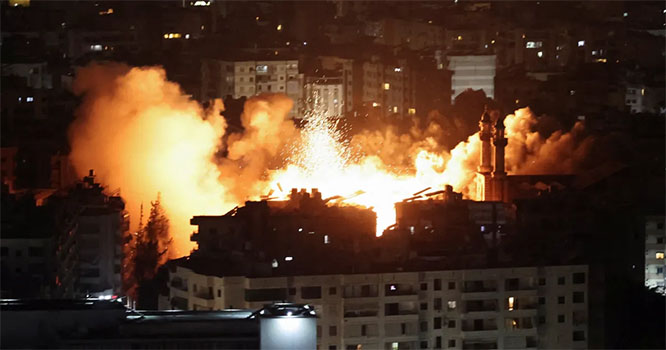
Israel has launched a new act of aggression on a residential neighborhood in Lebanon's capital, Beirut, killing and injuring about two dozen civilians.

The Israeli regime's military said in a statement that its forces carried out a so-called precise strike in a residential apartment in Dahiyeh in the southern suburbs of Beirut on Sunday.

The aggression targeted residential areas, killing at least five people and injuring more than 28 people, Lebanon's Health Ministry said. 

Hezbollah announced the martyrdom of senior Hezbollah commander Haytham Ali Tabatabai and four resistance fighters.

Lebanese President Michel Aoun condemned the airstrike, calling it a clear demonstration of Tel Aviv’s disregard for repeated international calls to halt violations on Lebanese soil.

“Israel refuses to implement international resolutions and all efforts aimed at ending the escalation and restoring stability,” Aoun said, urging the international community to take action to prevent further aggression.

The Palestinian Islamic Jihad movement also condemned the attack, holding the international community accountable. 

“The international community bears responsibility and continues to provide cover for these attacks as long as it does not restrain the occupiers,” said Ali Abu Shahin, a member of the group’s political bureau.

Israeli prime minister Benjamin Netanyahu’s office announced that the Israeli army carried out a strike “in the heart of Beirut."

Netanyahu reportedly approved the operation following recommendations from top Israeli security officials.

Two senior US officials commented on the Israeli strike.

The first official said that Israel did not notify Americans in advance about the attack. "We were informed immediately after the strike was carried out."

The second senior official said that the "US knew for several days that Israel was planning to escalate its strikes in Lebanon, but did not know in advance the timing, location, or target of the strike."

Speaking from the site of the Israeli strike, Lebanese MP Ali Ammar condemned the attack as part of a broader campaign of aggression that has targeted "all of Lebanon since the Washington-sponsored ceasefire."

He stated that "any attack on Lebanon is a violation of red lines; this aggression is part and parcel of the entity that targets Lebanon's dignity, sovereignty, and security of citizens."

Ammar went on to say the resistance is responding with "utmost wisdom, patience, and will confront the enemy at the appropriate time."

"Unfortunately, the enemy is emboldened to commit its aggression by voices within Lebanon that have turned themselves into tools that support its aggression," he added.

The Israeli attack on the southern suburbs of the Lebanese capital is the latest blatant violation of the ceasefire Israel signed with Hezbollah in November 2024, which was intended to end hostilities that had escalated into full-scale war.

An Israeli strike on the Ain al-Hilweh camp near Sidon in southern Lebanon late Tuesday killed at least 14 people. It wounded several others, including young students, according to the Lebanese health ministry.

The military claimed the attack targeted “a Hamas training compound” used to plan and carry out attacks against the regime -- a claim that has frequently been made without evidence.

Hamas rejected the allegations as “a blatant lie aimed at justifying the massacre,” stating it had “no military installations in the Palestinian camps in Lebanon” and that the targeted site was merely “an open sports field.”

According to Lebanese authorities, Israeli attacks have killed approximately 4,000 people and displaced more than 1.2 million residents across the country since October 2023.

Comments

Add new comment

  • Coastaldigest.com reserves the right to delete or block any comments.
  • Coastaldigset.com is not responsible for its readers’ comments.
  • Comments that are abusive, incendiary or irrelevant are strictly prohibited.
  • Please use a genuine email ID and provide your name to avoid reject.
News Network
November 28,2025

ministerPM.jpg

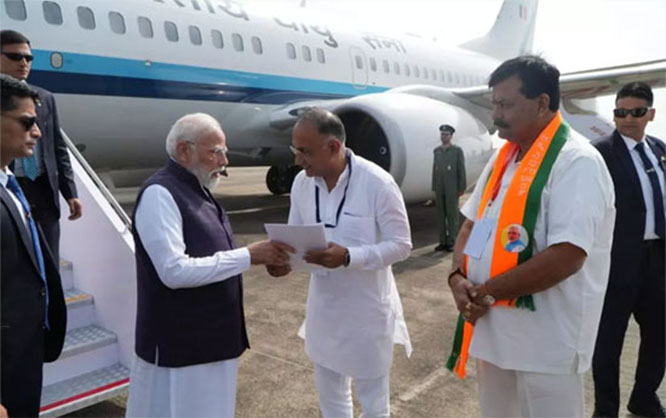
Mangaluru, Nov 28: Karnataka Health Minister and Dakshina Kannada district in-charge minister Dinesh Gundu Rao on Friday handed over Chief Minister Siddaramaiah’s letter to Prime Minister Narendra Modi, highlighting the severe distress faced by farmers due to crashing crop prices.

PM Modi arrived at the Mangaluru International Airport en route to Udupi, where Gundu Rao welcomed him and submitted the letter. The chief minister’s message stressed that farmers are suffering heavy losses because maize and green gram are being bought far below the Minimum Support Price (MSP). The state urged the Centre to immediately begin procurement at MSP.

According to the letter, Karnataka has a bumper harvest this year—over 54.74 lakh metric tons of maize and 1.98 lakh metric tons of green gram—yet farmers are unable to secure fair prices. Against the MSP of ₹2,400/MT for maize and ₹8,768/MT for green gram, market rates have plunged to ₹1,600–₹1,800 and ₹5,400 respectively.

The chief minister has requested the Centre to:

• Direct NAFED, FCI and NCCF to start MSP procurement immediately.
• Ensure ethanol units purchase maize directly from farmers or FPOs.
• Increase Karnataka’s ethanol allocation, citing high production capacity.
• Stop maize imports, which have depressed domestic prices.
• Relax quality norms for green gram, allowing up to 10% discoloration due to rains.

The letter stresses that MSP is crucial for farmer dignity and income stability and calls for swift central intervention to prevent a deepening crisis.

Comments

Add new comment

  • Coastaldigest.com reserves the right to delete or block any comments.
  • Coastaldigset.com is not responsible for its readers’ comments.
  • Comments that are abusive, incendiary or irrelevant are strictly prohibited.
  • Please use a genuine email ID and provide your name to avoid reject.