



China bullying neighbours to reorder Indo-Pacific region: Pentagon

Agencies
February 13, 2018

WASHINGTON, Feb 13: China is coercing its neighbours to reorder the Indo-Pacific region, the Pentagon told Congress in its annual budget proposals for the fiscal 2019, beginning October 1 this year.
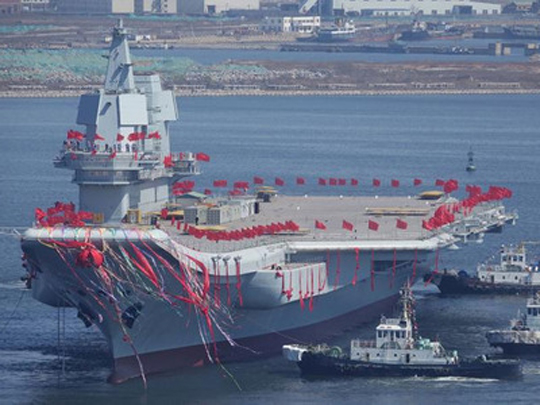
Trump administration on Monday released their proposal for the fiscal year 2019 budget. Fiscal years are different from calendar years. The budgetary proposal covers October 1, 2018, through September 30, 2019.

"China is leveraging military modernisation, influence operations and predatory economics to coerce neighbouring countries to reorder the Indo-Pacific region to their advantage," the Pentagon said in its annual defence budget for the fiscal 2019.

As China continues its economic and military ascendance, asserting power through an all-of-nation long-term strategy, it will continue to pursue a military modernisation programme that seeks Indo-Pacific regional hegemony in the near-term and displacement of the US to achieve global preeminence in the future, it said.

The most far-reaching objective of this defence strategy is to set the military relationship between the US and China on a path of transparency and non-aggression, it said.

According to the Pentagon, the central challenge to the US prosperity and security is the reemergence of long term, strategic competition by what the national security strategy classifies as revisionist powers.

"It is increasingly clear that China and Russia want to shape a world consistent with their authoritarian model — gaining veto authority over other nations' economic, diplomatic and security decisions," it said.

The Pentagon said Russia seeks veto authority over nations on its periphery in terms of its governmental, economic and diplomatic decisions to shatter the North Atlantic Treaty Organisation and to change European and Middle East security and economic structures to its favour.

The use of emerging technologies to discredit and subvert democratic processes in Georgia, Crimea and eastern Ukraine is concern enough, but when coupled with its expanding and modernising nuclear arsenal the challenge is clear.

"Rogue regimes such as North Korea and Iran are destabilising their regions by pursuing nuclear weapons or sponsoring terrorism," the Pentagon said.

North Korea seeks to guarantee regime survival and increased leverage through a mixture of nuclear, biological, chemical, conventional and unconventional weapons and a growing ballistic missile capability to gain coercive influence over South Korea, Japan and the US.

In the Middle East, Iran is competing with its neighbours, asserting an arc of influence and instability while vying for regional hegemony, using state-sponsored terrorist activities, a growing network of proxies and its missile programme to achieve its objectives, the Pentagon said.

According to the budgetary proposals, competitor states, especially China and Russia have narrowed department of defence's military technological advantages, demanding the US find new and innovative ways to fight in the future.

"China is now a strategic competitor, using predatory economics to intimidate its neighbours while militarising features in the South China Sea. Russia has violated the borders of nearby nations, and pursues veto power over the economic, diplomatic and security decisions of its neighbours," it said.

Concurrently, North Korea's actions and rhetoric continue despite the United Nation's censure and sanctions.

Iran continues to sow violence and remains the most significant challenge to the Middle East stability.

Despite the defeat of the Islamic State of Iraq and Syria's (ISIS) physical caliphate, threats to stability remain as terrorist groups with long reach continue to murder innocent people and threaten peace, the Pentagon added.

Comments

Add new comment

  • Coastaldigest.com reserves the right to delete or block any comments.
  • Coastaldigset.com is not responsible for its readers’ comments.
  • Comments that are abusive, incendiary or irrelevant are strictly prohibited.
  • Please use a genuine email ID and provide your name to avoid reject.
News Network
November 30,2025

airportmetro.jpg

Udupi: The pontiffs of Sri Paryaya Puttige Mutt, the sacred seat of Jagadguru Shrimad Madhvacharya Moola Samsthanam, have submitted a proposal to the Prime Minister seeking comprehensive development for Udupi district. 

Proposal for International Airport

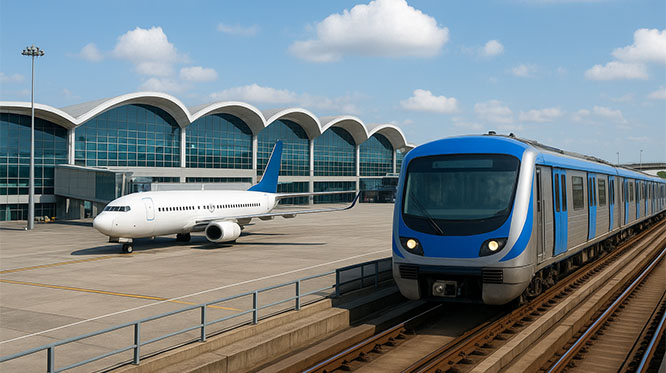
A key request is the establishment of an international airport. Highlighting that around 1,000 acres of land are available and suitable, the pontiffs noted that the existing Mangalore Airport provides limited international connectivity. They suggested the airport be developed under a Public-Private Partnership (PPP) or as a Greenfield Airport to boost trade, education, healthcare, and spiritual tourism.

Metro and Rapid Transit Connectivity

The proposal also calls for Metro Rail or Rapid Transit between Mangaluru and Udupi. The 55 km coastal stretch experiences heavy daily commuter traffic, causing congestion. The district administration is ready to prepare an initial project report for a Mass Rapid Transit corridor and requested inclusion under national urban mobility programmes to ensure safe, green, and time-efficient regional transport.

Port and Coastal Development

The pontiffs urged the development of an international-standard port with a cruise terminal along Udupi’s coast. They also requested fast-tracking of pending coastal tourism projects and revising Coastal Regulation Zone (CRZ) norms to encourage sustainable infrastructure and hospitality investment.

IT, AI and Technological Infrastructure

Support was sought for an IT and AI Innovation Park with incubation facilities under Digital India and Startup India initiatives. The proposal also emphasized the need for strengthened data security and cloud computing infrastructure to boost India’s technological independence.

Sports and Education Initiatives

The pontiffs requested national sports status for Kambala, along with financial and infrastructure support. They also sought the establishment of an AIIMS in Udupi, a new IIT campus, and approval for an IIM to promote higher education in the district.

Representation to the Prime Minister

Sri Sugunendra Tirtha Pontiff and Sri Sushrendra Tirtha Swamiji represented the pontiffs in submitting the comprehensive development proposal to the Prime Minister during his recent visit.

Comments

Add new comment

  • Coastaldigest.com reserves the right to delete or block any comments.
  • Coastaldigset.com is not responsible for its readers’ comments.
  • Comments that are abusive, incendiary or irrelevant are strictly prohibited.
  • Please use a genuine email ID and provide your name to avoid reject.
News Network
November 26,2025

students.jpg

Bengaluru, Nov 26: Karnataka is taking its first concrete steps towards lifting a three-decade-old ban on student elections in colleges and universities. Deputy Chief Minister D.K. Shivakumar announced Wednesday that the state government will form a small committee to study the reintroduction of campus polls, a practice halted in 1989 following incidents of violence.

Speaking at a 'Constitution Day' event organised by the Karnataka Congress, Mr. Shivakumar underscored the move's aim: nurturing new political leadership from the grassroots.

"Recently, (Leader of the Opposition in Lok Sabha) Rahul Gandhi wrote a letter to me and Chief Minister (Siddaramaiah) asking us to think about restarting student elections," Shivakumar stated. "I'm announcing today that we'll form a small committee and seek a report on this."

Student elections were banned in Karnataka in 1989, largely due to concerns over violence and the infiltration of political party affiliates into campus life. The ban effectively extinguished vibrant student bodies and the pipeline of young leaders they often produced.

Mr. Shivakumar, who also serves as the Karnataka Congress president, said that former student leaders will be consulted to "study the pros and cons" of the re-introduction.

Acknowledging the history of the ban, he added, "There were many criminal activities taking place back then. We’ll see how we can conduct (student) elections by regulating such criminal activities."

The Deputy CM reminisced about his own journey, which began on campus. He recalled his political activism at Sri Jagadguru Renukacharya College leading to his first Assembly ticket in 1985 at the age of 23. "That's how student leadership was at the time. Such leadership has gone today. College elections have stopped," he lamented, adding that for many, college elections were "like a big movement" where leaders were forged.

The move, driven by the Congress high command's push to cultivate young talent, will face scrutiny from academics and university authorities who have, in the past, expressed concern that the return of polls could disrupt the peaceful academic environment and turn campuses into political battlegrounds.

Comments

Add new comment

  • Coastaldigest.com reserves the right to delete or block any comments.
  • Coastaldigset.com is not responsible for its readers’ comments.
  • Comments that are abusive, incendiary or irrelevant are strictly prohibited.
  • Please use a genuine email ID and provide your name to avoid reject.
News Network
December 6,2025

pilot.jpg

New Delhi: IndiGo, India’s largest airline, faced major operational turbulence this week after failing to prepare for new pilot-fatigue regulations issued by the Directorate General of Civil Aviation (DGCA). The stricter rules—designed to improve flight safety—took effect in phases through 2024, with the latest implementation on November 1. IndiGo has acknowledged that inadequate roster planning led to widespread cancellations and delays.

Below are the key DGCA rules that affected IndiGo’s operations:

1. Longer Mandatory Weekly Rest

Weekly rest for pilots has been increased from 36 hours to 48 hours.

The government says the extended break is essential to curb cumulative fatigue. This rule remains in force despite the current crisis.

2. Cap on Night Landings

Pilots can now perform only two night landings per week—a steep reduction from the earlier limit of six.

Night hours, defined as midnight to early morning, are considered the least alert period for pilots.

Given the disruptions, this rule has been temporarily relaxed for IndiGo until February 10.

3. Reduced Maximum Night Flight Duty

Flight duty that stretches into the night is now capped at 10 hours.

This measure has also been kept on hold for IndiGo until February 10 to stabilize operations.

4. Weekly Rest Cannot Be Replaced With Personal Leave

Airlines can no longer count a pilot’s personal leave as part of the mandatory 48-hour rest.

Pilots say this closes a loophole that previously reduced actual rest time.

Currently, all airlines are exempt from this rule to normalise travel.

5. Mandatory Fatigue Monitoring

Airlines must submit quarterly fatigue reports along with corrective actions to DGCA.

This system aims to create a transparent fatigue-tracking framework across the industry.

The DGCA has stressed that these rules were crafted to strengthen flight safety and align India with global fatigue-management standards. The temporary relaxations are expected to remain until February 2025, giving IndiGo time to stabilise its schedules and restore normal air travel.

Comments

Add new comment

  • Coastaldigest.com reserves the right to delete or block any comments.
  • Coastaldigset.com is not responsible for its readers’ comments.
  • Comments that are abusive, incendiary or irrelevant are strictly prohibited.
  • Please use a genuine email ID and provide your name to avoid reject.
