'They aren’t gangsters': Court rejects police plea to produce Umar Khalid, Khalid Saifi in handcuffs

News Network
June 6, 2021

khalid_saifi.jpg

New Delhi, June 6: A court here turned down a plea of Delhi Police to produce former JNU student Umar Khalid and activist Khalid Saifi in handcuffs before trial courts, noting that “they are not gangsters”.

The plea application which came up for hearing before Additional Sessions Judge Vinod Yadav sought to produce the 2020 Delhi riots accused in “handcuffs in both hands from back side”, contending that they are “high-risk prisoners”.

The judge dismissed the plea observing that it is devoid of merits and filed in a mechanical manner and without application of mind by the high echelons of the Delhi Police and prison authority.

“The accused persons, who are sought to be produced in fetters and handcuffs, are admittedly not previous convicts. They are not even gangsters,” the Additional Sessions Judge stated in an order dated June 5.

He further said that the plea is not required at this stage as the accused are not being produced in the court physically due to the Covid-19 pandemic.

The judge also noted the replies submitted by the Superintendent of Mandoli and Tihar jail, Additional DCP (Special Cell) and DCP of third battalion of Delhi Police, on the plea.

The DCP told the court that in the aftermath of an attempt made by armed assailants to free an undertrial prisoner at GTB Hospital, the police had decided to request the court for permission to handcuff high-risk prisoners who are prone to escape.

“As part of the exercise, the current application for handcuffing UTPs Umar Khalid and Khalid Saifi was moved for the consideration of Hon'ble Court,” the senior police officer stated in a reply submitted to the court on April 26.

However, in the reply given by the Additional DCP of Special Cell, it was stated that no such application seeking to produce both the accused in handcuffs, was filed before any court or other authority. 

Comments

Ramesh Mishra
 - 
Thursday, 17 Jun 2021

UMAR KHALID AND KHALID SAIFI IN HANDCUFFS, NEW DELHI INDIA
They have been maliciously prosecuted and entitled to compensation.

Ramesh Mishra
Victoria, British Columbia, CANADA

Ahmed Ali Kulai
 - 
Monday, 7 Jun 2021

Scenario: Now after the court rejection to handcuff these 2 students to produce in the court, police may create a scene by forcing these two students to run away while moving to court, so that they can say to court that we asked court to allow to handcuff but court refused.

Add new comment

  • Coastaldigest.com reserves the right to delete or block any comments.
  • Coastaldigset.com is not responsible for its readers’ comments.
  • Comments that are abusive, incendiary or irrelevant are strictly prohibited.
  • Please use a genuine email ID and provide your name to avoid reject.
News Network
December 7,2025

SHRIMP.jpg

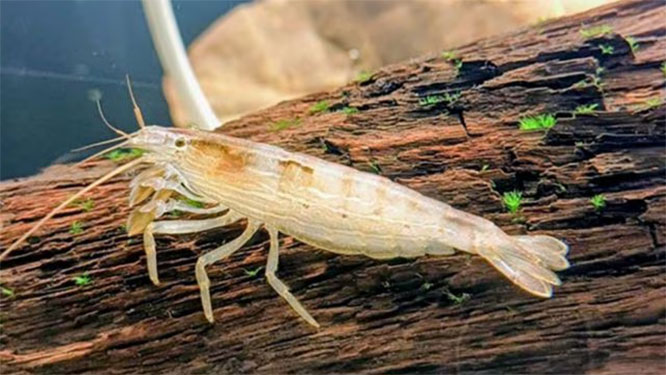
Mangaluru, Dec 7: A rare bamboo shrimp has been rediscovered on mainland India more than 70 years after it was last reported, confirming for the first time the presence of Atyopsis spinipes in the country. The find was made by researchers from the Centre for Climate Change Studies at Sathyabama Institute of Science and Technology, Chennai, during surveys in Karnataka and Odisha.

The team — shrimp expert Dr S Prakash, PhD scholar K Kunjulakshmi, and Mangaluru-based researcher Maclean Antony Santos — combined field surveys, ecological assessments and DNA analysis to identify the elusive species. Their findings, published in Zootaxa, resolve decades of taxonomic confusion stemming from a 1951 report that misidentified the species as Atyopsis moluccensis without strong evidence.

The shrimp has now been confirmed at two locations: the Mulki–Pavanje estuary near Mangaluru and the Kuakhai River in Bhubaneswar. Historical specimens from the Andaman Islands, previously labelled as A. moluccensis, were also found to be misidentified and actually belong to A. spinipes.

The rediscovery began after an aquarium hobbyist in Odisha spotted a shrimp in 2022, prompting systematic surveys across Udupi, Karwar and Mangaluru. Four female specimens were collected in Mulki and one in Odisha, all genetically matching.

Researchers warn the species may exist in very small, vulnerable populations as freshwater habitats face increasing pressure from pollution, sand mining and infrastructure development. All verified specimens have been deposited with the Zoological Survey of India for future reference.

Comments

Add new comment

  • Coastaldigest.com reserves the right to delete or block any comments.
  • Coastaldigset.com is not responsible for its readers’ comments.
  • Comments that are abusive, incendiary or irrelevant are strictly prohibited.
  • Please use a genuine email ID and provide your name to avoid reject.