Covid-19 lockdown anniversary: India yet to recover from unemployment blow

News Network
March 24, 2021

cov.jpg

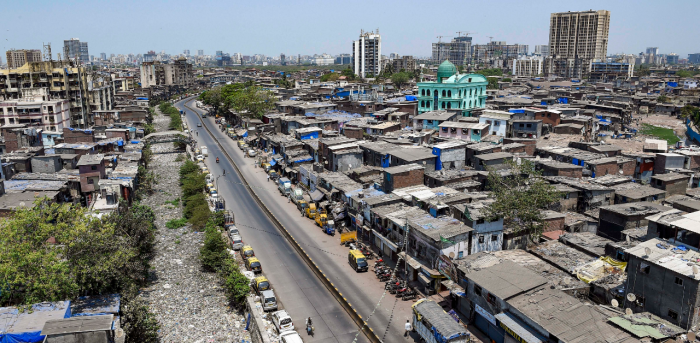
India is still not out of the woods as far as unemployment is concerned after a year when the lockdown was imposed to contain the spread of deadly Covid-19 on March 25 last year as pandemic-induced job loss has not tapered off consistently.

The government had imposed a lockdown to curb the spread of the pandemic but this impacted economic and commercial activities and resulted in job loss and later on the exodus of migrant workers which rocked the entire nation.

According to the Centre for Monitoring Indian Economy (CMIE) data, the unemployment rate was recorded at 6.9 per cent in February 2021 which is slightly better than 7.8 per cent in the same month last year and 8.8 per cent in March 2020, during which lockdown was imposed.

The data showed that the unemployment rate had peaked to 23.5 per cent in April and remained at 21.7 per cent in May. It started tapering off from June onward when it was recorded at 10.2 per cent in the month and further improved to 7.4 per cent in July.

However, the unemployment rate again rose slightly to 8.3 in August and improved to 6.7 per cent in September last year, as per CMIE data.

In October, unemployment again rose slightly to 7 per cent and then eased to 6.5 per cent in November last year as per the data.

The CMIE data showed that the unemployment rate had risen to 9.1 per cent in December 2020 and improved in January to 6.5 per cent.

Experts said that the CMIE data indicated improvement in the unemployment scenario from July onwards, but there is a need for consistency which would only come after an increase in buoyancy in the manufacturing and services sectors.

They were of the view that the farm sector has done well which engages over 55 per cent of the country's population but there is a need for improvement in hiring in urban and industrial areas.

They opined that the government has taken many steps to boost fresh hiring in the country but repeated policy interventions and monitoring of existing schemes and initiatives at the ground level are required to achieve consistent improvement in the employment scenario in the country.

According to labour ministry data, around 16.5 lakh people have benefited from the Aatmanirbhar Bharat Rozgar Yojana (ABRY) which was launched in October to encourage hiring in the country amid the COVID-19 pandemic till March 9, 2021.

The scheme was introduced on October 1, 2020, to incentivise the creation of new employment along with social security benefits and restoration of loss of employment during the pandemic.

This scheme, being implemented through the Employees Provident Fund Organisation (EPFO), reduces the financial burden of the employers of various sectors/ industries and encourages them to hire more workers.

Under the ABRY, the government is crediting for a period of two years both the employees' share (12 per cent of wages) and employers' share (12 per cent of wages) of contribution payable.

Under the ABRY, about 16.5 lakhs beneficiaries registered themselves with the Scheme from October 1, 2020 and out of this, approximately 13.64 lakhs are new joinees with UAN (universal account number) generated on or after October 1, 2020, and approximately 2.86 lakhs are re-joinees who were rendered un-employed during the pandemic from March 1, 2020 to September 30, 2020, and rejoined from October 1, 2020, onwards.

The experts said that the government intends to create 50 lakh to 60 lakh jobs through the ABRY in two years' time, but it required close monitoring and well-planned implementation to achieve the desired objective.

Under Pradhan Mantri Garib Kalyan Yojana (PMGKY), the government has contributed both 12 per cent employer's share and 12 per cent employee's share under Employees Provident Fund (EPF), totaling 24 per cent of the wage for the wage month from March to August 2020, for the establishments having up to 100 employees with 90 per cent of such employees earning less than Rs 15,000.

Under the PMGKY scheme, Rs 2,567.66 crore was credited in EPF accounts of 38.82 lakhs eligible employees.

The recently released latest EPFO payroll data showed that net new enrolments with the retirement fund body grew about 28 per cent to 13.36 lakh in January compared to the same month in 2020.

The data also reflected a growth of 24 per cent for January 2021 over December last year.

The EPFO has added around 62.49 lakh subscribers during the first ten months of the ongoing fiscal year, the data showed.

During 2019-20, the number of net new subscribers rose to 78.58 lakh as compared to 61.12 lakh in the preceding fiscal.

The EPFO payroll data also gives a perspective about the employment scenario in the country.

Comments

Add new comment

  • Coastaldigest.com reserves the right to delete or block any comments.
  • Coastaldigset.com is not responsible for its readers’ comments.
  • Comments that are abusive, incendiary or irrelevant are strictly prohibited.
  • Please use a genuine email ID and provide your name to avoid reject.
News Network
December 6,2025

pilot.jpg

New Delhi: IndiGo, India’s largest airline, faced major operational turbulence this week after failing to prepare for new pilot-fatigue regulations issued by the Directorate General of Civil Aviation (DGCA). The stricter rules—designed to improve flight safety—took effect in phases through 2024, with the latest implementation on November 1. IndiGo has acknowledged that inadequate roster planning led to widespread cancellations and delays.

Below are the key DGCA rules that affected IndiGo’s operations:

1. Longer Mandatory Weekly Rest

Weekly rest for pilots has been increased from 36 hours to 48 hours.

The government says the extended break is essential to curb cumulative fatigue. This rule remains in force despite the current crisis.

2. Cap on Night Landings

Pilots can now perform only two night landings per week—a steep reduction from the earlier limit of six.

Night hours, defined as midnight to early morning, are considered the least alert period for pilots.

Given the disruptions, this rule has been temporarily relaxed for IndiGo until February 10.

3. Reduced Maximum Night Flight Duty

Flight duty that stretches into the night is now capped at 10 hours.

This measure has also been kept on hold for IndiGo until February 10 to stabilize operations.

4. Weekly Rest Cannot Be Replaced With Personal Leave

Airlines can no longer count a pilot’s personal leave as part of the mandatory 48-hour rest.

Pilots say this closes a loophole that previously reduced actual rest time.

Currently, all airlines are exempt from this rule to normalise travel.

5. Mandatory Fatigue Monitoring

Airlines must submit quarterly fatigue reports along with corrective actions to DGCA.

This system aims to create a transparent fatigue-tracking framework across the industry.

The DGCA has stressed that these rules were crafted to strengthen flight safety and align India with global fatigue-management standards. The temporary relaxations are expected to remain until February 2025, giving IndiGo time to stabilise its schedules and restore normal air travel.

Comments

Add new comment

  • Coastaldigest.com reserves the right to delete or block any comments.
  • Coastaldigset.com is not responsible for its readers’ comments.
  • Comments that are abusive, incendiary or irrelevant are strictly prohibited.
  • Please use a genuine email ID and provide your name to avoid reject.
News Network
November 27,2025

imrankhan.jpg

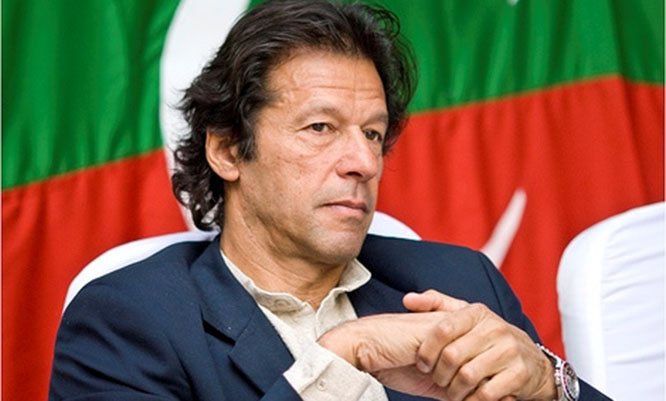
Authorities at Pakistan’s high-security Adiala Jail in Rawalpindi on Wednesday dismissed speculation about the condition of imprisoned former Pakistan Prime Minister Imran Khan, rejecting rumours that he had been moved out of the facility or was in danger. Officials said Khan was in “good health” and described the viral death claims as “baseless.”

“There is no truth to reports about his transfer from Adiala Jail,” the Rawalpindi prison administration said in a statement, according to Geo News. “He is fully healthy and receiving complete medical attention.”

Amid swirling rumours on social media, Imran Khan’s party, Pakistan Tehreek-e-Insaf (PTI), urged the federal government to issue an official clarification and demanded that authorities allow his family to meet him immediately, Dawn reported.

The frenzy began after Khan’s three sisters called for an impartial probe into what they described as a “brutal” police assault on them and other PTI supporters outside Adiala Jail last week. Soon after, several social media handles circulated unverified claims alleging that Khan had been “killed” inside the prison.

The rumours intensified when a handle named “Afghanistan Times” claimed that “credible sources” had confirmed Khan’s “murder” and that his body had been moved out of the jail — allegations that have not been verified by any credible agency.

Imran Khan, PTI’s patron-in-chief, has been lodged in the Rawalpindi prison since August 2023 in multiple cases. For over a month, an undeclared restriction has prevented family members and senior PTI leaders from meeting him. Khyber-Pakhtunkhwa Chief Minister Sohail Afridi has reportedly been denied access despite making seven attempts.

In a letter to Punjab Police Chief Usman Anwar, Khan’s sisters — Noreen Niazi, Aleema Khan, and Dr. Uzma Khan — said they were “peacefully protesting” outside the jail when police allegedly launched an unprovoked assault after streetlights were switched off.

“At 71, I was seized by my hair, thrown to the ground and dragged across the road,” Noreen Niazi said, alleging that other women present were also slapped and manhandled.

Adiala Jail officials reiterated that speculation over Imran Khan’s health was unfounded and insisted that his well-being was being ensured, Geo News reported.

Comments

Add new comment

  • Coastaldigest.com reserves the right to delete or block any comments.
  • Coastaldigset.com is not responsible for its readers’ comments.
  • Comments that are abusive, incendiary or irrelevant are strictly prohibited.
  • Please use a genuine email ID and provide your name to avoid reject.
News Network
December 2,2025

A major upgrade in safety and monitoring is planned for Haj 2026, with every Indian pilgrim set to receive a Haj Suvidha smart wristband linked to the official Haj Suvidha mobile app. The initiative aims to support pilgrims—especially senior citizens—who may struggle with smartphones during the 45-day journey.

What the Smart Wristband Will Do

Officials said the device will come with:
•    Location tracking
•    Pedometer
•    SOS emergency button
•    Qibla compass
•    Prayer timings
•    Basic health monitoring

SP Tiwari, secretary of the UP State Haj Committee, said the goal is to make the pilgrimage safer and more comfortable.

“Most Hajis are elderly and not comfortable with mobile apps,” he said. “The smartwatch will help locate pilgrims who forget their way or cannot communicate their location.”

The wristbands will be monitored by the Consulate General of India in Saudi Arabia, similar to mobile tracking via the Haj Suvidha App.

Free Distribution and Training

•    Smart wristbands will be given free of cost.
•    Training for pilgrims will be conducted between January and February 2026.
•    Sample units will reach state Haj committees soon.
•    Final devices will be distributed as pilgrims begin their journey.

New Rules for Accommodation

Two major decisions have also been finalised for Haj 2026:
1.    Separate rooms for men and women – including married couples. They may stay on the same floor but must occupy different rooms, following stricter Saudi guidelines.
2.    Cooking banned – gas cylinders will not be allowed; all meals will be provided through official catering services arranged by the Haj Committee of India.

These decisions were finalised during a meeting of the Haj Committee of India and state representatives in Mumbai.

Haj Suvidha App Launched Earlier

The government launched the Haj Suvidha App in 2024, offering:

•    Training modules
•    Accommodation and flight details
•    Baggage information
•    SOS and translation tools
•    Grievance redressal

Haj 2026 Quota and Key States

•    India’s total Haj quota for 2026: 1,75,025 pilgrims
•    70% (1,25,000) allotted to the Haj Committee of India
•    30% (around 50,000) reserved for Haj Group Organisers

Uttar Pradesh has the largest allocation (around 30,000 seats), though approximately 18,000 pilgrims are expected to go this year. States with high pilgrim numbers include Kerala, Maharashtra and Gujarat.

Dates of Haj 2026

The pilgrimage is scheduled to take place from 24 May to 29 May, 2026 (tentative).
Haj is one of the five pillars of Islam and is mandatory for Muslims who meet the required conditions.

Comments

Add new comment

  • Coastaldigest.com reserves the right to delete or block any comments.
  • Coastaldigset.com is not responsible for its readers’ comments.
  • Comments that are abusive, incendiary or irrelevant are strictly prohibited.
  • Please use a genuine email ID and provide your name to avoid reject.