Covid vaccine may cost up to Rs 250 per dose in private hospitals

Agencies
February 27, 2021

Covid vaccine price private govt hospitals free coronavirus shots latest  news | India News – India TV

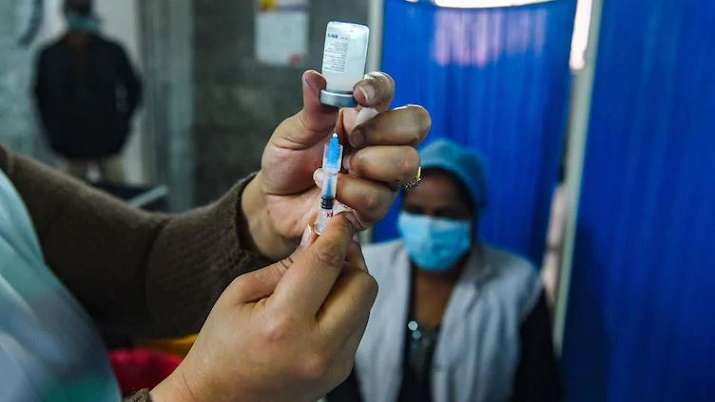
New Delhi, Feb 27: Private hospitals can charge up to Rs 250 per dose of Covid-19 vaccine, official sources said on Saturday as India prepares to vaccinate people aged above 60 years and those over 45 with comorbidities from March 1.

The Covid-19 vaccine will be given free of cost at government hospitals, while people will need to pay for it at private facilities.

"Rs 250 will be the ceiling -- Rs 150 cost of vaccine plus Rs 100 service charge. This arrangement will remain effective till further orders," a source said.

According to sources, states and union territories have been informed about it.

The Union Health Ministry on Friday had said beneficiaries would be able to self-register in advance by downloading the Co-WIN 2.0 portal and through other IT applications such as Aarogya Setu, which will show the government and private hospitals serving as Covid-19 vaccination centres (CVCs) with date and time of the available schedules.

The beneficiary would be able to choose the CVC of his/her choice and book an appointment for vaccination, the ministry said.

There will be facility of on-site registration so that eligible beneficiaries can walk into identified vaccination centres, get themselves registered and inoculated.

"Eligible beneficiaries would be able to register themselves on the Co-WIN platform from March 1 itself," R S Sharma, Chairman of Empowered Group on Covid-19 Vaccine Administration had said.

The nationwide Covid-19 vaccination drive was launched on January 16. This is now to be exponentially expanded to the age-groups -- all citizens above 60 years and those within the age bracket of 45 to 59 years with specified co-morbidities -- from March 1.

During a meeting held on Friday, representatives of states and UTs were explained the basic features of version 2.0 of the digital platform Co-WIN, which is a population-scale software with capacity of processing several thousands of entries.

It was pointed out that all CVCs must be health facilities which are government health facilities such as sub health centres (SHCs), primary health centres (PHCs), community health centres (CHCs), Ayushman Bharat Health and Wellness Centres, Sub-Division Hospitals, District Hospitals and Medical College Hospitals or private hospitals empanelled under the Central Government Health Scheme (CGHS), Ayushman Bharat- Pradhan Mantri Jan Aarogya Yojana (AB-PM JAY) and similar State Health Insurance Schemes.

States and UTs were asked to ensure that the private health facilities have adequate space for the vaccination process, as detailed in the comprehensive SOPs issued by the ministry, basic cold chain equipments, their own team of vaccinators and staff, and adequate facility for management of any adverse event following immunisation (AEFI) cases for using them as CVCs.

All beneficiaries, regardless of the mode of access will have to carry any one of the following photo ID documents -- Aadhaar Card, Electoral Photo Identity Card (EPIC), Photo ID card specified at the time of registration in case of online registration (if not Aadhaar or EPIC), certificate of co-morbidity for citizens in age group of 45 years to 59 years (signed by a registered medical practitioner), and employment certificate/Official Identity Card for healthcare workers (HCWs) and frontline workers (FLWs).

States and UTs  on Friday explained the simplified process of registration, which shall be through three routes -- advance self-registration, on-site registration and facilitated cohort registration.

Under the first route, beneficiaries will be able to self register in advance by downloading the Co-WIN 2.0 portal and through other IT applications such as Aarogya Setu.

"This will show the government and private hospitals serving as CVCs with date and time of the available schedules. The beneficiary would be able to choose the CVC of his/her choice and book an appointment for vaccination.

"The facility of on-site registration allows those who cannot self register in advance to walk into the identified CVCs and get themselves registered on-site and then vaccinated," the ministry said.

Under the facilitated cohort registration mechanism, the state and UT government will take proactive lead, the ministry said in the statement.

Specific date(s) for COVID-19 vaccination will be decided where target groups of potential beneficiates will be vaccinated. State and health authorities will ensure that that the target groups are actively mobilised and brought to the vaccination centres. ASHAs, ANMs, Panchayati Raj representatives and Women's Self Help Groups (SHGs) will be utilised for mobilising the target groups.

Vaccination will be free of charge at the government vaccination centres. The beneficiary will have to show a photo ID document for proof of age (preferably Aadhaar card or EPIC card) and certificate of co-morbidity (if required). Those taking the Covid-19 vaccine at any designated/empanelled private health facility will have to pay a pre-fixed charge.

Comments

Add new comment

  • Coastaldigest.com reserves the right to delete or block any comments.
  • Coastaldigset.com is not responsible for its readers’ comments.
  • Comments that are abusive, incendiary or irrelevant are strictly prohibited.
  • Please use a genuine email ID and provide your name to avoid reject.
News Network
November 26,2025

students.jpg

Bengaluru, Nov 26: Karnataka is taking its first concrete steps towards lifting a three-decade-old ban on student elections in colleges and universities. Deputy Chief Minister D.K. Shivakumar announced Wednesday that the state government will form a small committee to study the reintroduction of campus polls, a practice halted in 1989 following incidents of violence.

Speaking at a 'Constitution Day' event organised by the Karnataka Congress, Mr. Shivakumar underscored the move's aim: nurturing new political leadership from the grassroots.

"Recently, (Leader of the Opposition in Lok Sabha) Rahul Gandhi wrote a letter to me and Chief Minister (Siddaramaiah) asking us to think about restarting student elections," Shivakumar stated. "I'm announcing today that we'll form a small committee and seek a report on this."

Student elections were banned in Karnataka in 1989, largely due to concerns over violence and the infiltration of political party affiliates into campus life. The ban effectively extinguished vibrant student bodies and the pipeline of young leaders they often produced.

Mr. Shivakumar, who also serves as the Karnataka Congress president, said that former student leaders will be consulted to "study the pros and cons" of the re-introduction.

Acknowledging the history of the ban, he added, "There were many criminal activities taking place back then. We’ll see how we can conduct (student) elections by regulating such criminal activities."

The Deputy CM reminisced about his own journey, which began on campus. He recalled his political activism at Sri Jagadguru Renukacharya College leading to his first Assembly ticket in 1985 at the age of 23. "That's how student leadership was at the time. Such leadership has gone today. College elections have stopped," he lamented, adding that for many, college elections were "like a big movement" where leaders were forged.

The move, driven by the Congress high command's push to cultivate young talent, will face scrutiny from academics and university authorities who have, in the past, expressed concern that the return of polls could disrupt the peaceful academic environment and turn campuses into political battlegrounds.

Comments

Add new comment

  • Coastaldigest.com reserves the right to delete or block any comments.
  • Coastaldigset.com is not responsible for its readers’ comments.
  • Comments that are abusive, incendiary or irrelevant are strictly prohibited.
  • Please use a genuine email ID and provide your name to avoid reject.
News Network
November 30,2025

The United Nations Committee against Torture (CAT) has condemned the Israeli regime for enforcing a policy of “organized torture” against Palestinians.

In a report published on Friday, CAT stated that the occupying regime enforces a deliberate policy of “organized and widespread torture and ill-treatment” against Palestinian abductees, particularly since October 7, 2023, when Israel launched its genocidal war on Gaza.

The committee expressed “deep concern over repeated severe beatings, dog attacks, electrocution, water-boarding, use of prolonged stress positions [and] sexual violence” inflicted on Palestinians.

Palestinian prisoners were degraded by “being made to act like animals or being urinated on,” systematically denied medical care, and subjected to excessive restraints, “in some cases resulting in amputation,” the report added.

CAT also condemned the routine application of “unlawful combatants law” to justify the prolonged detention without trial of thousands of Palestinian men, women, and children.

More than 10,000 Palestinians, including women and children, are currently held in Israeli prisons, according to Palestinian and international human rights groups, with 3,474 Palestinians in “administrative detention,” meaning they are imprisoned without trial for indefinite periods.

The report highlighted the “high proportion of children who are currently detained without charge or on remand,” noting that while Israel sets the age of criminal responsibility at 12, even younger children have been abducted.

Children designated as security prisoners face severe restrictions on family contact, may be subjected to solitary confinement, and are denied access to education, in clear violation of international law.

The committee further suggested that Israel’s policies across the Occupied Territories constitute collective torture against the Palestinian population.

“A range of policies adopted by Israel in the course of its continued unlawful presence in the Occupied Palestinian Territory amounts to cruel, inhuman or degrading living conditions for the Palestinian population,” the report said.

On Thursday, the Palestinian resistance movement Hamas condemned the systematic killing and torture of Palestinian abductees in Israeli prisons, urging international action to halt these abuses.

Citing human rights data, Hamas stated that 94 Palestinians have been killed in Israeli prisons since the start of Tel Aviv’s genocidal war on Gaza.

“This reflects an organized criminal approach that has turned these prisons into direct killing grounds to eliminate our people,” the resistance movement said.

Hamas called on the international community, the UN, and human rights organizations to immediately pressure Israel to end crimes against prisoners and uphold their rights as guaranteed by all international conventions and norms.

Comments

Add new comment

  • Coastaldigest.com reserves the right to delete or block any comments.
  • Coastaldigset.com is not responsible for its readers’ comments.
  • Comments that are abusive, incendiary or irrelevant are strictly prohibited.
  • Please use a genuine email ID and provide your name to avoid reject.
News Network
December 3,2025

indigo.jpg

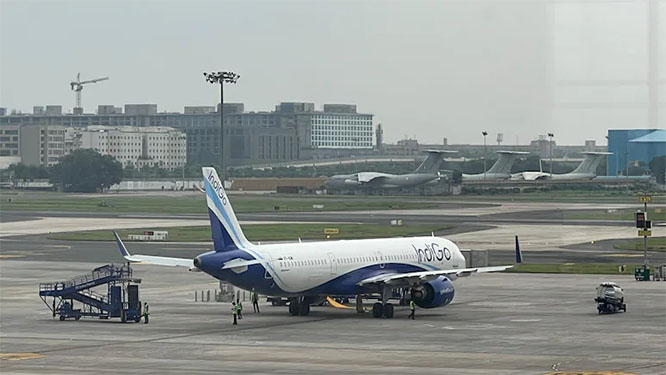
IndiGo, India’s largest airline, is battling one of its worst operational disruptions in recent years, with hundreds of delays and cancellations throwing domestic travel into chaos.

Government data on Tuesday showed its on-time performance plunging to 35%, an unusual dip for a carrier long associated with punctuality.

By Wednesday afternoon, airports in Delhi, Mumbai, Bengaluru and Hyderabad had collectively reported close to 200 cancellations, stranding travellers across the country.

Crew Shortage After New Duty Norms

A major trigger behind the meltdown is a severe crew shortage, especially among pilots, following the rollout of revised Flight Duty Time Limitation (FDTL) norms last month.

The rules mandate longer rest hours and more humane rosters — a shift IndiGo has struggled to incorporate across its vast network.

Sources said several flights were grounded due to lack of cabin crew, while some delays stretched upwards of eight hours.

With IndiGo controlling over 60% of India’s domestic aviation market, the ripple effect has impacted airports nationwide.

IndiGo Issues Apology, Lists “Compounding Factors”

In a statement, IndiGo acknowledged the large-scale disruption:

“We sincerely apologise to customers. A series of unforeseen operational challenges — technology glitches, winter schedule changes, adverse weather, system congestion and updated FDTL norms — created a compounding impact that could not have been anticipated.”

To stabilise operations, the airline has begun calibrated schedule adjustments for the next 48 hours, aiming to restore punctuality. Affected passengers are being offered refunds or alternate travel arrangements, IndiGo said.

What the FDTL Rules Require

The FDTL norms, designed to reduce pilot fatigue, cap duty and flying hours as follows:
•    Maximum 8 hours of flying per day
•    35 hours per week
•    125 hours per month
•    1,000 hours per year

Crew must also receive rest equalling twice the flight duration, with a minimum 10-hour rest period in any 24-hour window.

The DGCA introduced these limits to enhance flight safety.

Hyderabad: 33 Flights Cancelled, Long Queues Reported

Hyderabad’s Rajiv Gandhi International Airport saw heavy early-morning crowds as 33 IndiGo flights (arrivals and departures) were cancelled.

The airport clarified on X that operations were normal, advising passengers to contact IndiGo directly for latest flight status.

Cancellations included flights to and from Visakhapatnam, Goa, Ahmedabad, Delhi, Bengaluru, Chennai, Madurai, Hubli, Bhopal and Bhubaneswar.

Bengaluru: 42 Flights Disrupted

Bengaluru’s Kempegowda International Airport recorded 42 cancellations — 22 arrivals and 20 departures — affecting routes to Delhi, Mumbai, Chennai, Hyderabad, Goa, Kolkata and Lucknow.

Passengers Vent on Social Media

Irate travellers took to X to share their experiences. One passenger stranded in Hyderabad wrote: “I have been here since 3 a.m. and missed an important meeting.”

Another said: “My flight was pushed from 1:55 PM to 2:55 PM and now 4:35 PM. I was informed only three minutes before entering the airport.”

Delhi Airport Hit by Tech Glitch

At Delhi Airport, the disruption deepened due to a slowdown in the Amadeus system — used for reservations, check-ins and departure control.

The technical issue led to longer queues and sluggish processing, adding to delays already worsened by staff shortages.

Comments

Add new comment

  • Coastaldigest.com reserves the right to delete or block any comments.
  • Coastaldigset.com is not responsible for its readers’ comments.
  • Comments that are abusive, incendiary or irrelevant are strictly prohibited.
  • Please use a genuine email ID and provide your name to avoid reject.