




High fiscal deficit to pose challenge in lowering India’s debt to GDP ratio: Fitch

Agencies
February 10, 2021

1-196.jpg

New Delhi, Feb 10: Fitch Ratings on Wednesday said India's high fiscal deficit would pose a challenge in lowering the debt to GDP ratio, which is expected to remain above 90 per cent in the next five years.

It said India entered the pandemic with little fiscal headroom from a rating perspective. Its general government debt/GDP ratio stood at 72 per cent in 2019, against a median of 42 per cent for 'BBB' rated peers.

Fitch said the budget points to a loosening of fiscal policy to support the country's ongoing economic recovery from the pandemic and will consequently lead to a rise in public debt.

The debt/GDP trajectory is core to our sovereign rating assessment, meaning higher deficits and a slower consolidation path will make India's medium-term growth outlook take on a more critical role in our analysis, Fitch Ratings said in a statement.

It now expects public debt/GDP to rise above 90 per cent of GDP over the next five years, based on the revised budget targets. However, recent reforms and policy measures, including those announced in the budget, could also influence the rating agency's growth expectations and its debt trajectory forecasts.

Fitch estimated India to clock a 11 per cent growth in the fiscal beginning April and then grow at 6.5 per cent a year through to 2025-26 fiscal.

The agency had in June last year revised India's 'BBB-' rating outlook to negative from stable based on its assumptions of the likely impact of pandemic on public finance.

"The budget's deficit projections for the fiscal years ending March 2022 (FY22) to FY26 are about 1pp (percentage point) a year above our previous estimates between, which could make it more challenging to put debt/GDP on a downward trajectory," Fitch said.

India has exceeded its fiscal deficit target of 3.5 per cent in the current fiscal by a wide margin due to higher spendings to stimulate the economy amid the pandemic.

The fiscal deficit - the excess of government expenditure over its revenues - has been pegged at 9.5 per cent of the gross domestic product (GDP) in the current fiscal ending March 31, as per the revised estimate.

For the 2021-22 fiscal, beginning April 1, the deficit has been put at 6.8 per cent of the GDP, which will be further lowered to 4.5 per cent by 2025-26 fiscal ending March 31, 2026.

Fitch said the budget, presented in Parliament on February 1, has the potential to lift growth prospects. Higher expenditure will support the near-term recovery and increased infrastructure spending could boost sustainable medium-term growth rates.

Labour market and agricultural reforms that were legislated in September 2020 could also lift medium-term growth.

However, recent adverse court rulings have highlighted implementation challenges to these reforms, and there is a risk that fiscal spending could also fall short of planned levels. Meanwhile, the budget's proposed increases in import tariffs could dampen trade and economic growth, it said.

"Although there are implementation risks around aspects of the budget, we regard the government's overall fiscal projections as broadly credible.The budget's higher deficit forecasts are partly driven by positive steps toward greater transparency, as previously off-balance-sheet items, such as loans from the Food Corporation of India, have been brought on budget," Fitch added.

Fitch said the extent to which policy changes address weaknesses in India's financial sector will also influence the country's medium-term growth potential. "We believe the proposed injection of Rs 20,000 crore (USD2.7 billion) of new capital into state banks will be insufficient to alleviate the anticipated incremental stress on capital levels in 2021 and 2022. State banks are likely to continue to experience asset-quality problems, weak profitability and small capital buffers and, as a result, we project credit growth to remain soft in the absence of further government action".

The proposed establishment of an asset reconstruction company and an asset management company to deal with bad banking sector assets should be credit positive, dependent on the details of its structure and implementation.

Comments

Add new comment

  • Coastaldigest.com reserves the right to delete or block any comments.
  • Coastaldigset.com is not responsible for its readers’ comments.
  • Comments that are abusive, incendiary or irrelevant are strictly prohibited.
  • Please use a genuine email ID and provide your name to avoid reject.
News Network
December 2,2025

A major upgrade in safety and monitoring is planned for Haj 2026, with every Indian pilgrim set to receive a Haj Suvidha smart wristband linked to the official Haj Suvidha mobile app. The initiative aims to support pilgrims—especially senior citizens—who may struggle with smartphones during the 45-day journey.

What the Smart Wristband Will Do

Officials said the device will come with:
•    Location tracking
•    Pedometer
•    SOS emergency button
•    Qibla compass
•    Prayer timings
•    Basic health monitoring

SP Tiwari, secretary of the UP State Haj Committee, said the goal is to make the pilgrimage safer and more comfortable.

“Most Hajis are elderly and not comfortable with mobile apps,” he said. “The smartwatch will help locate pilgrims who forget their way or cannot communicate their location.”

The wristbands will be monitored by the Consulate General of India in Saudi Arabia, similar to mobile tracking via the Haj Suvidha App.

Free Distribution and Training

•    Smart wristbands will be given free of cost.
•    Training for pilgrims will be conducted between January and February 2026.
•    Sample units will reach state Haj committees soon.
•    Final devices will be distributed as pilgrims begin their journey.

New Rules for Accommodation

Two major decisions have also been finalised for Haj 2026:
1.    Separate rooms for men and women – including married couples. They may stay on the same floor but must occupy different rooms, following stricter Saudi guidelines.
2.    Cooking banned – gas cylinders will not be allowed; all meals will be provided through official catering services arranged by the Haj Committee of India.

These decisions were finalised during a meeting of the Haj Committee of India and state representatives in Mumbai.

Haj Suvidha App Launched Earlier

The government launched the Haj Suvidha App in 2024, offering:

•    Training modules
•    Accommodation and flight details
•    Baggage information
•    SOS and translation tools
•    Grievance redressal

Haj 2026 Quota and Key States

•    India’s total Haj quota for 2026: 1,75,025 pilgrims
•    70% (1,25,000) allotted to the Haj Committee of India
•    30% (around 50,000) reserved for Haj Group Organisers

Uttar Pradesh has the largest allocation (around 30,000 seats), though approximately 18,000 pilgrims are expected to go this year. States with high pilgrim numbers include Kerala, Maharashtra and Gujarat.

Dates of Haj 2026

The pilgrimage is scheduled to take place from 24 May to 29 May, 2026 (tentative).
Haj is one of the five pillars of Islam and is mandatory for Muslims who meet the required conditions.

Comments

Add new comment

  • Coastaldigest.com reserves the right to delete or block any comments.
  • Coastaldigset.com is not responsible for its readers’ comments.
  • Comments that are abusive, incendiary or irrelevant are strictly prohibited.
  • Please use a genuine email ID and provide your name to avoid reject.
News Network
November 26,2025

Mangaluru, Nov 26: Assembly Speaker and local MLA U.T. Khader has initiated a high-level push to resolve one of Mangaluru’s longest-standing traffic headaches: the narrow, high-density stretch of National Highway-66 between Nanthoor and Talapady.

He announced on Tuesday that a formal proposal has been submitted to the Union Ministry of Road Transport and Highways (MoRTH) seeking approval to prepare a Detailed Project Report (DPR) for the widening of this crucial corridor.

The plan specifically aims to expand the existing 45-meter road width to a full 60 meters, coupled with the construction of dedicated service roads. Khader highlighted that land for a 60-meter highway was originally acquired during the initial four-laning project, but only 45 meters were developed, leading to a perpetual bottleneck.

"With vehicle density rising sharply, the expansion has become unavoidable," Khader stated, stressing that the upgrade is essential for ensuring smoother traffic flow and improving safety at the city's main entry and exit points.

The stretch between Nanthoor and Talapady is a vital link on the busy Kochi-Panvel coastal highway and connects to major city junctions. The move to utilize the previously acquired land for the full 60-meter width is seen as a necessary measure to catch up with the region's rapid vehicular growth and prevent further traffic gridlocks.

Comments

Add new comment

  • Coastaldigest.com reserves the right to delete or block any comments.
  • Coastaldigset.com is not responsible for its readers’ comments.
  • Comments that are abusive, incendiary or irrelevant are strictly prohibited.
  • Please use a genuine email ID and provide your name to avoid reject.
News Network
November 24,2025

israelsyra.jpg

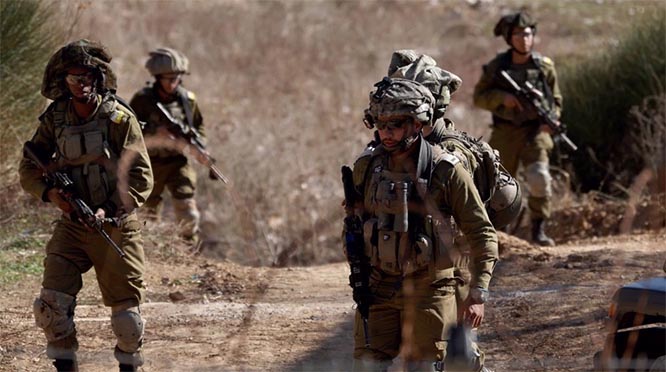
Israeli forces have pushed over the Syrian frontier, erecting a checkpoint and stopping vehicles in the southwestern city of Quneitra, in yet another breach of the Arab country’s sovereignty.

The violation took place on Sunday, when the troops made their way across the border, setting up the outpost near the Ain al-Bayda junction in northern Quneitra, Syrian outlets reported.

According to the al-Ikhbariya paper, an Israeli detachment positioned itself at the junction, halting cars and conducting searches.

The Syrian Arab News Agency (SANA) reported that three Israeli military vehicles then moved further into the northern countryside, deploying between the town of Jubata al-Khashab and the villages of Ofaniya and Ain al-Bayda. The agency added that a separate Israeli unit mounted a new incursion in the central region, approaching the villages of Umm Batina and al-Ajraf.

Residents said such activities have surged in recent months, pointing to Israeli advances onto farmland, leveling of extensive forested areas, arrests, and spread of mobile checkpoints.

The Israeli regime began markedly increasing its military aggression against Syria last year.

The escalation coincided with increasingly ferocious onslaughts throughout the country by the so-called Hay'at Tahrir al-Sham (HTS) Takfiri terrorist group, which the government of President Bashar al-Assad had confined to northwestern Syria. The HTS, however, managed to overthrow the government as the Israeli attacks would pummel the country’s civilian and defensive infrastructure.

Various reports have shown that, during the escalation, the regime conducted more than 1,000 airstrikes on the Syrian territory and over 400 ground raids into the south.

Following the collapse of the Assad government, Tel Aviv also widened its grip over the occupied Golan Heights by taking control of a demilitarized buffer zone, in defiance of a 1974 Disengagement Agreement. Earlier this month, senior Israeli officials, including Prime Minister Benjamin Netanyahu, visited the buffer zone, prompting expressions of alarm on the part of the United Nations.

The United States, the regime’s biggest ally, has, meanwhile, been fraternizing the HTS head Abu Mohammed al-Jolani amid the widely reported prospect of rapprochement with Tel Aviv.

Comments

Add new comment

  • Coastaldigest.com reserves the right to delete or block any comments.
  • Coastaldigset.com is not responsible for its readers’ comments.
  • Comments that are abusive, incendiary or irrelevant are strictly prohibited.
  • Please use a genuine email ID and provide your name to avoid reject.