How political novice Tejashwi Yadav gave veterans a run for their money

News Network
November 11, 2020

yadav.jpg

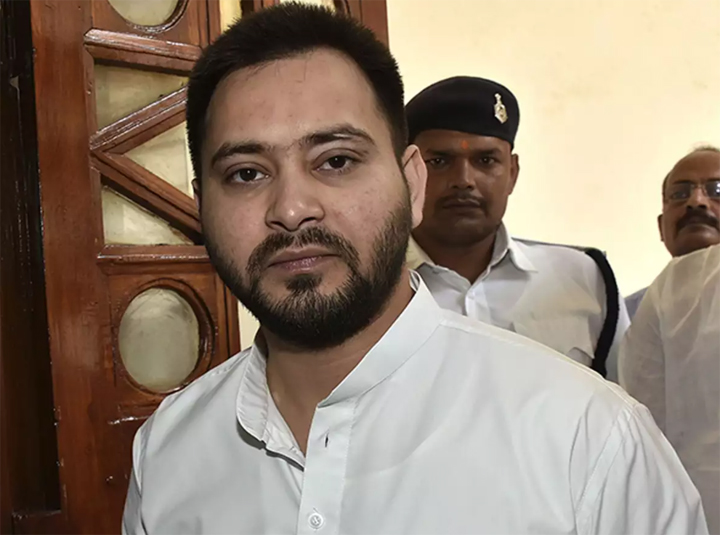
Patna, Nov 11: An avid cricketer whose career never really took off, a political greenhorn who got power on a silver platter but failed to keep it, a scion of Bihar's most powerful family who could not get past the 9th grade.

That was Tejashwi Yadav until the 2020 assembly polls marked the coming of age of a politician who valiantly went down fighting an army of battle-hardened veterans.

He may have failed to learn the textbook lessons at DPS, R K Puram, in the national capital but showed an uncanny knack of reading the mind of voters, like his more famous father, as he led the opposition Grand Alliance to an impressive performance in the polls winning 110 seats in the 243-member assembly.

He also powered the RJD to the status of the single largest party in the House with 75 seats.

Analysts feel Tejashwi's poll promise of sanctioning "10 lakh government jobs at my first cabinet meeting" was a masterstroke which had the young voter swooning in a state reeling from widespread joblessness sparked by Covid-induced lockdown when the return of countless migrants home brought the state's largely agrarian economy under further stress.

The promise was good but not good enough to bring down the NDA government.

As part of a cleverly crafted strategy that endeared him to liberals, he chose to steer clear of contentious issues like the Ram temple, a bait thrown at him by top BJP leaders, and stuck to his core agenda of unemployment and alleged corruption in the Nitish Kumar administration.

For a young man whose ability to lead the party was called into question after the RJD's unprecedented debacle in the Lok Sabha elections when it failed to win even one of the state's 40 seats, it was no mean feat that he succeeded in galvanising an organisational machinery in stupor after the battering.

Doubting his leadership qualities, allies HAM of former chief minister Jitan Ram Manjhi, RLSP of former union minister Upendra Kushwaha and VIP of Mukesh Sahni jumped the ship in search of greener pastures elsewhere.

Humility is a trait which, according to those who saw him at school or later as an aspiring cricketer, defines the younger son of two former chief ministers which was reflected in the manner in which he accommodated the Congress and the Left, seen as a spent force in the state ever since it was swept over by the Mandal wave.

Another hallmark of his personality is the ability to think on his feet. After deciding early on in life that studies were not for him, Yadav chose not to cling to his cricketing aspirations either after the much-needed big break eluded him. Contracted by IPL franchise Delhi Daredevils for some time he remained in the reserve list.

He announced his "retirement" from cricket just a couple of years before entering politics in 2015 at the tender age of 25. The new vocation came as a perfect pitch to bat on as he won from Raghopur in the assembly election comfortably.

Soon Lalu made it clear that Tejashwi was his chosen successor, and he was appointed the Deputy Chief Minister in the Nitish Kumar government.

As fate would have it, Tejashwi's name cropped up in a money laundering case related to alleged illegal land transactions when his father was the railway minister in the UPA-1 government. Tejashwi was in his teens when the alleged scam happened.

The development drew heavy opposition fire and Nitish Kumar snapped his ties with the RJD, before returning to the NDA, giving up his ambition of heading a nationwide coalition for a "Sangh Mukt Bharat" which could pose a challenge to the Narendra Modi juggernaut.

Tejashwi took the sudden loss of power on the chin, transitioning seamlessly into a doughty leader of the opposition.

As Lalu landed in jail following conviction in a number of fodder scam cases, Tejashwi, by now the RJD's chief ministerial candidate, kept the party afloat and also rallied leaders as diverse as Rahul Gandhi, Arvind Kejriwal and the Left bigwigs at a rally in New Delhi against the Muzaffarpur shelter home sex scandal, making his presence felt at the national level.

Towards the end of 2018, he seemed bogged down by problems in the family. Much of his time and energy was spent trying unsuccessfully to prevent mercurial elder brother Tej Pratap's nasty marital dispute from playing out in the open.

After the Lok Sabha poll fiasco, Tejashwi showed signs of torpor, choosing to spend most of his time away from Bihar and even giving a month-long assembly session a miss during an outbreak of brain fever and flash floods in north Bihar, providing the opposition with ample ammunition to attack him.

Leaders of the JD(U)-BJP combine ridiculed him as an "ill-prepared student afraid of facing exams" when he demanded that the assembly elections be deferred in view of the raging Covid-19 pandemic.

However, once the elections were announced, he steeled himself for the fight.

The young leader displayed quiet ruthlessness while marginalising dissenters and guile in keeping his ambitious eldest sister Misa Bharti, a Rajya Sabha MP, away from campaign and Tej Pratap confined to his Hasanpur seat.

As the NDA seemed losing its earlier surefootedness, doddering under the weight of LJP leader Chirag Paswan's rebellion, he seized the moment and launched an indefatigable campaign, addressing more than a dozen rallies a day.

His frequent references to himself as "sher ka beta" (son of a lion) notwithstanding, leaders of the JD(U) and the BJP claimed he was shying away from using the pictures of his parents in his campaign as they were emblematic of the "jungle raj".

Prime Minister Narendra Modi lent weight to the narrative by frequently referring to him as the "Jungle Raj Ke Yuvraj".

He might have failed to lead his alliance to victory, but the assembly polls have heralded the advent of a young leader on Bihar's political firmament who can feel the pulse of youth and has abundant promise.

Comments

Add new comment

  • Coastaldigest.com reserves the right to delete or block any comments.
  • Coastaldigset.com is not responsible for its readers’ comments.
  • Comments that are abusive, incendiary or irrelevant are strictly prohibited.
  • Please use a genuine email ID and provide your name to avoid reject.
News Network
November 28,2025

ministerPM.jpg

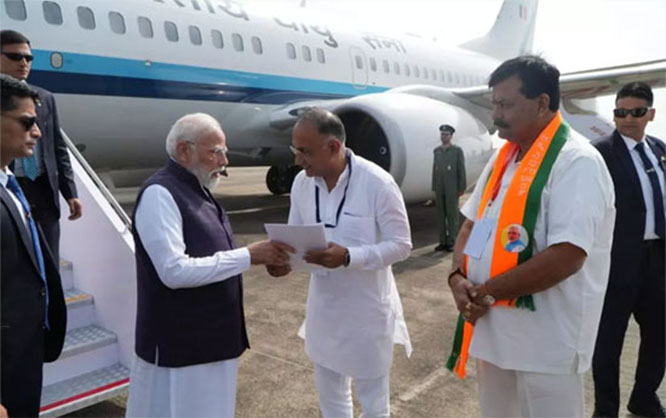
Mangaluru, Nov 28: Karnataka Health Minister and Dakshina Kannada district in-charge minister Dinesh Gundu Rao on Friday handed over Chief Minister Siddaramaiah’s letter to Prime Minister Narendra Modi, highlighting the severe distress faced by farmers due to crashing crop prices.

PM Modi arrived at the Mangaluru International Airport en route to Udupi, where Gundu Rao welcomed him and submitted the letter. The chief minister’s message stressed that farmers are suffering heavy losses because maize and green gram are being bought far below the Minimum Support Price (MSP). The state urged the Centre to immediately begin procurement at MSP.

According to the letter, Karnataka has a bumper harvest this year—over 54.74 lakh metric tons of maize and 1.98 lakh metric tons of green gram—yet farmers are unable to secure fair prices. Against the MSP of ₹2,400/MT for maize and ₹8,768/MT for green gram, market rates have plunged to ₹1,600–₹1,800 and ₹5,400 respectively.

The chief minister has requested the Centre to:

• Direct NAFED, FCI and NCCF to start MSP procurement immediately.
• Ensure ethanol units purchase maize directly from farmers or FPOs.
• Increase Karnataka’s ethanol allocation, citing high production capacity.
• Stop maize imports, which have depressed domestic prices.
• Relax quality norms for green gram, allowing up to 10% discoloration due to rains.

The letter stresses that MSP is crucial for farmer dignity and income stability and calls for swift central intervention to prevent a deepening crisis.

Comments

Add new comment

  • Coastaldigest.com reserves the right to delete or block any comments.
  • Coastaldigset.com is not responsible for its readers’ comments.
  • Comments that are abusive, incendiary or irrelevant are strictly prohibited.
  • Please use a genuine email ID and provide your name to avoid reject.
News Network
December 7,2025

envoy.jpg

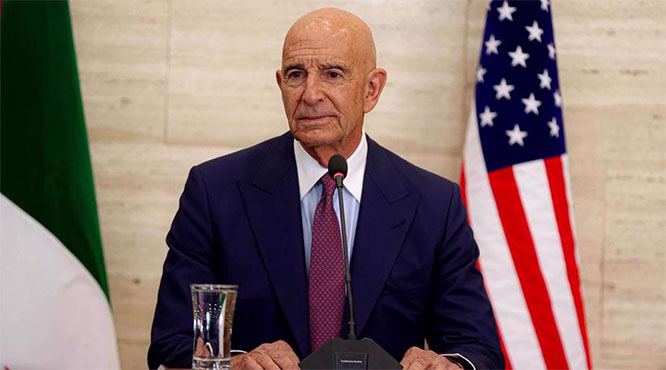
Since 1946, the United States has attempted 93 coups or “regime change” operations across the world — including two in Iran, US Special Envoy for Syria Tom Barrack has admitted.

Speaking to the UAE-based IMI Media Group, in remarks published by The National, Barrack said Washington tried twice to overthrow the Iranian government but failed both times. 

“For (Trump) then to be imputed with regime change — we had two regime changes in Iran already. Neither one worked. So I think wisely leave it to the region to solve,” said Barrack, who also serves as the US ambassador to Turkey.

His comments come six months after the US joined Israel in airstrikes against Iran during ongoing indirect nuclear negotiations between Tehran and Washington.

On June 13, Israel launched an attack on Iran that killed at least 1,064 people and hit civilian infrastructure. Days later, the United States targeted three nuclear facilities — Fordow, Natanz and Isfahan — in what Iran called a clear violation of international law. Iranian retaliation eventually forced a halt to the assault on June 24.

Barrack further claimed that US President Donald Trump and Foreign Secretary Marco Rubio are “not into regime change” and prefer a regional approach driven by Middle Eastern countries themselves. According to him, regional dialogue and non-interference by outside powers offer a more durable path forward.

He added that Washington is still open to an agreement with Tehran if Iranian authorities show “seriousness” and willingness to engage constructively.

However, Iran maintains the US has not shown readiness for meaningful talks. In an interview with Japan’s Kyodo News, Iranian Foreign Minister Abbas Araghchi said negotiations could advance only if Washington acknowledges Iran’s right to peaceful nuclear energy and lifts unilateral sanctions.

Comments

Add new comment

  • Coastaldigest.com reserves the right to delete or block any comments.
  • Coastaldigset.com is not responsible for its readers’ comments.
  • Comments that are abusive, incendiary or irrelevant are strictly prohibited.
  • Please use a genuine email ID and provide your name to avoid reject.
News Network
December 6,2025

pilot.jpg

New Delhi: IndiGo, India’s largest airline, faced major operational turbulence this week after failing to prepare for new pilot-fatigue regulations issued by the Directorate General of Civil Aviation (DGCA). The stricter rules—designed to improve flight safety—took effect in phases through 2024, with the latest implementation on November 1. IndiGo has acknowledged that inadequate roster planning led to widespread cancellations and delays.

Below are the key DGCA rules that affected IndiGo’s operations:

1. Longer Mandatory Weekly Rest

Weekly rest for pilots has been increased from 36 hours to 48 hours.

The government says the extended break is essential to curb cumulative fatigue. This rule remains in force despite the current crisis.

2. Cap on Night Landings

Pilots can now perform only two night landings per week—a steep reduction from the earlier limit of six.

Night hours, defined as midnight to early morning, are considered the least alert period for pilots.

Given the disruptions, this rule has been temporarily relaxed for IndiGo until February 10.

3. Reduced Maximum Night Flight Duty

Flight duty that stretches into the night is now capped at 10 hours.

This measure has also been kept on hold for IndiGo until February 10 to stabilize operations.

4. Weekly Rest Cannot Be Replaced With Personal Leave

Airlines can no longer count a pilot’s personal leave as part of the mandatory 48-hour rest.

Pilots say this closes a loophole that previously reduced actual rest time.

Currently, all airlines are exempt from this rule to normalise travel.

5. Mandatory Fatigue Monitoring

Airlines must submit quarterly fatigue reports along with corrective actions to DGCA.

This system aims to create a transparent fatigue-tracking framework across the industry.

The DGCA has stressed that these rules were crafted to strengthen flight safety and align India with global fatigue-management standards. The temporary relaxations are expected to remain until February 2025, giving IndiGo time to stabilise its schedules and restore normal air travel.

Comments

Add new comment

  • Coastaldigest.com reserves the right to delete or block any comments.
  • Coastaldigset.com is not responsible for its readers’ comments.
  • Comments that are abusive, incendiary or irrelevant are strictly prohibited.
  • Please use a genuine email ID and provide your name to avoid reject.