India, China complete disengagement in Pangong lake; to hold military talks on Feb 20 on further withdrawal

Agencies
February 19, 2021

Image result for India, China complete disengagement in Pangong lake; to hold military talks on Feb 20 on further withdrawal

New Delhi, Feb 19: After completing the withdrawal of troops and weapons from the north and south banks of Pangong lake, India and China will hold a fresh round of high-level military talks on Saturday to take forward the disengagement process in Hot Springs, Gogra and Depsang in eastern Ladakh, official sources said on Friday.

The tenth round of Corps Commander-level talks are scheduled to start at 10 am at the Moldo border point on the Chinese side of the Line of Actual Control, and will be the first engagement between the two sides at a senior level after conclusion of the disengagement process in Pangong lake areas, they said.

Sources said pulling back of troops, weapons and other military hardware as well as dismantling of bunkers, tents and temporary structures in north and south banks of Pangong lake were completed on Thursday and both sides have carried out a verification of the same.

"Both sides will also carry out a comprehensive review of the disengagement process in Pangong lake areas," said a source.

Also on Friday, China for the first time officially acknowledged that four of its e soldiers were killed in the fierce clash with the Indian Army in the Galwan Valley in eastern Ladakh in June last year. India had lost 20 soldiers in the fierce hand-to-hand combat.

Sources indicated that during Saturday's talks, India will insist on a faster disengagement process in remaining areas to bring down tension in the region, which has witnessed a tense standoff between the two militaries for over nine months.

On February 11, Defence Minister Rajnath Singh told Parliament about an agreement between India and China on disengagement in the north and south banks of Pangong lake that mandated both sides to "cease" forward deployment of troops in a "phased, coordinated and verifiable" manner.

Under the agreement, he said China will pull back its troops to east of Finger 8 areas in the northern bank of Pangong lake while the Indian personnel will be based at their permanent base at Dhan Singh Thapa Post near Finger 3 in the region. Similar action would take place on the south bank of the lake, he said.

The sources said troops of both sides have retreated to positions that were agreed to by both sides.

The disengagement process began on February 10.

The Indian delegation at Saturday's talks will be led by Lt Gen PGK Menon, the Commander of the Leh-based 14 Corps while the Chinese side is expected to be headed by Maj Gen Liu Lin, the commander of the South Xinjiang military district of the People's Liberation Army (PLA).

In his statement in Parliament, the defence minister also said that it was agreed to convene the next meeting of senior commanders of both sides within 48 hours of completion of the disengagement in the Pangong lake areas so as to resolve all other remaining issues.

Days later, the defence ministry said other outstanding "problems" including in Depsang, Hot Springs and Gogra will be taken up at the upcoming talks between military commanders of the two countries.

The border standoff between the Indian and Chinese militaries erupted on May 5 following a violent clash in the Pangong lake areas and both sides gradually enhanced their deployment by rushing in tens of thousands of soldiers as well as heavy weaponry even as the two sides continued military and diplomatic talks.

Last year, the Chinese military built several bunkers and other structures in the areas between Finger 4 and 8 and had blocked all Indian patrols beyond Finger 4, triggering strong reaction from the Indian Army.

In the nine rounds of military talks, India had specifically insisted on withdrawal of Chinese troops from Finger 4 to Finger 8 on the north bank of Pangong Lake. The mountain spurs in the area are referred to as Fingers.

On its part, the Chinese side was insisting on withdrawal of Indian troops from several strategic peaks on the southern bank of the lake.

Around five months back, Indian troops occupied a number of strategic heights in the Mukhpari, Rechin La and Magar hill areas around the southern bank after the Chinese PLA attempted to intimidate them in the area.

Both sides had rushed a large number of battle tanks, armoured vehicles and heavy equipment to the treacherous and high-altitude areas of eastern Ladakh region after tension escalated following a deadly clash in the Galwan Valley in June last.

On Tuesday, the Indian Army released short videos and photographs showing thinning down of troops and dismantling of bunkers, camps and other facilities by the Chinese military in the areas around the Pangong lake.

The visuals also showed Chinese military using a bulldozer to flatten some structures, and vehicles with troops and equipment preparing to retreat to rear bases as part of the infantry disengagement.

The photos and videos largely depicted fast-paced disengagement process in both north and south banks of Pangong lake that included withdrawal of troops, removal of machinery and dismantling of temporary structures like bunkers, posts and tents.

Comments

Add new comment

  • Coastaldigest.com reserves the right to delete or block any comments.
  • Coastaldigset.com is not responsible for its readers’ comments.
  • Comments that are abusive, incendiary or irrelevant are strictly prohibited.
  • Please use a genuine email ID and provide your name to avoid reject.
News Network
November 29,2025

DKSsiddu.jpg

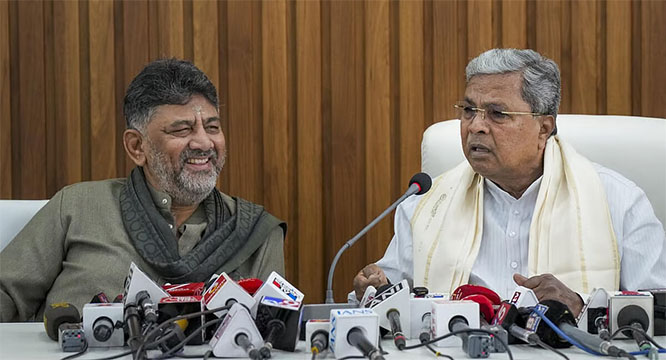
New Delhi: Karnataka chief minister Siddaramaiah and deputy CM DK Shivakumar on Saturday put up a dramatic display of unity at a closely watched joint press briefing, firmly dismissing weeks of speculation about a power-sharing tussle within the Congress. With the high command nudging both leaders to sit together and settle the dust, the meeting became a political spectacle, ending with the duo declaring that there was “no confusion, no differences.”

Calling the reports of a rift “manufactured confusion,” Siddaramaiah said the talks had gone smoothly, even joking about their breakfast. “Breakfast was very good. All three of us enjoyed it,” he said. “We want to end this confusion once and for all. For local elections and for 2028, our mission is clear — Congress must return to power. There is no difference between me and DKS, not now, not before.”

He blamed the media for fuelling rumours and reiterated absolute adherence to the party leadership. “From tomorrow, let there be no confusion. What the high command says, we will follow.”

Siddaramaiah also assured that the Assembly session starting December 8 would run smoothly and vowed that Congress would take on the BJP and JD(S) “together.”

Shivakumar echoed the chief minister word for word, stressing loyalty and discipline. “People have given us a massive mandate. It is our duty to deliver,” he said. “This government was formed under Siddaramaiah’s leadership. We both have complete trust in the high command. If they tell me to wait, I will wait.”

He added that the two leaders had discussed strategy for the 2028 Assembly elections. “Whatever the CM says, I agree. We are loyal soldiers of the party. The party may be facing challenges nationally, but we will keep it strong in Karnataka.”

Shivakumar also said Siddaramaiah would soon visit his home for lunch or dinner — another symbolic gesture meant to underline their unity.

Both leaders later posted on social media describing the breakfast meeting as “productive” and focused on “Karnataka’s priorities.”

The BJP, however, rejected the show of camaraderie as “pure bunkum,” accusing Congress of trying to paper over an internal power struggle. But Siddaramaiah and Shivakumar insisted their united front would continue — and that there was “no confusion” within the state leadership.

Comments

Add new comment

  • Coastaldigest.com reserves the right to delete or block any comments.
  • Coastaldigset.com is not responsible for its readers’ comments.
  • Comments that are abusive, incendiary or irrelevant are strictly prohibited.
  • Please use a genuine email ID and provide your name to avoid reject.
News Network
December 3,2025

indigo.jpg

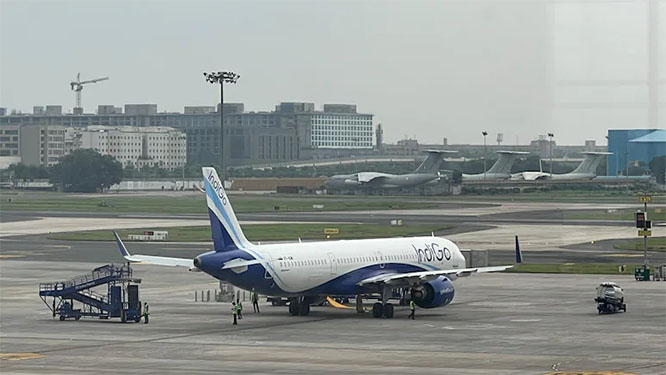
IndiGo, India’s largest airline, is battling one of its worst operational disruptions in recent years, with hundreds of delays and cancellations throwing domestic travel into chaos.

Government data on Tuesday showed its on-time performance plunging to 35%, an unusual dip for a carrier long associated with punctuality.

By Wednesday afternoon, airports in Delhi, Mumbai, Bengaluru and Hyderabad had collectively reported close to 200 cancellations, stranding travellers across the country.

Crew Shortage After New Duty Norms

A major trigger behind the meltdown is a severe crew shortage, especially among pilots, following the rollout of revised Flight Duty Time Limitation (FDTL) norms last month.

The rules mandate longer rest hours and more humane rosters — a shift IndiGo has struggled to incorporate across its vast network.

Sources said several flights were grounded due to lack of cabin crew, while some delays stretched upwards of eight hours.

With IndiGo controlling over 60% of India’s domestic aviation market, the ripple effect has impacted airports nationwide.

IndiGo Issues Apology, Lists “Compounding Factors”

In a statement, IndiGo acknowledged the large-scale disruption:

“We sincerely apologise to customers. A series of unforeseen operational challenges — technology glitches, winter schedule changes, adverse weather, system congestion and updated FDTL norms — created a compounding impact that could not have been anticipated.”

To stabilise operations, the airline has begun calibrated schedule adjustments for the next 48 hours, aiming to restore punctuality. Affected passengers are being offered refunds or alternate travel arrangements, IndiGo said.

What the FDTL Rules Require

The FDTL norms, designed to reduce pilot fatigue, cap duty and flying hours as follows:
•    Maximum 8 hours of flying per day
•    35 hours per week
•    125 hours per month
•    1,000 hours per year

Crew must also receive rest equalling twice the flight duration, with a minimum 10-hour rest period in any 24-hour window.

The DGCA introduced these limits to enhance flight safety.

Hyderabad: 33 Flights Cancelled, Long Queues Reported

Hyderabad’s Rajiv Gandhi International Airport saw heavy early-morning crowds as 33 IndiGo flights (arrivals and departures) were cancelled.

The airport clarified on X that operations were normal, advising passengers to contact IndiGo directly for latest flight status.

Cancellations included flights to and from Visakhapatnam, Goa, Ahmedabad, Delhi, Bengaluru, Chennai, Madurai, Hubli, Bhopal and Bhubaneswar.

Bengaluru: 42 Flights Disrupted

Bengaluru’s Kempegowda International Airport recorded 42 cancellations — 22 arrivals and 20 departures — affecting routes to Delhi, Mumbai, Chennai, Hyderabad, Goa, Kolkata and Lucknow.

Passengers Vent on Social Media

Irate travellers took to X to share their experiences. One passenger stranded in Hyderabad wrote: “I have been here since 3 a.m. and missed an important meeting.”

Another said: “My flight was pushed from 1:55 PM to 2:55 PM and now 4:35 PM. I was informed only three minutes before entering the airport.”

Delhi Airport Hit by Tech Glitch

At Delhi Airport, the disruption deepened due to a slowdown in the Amadeus system — used for reservations, check-ins and departure control.

The technical issue led to longer queues and sluggish processing, adding to delays already worsened by staff shortages.

Comments

Add new comment

  • Coastaldigest.com reserves the right to delete or block any comments.
  • Coastaldigset.com is not responsible for its readers’ comments.
  • Comments that are abusive, incendiary or irrelevant are strictly prohibited.
  • Please use a genuine email ID and provide your name to avoid reject.
News Network
November 24,2025

israelsyra.jpg

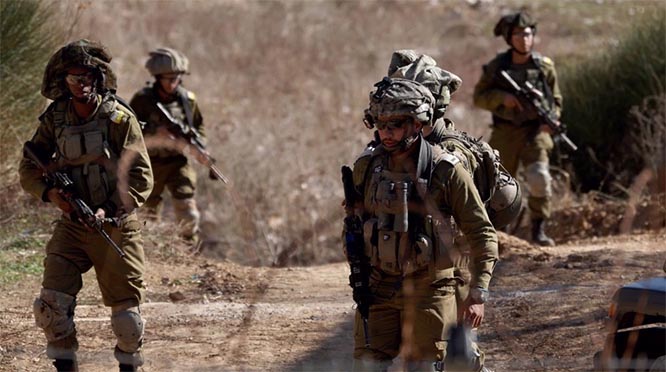
Israeli forces have pushed over the Syrian frontier, erecting a checkpoint and stopping vehicles in the southwestern city of Quneitra, in yet another breach of the Arab country’s sovereignty.

The violation took place on Sunday, when the troops made their way across the border, setting up the outpost near the Ain al-Bayda junction in northern Quneitra, Syrian outlets reported.

According to the al-Ikhbariya paper, an Israeli detachment positioned itself at the junction, halting cars and conducting searches.

The Syrian Arab News Agency (SANA) reported that three Israeli military vehicles then moved further into the northern countryside, deploying between the town of Jubata al-Khashab and the villages of Ofaniya and Ain al-Bayda. The agency added that a separate Israeli unit mounted a new incursion in the central region, approaching the villages of Umm Batina and al-Ajraf.

Residents said such activities have surged in recent months, pointing to Israeli advances onto farmland, leveling of extensive forested areas, arrests, and spread of mobile checkpoints.

The Israeli regime began markedly increasing its military aggression against Syria last year.

The escalation coincided with increasingly ferocious onslaughts throughout the country by the so-called Hay'at Tahrir al-Sham (HTS) Takfiri terrorist group, which the government of President Bashar al-Assad had confined to northwestern Syria. The HTS, however, managed to overthrow the government as the Israeli attacks would pummel the country’s civilian and defensive infrastructure.

Various reports have shown that, during the escalation, the regime conducted more than 1,000 airstrikes on the Syrian territory and over 400 ground raids into the south.

Following the collapse of the Assad government, Tel Aviv also widened its grip over the occupied Golan Heights by taking control of a demilitarized buffer zone, in defiance of a 1974 Disengagement Agreement. Earlier this month, senior Israeli officials, including Prime Minister Benjamin Netanyahu, visited the buffer zone, prompting expressions of alarm on the part of the United Nations.

The United States, the regime’s biggest ally, has, meanwhile, been fraternizing the HTS head Abu Mohammed al-Jolani amid the widely reported prospect of rapprochement with Tel Aviv.

Comments

Add new comment

  • Coastaldigest.com reserves the right to delete or block any comments.
  • Coastaldigset.com is not responsible for its readers’ comments.
  • Comments that are abusive, incendiary or irrelevant are strictly prohibited.
  • Please use a genuine email ID and provide your name to avoid reject.