



India might see 'serious livelihood crisis': Economist Jean Dreze

Agencies
May 11, 2021

crisis.jpg

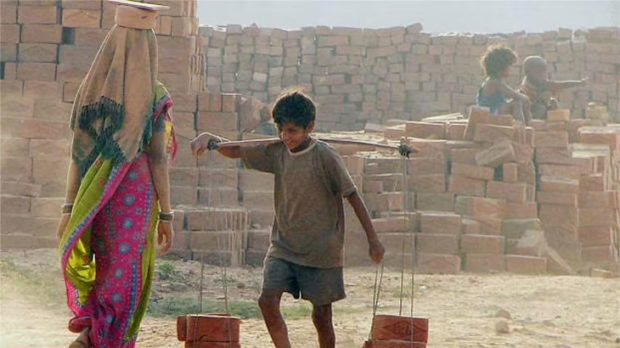
India might be heading towards a "serious livelihood crisis" as the situation seems to be worse this time for the working class amid the Covid crisis and local restrictions by states already add up to something close to a nationwide lockdown, according to noted economist Jean Dreze.

In an interview, he also said the Narendra Modi government's target to make India a USD 5 trillion economy by 2024-25 was never a "feasible target" and was just to pander to the "super-power ambitions" of the Indian elite.

About the impact of the second wave of Covid on the Indian economy, the eminent economist said the situation today is not very different from what it was around this time last year as far as working people are concerned.

"The economic consequences of local lockdowns may not be as destructive as those of a national lockdown. But in some respects, things are worse this time for the working class," he opined.

Further, the eminent economist said the fear of infection is more widespread and that will make it hard to revive economic activity.

"Despite mass vaccination, there is a serious possibility that intermittent crises will continue for a long time, perhaps years.

"Compared with last year, many people have depleted savings and larger debts. Those who borrowed their way through last year's crisis may not be able to do it again this time," he observed.

Dreze also pointed out that last year there was a relief package and today relief measures are not even being discussed.

"On top of all this, local lockdowns may give way to a national lockdown relatively soon. In fact, they already add up to something close to a country-wide lockdown.

"In short, we are heading towards a serious livelihood crisis," he said.

On how the government could have missed seeing the second Covid-19 wave coming, Dreze said the Indian government has been in denial all along.

"Remember, the government refused to admit about any 'community transmission' of Covid for a long time, even as recorded cases were counted in millions.

"When an early analysis of official data exposed the collapse of health services, the government retracted the data," he said.

He pointed out that misleading statistics have been routinely invoked to reassure the public that all is well. "Denying a crisis is the surest way to make it worse. We are now paying the price of this complacency".

India has been reporting more than three lakh new Covid cases daily in recent weeks and the death toll due to the infection is also rising.

Noting that India is also paying the price of a long history of neglect of the health sector, especially public health, Dreze said nothing is more important than health for the quality of life, yet public expenditure on health in India has hovered around a measly 1 per cent of GDP for decades.
When asked about the sort of relief measures that could be put in place to deal with possible livelihood crisis, he said as a starter, the central government could replay the 2020 relief package.

"But it is important to go beyond that, and to consolidate the social security system on a durable basis," the eminent economist said, adding that ad-hoc, short-term relief measures tend to breed confusion, corruption and waste.

Dreze, who was also part of the National Advisory Council (NAC) that had advised the previous UPA government, said much can be done within the framework of existing social security schemes and laws such as the public distribution system, the National Rural Employment Guarantee Act (NREGA), the National Social Assistance Programme, and the Integrated Child Development Services.

He also noted it would be easy to provide supplementary food rations to all ration-card holders for much longer than the proposed two months, and also to expand the coverage of the public distribution system.

"Going beyond existing schemes, I think that a well-designed, inclusive cash-transfer programme would be useful," Dreze opined.

According to him, if intermittent crises are going to continue for years, which is very possible, it would really help to have a well-functioning system of cash relief that can be activated whenever the need arises.

"Turning India into a USD 5 trillion economy by 2024-25 was never a feasible target, and it is a useless target in any case. The function of this target is to pander to the super-power ambitions of the Indian elite," the Belgian-born Indian economist said. In 2019, Prime Minister Narendra Modi envisioned to make India a USD 5 trillion economy and global power house by 2024-25.

According to Dreze, even if we accept GDP as a valid development indicator, the standard approach is to look at GDP at its per capita terms.

"But then India looks like one of the poorer countries in the world, which it is. Looking at aggregate GDP, which is naturally quite large because of India's large population, creates an illusion of prosperity and power," he argued.

Dreze pointed out that actually it is not entirely an illusion because if the government's interest is in power on the world stage rather than in the living conditions of the people, then, yes, aggregate GDP would matter.

"For instance, it would enable you maintain a large army. But this has nothing to do with development," he observed. 

Comments

Add new comment

  • Coastaldigest.com reserves the right to delete or block any comments.
  • Coastaldigset.com is not responsible for its readers’ comments.
  • Comments that are abusive, incendiary or irrelevant are strictly prohibited.
  • Please use a genuine email ID and provide your name to avoid reject.
News Network
December 6,2025

pilot.jpg

New Delhi: IndiGo, India’s largest airline, faced major operational turbulence this week after failing to prepare for new pilot-fatigue regulations issued by the Directorate General of Civil Aviation (DGCA). The stricter rules—designed to improve flight safety—took effect in phases through 2024, with the latest implementation on November 1. IndiGo has acknowledged that inadequate roster planning led to widespread cancellations and delays.

Below are the key DGCA rules that affected IndiGo’s operations:

1. Longer Mandatory Weekly Rest

Weekly rest for pilots has been increased from 36 hours to 48 hours.

The government says the extended break is essential to curb cumulative fatigue. This rule remains in force despite the current crisis.

2. Cap on Night Landings

Pilots can now perform only two night landings per week—a steep reduction from the earlier limit of six.

Night hours, defined as midnight to early morning, are considered the least alert period for pilots.

Given the disruptions, this rule has been temporarily relaxed for IndiGo until February 10.

3. Reduced Maximum Night Flight Duty

Flight duty that stretches into the night is now capped at 10 hours.

This measure has also been kept on hold for IndiGo until February 10 to stabilize operations.

4. Weekly Rest Cannot Be Replaced With Personal Leave

Airlines can no longer count a pilot’s personal leave as part of the mandatory 48-hour rest.

Pilots say this closes a loophole that previously reduced actual rest time.

Currently, all airlines are exempt from this rule to normalise travel.

5. Mandatory Fatigue Monitoring

Airlines must submit quarterly fatigue reports along with corrective actions to DGCA.

This system aims to create a transparent fatigue-tracking framework across the industry.

The DGCA has stressed that these rules were crafted to strengthen flight safety and align India with global fatigue-management standards. The temporary relaxations are expected to remain until February 2025, giving IndiGo time to stabilise its schedules and restore normal air travel.

Comments

Add new comment

  • Coastaldigest.com reserves the right to delete or block any comments.
  • Coastaldigset.com is not responsible for its readers’ comments.
  • Comments that are abusive, incendiary or irrelevant are strictly prohibited.
  • Please use a genuine email ID and provide your name to avoid reject.
News Network
December 4,2025

indigoflight.jpg

Domestic carrier IndiGo has cancelled over 180 flights from three major airports — Mumbai, Delhi and Bengaluru — on Thursday, December 4, as the airline struggles to secure the required crew to operate its flights in the wake of new flight-duty and rest-period norms for pilots.

While the number of cancellations at Mumbai airport stands at 86 (41 arrivals and 45 departures) for the day, at Bengaluru, 73 flights have been cancelled, including 41 arrivals, according to a PTI report that quoted sources.

"IndiGo cancelled over 180 flights on Thursday at three airports-Mumbai, Delhi and Bengaluru," the source told the news agency.

Besides, it had cancelled as many as 33 flights at Delhi airport for Thursday, the source said, adding, "The number of cancellations is expected to be higher by the end of the day."

The Gurugram-based airline's On-Time Performance (OTP) nosedived to 19.7 per cent at six key airports — Delhi, Mumbai, Chennai, Kolkata, Bengaluru and Hyderabad — on December 3, as it struggled to get the required crew to operate its services, down from almost half of December 2, when it was 35 per cent.

"IndiGo has been facing acute crew shortage since the implementation of the second phase of the FDTL (Flight Duty Time Limitations) norms, leading to cancellations and huge delays in its operations across the airports," a source had told PTI on Wednesday.

Chaos continued at several major airports for the third day on Thursday because of the cancellations.

A spokesperson for the Kempegowda International Airport (KIA) in Bengaluru said that 73 IndiGo flights had been cancelled on Thursday.

At least 150 flights were cancelled and dozens of others delayed on Wednesday, airport sources said, leaving thousands of travellers stranded, according to news agency Reuters.

The Directorate General of Civil Aviation (DGCA) has said it is investigating IndiGo flight disruptions and has asked the airline to submit the reasons for the current situation, as well as its plans to reduce flight cancellations and delays.

It may be mentioned here that the pilots' body, Federation of Indian Pilots (FIP), has alleged that IndiGo, despite getting a two-year preparatory window before the full implementation of new flight duty and rest period norms for cockpit crew, "inexplicably" adopted a "hiring freeze".

The FIP said it has urged the safety regulator, the DGCA, not to approve airlines' seasonal flight schedules unless they have adequate staff to operate their services "safely and reliably" in accordance with the New Flight Duty Time Limitations (FDTL) norms.

In a letter to the DGCA late on Wednesday, the FIP urged the DGCA to consider re-evaluating and reallocating slots to other airlines, which have the capacity to operate them without disruption during the peak holiday and fog season if IndiGo continues to "fail in delivering on its commitments to passengers due to its own avoidable staffing shortages."

Comments

Add new comment

  • Coastaldigest.com reserves the right to delete or block any comments.
  • Coastaldigset.com is not responsible for its readers’ comments.
  • Comments that are abusive, incendiary or irrelevant are strictly prohibited.
  • Please use a genuine email ID and provide your name to avoid reject.
News Network
November 30,2025

The United Nations Committee against Torture (CAT) has condemned the Israeli regime for enforcing a policy of “organized torture” against Palestinians.

In a report published on Friday, CAT stated that the occupying regime enforces a deliberate policy of “organized and widespread torture and ill-treatment” against Palestinian abductees, particularly since October 7, 2023, when Israel launched its genocidal war on Gaza.

The committee expressed “deep concern over repeated severe beatings, dog attacks, electrocution, water-boarding, use of prolonged stress positions [and] sexual violence” inflicted on Palestinians.

Palestinian prisoners were degraded by “being made to act like animals or being urinated on,” systematically denied medical care, and subjected to excessive restraints, “in some cases resulting in amputation,” the report added.

CAT also condemned the routine application of “unlawful combatants law” to justify the prolonged detention without trial of thousands of Palestinian men, women, and children.

More than 10,000 Palestinians, including women and children, are currently held in Israeli prisons, according to Palestinian and international human rights groups, with 3,474 Palestinians in “administrative detention,” meaning they are imprisoned without trial for indefinite periods.

The report highlighted the “high proportion of children who are currently detained without charge or on remand,” noting that while Israel sets the age of criminal responsibility at 12, even younger children have been abducted.

Children designated as security prisoners face severe restrictions on family contact, may be subjected to solitary confinement, and are denied access to education, in clear violation of international law.

The committee further suggested that Israel’s policies across the Occupied Territories constitute collective torture against the Palestinian population.

“A range of policies adopted by Israel in the course of its continued unlawful presence in the Occupied Palestinian Territory amounts to cruel, inhuman or degrading living conditions for the Palestinian population,” the report said.

On Thursday, the Palestinian resistance movement Hamas condemned the systematic killing and torture of Palestinian abductees in Israeli prisons, urging international action to halt these abuses.

Citing human rights data, Hamas stated that 94 Palestinians have been killed in Israeli prisons since the start of Tel Aviv’s genocidal war on Gaza.

“This reflects an organized criminal approach that has turned these prisons into direct killing grounds to eliminate our people,” the resistance movement said.

Hamas called on the international community, the UN, and human rights organizations to immediately pressure Israel to end crimes against prisoners and uphold their rights as guaranteed by all international conventions and norms.

Comments

Add new comment

  • Coastaldigest.com reserves the right to delete or block any comments.
  • Coastaldigset.com is not responsible for its readers’ comments.
  • Comments that are abusive, incendiary or irrelevant are strictly prohibited.
  • Please use a genuine email ID and provide your name to avoid reject.
