India’s GDP expected to contract by 9.6% this fiscal: World Bank

News Network
October 8, 2020

gdp.JPG

The World Bank on Thursday said that India’s GDP is expected to contract by 9.6 per cent this fiscal which is reflective of the national lockdown and the income shock experienced by households and firms due to the Covid-19 pandemic, noting that the country's economic situation is “much worse” than ever seen before.

The Washington-based global lender, in its latest South Asia Economic Focus report ahead of the annual meeting of the World bank and International Monetary Fund, forecasts a sharper than expected economic slump across the region, with regional growth expected to contract by 7.7 per cent in 2020, after topping six per cent annually in the past five years.

“India’s GDP is expected to contract by 9.6 per cent in the fiscal year that started in March,” the World Bank said in the report released here.

Regional growth is projected to rebound to 4.5 per cent in 2021, it said.

Factoring in population growth, however, income-per-capita in the region will remain 6 per cent below 2019 estimates, indicating that the expected rebound will not offset the lasting economic damage caused by the pandemic, it said.

“The situation is much worse in India than we have ever seen before,” Hans Timmer, World Bank Chief Economist for South Asia told reporters during a conference call.

“It is an exceptional situation in India. A very dire outlook,” he said.

There was a 25 per cent decline in GDP in the second quarter of the year, which is the first quarter of the current fiscal year in India.

In the report, the World bank said that the spread of the coronavirus and containment measures have severely disrupted supply and demand conditions in India.

With the intent to contain the spread of COVID-19, Prime Minister Narendra Modi, with effect from March 25, announced a nationwide complete lockdown that brought as much as 70 per cent of economic activity, investment, exports and discretionary consumption to a standstill. Only essential goods and services such as agriculture, mining, utility services, some financial and IT services and public services were allowed to operate.

Dubbed as the world's biggest lockdown, it shut a majority of the factories and businesses, suspended flights, stopped trains and restricted movement of vehicles and people.

According to the World Bank, monetary policy has been deployed aggressively and fiscal resources have been channeled to public health and social protection, but additional counter-cyclical measures will be needed, within a revised medium-term fiscal framework.

Despite measures to shield vulnerable households and firms, the trajectory of poverty reduction has slowed, if not reversed, it said.

“We have seen from the rapid survey that many people have lost their jobs,” Timmer said, adding that this is happening against a background when India's economy was already slowing down before the pandemic.

“We had seen a rise in non-performing loans. Those are all vulnerabilities that India has to deal with,” he said.

Responding to a question, Timmer said what the Indian government has done with limited resources and limited fiscal space is very impressive.

“We have seen a loosening of monetary policy. You have seen attempts to increase credit to the private sector to help a company survive,” he said, adding that there have been big efforts in the health sector and expansion of a social safety net.

“But with every big crisis, I think, we have to realise that this will not go over anytime soon. And it will actually change the longer-term future also. What this reveals is really as good as federal policies, especially the policies related to the informal sector.

“There's a big problem that the informal sector has no coverage in social insurance. What we see now is that especially the informal workers in the middle of the income distribution have lost their jobs. There are no systems in place to support those people,” Timmer said.

Responding to another question, Timmer said that as a result of Covid-19, the World Bank estimates that in one year, the number of people living below the poverty line has increased by 33 per cent.

In its report, the World Bank said that the response of the government of India to the COVID-19 outbreak was swift and comprehensive. A strict lockdown was implemented to contain the health emergency.

To mitigate its impact on the poorest, it was complemented by social protection measures; to ensure that businesses could maintain their operations, the Reserve Bank of India and the government also provided liquidity and other regulatory support, it said.

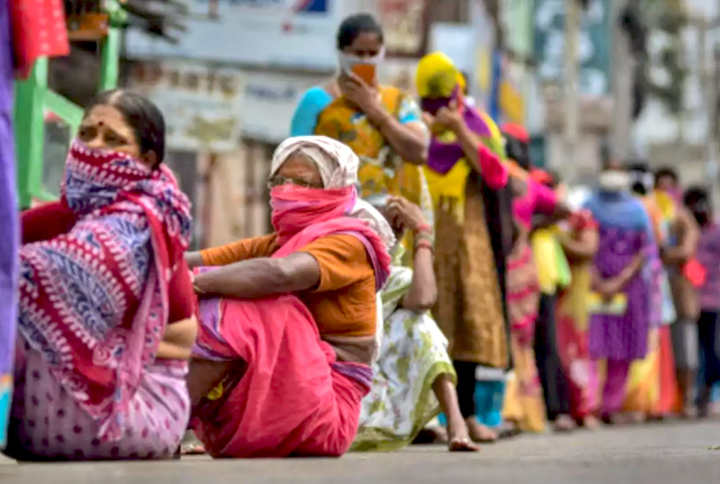
“Nonetheless, there was a massive contraction in output and poor and vulnerable households experienced significant social hardships – specifically urban migrants and workers in the informal economy,” the bank said.

After fiscal 2017, during which the economy grew at 8.3 per cent, growth decelerated in each subsequent year to 7.0, 6.1 and 4.2 per cent.

This was on account of two mutually reinforcing dynamics: emerging weaknesses in non-bank financial companies (a major source of credit growth, making up for risk aversion from banks) and slowing private consumption growth, the bank added.

Comments

Add new comment

  • Coastaldigest.com reserves the right to delete or block any comments.
  • Coastaldigset.com is not responsible for its readers’ comments.
  • Comments that are abusive, incendiary or irrelevant are strictly prohibited.
  • Please use a genuine email ID and provide your name to avoid reject.
News Network
November 26,2025

Mangaluru, Nov 26: Mangaluru East police have registered a case following a sophisticated online fraud where a 57-year-old local resident was allegedly cheated out of ₹13.4 lakh after being targeted on Facebook.

The scam began in February when the complainant, while browsing Facebook reels, was contacted by a woman identifying herself as "Lillian Mary George" from London. After establishing a chat relationship, the woman claimed she would visit India in November and bring a significant sum of money.

The trap was sprung on November 15, when the victim received a call from a woman named "Sonali Gupta," who claimed Lillian had arrived at Mumbai International Airport but was detained by customs. The fraudsters convinced the man that Lillian was carrying £25,000 (about ₹26 lakh) in traveller’s cheques and 1 kg of gold (valued at around ₹30 lakh).

Under the pretense of clearing these items, the victim was asked to make numerous online transfers between November 15 and 18 for various bogus charges, including:

•    "Pounds exchange registration"
•    "Customs declaration issues"
•    "Discount charges"
•    "Money-laundering charges"

Believing the fictitious story, the complainant transferred the cumulative sum of ₹13.4 lakh to various bank accounts provided by the fraudsters. He realised he was cheated when the culprits later promised a refund within two days but stopped answering his calls. The Mangaluru East police are now investigating the case, which highlights the continuing threat of transnational cyber fraud using social engineering and promises of fictitious wealth.

Comments

Add new comment

  • Coastaldigest.com reserves the right to delete or block any comments.
  • Coastaldigset.com is not responsible for its readers’ comments.
  • Comments that are abusive, incendiary or irrelevant are strictly prohibited.
  • Please use a genuine email ID and provide your name to avoid reject.
News Network
December 7,2025

envoy.jpg

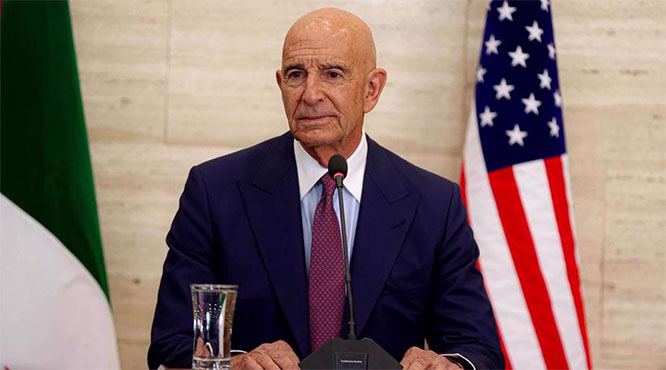
Since 1946, the United States has attempted 93 coups or “regime change” operations across the world — including two in Iran, US Special Envoy for Syria Tom Barrack has admitted.

Speaking to the UAE-based IMI Media Group, in remarks published by The National, Barrack said Washington tried twice to overthrow the Iranian government but failed both times. 

“For (Trump) then to be imputed with regime change — we had two regime changes in Iran already. Neither one worked. So I think wisely leave it to the region to solve,” said Barrack, who also serves as the US ambassador to Turkey.

His comments come six months after the US joined Israel in airstrikes against Iran during ongoing indirect nuclear negotiations between Tehran and Washington.

On June 13, Israel launched an attack on Iran that killed at least 1,064 people and hit civilian infrastructure. Days later, the United States targeted three nuclear facilities — Fordow, Natanz and Isfahan — in what Iran called a clear violation of international law. Iranian retaliation eventually forced a halt to the assault on June 24.

Barrack further claimed that US President Donald Trump and Foreign Secretary Marco Rubio are “not into regime change” and prefer a regional approach driven by Middle Eastern countries themselves. According to him, regional dialogue and non-interference by outside powers offer a more durable path forward.

He added that Washington is still open to an agreement with Tehran if Iranian authorities show “seriousness” and willingness to engage constructively.

However, Iran maintains the US has not shown readiness for meaningful talks. In an interview with Japan’s Kyodo News, Iranian Foreign Minister Abbas Araghchi said negotiations could advance only if Washington acknowledges Iran’s right to peaceful nuclear energy and lifts unilateral sanctions.

Comments

Add new comment

  • Coastaldigest.com reserves the right to delete or block any comments.
  • Coastaldigset.com is not responsible for its readers’ comments.
  • Comments that are abusive, incendiary or irrelevant are strictly prohibited.
  • Please use a genuine email ID and provide your name to avoid reject.
News Network
November 28,2025

ministerPM.jpg

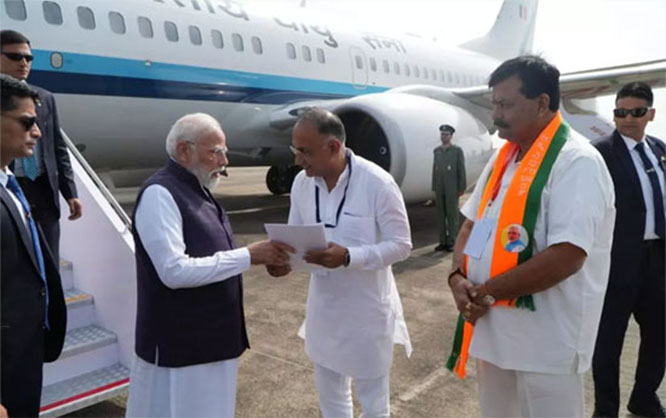
Mangaluru, Nov 28: Karnataka Health Minister and Dakshina Kannada district in-charge minister Dinesh Gundu Rao on Friday handed over Chief Minister Siddaramaiah’s letter to Prime Minister Narendra Modi, highlighting the severe distress faced by farmers due to crashing crop prices.

PM Modi arrived at the Mangaluru International Airport en route to Udupi, where Gundu Rao welcomed him and submitted the letter. The chief minister’s message stressed that farmers are suffering heavy losses because maize and green gram are being bought far below the Minimum Support Price (MSP). The state urged the Centre to immediately begin procurement at MSP.

According to the letter, Karnataka has a bumper harvest this year—over 54.74 lakh metric tons of maize and 1.98 lakh metric tons of green gram—yet farmers are unable to secure fair prices. Against the MSP of ₹2,400/MT for maize and ₹8,768/MT for green gram, market rates have plunged to ₹1,600–₹1,800 and ₹5,400 respectively.

The chief minister has requested the Centre to:

• Direct NAFED, FCI and NCCF to start MSP procurement immediately.
• Ensure ethanol units purchase maize directly from farmers or FPOs.
• Increase Karnataka’s ethanol allocation, citing high production capacity.
• Stop maize imports, which have depressed domestic prices.
• Relax quality norms for green gram, allowing up to 10% discoloration due to rains.

The letter stresses that MSP is crucial for farmer dignity and income stability and calls for swift central intervention to prevent a deepening crisis.

Comments

Add new comment

  • Coastaldigest.com reserves the right to delete or block any comments.
  • Coastaldigset.com is not responsible for its readers’ comments.
  • Comments that are abusive, incendiary or irrelevant are strictly prohibited.
  • Please use a genuine email ID and provide your name to avoid reject.