President reaches out to small and marginal farmers

Agencies
January 29, 2021

president.jpg

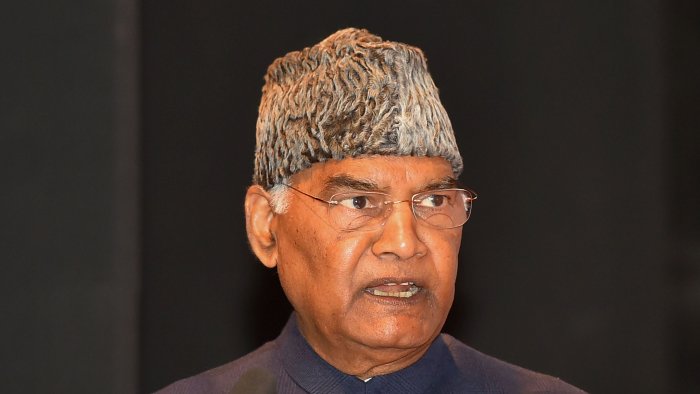
With farmers' agitation showing signs firming up further despite the police crackdown after the violence during the Republic Day tractor rally by farmer unions, the Government on Friday reached out to numerically dominating small and marginal farmers through President Ram Nath Kovind's address to the joint sitting of Budget Session beginning Friday.

Kovind assured farmers that the new farm laws have added new rights and facilities to them instead of taking away any of the rights existing previously.

The President flagged his strong disapproval of the act of a group of farmers storming the Red Fort and hoisting a religious flag there as well as the violence in the streets on Republic Day during the farmer protest.

"The insult of the tricolour and the pious Republic Day a few days ago is very unfortunate. The Constitution gives us the right to freedom of expression and also teaches us that law and rules should also be followed with the same earnestness," he said.

At the same time, Kovind also chose to flag that the government will go by the decision of the Supreme Court, which has put on hold the implementation of three farm laws.

"According full respect to the decision of the Supreme Court, my government will implement that," he said even as sought to make it clear that there has been no deduction in the rights and facilities that were available before the passage of these three farm laws. Rather the government has provided new rights along with providing new facilities to the farmers through these farm reforms," Kovind said.

Addressing the joint sitting, which was boycotted by nearly 20 Opposition parties, Kovind said that over 10 crore small farmers immediately started getting benefits of the three farm reform laws and recalled that many political parties had, from time to time, have given full support to these reforms taking into account the benefits accruing to small farmers. 

Stressing that Parliament passed these three laws after comprehensive deliberations, Kovind said these small and marginal farmers are in the priority list of the government.

He said in order to support such farmers in meeting their small expenses, the government has directly transferred around Rs 1,13,000 crores in their accounts under the PM-Kisan Samman Nidhi scheme.

The focus on the government's initiatives for small and marginal farmers. which constitute 82 percent of total number of farmers, in the President's speech during the Budget session — through which the government of the day lays out its vision and priority — is significant.

This is especially so as it comes at the backdrop of Opposition's attempt to paint the government anti-farmer and lend its full support to the farmers' stir, who have gathered on the outskirts of the national capital to protest against the farm laws.

"It is the demand of the time to pay special attention to small and marginal farmers in our agriculture sector, who have only one or two hectares of land. Of all the farmers in the country, more than 80 percent are these small farmers and they are more than 10 crore," Kovind said.

One of the criticisms of the ongoing farm agitation was that it was mainly led by relatively well-off farmers from Punjab, Haryana and Western UP, at least when it started two months back. The gathering later swelled with farmers from other states and other sections also joining it.

The President's address highlighting the achievements of "my government" talked at length about the measures taken by the Centre in the last six years since Prime Minister Narendra Modi-led BJP government was formed first in mid 2014.

"In the last six years the government has tried to bring positive change in all sectors from seed to marketing (beej se bazaar tak). My government has also taken the decision to implement the recommendations of M S Swaminathan Commission and provide farmers Minimum Support Price (MSP) of one and half times the production cost of foodgrains."

The President also flagged the rise in production of vegetables and foodgrain and the rise in the area of micro irrigation from 42 lakh hectare to 56 lakh hectare land in this period.

He said the Kisan Rail facility started by the government is writing a new chapter in providing markets to farmers as more than 38 thousand tonnes of foodgrain, fruit and vegetables have been transported by farmers from one region to another through more than 100 Kisan trains run so far.

"My government is giving special attention to modernising agriculture infrastructure to make agriculture more lucrative and for this an Agriculture Infrastructure Fund of  Rs 1,00,000 crore has been started. In order to create the foundational structure in the dairy sector and promote investment ther, the government has also set up a Dairy Infrastructure Development Fund (DIDF) worth 15,000 crore," the President said.

He also listed other measures like distribution of 20 lakh solar pumps under Pradhanmantri Kusum Yojan and the five-time rise in Ethanol production in last years as examples of the government's commitment to promote the agriculture sector and support farmers.


Comments

Add new comment

  • Coastaldigest.com reserves the right to delete or block any comments.
  • Coastaldigset.com is not responsible for its readers’ comments.
  • Comments that are abusive, incendiary or irrelevant are strictly prohibited.
  • Please use a genuine email ID and provide your name to avoid reject.
News Network
November 30,2025

girlnomore.jpg

Mangaluru, Nov 30: A 22-year-old college student succumbed to her injuries at a private hospital in Mangaluru today, days after she was hit by a goods tempo while crossing a road in Padubidri.

The deceased has been identified as Preksha, a resident of Nadsalu Billitota in Padubidri. The fatal incident occurred as Preksha, who was returning home after completing her examination, attempted to cross the service road towards Mangaluru. She was struck by a goods tempo approaching from the Udupi side, causing her to fall and sustain a severe head injury.

Prompt action from local residents ensured she received immediate first aid before being rushed to a hospital in Mangaluru for specialised treatment. Despite medical efforts, she passed away while undergoing care.

Preksha was a student at Karavali College, Vamanjoor on the outskirts of Mangaluru city. The tragedy is compounded by the fact that she belonged to a financially vulnerable family, having previously lost her father. She is survived by her mother and brother.

A case related to the accident has been registered at the Padubidri police station, and an investigation is underway to determine the exact circumstances that led to the collision. The incident highlights the growing concerns over road safety, particularly on busy service roads, and serves as a tragic reminder of the human cost of traffic accidents.

Comments

Add new comment

  • Coastaldigest.com reserves the right to delete or block any comments.
  • Coastaldigset.com is not responsible for its readers’ comments.
  • Comments that are abusive, incendiary or irrelevant are strictly prohibited.
  • Please use a genuine email ID and provide your name to avoid reject.
News Network
December 4,2025

indigocrisis.jpg

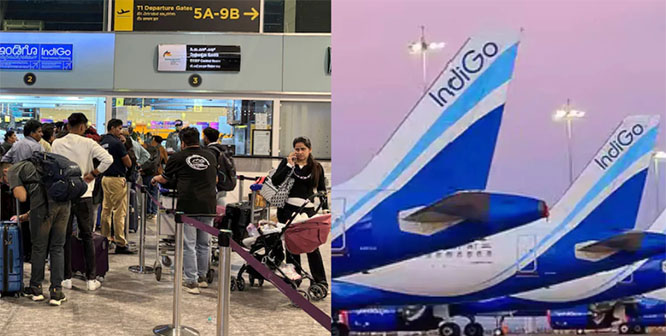
Angry outbursts, long queues, and desperate appeals filled airports across India today as IndiGo grappled with a severe operational breakdown. Hundreds of flights have been cancelled or delayed, leaving thousands of passengers stranded through the night and forcing many to spend long hours at helpdesks.

Social media was flooded with videos of fliers pleading for assistance, accusing the airline of misleading updates, and demanding accommodation after being stuck for 10 to 12 hours at airports such as Hyderabad and Bengaluru.

What Triggered the Meltdown?

IndiGo has attributed the widespread disruption to “a multitude of unforeseen operational challenges.” These include:

•    Minor technology glitches
•    Winter-season schedule adjustments
•    Bad weather
•    Congestion in the aviation network
•    New crew rostering rules (Flight Duty Time Limitations or FDTL)

Among these, the most disruptive has been the implementation of the updated FDTL norms introduced by the Directorate General of Civil Aviation (DGCA) in January 2024.

These rules were designed to reduce pilot fatigue and improve passenger safety. Key changes include:

•    Longer weekly rest periods for flight crew
•    A revised definition of “night,” extending it by an extra hour
•    Tighter caps on flight duty timing and night landings
•    Cutting night shifts for pilots and crew from six per roster cycle to just two

Once these norms became fully enforceable, airlines were required to overhaul rosters well in advance. For IndiGo, this triggered a sudden shortage of crew available for duty, leading to cascading delays and cancellations.

Why IndiGo Was Hit the Hardest

IndiGo is India’s largest airline by a wide margin, operating over 2,200 flights daily. That’s roughly double the number operated by Air India.

When an airline of this size experiences even a 10–20% disruption, it translates to 200–400 flights being delayed or grounded — producing massive spillover effects across the country.

IndiGo also relies heavily on high-frequency overnight operations, a model typical of low-cost carriers that aim to maximise aircraft utilisation and reduce downtime. The stricter FDTL norms clash with these overnight-heavy schedules, forcing the airline to pull back services.

Aviation bodies have also criticised IndiGo’s preparedness. The Airline Pilots' Association of India (ALPA) said airlines were given a two-year window to plan for the new rules but “started preparing rather late.” IndiGo, it said, failed to rebuild crew rosters 15 days in advance as required.

The Federation of Indian Pilots (FIP) went further, calling the crisis the result of IndiGo’s “prolonged and unorthodox lean manpower strategy,” and alleging that the airline adopted a hiring freeze even as it knew the new rules would require more careful staffing.

How Many Flights Are Affected?

In the past 48 hours, over 300 flights have been cancelled. At least 100 more are expected to be cancelled today.

City-wise impact:

•    Hyderabad: 33 expected cancellations; several fliers stranded overnight
•    Bengaluru: over 70 expected cancellations
•    Delhi, Mumbai, Chennai, Kolkata: widespread delays and missed connections

Passengers shared distressing accounts online.

One customer at Hyderabad airport said they waited from 6 PM to 9 AM with “no action taken” regarding their delayed Pune flight. Another said IndiGo repeatedly told them the crew was “arriving soon,” only for the delay to stretch over 12 hours.

IndiGo has apologised for the disruption and promised that operations will stabilise within 48 hours, adding that “calibrated adjustments” are being made to contain the chaos.

What Should Passengers Do Now?

For those flying in the next few days, especially with IndiGo, here are key precautions:

1. Keep Checking Flight Status
Monitor your flight closely before leaving for the airport, as delays may be announced last-minute.

2. Arrive Early
Expect long queues at counters and security due to crowding and rescheduling.

3. Carry Essentials
Pack snacks, water, basic medicines, chargers, and items for children or senior citizens. Extended waiting times should be anticipated.

4. Use Flexible Booking Options
If you booked tickets with a free-date-change or cancellation option, consider using them.
If you haven’t booked yet, prefer refundable or flexible fares, or even consider alternate airlines.

5. Follow IndiGo’s Updates
Keep an eye on IndiGo’s official social media channels and contact customer support for rebooking and refund queries.

What Needs to Change?

Pilot groups have raised concerns not just about staffing but also the planning practices behind it.
The Federation of Indian Pilots accused IndiGo of:

•    Imposing an unexplained hiring freeze despite knowing the FDTL changes were coming
•    Entering non-poaching agreements that limited talent movement
•    Keeping pilot pay frozen
•    Underestimating the need to restructure operations in advance

They have urged DGCA to approve seasonal schedules only after airlines prove they have adequate pilot strength under the new norms.

ALPA also warned that some airlines might be using the delays as an “immature pressure tactic” to push DGCA for relaxations in the new rules — which, if granted, could compromise the very safety standards the norms were meant to protect.

Both pilot bodies stressed that no exemption should dilute safety, and any deviations should be based solely on scientific risk assessment.

Is a Solution in Sight?

While IndiGo says normalcy will return within two days, aviation experts believe that fully stabilising operations could take longer, depending on how quickly the airline can:
•    Re-align rosters
•    Mobilise rested crew
•    Boost staffing
•    Adjust its winter schedule to match regulatory requirements
Passengers are advised to remain prepared for continued delays over the next few days as the airline works through its backlog. 

Comments

Add new comment

  • Coastaldigest.com reserves the right to delete or block any comments.
  • Coastaldigset.com is not responsible for its readers’ comments.
  • Comments that are abusive, incendiary or irrelevant are strictly prohibited.
  • Please use a genuine email ID and provide your name to avoid reject.
News Network
November 26,2025

students.jpg

Bengaluru, Nov 26: Karnataka is taking its first concrete steps towards lifting a three-decade-old ban on student elections in colleges and universities. Deputy Chief Minister D.K. Shivakumar announced Wednesday that the state government will form a small committee to study the reintroduction of campus polls, a practice halted in 1989 following incidents of violence.

Speaking at a 'Constitution Day' event organised by the Karnataka Congress, Mr. Shivakumar underscored the move's aim: nurturing new political leadership from the grassroots.

"Recently, (Leader of the Opposition in Lok Sabha) Rahul Gandhi wrote a letter to me and Chief Minister (Siddaramaiah) asking us to think about restarting student elections," Shivakumar stated. "I'm announcing today that we'll form a small committee and seek a report on this."

Student elections were banned in Karnataka in 1989, largely due to concerns over violence and the infiltration of political party affiliates into campus life. The ban effectively extinguished vibrant student bodies and the pipeline of young leaders they often produced.

Mr. Shivakumar, who also serves as the Karnataka Congress president, said that former student leaders will be consulted to "study the pros and cons" of the re-introduction.

Acknowledging the history of the ban, he added, "There were many criminal activities taking place back then. We’ll see how we can conduct (student) elections by regulating such criminal activities."

The Deputy CM reminisced about his own journey, which began on campus. He recalled his political activism at Sri Jagadguru Renukacharya College leading to his first Assembly ticket in 1985 at the age of 23. "That's how student leadership was at the time. Such leadership has gone today. College elections have stopped," he lamented, adding that for many, college elections were "like a big movement" where leaders were forged.

The move, driven by the Congress high command's push to cultivate young talent, will face scrutiny from academics and university authorities who have, in the past, expressed concern that the return of polls could disrupt the peaceful academic environment and turn campuses into political battlegrounds.

Comments

Add new comment

  • Coastaldigest.com reserves the right to delete or block any comments.
  • Coastaldigset.com is not responsible for its readers’ comments.
  • Comments that are abusive, incendiary or irrelevant are strictly prohibited.
  • Please use a genuine email ID and provide your name to avoid reject.