



Rs 35-lakh cr Union Budget to spur growth leaves little for the poor

Agencies
February 2, 2021

India's $500 billion budget to spur growth leaves little for the poor - The  Economic Times

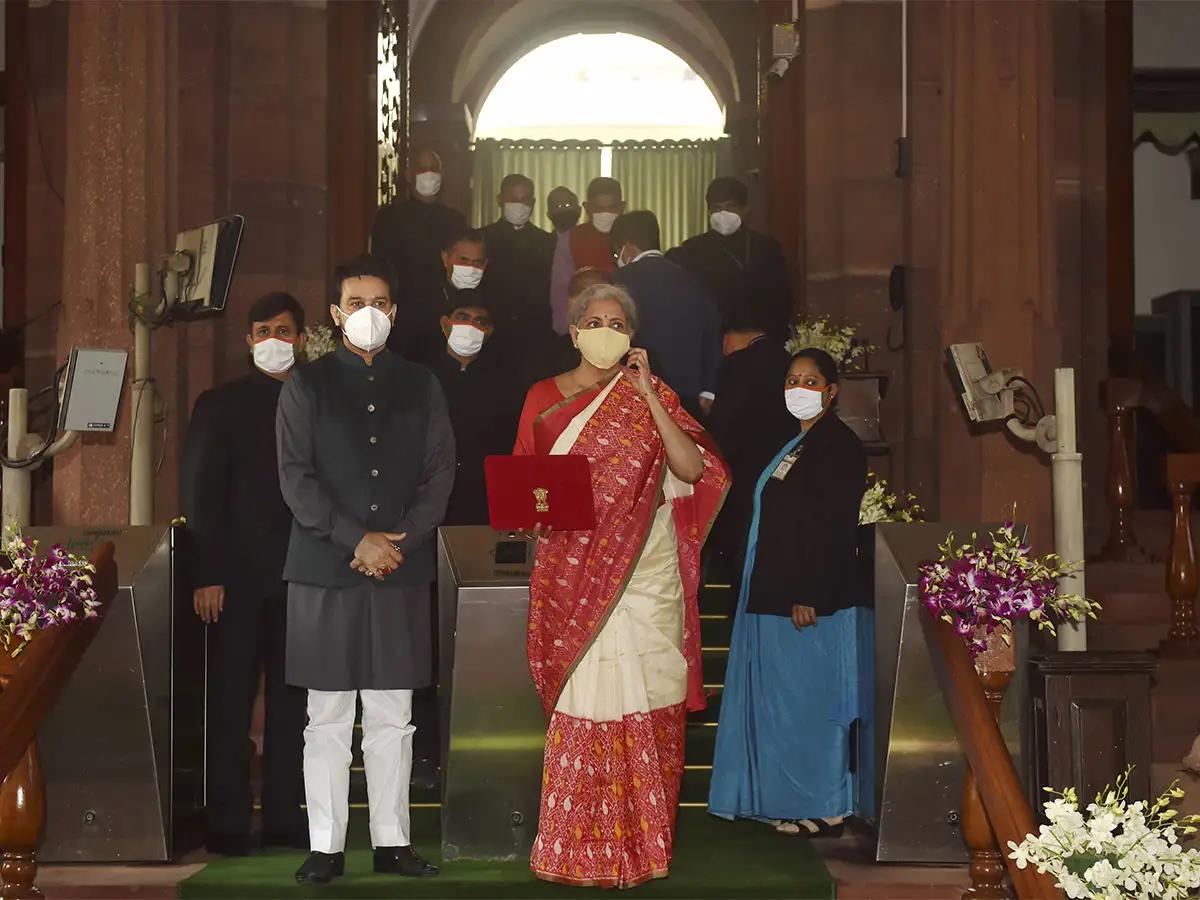
Feb 2: A mammoth spending plan of almost $500 billion announced by Prime Minister Narendra Modi’s government is expected to jump-start growth in an economy battered by the coronavirus pandemic, but may not be enough to make a dent in the rising unemployment and poverty India has battled.

Finance Minister Nirmala Sitharaman on Monday unveiled a national budget that will cause the fiscal deficit to balloon to a much higher-than-expected 9.5% in the current year ending March on the added expenditures. Stock market investors cheered the plan, hoping for an economic resurgence and celebrating the absence of new taxes on the wealthy and corporations, while bonds tumbled on worries about the record deficit.

Still, the budget -- among India’s most highly anticipated and closely watched annual events -- didn’t have major proposals to address the job losses, hunger and rising pressures on the farming and rural sectors. In fact, the ballooning deficit will force the Modi government to curb spending on some rural programs in the coming fiscal year.

Modi cut back the budgetary allocation for rural development, which includes a jobs guarantee program, spending for rural roads and pension for widows, by 10% to Rs 1.95 lakh crore in the year starting April. That will help him boost investments in creating assets by 26% and keep the overall spending little changed at nearly Rs 35 lakh crore ($480 billion) from a year ago.

“The central intent has been to use expansionary fiscal policy to support growth, sidestepping concerns over debt sustainability and sovereign rating,” said Abheek Barua, chief economist at HDFC Bank Ltd. “That said, the budget does not adequately address concerns over inequitable growth which has been a worry across the globe due to the pandemic.”

India’s budget offers a look at the new challenges emerging nations must now contend with after coronavirus lockdowns upended the lives of daily wage earners worldwide. Unemployment in India reached 9.1% in December and 85 million people are estimated to have fallen into the ranks of the newly poor, particularly migrant workers who returned to villages.

While the government didn’t make major changes to personal income taxes it also didn’t give much to the middle class and the poor, who were expecting some relief from the budget, Barua said.

The government has “stretched its resources to deliver for the most vulnerable sections of our society – the poorest of the poor,” Sitharaman said in her budget speech. Spending on infrastructure development will again generate employment, she said.

What Bloomberg Economics Says...

“The budget plans should deliver a strong fiscal boost that is likely to further strengthen the recovery. The favourable shift in the composition of spending toward capital expenditure raises the chances of virtuous cycle of high growth, enhanced tax buoyancy and a reduction in fiscal deficits taking hold over the medium term,” said Abhishek Gupta, India economist.

The new proposals also come as the government faces widespread anger from farmers, whose protests against market reforms overwhelmed parts of the capital New Delhi last week. Despite that there were no measures announced for them in the government’s plan.

The proposed increase in capital expenditure is coming at the expense of non-capital expenditure, keeping aggregate spending the same, Amit Basole, who teaches at the privately run Azim Premji University, said. This shift is desirable in normal times, but in these times, leaves a massive livelihoods crisis unaddressed, he said.

Bad Bank

Meanwhile, the government sought to bolster the nation’s financial stability, with plans to set up a company to manage a growing pile of bad loans. The idea has been debated by policy makers for more than three years and is aimed at culling out soured debt off lenders’ balance sheets and creating room for faster lending.

The bad bank will include such soured assets and will be sold on to investors at a reduced price at a time Indian lenders are struggling with one of the world’s worst bad-loan ratios. Still, the budget offered few further details on how some of these steps would be achieved.

The budget will be followed by the Reserve Bank of India’s rate decision Friday, with expectations for policy makers to possibly resume interest rate cuts as inflation cools.

“The government is fully prepared to support and facilitate the economy’s reset,” Sitharaman said. “This budget provides every opportunity for our economy to rise and capture the pace it needs for a sustainable growth.”

Among other spending increases, India said it would hike its health expenditure by a massive 137%, attempting to improve an under-resourced public system that has struggled to manage the world’s second-largest Covid-19 outbreak.

The fiscal deficit next year is expected at 6.8% of gross domestic product, Sitharaman said. That’s wider than the 5.5% forecast in a Bloomberg survey. The administration will borrow about Rs 12 lakh crore to meet the shortfall.

Sitharaman had pledged before Monday that the government would look beyond fiscal deficits in its aim to revive Asia’s third-largest economy, which is expected to outpace the global recovery.

The government’s annual economic report card, released Friday, forecast an 11% rebound in the coming fiscal, following an estimated 7.7% contraction in the current year.

“This is not a populist budget, there is no major attempt to redistribute incomes by increasing taxes on high income groups,” said Prabhat Awasthi, managing director and country head of India at Nomura Holdings Inc. “It prioritized growth over fiscal prudence. Equity markets have loved it and bonds have sold off.”

Comments

Add new comment

  • Coastaldigest.com reserves the right to delete or block any comments.
  • Coastaldigset.com is not responsible for its readers’ comments.
  • Comments that are abusive, incendiary or irrelevant are strictly prohibited.
  • Please use a genuine email ID and provide your name to avoid reject.
Agencies
November 22,2025

indiapak.jpg

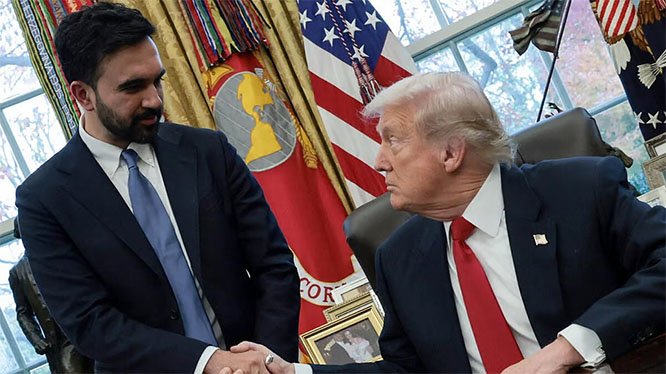
New York/Washington: US President Donald Trump has again claimed to have solved the conflict between India and Pakistan, repeating his assertion during a meeting with New York City Mayor-elect Zohran Mamdani in the Oval Office.

Mamdani flew to Washington DC for his first meeting with Trump in the White House on Friday. Trump said he “enjoyed” the meeting, which he described as “great.”

During remarks in the Oval Office, with Mamdani standing next to him, Trump repeated his claim that he solved the May conflict between India and Pakistan.

"I did eight peace deals of countries, including India and Pakistan,” he said.

On Wednesday, Trump had said he threatened to put 350 per cent tariffs on India and Pakistan if they did not end their conflict, repeating his claim that he solved the fighting between the nuclear-armed neighbours and that Prime Minister Narendra Modi had called him to say “we're not going to go to war.”

Since May 10, when Trump announced on social media that India and Pakistan had agreed to a “full and immediate” ceasefire after a “long night” of talks mediated by Washington, he has repeated his claim over 60 times that he “helped settle” the tensions between India and Pakistan.

India has consistently denied any third-party intervention. India launched Operation Sindoor on May 7, targeting terror infrastructure in Pakistan and Pakistan-occupied Kashmir in retaliation for the April 22 Pahalgam attack that killed 26 civilians. India and Pakistan reached an understanding on May 10 to end the conflict after four days of intense cross-border drone and missile strikes.

Mamdani emerged victorious in the closely-watched battle for New York City Mayor, becoming the first South Asian and Muslim to be elected to sit at the helm of the largest city in the US.

He had been the front-runner in the NYC Mayoral election for months and defeated Republican nominee Curtis Sliwa and political heavyweight former New York State Governor Andrew Cuomo, who ran as an independent candidate and was officially endorsed by Trump just hours before the elections.

Indian-descent Mamdani is the son of renowned filmmaker Mira Nair and Columbia University professor Mahmood Mamdani. He was born and raised in Kampala, Uganda and moved to New York City with his family when he was 7. Mamdani became a naturalised US citizen only recently, in 2018.

Comments

Add new comment

  • Coastaldigest.com reserves the right to delete or block any comments.
  • Coastaldigset.com is not responsible for its readers’ comments.
  • Comments that are abusive, incendiary or irrelevant are strictly prohibited.
  • Please use a genuine email ID and provide your name to avoid reject.
News Network
December 6,2025

pilot.jpg

New Delhi: IndiGo, India’s largest airline, faced major operational turbulence this week after failing to prepare for new pilot-fatigue regulations issued by the Directorate General of Civil Aviation (DGCA). The stricter rules—designed to improve flight safety—took effect in phases through 2024, with the latest implementation on November 1. IndiGo has acknowledged that inadequate roster planning led to widespread cancellations and delays.

Below are the key DGCA rules that affected IndiGo’s operations:

1. Longer Mandatory Weekly Rest

Weekly rest for pilots has been increased from 36 hours to 48 hours.

The government says the extended break is essential to curb cumulative fatigue. This rule remains in force despite the current crisis.

2. Cap on Night Landings

Pilots can now perform only two night landings per week—a steep reduction from the earlier limit of six.

Night hours, defined as midnight to early morning, are considered the least alert period for pilots.

Given the disruptions, this rule has been temporarily relaxed for IndiGo until February 10.

3. Reduced Maximum Night Flight Duty

Flight duty that stretches into the night is now capped at 10 hours.

This measure has also been kept on hold for IndiGo until February 10 to stabilize operations.

4. Weekly Rest Cannot Be Replaced With Personal Leave

Airlines can no longer count a pilot’s personal leave as part of the mandatory 48-hour rest.

Pilots say this closes a loophole that previously reduced actual rest time.

Currently, all airlines are exempt from this rule to normalise travel.

5. Mandatory Fatigue Monitoring

Airlines must submit quarterly fatigue reports along with corrective actions to DGCA.

This system aims to create a transparent fatigue-tracking framework across the industry.

The DGCA has stressed that these rules were crafted to strengthen flight safety and align India with global fatigue-management standards. The temporary relaxations are expected to remain until February 2025, giving IndiGo time to stabilise its schedules and restore normal air travel.

Comments

Add new comment

  • Coastaldigest.com reserves the right to delete or block any comments.
  • Coastaldigset.com is not responsible for its readers’ comments.
  • Comments that are abusive, incendiary or irrelevant are strictly prohibited.
  • Please use a genuine email ID and provide your name to avoid reject.
News Network
November 26,2025

students.jpg

Bengaluru, Nov 26: Karnataka is taking its first concrete steps towards lifting a three-decade-old ban on student elections in colleges and universities. Deputy Chief Minister D.K. Shivakumar announced Wednesday that the state government will form a small committee to study the reintroduction of campus polls, a practice halted in 1989 following incidents of violence.

Speaking at a 'Constitution Day' event organised by the Karnataka Congress, Mr. Shivakumar underscored the move's aim: nurturing new political leadership from the grassroots.

"Recently, (Leader of the Opposition in Lok Sabha) Rahul Gandhi wrote a letter to me and Chief Minister (Siddaramaiah) asking us to think about restarting student elections," Shivakumar stated. "I'm announcing today that we'll form a small committee and seek a report on this."

Student elections were banned in Karnataka in 1989, largely due to concerns over violence and the infiltration of political party affiliates into campus life. The ban effectively extinguished vibrant student bodies and the pipeline of young leaders they often produced.

Mr. Shivakumar, who also serves as the Karnataka Congress president, said that former student leaders will be consulted to "study the pros and cons" of the re-introduction.

Acknowledging the history of the ban, he added, "There were many criminal activities taking place back then. We’ll see how we can conduct (student) elections by regulating such criminal activities."

The Deputy CM reminisced about his own journey, which began on campus. He recalled his political activism at Sri Jagadguru Renukacharya College leading to his first Assembly ticket in 1985 at the age of 23. "That's how student leadership was at the time. Such leadership has gone today. College elections have stopped," he lamented, adding that for many, college elections were "like a big movement" where leaders were forged.

The move, driven by the Congress high command's push to cultivate young talent, will face scrutiny from academics and university authorities who have, in the past, expressed concern that the return of polls could disrupt the peaceful academic environment and turn campuses into political battlegrounds.

Comments

Add new comment

  • Coastaldigest.com reserves the right to delete or block any comments.
  • Coastaldigset.com is not responsible for its readers’ comments.
  • Comments that are abusive, incendiary or irrelevant are strictly prohibited.
  • Please use a genuine email ID and provide your name to avoid reject.
