Secret India-Pak peace roadmap brokered by top UAE royals

Agencies
March 23, 2021

indopak.jpg

About 24 hours after military chiefs from India and Pakistan surprised the world last month with a rare joint commitment to respect a 2003 cease-fire agreement, the top diplomat of the United Arab Emirates popped over to New Delhi for a quick one-day visit.

The official UAE readout of the Feb. 26 meeting gave few clues of what Foreign Minister Sheikh Abdullah bin Zayed spoke about with Indian counterpart Subrahmanyam Jaishankar, noting they “discussed all regional and international issues of common interest and exchanged views on them.”

Yet behind closed doors, the India-Pakistan cease-fire marked a milestone in secret talks brokered by the UAE that began months earlier, according to officials aware of the situation who asked not to be identified. The cease-fire, one said, is only the beginning of a larger roadmap to forge a lasting peace between the neighbors, both of which have nuclear weapons and spar regularly over a decades-old territory dispute.

The next step in the process, the official said, involves both sides reinstating envoys in New Delhi and Islamabad, who were pulled in 2019 after Pakistan protested India’s move to revoke seven decades of autonomy for the disputed Muslim-majority state of Jammu and Kashmir. Then comes the hard part: Talks on resuming trade and a lasting resolution on Kashmir, the subject of three wars since India and Pakistan became independent from Britain in 1947.

Over the years, India and Pakistan have routinely made peace overtures only to have them quickly fall through, particularly as both sides frequently use the issue to stir up emotions around election time. Officials said expectations were low that the current detente would achieve much beyond the return of envoys and a resumption of trade through their Punjab land border.

But this process appears to be the most concerted effort in years, and comes as the Biden administration is seeking wider peace talks on Afghanistan -- a place both countries for years have battled for influence. Indian Prime Minister Narendra Modi wants to shore up growth and focus military resources on the border with China, while Pakistan’s leaders are also facing economic woes and looking to make a good impression with the U.S. and other powers.

Pakistan’s Foreign Ministry didn’t comment on the talks or the role of the UAE, while the foreign ministries of India and the UAE had no immediate comment.

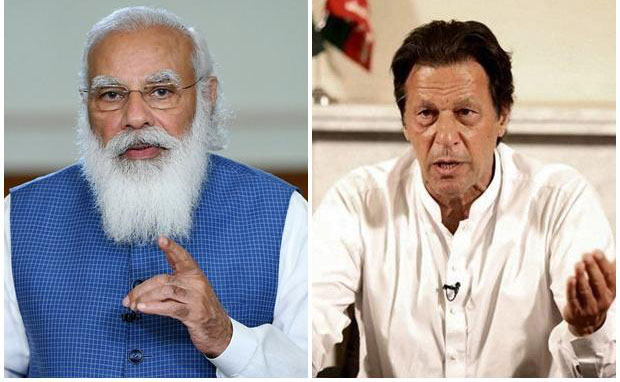
Last week Pakistan army chief General Qamar Javed Bajwa asked India “to bury the past and move forward” while saying the military was ready to enter talks to resolve “all our outstanding issues.” The comments came a day after Prime Minister Imran Khan after called for a resolution on Kashmir, which he described as “the one issue that holds us back.”

On Saturday, Modi sent a tweet wishing Khan well after he was diagnosed with Covid-19 -- another sign that relations between the countries are getting warmer.

The UAE, which has historic trade and diplomatic links with India and Pakistan, has taken a more assertive international role under de facto ruler Sheikh Mohammed bin Zayed Al Nahyan. The biggest shift has been in the Middle East where the Gulf Arab state has intervened in conflicts and backed groups and regional leaders. But it has also looked to Asia as it strengthens political alliances beyond its role as a global trade and logistics hub.

India-Pakistan ties were effectively cut off two years ago after a suicide attack in India-controlled Kashmir killed 40 Indian soldiers, prompting Modi’s government to authorize air strikes on alleged terror facilities inside Pakistan. The joint statement last month said the two sides “agreed to address each other’s core issues,” signaling a wider discussion on Kashmir and terrorism.

Several clues over the past few months pointed at the UAE’s role. In November, Jaishankar met bin Zayed and the crown prince on a two-day visit to Abu Dhabi, followed by Pakistan Foreign Minister Shah Mahmood Qureshi the following month. Roughly two weeks before the Feb. 25 announcement, the UAE foreign minister held a phone call with Pakistan Prime Minister Imran Khan “wherein they discussed regional and international issues of interest.” And just days before, India allowed Khan’s aircraft to fly over Indian airspace as he headed to Sri Lanka for a state visit -- a practice suspended since the 2019 hostilities.

After the cease-fire, the UAE was one of a handful of countries to issue a statement welcoming the cease-fire announcement, highlighting the “close historical ties” it has with both India and Pakistan and hailing “the efforts made by both countries to come to this agreement.” In Washington, State Department spokesman Ned Price dodged a question on what role the U.S. played in bringing the two sides together while urging Pakistan to play a constructive role in Afghanistan, Kashmir and other places.

“Obviously Pakistan has an important role to play when it comes to Afghanistan and what takes place across its other border,” Price said on Feb. 25. “So clearly, we will be paying close attention.”

Comments

Add new comment

  • Coastaldigest.com reserves the right to delete or block any comments.
  • Coastaldigset.com is not responsible for its readers’ comments.
  • Comments that are abusive, incendiary or irrelevant are strictly prohibited.
  • Please use a genuine email ID and provide your name to avoid reject.
News Network
November 27,2025

imrankhan.jpg

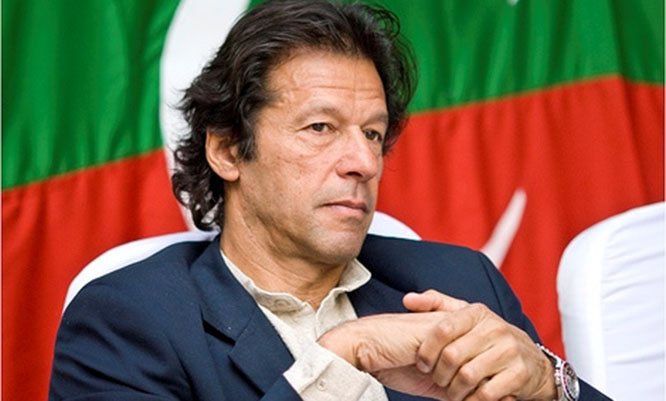
Authorities at Pakistan’s high-security Adiala Jail in Rawalpindi on Wednesday dismissed speculation about the condition of imprisoned former Pakistan Prime Minister Imran Khan, rejecting rumours that he had been moved out of the facility or was in danger. Officials said Khan was in “good health” and described the viral death claims as “baseless.”

“There is no truth to reports about his transfer from Adiala Jail,” the Rawalpindi prison administration said in a statement, according to Geo News. “He is fully healthy and receiving complete medical attention.”

Amid swirling rumours on social media, Imran Khan’s party, Pakistan Tehreek-e-Insaf (PTI), urged the federal government to issue an official clarification and demanded that authorities allow his family to meet him immediately, Dawn reported.

The frenzy began after Khan’s three sisters called for an impartial probe into what they described as a “brutal” police assault on them and other PTI supporters outside Adiala Jail last week. Soon after, several social media handles circulated unverified claims alleging that Khan had been “killed” inside the prison.

The rumours intensified when a handle named “Afghanistan Times” claimed that “credible sources” had confirmed Khan’s “murder” and that his body had been moved out of the jail — allegations that have not been verified by any credible agency.

Imran Khan, PTI’s patron-in-chief, has been lodged in the Rawalpindi prison since August 2023 in multiple cases. For over a month, an undeclared restriction has prevented family members and senior PTI leaders from meeting him. Khyber-Pakhtunkhwa Chief Minister Sohail Afridi has reportedly been denied access despite making seven attempts.

In a letter to Punjab Police Chief Usman Anwar, Khan’s sisters — Noreen Niazi, Aleema Khan, and Dr. Uzma Khan — said they were “peacefully protesting” outside the jail when police allegedly launched an unprovoked assault after streetlights were switched off.

“At 71, I was seized by my hair, thrown to the ground and dragged across the road,” Noreen Niazi said, alleging that other women present were also slapped and manhandled.

Adiala Jail officials reiterated that speculation over Imran Khan’s health was unfounded and insisted that his well-being was being ensured, Geo News reported.

Comments

Add new comment

  • Coastaldigest.com reserves the right to delete or block any comments.
  • Coastaldigset.com is not responsible for its readers’ comments.
  • Comments that are abusive, incendiary or irrelevant are strictly prohibited.
  • Please use a genuine email ID and provide your name to avoid reject.
News Network
November 24,2025

israelsyra.jpg

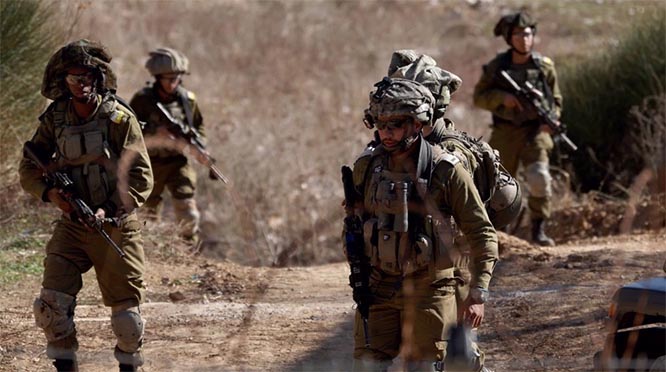
Israeli forces have pushed over the Syrian frontier, erecting a checkpoint and stopping vehicles in the southwestern city of Quneitra, in yet another breach of the Arab country’s sovereignty.

The violation took place on Sunday, when the troops made their way across the border, setting up the outpost near the Ain al-Bayda junction in northern Quneitra, Syrian outlets reported.

According to the al-Ikhbariya paper, an Israeli detachment positioned itself at the junction, halting cars and conducting searches.

The Syrian Arab News Agency (SANA) reported that three Israeli military vehicles then moved further into the northern countryside, deploying between the town of Jubata al-Khashab and the villages of Ofaniya and Ain al-Bayda. The agency added that a separate Israeli unit mounted a new incursion in the central region, approaching the villages of Umm Batina and al-Ajraf.

Residents said such activities have surged in recent months, pointing to Israeli advances onto farmland, leveling of extensive forested areas, arrests, and spread of mobile checkpoints.

The Israeli regime began markedly increasing its military aggression against Syria last year.

The escalation coincided with increasingly ferocious onslaughts throughout the country by the so-called Hay'at Tahrir al-Sham (HTS) Takfiri terrorist group, which the government of President Bashar al-Assad had confined to northwestern Syria. The HTS, however, managed to overthrow the government as the Israeli attacks would pummel the country’s civilian and defensive infrastructure.

Various reports have shown that, during the escalation, the regime conducted more than 1,000 airstrikes on the Syrian territory and over 400 ground raids into the south.

Following the collapse of the Assad government, Tel Aviv also widened its grip over the occupied Golan Heights by taking control of a demilitarized buffer zone, in defiance of a 1974 Disengagement Agreement. Earlier this month, senior Israeli officials, including Prime Minister Benjamin Netanyahu, visited the buffer zone, prompting expressions of alarm on the part of the United Nations.

The United States, the regime’s biggest ally, has, meanwhile, been fraternizing the HTS head Abu Mohammed al-Jolani amid the widely reported prospect of rapprochement with Tel Aviv.

Comments

Add new comment

  • Coastaldigest.com reserves the right to delete or block any comments.
  • Coastaldigset.com is not responsible for its readers’ comments.
  • Comments that are abusive, incendiary or irrelevant are strictly prohibited.
  • Please use a genuine email ID and provide your name to avoid reject.
News Network
November 29,2025

DKSsiddu.jpg

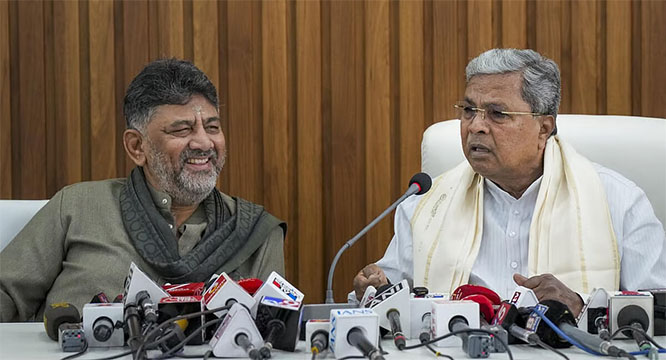
New Delhi: Karnataka chief minister Siddaramaiah and deputy CM DK Shivakumar on Saturday put up a dramatic display of unity at a closely watched joint press briefing, firmly dismissing weeks of speculation about a power-sharing tussle within the Congress. With the high command nudging both leaders to sit together and settle the dust, the meeting became a political spectacle, ending with the duo declaring that there was “no confusion, no differences.”

Calling the reports of a rift “manufactured confusion,” Siddaramaiah said the talks had gone smoothly, even joking about their breakfast. “Breakfast was very good. All three of us enjoyed it,” he said. “We want to end this confusion once and for all. For local elections and for 2028, our mission is clear — Congress must return to power. There is no difference between me and DKS, not now, not before.”

He blamed the media for fuelling rumours and reiterated absolute adherence to the party leadership. “From tomorrow, let there be no confusion. What the high command says, we will follow.”

Siddaramaiah also assured that the Assembly session starting December 8 would run smoothly and vowed that Congress would take on the BJP and JD(S) “together.”

Shivakumar echoed the chief minister word for word, stressing loyalty and discipline. “People have given us a massive mandate. It is our duty to deliver,” he said. “This government was formed under Siddaramaiah’s leadership. We both have complete trust in the high command. If they tell me to wait, I will wait.”

He added that the two leaders had discussed strategy for the 2028 Assembly elections. “Whatever the CM says, I agree. We are loyal soldiers of the party. The party may be facing challenges nationally, but we will keep it strong in Karnataka.”

Shivakumar also said Siddaramaiah would soon visit his home for lunch or dinner — another symbolic gesture meant to underline their unity.

Both leaders later posted on social media describing the breakfast meeting as “productive” and focused on “Karnataka’s priorities.”

The BJP, however, rejected the show of camaraderie as “pure bunkum,” accusing Congress of trying to paper over an internal power struggle. But Siddaramaiah and Shivakumar insisted their united front would continue — and that there was “no confusion” within the state leadership.

Comments

Add new comment

  • Coastaldigest.com reserves the right to delete or block any comments.
  • Coastaldigset.com is not responsible for its readers’ comments.
  • Comments that are abusive, incendiary or irrelevant are strictly prohibited.
  • Please use a genuine email ID and provide your name to avoid reject.