Wealth amassed by 100 richest Indians during covid-19 can give 13.8 crore poorest Rs 94,000 each: Oxfam

Agencies
January 25, 2021

Wealth amassed by 100 richest Indians during pandemic can give 13.8 crore  poorest Rs 94,000 each - OrissaPOST

New Delhi, Jan 25: India's 100 top billionaires have seen their fortunes increase by Rs 12,97,822 crore since March last year when the Covid-19 pandemic hit the country and this amount is enough to give 13.8 crore poorest Indians a cheque for Rs 94,045 each.

The latest India supplement of the Oxfam report 'The Inequality Virus' said it would take an unskilled worker 10,000 years to make what businessman Mukesh Ambani made in an hour during the pandemic and three years to make what he made in a second.

The report has been released on the opening day of the World Economic Forum's 'Davos Dialogues'.

Calling the coronavirus pandemic the world's worst public health crisis in a hundred years, the report said it triggered an economic crisis comparable in scale only with the Great Depression of the 1930s.

"India's 100 billionaires have seen their fortunes increase by Rs 12,97,822 crores since March last year which is enough to give every one of the 138 million poorest Indians a cheque for Rs 94,045 each," the report said.

The new global survey of 295 economists from 79 countries, commissioned by Oxfam, reveals that 87 per cent of respondents, including Jeffrey Sachs, Jayati Ghosh and Gabriel Zucman, expect an "increase" or a "major increase" in income inequality in their country as a result of the pandemic.

"India has the world's fourth lowest health budget in terms of its share of government expenditure," it said. "If India's top 11 billionaires are taxed at just 1 per cent on the increase in their wealth during the pandemic, it will be enough to increase the allocation of Jan Aushadi Scheme by 140 times, which provides affordable medicines to the poor and marginalized."

India introduced one of the earliest and most stringent lockdowns in the face of the pandemic and its enforcement brought the economy to a standstill, triggering unemployment, hunger, distress migration and untold hardship in its wake, the report said.

"The rich were able to escape the pandemic's worst impact; and while the white-collar workers isolated themselves and worked from home, a majority of the not-so-fortunate Indians lost their livelihood," it said.

The report noted that billionaires like Gautam Adani, Shiv Nadar, Cyrus Poonawalla, Uday Kotak, Azim Premji, Sunil Mittal, Radhakrishan Damani, Kumar Manglam Birla and Laxmi Mittal working in sectors like coal, oil, telecom, medicines, pharmaceutical, education and retail increased their wealth exponentially since March 2020 when India announced world's biggest Covid-19 lockdown and economy came to standstill.

On the other hand, data has shown that 170,000 people lost their jobs every hour in the month of April 2020, the report said.

Findings of the report showed that rich got richer during the pandemic.

"Data shows what Ambani earned during the pandemic would keep the 40 crore informal workers that are at risk of falling into poverty due to Covid-19 above the poverty line for at least 5 months," the report said.

The wealth of Indian billionaires increased by 35 per cent during the lockdown and by 90 per cent since 2009 to USD 422.9 billion, ranking India sixth in the world after the US, China, Germany, Russia and France, it said.

In fact, the report said the increase in wealth of the top 11 billionaires of India during the pandemic could sustain the rural job scheme MGNREGA for 10 years or the Health Ministry for 10 years.

Noting that the informal sector had been the worst hit, the report said out of a total 12.2 crore people who lost their jobs, 75 per cent, which accounts for 9.2 crore jobs, were lost in the informal sector.

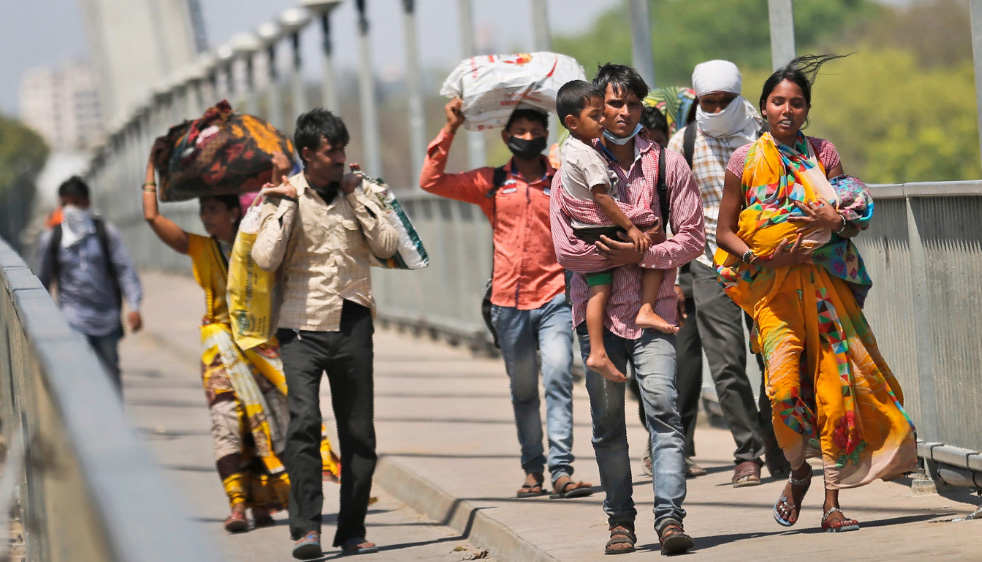
"The mass exodus on foot triggered by the sudden lockdown and the inhuman beating, disinfection and quarantine conditions the informal workers were subjected to turned a health emergency into a humanitarian crisis," it said.

"Over 300 informal workers died due to the lockdown, with reasons ranging from starvation, suicides, exhaustion, road and rail accidents, police brutality and denial of timely medical care. The National Human Rights Commission recorded over 2,582 cases of human rights violation as early as in the month of April 2020," the report added.

It noted that the long disruption of schooling risked doubling the rate of out of school, especially among the poor.

"Only 4 per cent of rural households had a computer and less than 15 per cent rural households had an internet connection," it said.

On health inequalities, the report said only 6 per cent of the poorest 20 per cent has access to non-shared sources of improved sanitation, compared to 93.4 per cent of the top 20 per cent. It added that 59.6 per cent of India's population lives in a room or less.

The report said 1.7 crore women lost their job in April 2020 and unemployment for women rose by 15 per cent from a pre-lockdown level.

Oxfam India CEO Amitabh Behar said if not addressed immediately, the crisis could worsen.

"Extreme inequality is not inevitable, but a policy choice. The fight against inequality must be at the heart of economic rescue and recovery efforts now," Behar said.

"Newer and creative ways of catering to the needs of the masses is possible if governments are committed to the needs of its people. It is time for the government of India to take specific and concrete actions that will build a better future, more equal and just a future for everyone," he said.

Comments

Add new comment

  • Coastaldigest.com reserves the right to delete or block any comments.
  • Coastaldigset.com is not responsible for its readers’ comments.
  • Comments that are abusive, incendiary or irrelevant are strictly prohibited.
  • Please use a genuine email ID and provide your name to avoid reject.
News Network
December 5,2025

indigoCEO.jpg

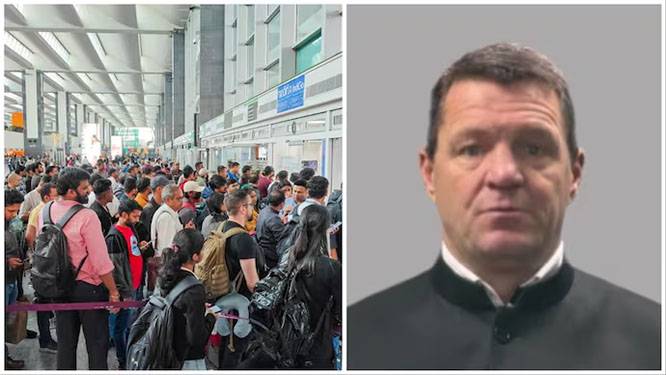
New Delhi, Dec 5: IndiGo CEO Pieter Elbers issued a public apology this evening after more than a thousand flights were cancelled today, making it the "most severely impacted day" in terms of cancellations. The biggest airline of the country cancelled "more than half" of its daily number of flights on Friday, said Elbers. He also said that even though the crisis will persist on Saturday, the airline anticipates fewer than 1,000 flight cancellations.

"Full normalisation is expected between December 10 and 15, though IndiGo cautions that recovery will take time due to the scale of operations," the IndiGo CEO said. 

IndiGo operates around 2,300 domestic and international flights daily.

Pieter Elbers, while apologising for the major inconvenience due to delays and cancellations, said the situation is a result of various causes.

The crisis at IndiGo stems from new regulations that boost pilots' weekly rest requirements by 12 hours to 48 and allow only two night-time landings per week, down from six. IndiGo has attributed the mass cancellations to "misjudgment and planning gaps".

Elbers also listed three lines of action that the airline will adopt to address the issue.

"Firstly, customer communication and addressing your needs, for this, messages have been sent on social media. And just now, a more detailed communication with information, refunds, cancellations and other customer support measures was sent," he said.

The airline has also stepped up its call centre capacity.

"Secondly, due to yesterday's situation, we had customers stranded mostly at the nation's largest airports. Our focus was for all of them to be able to travel today itself, which will be achieved. For this, we also ask customers whose flights are cancelled not to come to the airports as notifications are sent," the CEO said.

"Thirdly, cancellations were made for today to align our crew and planes to be where they need to start tomorrow morning afresh. Earlier measures of the last few days, regrettable, have proven not to be enough, but we have decided today to reboot all our systems and schedules, resulting in the highest numbers of cancellations so far, but imperative for progressive improvements starting from tomorrow," he added.

As airports witnessed chaotic scenes, the Directorate General of Civil Aviation (DGCA) stepped in to grant IndiGo a temporary exemption from stricter night duty rules for pilots. It also allowed substitution of leaves with a weekly rest period. 

Civil Aviation Minister Ram Mohan Naidu has said a high-level inquiry will be ordered and accountability will be fixed.

Comments

Add new comment

  • Coastaldigest.com reserves the right to delete or block any comments.
  • Coastaldigset.com is not responsible for its readers’ comments.
  • Comments that are abusive, incendiary or irrelevant are strictly prohibited.
  • Please use a genuine email ID and provide your name to avoid reject.
News Network
November 24,2025

israelsyra.jpg

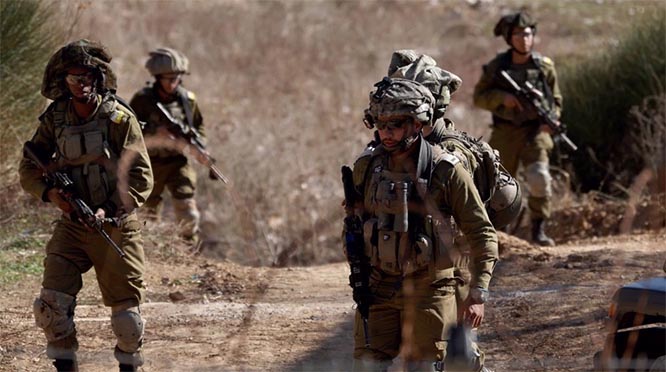
Israeli forces have pushed over the Syrian frontier, erecting a checkpoint and stopping vehicles in the southwestern city of Quneitra, in yet another breach of the Arab country’s sovereignty.

The violation took place on Sunday, when the troops made their way across the border, setting up the outpost near the Ain al-Bayda junction in northern Quneitra, Syrian outlets reported.

According to the al-Ikhbariya paper, an Israeli detachment positioned itself at the junction, halting cars and conducting searches.

The Syrian Arab News Agency (SANA) reported that three Israeli military vehicles then moved further into the northern countryside, deploying between the town of Jubata al-Khashab and the villages of Ofaniya and Ain al-Bayda. The agency added that a separate Israeli unit mounted a new incursion in the central region, approaching the villages of Umm Batina and al-Ajraf.

Residents said such activities have surged in recent months, pointing to Israeli advances onto farmland, leveling of extensive forested areas, arrests, and spread of mobile checkpoints.

The Israeli regime began markedly increasing its military aggression against Syria last year.

The escalation coincided with increasingly ferocious onslaughts throughout the country by the so-called Hay'at Tahrir al-Sham (HTS) Takfiri terrorist group, which the government of President Bashar al-Assad had confined to northwestern Syria. The HTS, however, managed to overthrow the government as the Israeli attacks would pummel the country’s civilian and defensive infrastructure.

Various reports have shown that, during the escalation, the regime conducted more than 1,000 airstrikes on the Syrian territory and over 400 ground raids into the south.

Following the collapse of the Assad government, Tel Aviv also widened its grip over the occupied Golan Heights by taking control of a demilitarized buffer zone, in defiance of a 1974 Disengagement Agreement. Earlier this month, senior Israeli officials, including Prime Minister Benjamin Netanyahu, visited the buffer zone, prompting expressions of alarm on the part of the United Nations.

The United States, the regime’s biggest ally, has, meanwhile, been fraternizing the HTS head Abu Mohammed al-Jolani amid the widely reported prospect of rapprochement with Tel Aviv.

Comments

Add new comment

  • Coastaldigest.com reserves the right to delete or block any comments.
  • Coastaldigset.com is not responsible for its readers’ comments.
  • Comments that are abusive, incendiary or irrelevant are strictly prohibited.
  • Please use a genuine email ID and provide your name to avoid reject.
News Network
December 7,2025

Mangaluru, Dec 7: A 34-year-old fruit and vegetable trader in Mangaluru has reportedly lost ₹33.1 lakh after falling victim to an online investment scam run through a fake mobile app.

Police said the scam began in September, when the victim received a link on Facebook. Clicking it connected him to a WhatsApp number, where an unidentified person introduced a high-return investment scheme and instructed him to download an app.

To build trust, the fraudster asked him to invest ₹30,000 on September 24. The trader soon received ₹34,000 as “profit,” convincing him the scheme was genuine. Over the next two months, he transferred money in multiple instalments via Google Pay and IMPS to different scanner codes and bank accounts shared by the scammers. Between September 24 and December 3, he ended up sending a total of ₹33.1 lakh.

When he later requested a refund of his investment and promised returns, the scammers demanded additional payments, claiming he needed to pay a “service tax” first. Even after he paid a small amount, no money was returned, and the scammers continued pressuring him for more.

A case has been registered at the CEN Crime Police Station.

Comments

Add new comment

  • Coastaldigest.com reserves the right to delete or block any comments.
  • Coastaldigset.com is not responsible for its readers’ comments.
  • Comments that are abusive, incendiary or irrelevant are strictly prohibited.
  • Please use a genuine email ID and provide your name to avoid reject.