World worried as 2nd wave of covid shifts India from mass vaccine exporter to importer

Agencies
April 16, 2021

After gifting and selling crores of Covid-19 vaccine doses abroad, India suddenly finds itself short of shots as new infections surge in the world's second-most populous country.

India breached 2,00,000 daily infections for the first time on Thursday, and is trying to inoculate more of its population using domestically produced shots.

Facing soaring cases and overflowing hospitals after lockdown restrictions were eased, it also abruptly changed the rules to allow it to fast-track vaccine imports, having earlier rebuffed foreign drugmakers like Pfizer.

It will import Russia's Sputnik V vaccine starting this month to cover as many as 12.5 crore people.

The reversal in fortunes could hamper not only India's battle to contain the pandemic, but also vaccination campaigns in more than 60 poorer countries, mainly in Africa, for months.

The COVAX programme, backed by the World Health Organization and Gavi vaccine alliance, aims at equitable vaccine access around the world, and is relying heavily on supplies from India, Asia's pharmaceutical powerhouse.

But so far this month India has only exported around 12 lakh vaccine doses. That compares with 6.4 crore doses shipped abroad between late January and March, according to data from the foreign ministry.

An official with knowledge of India's vaccine strategy said that available shots would be used domestically while the country faced an "emergency situation".

"There is no commitment to other countries," he said.

India's foreign ministry, which oversees vaccine deals with other countries, said last week that Indian demand would dictate the level of exports.

Resulting shortages are already being felt in some countries in the COVAX scheme, and a UN health official involved in the vaccine rollout in Africa said: "To be so reliant on one manufacturer is a massive concern."

The director of the Africa Centers for Disease Control and Prevention, John Nkengasong, said earlier this month delays in supplies from India could be "catastrophic".

MISSTEPS

Four sources involved in discussions on vaccine supplies and procurement said factors including delays by India and COVAX in placing firm orders, a lack of investment in production, raw material shortages and underestimating the coronavirus surge at home had contributed to vaccine shortages.

The Serum Institute of India (SII), the world's biggest vaccine manufacturer, had vowed to deliver at least 200 crore Covid-19 shots to low and middle-income countries, with nearly half of that by the end of 2021.

But it has also come under pressure to meet the needs of other governments, including Britain, Canada and Saudi Arabia, amid AstraZeneca's global production problems.

The United States, meanwhile, ring-fenced the supply of key equipment and raw materials for its own vaccine makers, limiting SII's operations and delaying by months its goal of raising monthly output to 10 crore from up to 7 crore now, said one of the sources.

A further initial hurdle to SII's supply ambitions was India's hesitation in placing firm orders, two sources said.

That could have allowed it to boost output of the AstraZeneca vaccine early, even though regulators had yet to approve it.

India spent months discussing the final price per dose, and inked an initial purchase order roughly two weeks after India's drug regulator approved the AstraZeneca shot, according to the sources.

At one point, SII ran out of space to store produced doses.

"That is why I chose not to pack more than 5 crore doses, because I knew if I packed more than that, I would have to store it in my house," SII Chief Executive Adar Poonawalla told media in January.

He said he had spent 2,000 crore rupees ($272 million) on the 5 crore doses that the company started stockpiling since around October.

Even now, the government only makes ad-hoc purchases from SII instead of agreeing a longer-term supply schedule, said one of the sources.

SII has sought more than $400 million from the government to increase capacity, but no commitment has yet been made.

The health department and foreign ministry did not respond to requests for comment on issues of funding, purchasing delays and other aspects of India's vaccination rollout.

COVAX CONUNDRUM

COVAX also did not green-light shipments to participating countries from SII until after the shot received WHO clearance in mid-February, said a source involved in the COVAX initiative.

The source said those delays meant crores of additional doses that the SII could have produced between October and February never materialised.

Gavi defended its decision to wait for proper approvals before going ahead with firm orders. And while it is looking for more suppliers, it conceded that much still depended on India's vaccine makers who account for some 60% of global supplies.

COVAX has a deal to buy 100 crore-plus doses from the SII. But it has received less than a fifth of the 10 crore or so doses of the SII-made AstraZeneca vaccine it had expected by May. SII is also supposed to make a large number of doses of the Novavax shot for COVAX.

Gavi had hoped SII would fully resume vaccine deliveries to COVAX in May, but on Wednesday it said India's Covid-19 crisis could affect that.

"We understand the ferocity of the virus in India at the current time, nevertheless we hope and expect deliveries to resume as soon as possible," it said.

On Thursday India reported 2,00,739 infections over the past 24 hours, a seventh daily record in the last eight days, while 1,038 deaths took its toll to 1,73,123. Its tally of 1.4 crore infections is second only to the United States.

Having originally aimed to cover 30 crore of its highest-risk people by August, or just over a fifth of its 135 crore population, the government has now expanded that by another 10 crore, with the promise to widen it further.

Comments

Add new comment

  • Coastaldigest.com reserves the right to delete or block any comments.
  • Coastaldigset.com is not responsible for its readers’ comments.
  • Comments that are abusive, incendiary or irrelevant are strictly prohibited.
  • Please use a genuine email ID and provide your name to avoid reject.
News Network
November 26,2025

students.jpg

Bengaluru, Nov 26: Karnataka is taking its first concrete steps towards lifting a three-decade-old ban on student elections in colleges and universities. Deputy Chief Minister D.K. Shivakumar announced Wednesday that the state government will form a small committee to study the reintroduction of campus polls, a practice halted in 1989 following incidents of violence.

Speaking at a 'Constitution Day' event organised by the Karnataka Congress, Mr. Shivakumar underscored the move's aim: nurturing new political leadership from the grassroots.

"Recently, (Leader of the Opposition in Lok Sabha) Rahul Gandhi wrote a letter to me and Chief Minister (Siddaramaiah) asking us to think about restarting student elections," Shivakumar stated. "I'm announcing today that we'll form a small committee and seek a report on this."

Student elections were banned in Karnataka in 1989, largely due to concerns over violence and the infiltration of political party affiliates into campus life. The ban effectively extinguished vibrant student bodies and the pipeline of young leaders they often produced.

Mr. Shivakumar, who also serves as the Karnataka Congress president, said that former student leaders will be consulted to "study the pros and cons" of the re-introduction.

Acknowledging the history of the ban, he added, "There were many criminal activities taking place back then. We’ll see how we can conduct (student) elections by regulating such criminal activities."

The Deputy CM reminisced about his own journey, which began on campus. He recalled his political activism at Sri Jagadguru Renukacharya College leading to his first Assembly ticket in 1985 at the age of 23. "That's how student leadership was at the time. Such leadership has gone today. College elections have stopped," he lamented, adding that for many, college elections were "like a big movement" where leaders were forged.

The move, driven by the Congress high command's push to cultivate young talent, will face scrutiny from academics and university authorities who have, in the past, expressed concern that the return of polls could disrupt the peaceful academic environment and turn campuses into political battlegrounds.

Comments

Add new comment

  • Coastaldigest.com reserves the right to delete or block any comments.
  • Coastaldigset.com is not responsible for its readers’ comments.
  • Comments that are abusive, incendiary or irrelevant are strictly prohibited.
  • Please use a genuine email ID and provide your name to avoid reject.
News Network
November 24,2025

lebanon.jpg

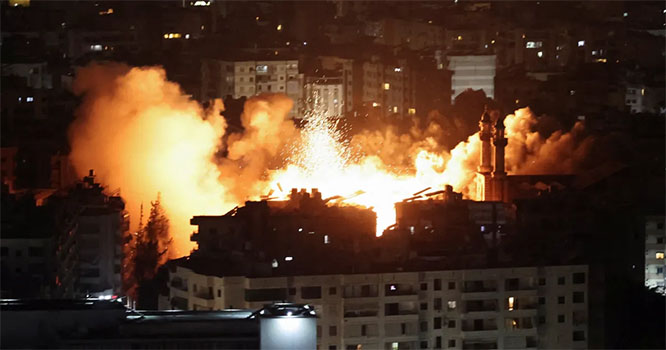
Israel has launched a new act of aggression on a residential neighborhood in Lebanon's capital, Beirut, killing and injuring about two dozen civilians.

The Israeli regime's military said in a statement that its forces carried out a so-called precise strike in a residential apartment in Dahiyeh in the southern suburbs of Beirut on Sunday.

The aggression targeted residential areas, killing at least five people and injuring more than 28 people, Lebanon's Health Ministry said. 

Hezbollah announced the martyrdom of senior Hezbollah commander Haytham Ali Tabatabai and four resistance fighters.

Lebanese President Michel Aoun condemned the airstrike, calling it a clear demonstration of Tel Aviv’s disregard for repeated international calls to halt violations on Lebanese soil.

“Israel refuses to implement international resolutions and all efforts aimed at ending the escalation and restoring stability,” Aoun said, urging the international community to take action to prevent further aggression.

The Palestinian Islamic Jihad movement also condemned the attack, holding the international community accountable. 

“The international community bears responsibility and continues to provide cover for these attacks as long as it does not restrain the occupiers,” said Ali Abu Shahin, a member of the group’s political bureau.

Israeli prime minister Benjamin Netanyahu’s office announced that the Israeli army carried out a strike “in the heart of Beirut."

Netanyahu reportedly approved the operation following recommendations from top Israeli security officials.

Two senior US officials commented on the Israeli strike.

The first official said that Israel did not notify Americans in advance about the attack. "We were informed immediately after the strike was carried out."

The second senior official said that the "US knew for several days that Israel was planning to escalate its strikes in Lebanon, but did not know in advance the timing, location, or target of the strike."

Speaking from the site of the Israeli strike, Lebanese MP Ali Ammar condemned the attack as part of a broader campaign of aggression that has targeted "all of Lebanon since the Washington-sponsored ceasefire."

He stated that "any attack on Lebanon is a violation of red lines; this aggression is part and parcel of the entity that targets Lebanon's dignity, sovereignty, and security of citizens."

Ammar went on to say the resistance is responding with "utmost wisdom, patience, and will confront the enemy at the appropriate time."

"Unfortunately, the enemy is emboldened to commit its aggression by voices within Lebanon that have turned themselves into tools that support its aggression," he added.

The Israeli attack on the southern suburbs of the Lebanese capital is the latest blatant violation of the ceasefire Israel signed with Hezbollah in November 2024, which was intended to end hostilities that had escalated into full-scale war.

An Israeli strike on the Ain al-Hilweh camp near Sidon in southern Lebanon late Tuesday killed at least 14 people. It wounded several others, including young students, according to the Lebanese health ministry.

The military claimed the attack targeted “a Hamas training compound” used to plan and carry out attacks against the regime -- a claim that has frequently been made without evidence.

Hamas rejected the allegations as “a blatant lie aimed at justifying the massacre,” stating it had “no military installations in the Palestinian camps in Lebanon” and that the targeted site was merely “an open sports field.”

According to Lebanese authorities, Israeli attacks have killed approximately 4,000 people and displaced more than 1.2 million residents across the country since October 2023.

Comments

Add new comment

  • Coastaldigest.com reserves the right to delete or block any comments.
  • Coastaldigset.com is not responsible for its readers’ comments.
  • Comments that are abusive, incendiary or irrelevant are strictly prohibited.
  • Please use a genuine email ID and provide your name to avoid reject.
News Network
December 6,2025

pilot.jpg

New Delhi: IndiGo, India’s largest airline, faced major operational turbulence this week after failing to prepare for new pilot-fatigue regulations issued by the Directorate General of Civil Aviation (DGCA). The stricter rules—designed to improve flight safety—took effect in phases through 2024, with the latest implementation on November 1. IndiGo has acknowledged that inadequate roster planning led to widespread cancellations and delays.

Below are the key DGCA rules that affected IndiGo’s operations:

1. Longer Mandatory Weekly Rest

Weekly rest for pilots has been increased from 36 hours to 48 hours.

The government says the extended break is essential to curb cumulative fatigue. This rule remains in force despite the current crisis.

2. Cap on Night Landings

Pilots can now perform only two night landings per week—a steep reduction from the earlier limit of six.

Night hours, defined as midnight to early morning, are considered the least alert period for pilots.

Given the disruptions, this rule has been temporarily relaxed for IndiGo until February 10.

3. Reduced Maximum Night Flight Duty

Flight duty that stretches into the night is now capped at 10 hours.

This measure has also been kept on hold for IndiGo until February 10 to stabilize operations.

4. Weekly Rest Cannot Be Replaced With Personal Leave

Airlines can no longer count a pilot’s personal leave as part of the mandatory 48-hour rest.

Pilots say this closes a loophole that previously reduced actual rest time.

Currently, all airlines are exempt from this rule to normalise travel.

5. Mandatory Fatigue Monitoring

Airlines must submit quarterly fatigue reports along with corrective actions to DGCA.

This system aims to create a transparent fatigue-tracking framework across the industry.

The DGCA has stressed that these rules were crafted to strengthen flight safety and align India with global fatigue-management standards. The temporary relaxations are expected to remain until February 2025, giving IndiGo time to stabilise its schedules and restore normal air travel.

Comments

Add new comment

  • Coastaldigest.com reserves the right to delete or block any comments.
  • Coastaldigset.com is not responsible for its readers’ comments.
  • Comments that are abusive, incendiary or irrelevant are strictly prohibited.
  • Please use a genuine email ID and provide your name to avoid reject.