Over 50 docs, PETA sound COVID alert on ‘Jallikattu’

Agencies
January 7, 2021

380587.jpg

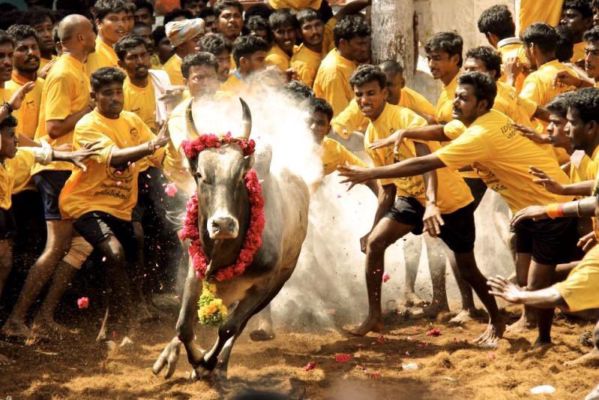
Chennai, Jan 7: Over 50 doctors and People for the Ethical Treatment of Animals (PETA) India appealed to the Tamil Nadu government to immediately withdraw the permission for the annual bull taming event -- 'Jallikattu'.

Jallikattu is typically celebrated in the southern state of Tamil Nadu as part of the Pongal celebrations, on the Mattu Pongal day, which occurs annually during this month.

Over 50 doctors have signed a letter to the Tamil Nadu Chief Minister, Edappadi Palaniswami and Health Minister C. Vijayabaskar urging them to immediately withdraw the permission, which the doctors warn poses a grave risk to the general public because of the ongoing COVID-19 pandemic.

The appeal is in response to the Tamil Nadu government's recent order allowing the conduct of Jallikattu events with hundreds of people present, People for the Ethical Treatment of Animals (PETA) India has also asked the state government to stop Jallikattu events.

The letter signed by 50 doctors, states, "To prevent the rapid spread of COVID-19 and to protect public health, as well as to ease the pressure on the healthcare professionals, non-essential activities such as Jallikattu events, which lead to unnecessary gatherings of people, must not be allowed."

The letter also states, "Since the Tamil Nadu government legalised Jallikattu in 2017, at least 22 bulls and 57 humans have reportedly died, while 3,632 humans were injured in events organised throughout the state."

They also warn that even more human deaths will likely occur because of Covid-19 if Jallikattu events are allowed to be organised in the state.

PETA India Research Associate Dr. Ankita Pandey further cautions that more people are expected to die this year, not only because of Jallikattu itself but also because of Covid-19. "If Jallikattu events are not stopped, if huge crowds gather to torment bulls, society will be tormented, too," she urges the TN government

The healthcare professionals also forewarn that the measures of COVID-19 -- negative certificates for participants and thermal screening of spectators as pre-conditions for allowing Jallikattu are not enough to stop the spread of the virus.

And their letter further says, during the incubation period, a contagious person may be tested too early and produce a false-negative result and not everyone with COVID-19 develops or sustains a fever.

This event is associated with strength and courage and honours the bull owners. However, it is undoubtedly cruel to animals. In 2014, Jallikattu was banned by the Supreme Court.

But the ban on Jallikattu, considered an important authentic tradition and inalienable part of rural society's culture, had spurred widespread protests in Tamil Nadu. After several years of continuous protests, in 2017 the Tamil Nadu government passed the Jallikattu Bill bringing into effect the Prevention of Cruelty to Animals (Tamil Nadu Amendment) Act, 2017, thereby allowing the conduct of Jallikattu.

As early as 2010 itself, an investigation led by the Animal Welfare Board of India concluded that "Jallikattu is inherently cruel to animals". Animal welfare organisations such as the Federation of Indian Animal Protection Organisations (FIAPO) and PETA India have protested against the practice since then.

However, pro-Jallikattu activists countering the animal activists argue that Jallikattu had been known to be practiced during the Tamil classical period (400-100 BC) and inalienable part of the rural Tamil society's culture.

It was common among the Ayar people who lived in the 'Mullai' geographical division of the ancient Tamil country. Later, it became a platform for display of bravery, and prize money was introduced for participation encouragement.

A seal from the Indus Valley Civilization depicting the practice is preserved in the National Museum, New Delhi. A cave painting in white kaolin discovered near Madurai depicting a lone man trying to control a bull is estimated to be about 1,500 years old.

Several references are found in ancient Tamil Sangams literature which described the practice as "Yeru thazhuvuthal" (Bull embracing). The modern term Jallikattu or Sallikattu is derived from "Salli" (Coins) and "Kattu" (Package), which refers to a prize of coins that are tied to the bull's horns and that participants attempt to retrieve.

Comments

Add new comment

  • Coastaldigest.com reserves the right to delete or block any comments.
  • Coastaldigset.com is not responsible for its readers’ comments.
  • Comments that are abusive, incendiary or irrelevant are strictly prohibited.
  • Please use a genuine email ID and provide your name to avoid reject.
News Network
December 4,2025

indigoflight.jpg

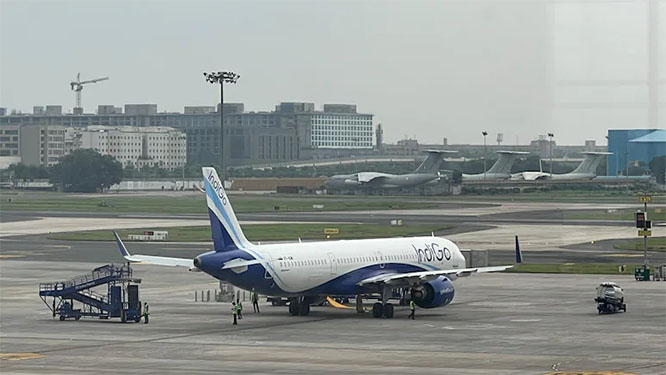
Domestic carrier IndiGo has cancelled over 180 flights from three major airports — Mumbai, Delhi and Bengaluru — on Thursday, December 4, as the airline struggles to secure the required crew to operate its flights in the wake of new flight-duty and rest-period norms for pilots.

While the number of cancellations at Mumbai airport stands at 86 (41 arrivals and 45 departures) for the day, at Bengaluru, 73 flights have been cancelled, including 41 arrivals, according to a PTI report that quoted sources.

"IndiGo cancelled over 180 flights on Thursday at three airports-Mumbai, Delhi and Bengaluru," the source told the news agency.

Besides, it had cancelled as many as 33 flights at Delhi airport for Thursday, the source said, adding, "The number of cancellations is expected to be higher by the end of the day."

The Gurugram-based airline's On-Time Performance (OTP) nosedived to 19.7 per cent at six key airports — Delhi, Mumbai, Chennai, Kolkata, Bengaluru and Hyderabad — on December 3, as it struggled to get the required crew to operate its services, down from almost half of December 2, when it was 35 per cent.

"IndiGo has been facing acute crew shortage since the implementation of the second phase of the FDTL (Flight Duty Time Limitations) norms, leading to cancellations and huge delays in its operations across the airports," a source had told PTI on Wednesday.

Chaos continued at several major airports for the third day on Thursday because of the cancellations.

A spokesperson for the Kempegowda International Airport (KIA) in Bengaluru said that 73 IndiGo flights had been cancelled on Thursday.

At least 150 flights were cancelled and dozens of others delayed on Wednesday, airport sources said, leaving thousands of travellers stranded, according to news agency Reuters.

The Directorate General of Civil Aviation (DGCA) has said it is investigating IndiGo flight disruptions and has asked the airline to submit the reasons for the current situation, as well as its plans to reduce flight cancellations and delays.

It may be mentioned here that the pilots' body, Federation of Indian Pilots (FIP), has alleged that IndiGo, despite getting a two-year preparatory window before the full implementation of new flight duty and rest period norms for cockpit crew, "inexplicably" adopted a "hiring freeze".

The FIP said it has urged the safety regulator, the DGCA, not to approve airlines' seasonal flight schedules unless they have adequate staff to operate their services "safely and reliably" in accordance with the New Flight Duty Time Limitations (FDTL) norms.

In a letter to the DGCA late on Wednesday, the FIP urged the DGCA to consider re-evaluating and reallocating slots to other airlines, which have the capacity to operate them without disruption during the peak holiday and fog season if IndiGo continues to "fail in delivering on its commitments to passengers due to its own avoidable staffing shortages."

Comments

Add new comment

  • Coastaldigest.com reserves the right to delete or block any comments.
  • Coastaldigset.com is not responsible for its readers’ comments.
  • Comments that are abusive, incendiary or irrelevant are strictly prohibited.
  • Please use a genuine email ID and provide your name to avoid reject.
News Network
December 3,2025

indigo.jpg

IndiGo, India’s largest airline, is battling one of its worst operational disruptions in recent years, with hundreds of delays and cancellations throwing domestic travel into chaos.

Government data on Tuesday showed its on-time performance plunging to 35%, an unusual dip for a carrier long associated with punctuality.

By Wednesday afternoon, airports in Delhi, Mumbai, Bengaluru and Hyderabad had collectively reported close to 200 cancellations, stranding travellers across the country.

Crew Shortage After New Duty Norms

A major trigger behind the meltdown is a severe crew shortage, especially among pilots, following the rollout of revised Flight Duty Time Limitation (FDTL) norms last month.

The rules mandate longer rest hours and more humane rosters — a shift IndiGo has struggled to incorporate across its vast network.

Sources said several flights were grounded due to lack of cabin crew, while some delays stretched upwards of eight hours.

With IndiGo controlling over 60% of India’s domestic aviation market, the ripple effect has impacted airports nationwide.

IndiGo Issues Apology, Lists “Compounding Factors”

In a statement, IndiGo acknowledged the large-scale disruption:

“We sincerely apologise to customers. A series of unforeseen operational challenges — technology glitches, winter schedule changes, adverse weather, system congestion and updated FDTL norms — created a compounding impact that could not have been anticipated.”

To stabilise operations, the airline has begun calibrated schedule adjustments for the next 48 hours, aiming to restore punctuality. Affected passengers are being offered refunds or alternate travel arrangements, IndiGo said.

What the FDTL Rules Require

The FDTL norms, designed to reduce pilot fatigue, cap duty and flying hours as follows:
•    Maximum 8 hours of flying per day
•    35 hours per week
•    125 hours per month
•    1,000 hours per year

Crew must also receive rest equalling twice the flight duration, with a minimum 10-hour rest period in any 24-hour window.

The DGCA introduced these limits to enhance flight safety.

Hyderabad: 33 Flights Cancelled, Long Queues Reported

Hyderabad’s Rajiv Gandhi International Airport saw heavy early-morning crowds as 33 IndiGo flights (arrivals and departures) were cancelled.

The airport clarified on X that operations were normal, advising passengers to contact IndiGo directly for latest flight status.

Cancellations included flights to and from Visakhapatnam, Goa, Ahmedabad, Delhi, Bengaluru, Chennai, Madurai, Hubli, Bhopal and Bhubaneswar.

Bengaluru: 42 Flights Disrupted

Bengaluru’s Kempegowda International Airport recorded 42 cancellations — 22 arrivals and 20 departures — affecting routes to Delhi, Mumbai, Chennai, Hyderabad, Goa, Kolkata and Lucknow.

Passengers Vent on Social Media

Irate travellers took to X to share their experiences. One passenger stranded in Hyderabad wrote: “I have been here since 3 a.m. and missed an important meeting.”

Another said: “My flight was pushed from 1:55 PM to 2:55 PM and now 4:35 PM. I was informed only three minutes before entering the airport.”

Delhi Airport Hit by Tech Glitch

At Delhi Airport, the disruption deepened due to a slowdown in the Amadeus system — used for reservations, check-ins and departure control.

The technical issue led to longer queues and sluggish processing, adding to delays already worsened by staff shortages.

Comments

Add new comment

  • Coastaldigest.com reserves the right to delete or block any comments.
  • Coastaldigset.com is not responsible for its readers’ comments.
  • Comments that are abusive, incendiary or irrelevant are strictly prohibited.
  • Please use a genuine email ID and provide your name to avoid reject.
News Network
December 6,2025

pilot.jpg

New Delhi: IndiGo, India’s largest airline, faced major operational turbulence this week after failing to prepare for new pilot-fatigue regulations issued by the Directorate General of Civil Aviation (DGCA). The stricter rules—designed to improve flight safety—took effect in phases through 2024, with the latest implementation on November 1. IndiGo has acknowledged that inadequate roster planning led to widespread cancellations and delays.

Below are the key DGCA rules that affected IndiGo’s operations:

1. Longer Mandatory Weekly Rest

Weekly rest for pilots has been increased from 36 hours to 48 hours.

The government says the extended break is essential to curb cumulative fatigue. This rule remains in force despite the current crisis.

2. Cap on Night Landings

Pilots can now perform only two night landings per week—a steep reduction from the earlier limit of six.

Night hours, defined as midnight to early morning, are considered the least alert period for pilots.

Given the disruptions, this rule has been temporarily relaxed for IndiGo until February 10.

3. Reduced Maximum Night Flight Duty

Flight duty that stretches into the night is now capped at 10 hours.

This measure has also been kept on hold for IndiGo until February 10 to stabilize operations.

4. Weekly Rest Cannot Be Replaced With Personal Leave

Airlines can no longer count a pilot’s personal leave as part of the mandatory 48-hour rest.

Pilots say this closes a loophole that previously reduced actual rest time.

Currently, all airlines are exempt from this rule to normalise travel.

5. Mandatory Fatigue Monitoring

Airlines must submit quarterly fatigue reports along with corrective actions to DGCA.

This system aims to create a transparent fatigue-tracking framework across the industry.

The DGCA has stressed that these rules were crafted to strengthen flight safety and align India with global fatigue-management standards. The temporary relaxations are expected to remain until February 2025, giving IndiGo time to stabilise its schedules and restore normal air travel.

Comments

Add new comment

  • Coastaldigest.com reserves the right to delete or block any comments.
  • Coastaldigset.com is not responsible for its readers’ comments.
  • Comments that are abusive, incendiary or irrelevant are strictly prohibited.
  • Please use a genuine email ID and provide your name to avoid reject.