Indian police uncovered a plot, but Sri Lanka didn’t act

Agencies
April 28, 2019

Colombo, Apr 28: While monitoring the usual channels, Indian police stumbled upon something extraordinary: a detailed plot for what would become the bloodiest attack linked to the Daesh group in South Asia.

Police were investigating suspected sympathizers of the withered caliphate in southern India when a name they had no record of surfaced — National Towheed Jamaat, the Sri Lankan Daesh-backed militant organization that authorities say conducted the coordinated Easter Sunday attacks on churches and hotels in Sri Lanka that killed more than 250 people.

Indian police managed to break into the group’s communications and began tapping into the plot, according to Ajai Sahni, executive director of the Institute for Conflict Management in New Delhi.

“That is why the kind of detailing of the incident they received was very, very specific,” Sahni said. “They knew the group, they knew the targets, they knew the time, they knew the whereabouts of the suicide bombers, and all of this was communicated to the Sri Lankan government.”

Top Sri Lankan officials have acknowledged that some of the island nation’s intelligence units were given advance notice about the attacks — starting weeks ago and up until the morning of the bombings — but that little was done to prevent them.

Both President Maithripala Sirisena, who is also Sri Lanka’s minister of defense and in charge of national police, and Prime Minister Ranil Wickremesinghe, who has been kept out of high-level security meetings since Sirisena tried to oust him last fall, said they only learned about the plot after it had been carried out.

“The fact is, it’s very, very specific information and that has been conveyed to everyone in writing. That is the action that was missing in some cases. That’s what we’re investigating,” Wickremesinghe said.

The first intelligence brief from India arrived April 4, more than two weeks before the bombings. It said a suicide terrorist attack was planned against “some important churches” and listed six people likely to be involved.

The deputy inspector of police shared the report with at least four security unit directors, including those responsible for “VIPs” and foreign embassies, along with a memo, urging the directors to pay extra attention to the places and people in their care.

India’s final intelligence warning came just before the Easter morning blasts, Sahni said.

Why the warnings went unheeded is the subject of intense public debate, with some blaming the dismantling of a system built by former strongman President Mahinda Rajapaksa for rapid response to rebel activity during Sri Lanka’s long civil war.

For 26 years, the Tamil Tigers militants from Sri Lanka’s minority Tamil ethnic community fought for independence from the Buddhist, ethnically Sinhalese-majority state. Military forces under Rajapaksa’s brother, then-Secretary of Defense Gotabhaya Rajapaksa, brutally crushed them in 2009.

The current state minister of defense, Ruwan Wijewardene, said “weakness” within Sri Lanka’s security apparatus led to the failure to prevent the Easter bombings.

Sirisena, while campaigning for the 2015 election to defeat Rajapaksa, had stressed the need for fresh investigations of military officials, including intelligence officers accused of abducting and killing civilians, political opponents and journalists during the civil war.

Since then, some military officials have been arrested on charges related to their actions during the war and remanded in detention facilities. Court cases are ongoing.

But on Friday, Sirisena, perhaps with an eye toward the 2020 election, said that arresting military intelligence officials after the civil war had weakened national security. He promised a shake-up, asking for the resignations of both his secretary of defense and inspector general of police.

Some experts believe Sri Lankan security forces may not have given much credence to Indian intelligence because of its controversial role in the civil war.

India’s Research and Analysis Wing, or RAW, the country’s external intelligence group, initially supported Tamil separatists, training and arming the Liberation Tigers of Tamil Eelman in the 1970s. But after the group’s terrorist activities in the 1980s, RAW withdrew its support.

New Delhi made a pact with Colombo in 1987 to send peacekeeping forces to the island on its southern tip, and they ended up fighting the rebels. They were asked to withdraw a few years later amid allegations of abuses against Tamils. In 1991, Indian Prime Minister Rajiv Gandhi was assassinated by a Tamil Tiger suicide bomber.

India questioned Sri Lanka’s heavy-handed approach to defeating the Tigers in the final months of the war, when tens of thousands of civilians were reportedly killed by government troops. Thousands more are still missing. Ethnic minority Tamils in the country’s north and east are still reeling from the effects of the war.

Indian security and intelligence agencies lost some of their “moral authority” with the Sri Lankans, said M.K. Narayanan, the former head of India’s external intelligence service.

“What really happened was India lost moral authority. India did not accept the policies that were being followed, so they lost a lot of support in Sri Lanka,” he said.

Genealogical and cultural ties between Sri Lanka and India date back thousands of years. According to folklore, the island’s majority Sinhalese are descendants of an Indian prince banished there 2,000 years ago.

The nation’s minority Tamils, meanwhile, are in part the descendants of more than a million tea and rubber plantation workers brought to Sri Lanka from southern India by British colonial rulers in the 18th and 19th centuries.

And India shares intelligence with its neighbors in part to keep them within its sphere of influence, Narayanan said.

Located just 23 kilometers (14 miles) off its southeast coast, India sees Sri Lanka as a bulwark in its military defenses to ward off potential Chinese incursions. Soon after the Easter attacks, India deployed naval and coast guard ships along the narrow Palk Strait.

Comments

Add new comment

  • Coastaldigest.com reserves the right to delete or block any comments.
  • Coastaldigset.com is not responsible for its readers’ comments.
  • Comments that are abusive, incendiary or irrelevant are strictly prohibited.
  • Please use a genuine email ID and provide your name to avoid reject.
News Network
November 26,2025

Mangaluru, Nov 26: Assembly Speaker and local MLA U.T. Khader has initiated a high-level push to resolve one of Mangaluru’s longest-standing traffic headaches: the narrow, high-density stretch of National Highway-66 between Nanthoor and Talapady.

He announced on Tuesday that a formal proposal has been submitted to the Union Ministry of Road Transport and Highways (MoRTH) seeking approval to prepare a Detailed Project Report (DPR) for the widening of this crucial corridor.

The plan specifically aims to expand the existing 45-meter road width to a full 60 meters, coupled with the construction of dedicated service roads. Khader highlighted that land for a 60-meter highway was originally acquired during the initial four-laning project, but only 45 meters were developed, leading to a perpetual bottleneck.

"With vehicle density rising sharply, the expansion has become unavoidable," Khader stated, stressing that the upgrade is essential for ensuring smoother traffic flow and improving safety at the city's main entry and exit points.

The stretch between Nanthoor and Talapady is a vital link on the busy Kochi-Panvel coastal highway and connects to major city junctions. The move to utilize the previously acquired land for the full 60-meter width is seen as a necessary measure to catch up with the region's rapid vehicular growth and prevent further traffic gridlocks.

Comments

Add new comment

  • Coastaldigest.com reserves the right to delete or block any comments.
  • Coastaldigset.com is not responsible for its readers’ comments.
  • Comments that are abusive, incendiary or irrelevant are strictly prohibited.
  • Please use a genuine email ID and provide your name to avoid reject.
News Network
November 30,2025

girlnomore.jpg

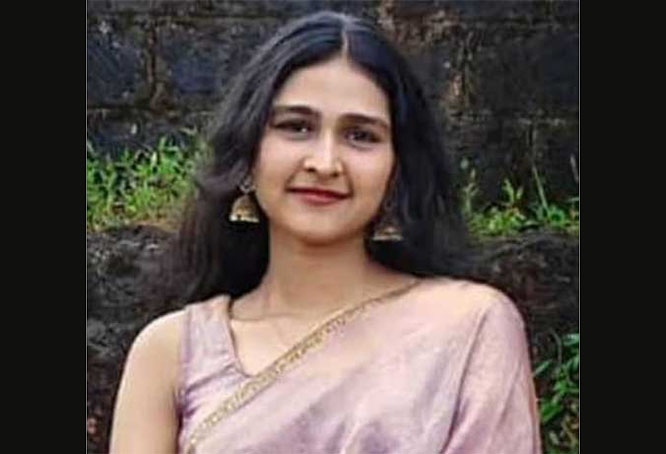
Mangaluru, Nov 30: A 22-year-old college student succumbed to her injuries at a private hospital in Mangaluru today, days after she was hit by a goods tempo while crossing a road in Padubidri.

The deceased has been identified as Preksha, a resident of Nadsalu Billitota in Padubidri. The fatal incident occurred as Preksha, who was returning home after completing her examination, attempted to cross the service road towards Mangaluru. She was struck by a goods tempo approaching from the Udupi side, causing her to fall and sustain a severe head injury.

Prompt action from local residents ensured she received immediate first aid before being rushed to a hospital in Mangaluru for specialised treatment. Despite medical efforts, she passed away while undergoing care.

Preksha was a student at Karavali College, Vamanjoor on the outskirts of Mangaluru city. The tragedy is compounded by the fact that she belonged to a financially vulnerable family, having previously lost her father. She is survived by her mother and brother.

A case related to the accident has been registered at the Padubidri police station, and an investigation is underway to determine the exact circumstances that led to the collision. The incident highlights the growing concerns over road safety, particularly on busy service roads, and serves as a tragic reminder of the human cost of traffic accidents.

Comments

Add new comment

  • Coastaldigest.com reserves the right to delete or block any comments.
  • Coastaldigset.com is not responsible for its readers’ comments.
  • Comments that are abusive, incendiary or irrelevant are strictly prohibited.
  • Please use a genuine email ID and provide your name to avoid reject.
News Network
December 2,2025

DKSsiddu.jpg

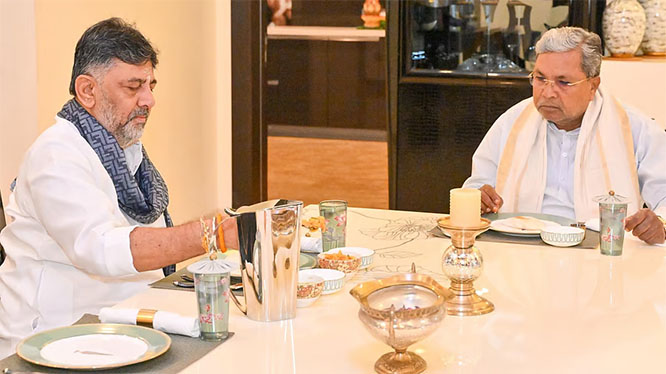
Bengaluru: 'Nati koli saaru' (country chicken curry) considered one of Chief Minister Siddaramaiah’s favourites along with steaming hot idlis was on the breakfast menu at Deputy CM D K Shivakumar’s residence on Tuesday, according to official sources.

The spread also included 'nati koli' fry, vada and pongal, among other items, they said.

In an apparent show of unity, Siddaramaiah visited Shivakumar’s residence for breakfast, just days after the two leaders shared a meal amid a simmering power tussle in the state Congress.

Siddaramaiah drove to the Deputy CM’s residence in Sadashivanagar, where he was received by Shivakumar and his brother D K Suresh, who is a former Congress MP.

Suresh and Kunigal MLA H D Ranganath, a relative of Shivakumar, joined them for breakfast, which featured a mix of vegetarian and non-vegetarian dishes.

Speaking to reporters later, Siddaramaiah said Shivakumar had invited him during his visit to the CM’s residence for breakfast on Saturday.

Asked about the difference between the two meals, the chief minister said, "At his (Shivakumar’s) house it was non-veg, while at my house it was veg. He is a vegetarian, I am a non-vegetarian. I had not prepared non-veg. I told DK to get chicken from the village as you won’t get the original in Bengaluru."

Shivakumar said he had initially invited Siddaramaiah to his residence, but the CM had suggested visiting his place first and reciprocating later. "It was a vegetarian breakfast at the CM’s house on Saturday," he noted.

"Today, I invited him (the CM) to my house. He enjoyed the breakfast, which had his Mysuru taste," Shivakumar added. At this point, Siddaramaiah remarked that Shivakumar’s wife is also from Mysuru.

Saturday’s breakfast at Siddaramaiah’s official residence, held as part of efforts by the Congress high command to ease tensions in the leadership dispute between the two, reportedly included idlis and sambar, according to official sources.

Comments

Add new comment

  • Coastaldigest.com reserves the right to delete or block any comments.
  • Coastaldigset.com is not responsible for its readers’ comments.
  • Comments that are abusive, incendiary or irrelevant are strictly prohibited.
  • Please use a genuine email ID and provide your name to avoid reject.