Indian police uncovered a plot, but Sri Lanka didn’t act

Agencies
April 28, 2019

Colombo, Apr 28: While monitoring the usual channels, Indian police stumbled upon something extraordinary: a detailed plot for what would become the bloodiest attack linked to the Daesh group in South Asia.

Police were investigating suspected sympathizers of the withered caliphate in southern India when a name they had no record of surfaced — National Towheed Jamaat, the Sri Lankan Daesh-backed militant organization that authorities say conducted the coordinated Easter Sunday attacks on churches and hotels in Sri Lanka that killed more than 250 people.

Indian police managed to break into the group’s communications and began tapping into the plot, according to Ajai Sahni, executive director of the Institute for Conflict Management in New Delhi.

“That is why the kind of detailing of the incident they received was very, very specific,” Sahni said. “They knew the group, they knew the targets, they knew the time, they knew the whereabouts of the suicide bombers, and all of this was communicated to the Sri Lankan government.”

Top Sri Lankan officials have acknowledged that some of the island nation’s intelligence units were given advance notice about the attacks — starting weeks ago and up until the morning of the bombings — but that little was done to prevent them.

Both President Maithripala Sirisena, who is also Sri Lanka’s minister of defense and in charge of national police, and Prime Minister Ranil Wickremesinghe, who has been kept out of high-level security meetings since Sirisena tried to oust him last fall, said they only learned about the plot after it had been carried out.

“The fact is, it’s very, very specific information and that has been conveyed to everyone in writing. That is the action that was missing in some cases. That’s what we’re investigating,” Wickremesinghe said.

The first intelligence brief from India arrived April 4, more than two weeks before the bombings. It said a suicide terrorist attack was planned against “some important churches” and listed six people likely to be involved.

The deputy inspector of police shared the report with at least four security unit directors, including those responsible for “VIPs” and foreign embassies, along with a memo, urging the directors to pay extra attention to the places and people in their care.

India’s final intelligence warning came just before the Easter morning blasts, Sahni said.

Why the warnings went unheeded is the subject of intense public debate, with some blaming the dismantling of a system built by former strongman President Mahinda Rajapaksa for rapid response to rebel activity during Sri Lanka’s long civil war.

For 26 years, the Tamil Tigers militants from Sri Lanka’s minority Tamil ethnic community fought for independence from the Buddhist, ethnically Sinhalese-majority state. Military forces under Rajapaksa’s brother, then-Secretary of Defense Gotabhaya Rajapaksa, brutally crushed them in 2009.

The current state minister of defense, Ruwan Wijewardene, said “weakness” within Sri Lanka’s security apparatus led to the failure to prevent the Easter bombings.

Sirisena, while campaigning for the 2015 election to defeat Rajapaksa, had stressed the need for fresh investigations of military officials, including intelligence officers accused of abducting and killing civilians, political opponents and journalists during the civil war.

Since then, some military officials have been arrested on charges related to their actions during the war and remanded in detention facilities. Court cases are ongoing.

But on Friday, Sirisena, perhaps with an eye toward the 2020 election, said that arresting military intelligence officials after the civil war had weakened national security. He promised a shake-up, asking for the resignations of both his secretary of defense and inspector general of police.

Some experts believe Sri Lankan security forces may not have given much credence to Indian intelligence because of its controversial role in the civil war.

India’s Research and Analysis Wing, or RAW, the country’s external intelligence group, initially supported Tamil separatists, training and arming the Liberation Tigers of Tamil Eelman in the 1970s. But after the group’s terrorist activities in the 1980s, RAW withdrew its support.

New Delhi made a pact with Colombo in 1987 to send peacekeeping forces to the island on its southern tip, and they ended up fighting the rebels. They were asked to withdraw a few years later amid allegations of abuses against Tamils. In 1991, Indian Prime Minister Rajiv Gandhi was assassinated by a Tamil Tiger suicide bomber.

India questioned Sri Lanka’s heavy-handed approach to defeating the Tigers in the final months of the war, when tens of thousands of civilians were reportedly killed by government troops. Thousands more are still missing. Ethnic minority Tamils in the country’s north and east are still reeling from the effects of the war.

Indian security and intelligence agencies lost some of their “moral authority” with the Sri Lankans, said M.K. Narayanan, the former head of India’s external intelligence service.

“What really happened was India lost moral authority. India did not accept the policies that were being followed, so they lost a lot of support in Sri Lanka,” he said.

Genealogical and cultural ties between Sri Lanka and India date back thousands of years. According to folklore, the island’s majority Sinhalese are descendants of an Indian prince banished there 2,000 years ago.

The nation’s minority Tamils, meanwhile, are in part the descendants of more than a million tea and rubber plantation workers brought to Sri Lanka from southern India by British colonial rulers in the 18th and 19th centuries.

And India shares intelligence with its neighbors in part to keep them within its sphere of influence, Narayanan said.

Located just 23 kilometers (14 miles) off its southeast coast, India sees Sri Lanka as a bulwark in its military defenses to ward off potential Chinese incursions. Soon after the Easter attacks, India deployed naval and coast guard ships along the narrow Palk Strait.

Comments

Add new comment

  • Coastaldigest.com reserves the right to delete or block any comments.
  • Coastaldigset.com is not responsible for its readers’ comments.
  • Comments that are abusive, incendiary or irrelevant are strictly prohibited.
  • Please use a genuine email ID and provide your name to avoid reject.
News Network
November 27,2025

DKSvokkaliga.jpg

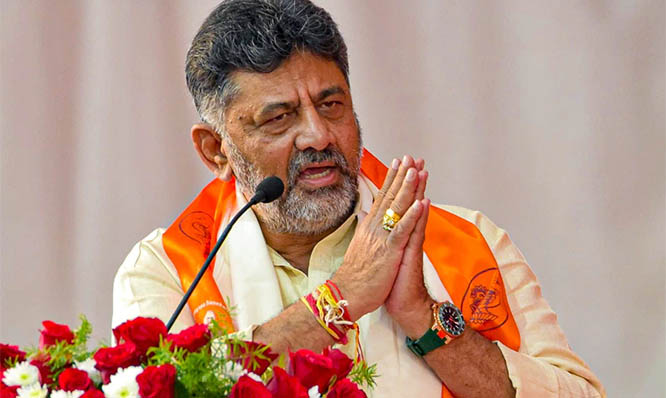
Bengaluru: The Vokkaligara Sangha on Thursday issued a stern warning to the Congress, saying the party could face serious electoral repercussions if Deputy Chief Minister D.K. Shivakumar is not appointed as Chief Minister.

The warning follows the public backing of Shivakumar’s chief ministerial ambition by top Vokkaliga pontiff Nirmalanandanatha Swami, who urged the Congress high command to honor his claim.

“The community supported Congress in the 2023 Assembly elections only because Shivakumar had a real chance to become CM. If he is cheated, we’ll teach the party a big lesson,” said newly elected Sangha president L. Srinivas. He added that Vokkaligas would organize protests under the guidance of community leaders.

General Secretary C.G. Gangadhar pointed out that Congress won more seats in the Vokkaliga-dominated Old Mysuru region due to Shivakumar’s influence, adding, “If Congress wants to retain power, Shivakumar should be made the CM.”

Outgoing president Kenchappa Gowda emphasized Shivakumar’s contribution to Congress’ victory. “Our community voted for Congress thinking he would become CM. Siddaramaiah has also served the party well, but Shivakumar should now be given a chance,” he said.

Former general-secretary Konappa Reddy appealed to Sonia and Rahul Gandhi to recognize Shivakumar’s loyalty and service, saying, “Congress is known to keep its promises. We hope it won’t break the promise made to him.”

Comments

Add new comment

  • Coastaldigest.com reserves the right to delete or block any comments.
  • Coastaldigset.com is not responsible for its readers’ comments.
  • Comments that are abusive, incendiary or irrelevant are strictly prohibited.
  • Please use a genuine email ID and provide your name to avoid reject.
News Network
November 24,2025

lebanon.jpg

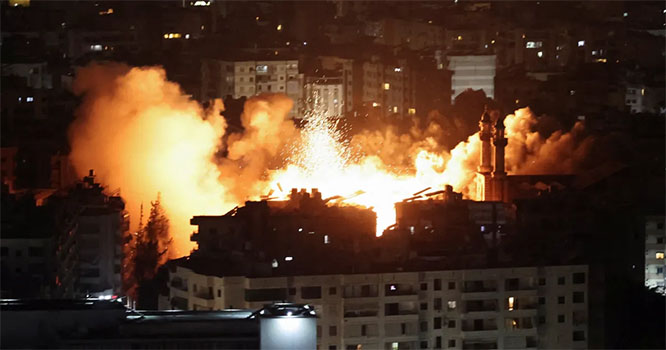
Israel has launched a new act of aggression on a residential neighborhood in Lebanon's capital, Beirut, killing and injuring about two dozen civilians.

The Israeli regime's military said in a statement that its forces carried out a so-called precise strike in a residential apartment in Dahiyeh in the southern suburbs of Beirut on Sunday.

The aggression targeted residential areas, killing at least five people and injuring more than 28 people, Lebanon's Health Ministry said. 

Hezbollah announced the martyrdom of senior Hezbollah commander Haytham Ali Tabatabai and four resistance fighters.

Lebanese President Michel Aoun condemned the airstrike, calling it a clear demonstration of Tel Aviv’s disregard for repeated international calls to halt violations on Lebanese soil.

“Israel refuses to implement international resolutions and all efforts aimed at ending the escalation and restoring stability,” Aoun said, urging the international community to take action to prevent further aggression.

The Palestinian Islamic Jihad movement also condemned the attack, holding the international community accountable. 

“The international community bears responsibility and continues to provide cover for these attacks as long as it does not restrain the occupiers,” said Ali Abu Shahin, a member of the group’s political bureau.

Israeli prime minister Benjamin Netanyahu’s office announced that the Israeli army carried out a strike “in the heart of Beirut."

Netanyahu reportedly approved the operation following recommendations from top Israeli security officials.

Two senior US officials commented on the Israeli strike.

The first official said that Israel did not notify Americans in advance about the attack. "We were informed immediately after the strike was carried out."

The second senior official said that the "US knew for several days that Israel was planning to escalate its strikes in Lebanon, but did not know in advance the timing, location, or target of the strike."

Speaking from the site of the Israeli strike, Lebanese MP Ali Ammar condemned the attack as part of a broader campaign of aggression that has targeted "all of Lebanon since the Washington-sponsored ceasefire."

He stated that "any attack on Lebanon is a violation of red lines; this aggression is part and parcel of the entity that targets Lebanon's dignity, sovereignty, and security of citizens."

Ammar went on to say the resistance is responding with "utmost wisdom, patience, and will confront the enemy at the appropriate time."

"Unfortunately, the enemy is emboldened to commit its aggression by voices within Lebanon that have turned themselves into tools that support its aggression," he added.

The Israeli attack on the southern suburbs of the Lebanese capital is the latest blatant violation of the ceasefire Israel signed with Hezbollah in November 2024, which was intended to end hostilities that had escalated into full-scale war.

An Israeli strike on the Ain al-Hilweh camp near Sidon in southern Lebanon late Tuesday killed at least 14 people. It wounded several others, including young students, according to the Lebanese health ministry.

The military claimed the attack targeted “a Hamas training compound” used to plan and carry out attacks against the regime -- a claim that has frequently been made without evidence.

Hamas rejected the allegations as “a blatant lie aimed at justifying the massacre,” stating it had “no military installations in the Palestinian camps in Lebanon” and that the targeted site was merely “an open sports field.”

According to Lebanese authorities, Israeli attacks have killed approximately 4,000 people and displaced more than 1.2 million residents across the country since October 2023.

Comments

Add new comment

  • Coastaldigest.com reserves the right to delete or block any comments.
  • Coastaldigset.com is not responsible for its readers’ comments.
  • Comments that are abusive, incendiary or irrelevant are strictly prohibited.
  • Please use a genuine email ID and provide your name to avoid reject.
News Network
December 7,2025

SHRIMP.jpg

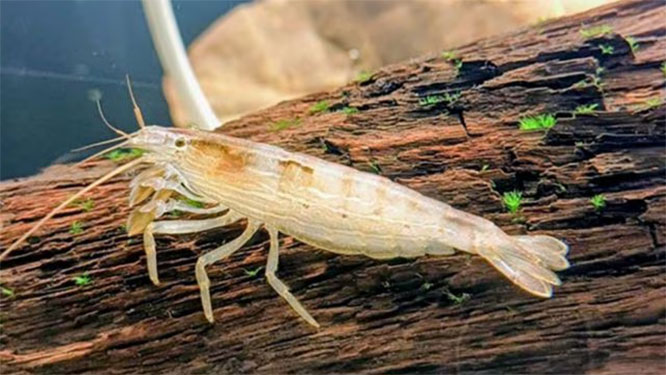
Mangaluru, Dec 7: A rare bamboo shrimp has been rediscovered on mainland India more than 70 years after it was last reported, confirming for the first time the presence of Atyopsis spinipes in the country. The find was made by researchers from the Centre for Climate Change Studies at Sathyabama Institute of Science and Technology, Chennai, during surveys in Karnataka and Odisha.

The team — shrimp expert Dr S Prakash, PhD scholar K Kunjulakshmi, and Mangaluru-based researcher Maclean Antony Santos — combined field surveys, ecological assessments and DNA analysis to identify the elusive species. Their findings, published in Zootaxa, resolve decades of taxonomic confusion stemming from a 1951 report that misidentified the species as Atyopsis moluccensis without strong evidence.

The shrimp has now been confirmed at two locations: the Mulki–Pavanje estuary near Mangaluru and the Kuakhai River in Bhubaneswar. Historical specimens from the Andaman Islands, previously labelled as A. moluccensis, were also found to be misidentified and actually belong to A. spinipes.

The rediscovery began after an aquarium hobbyist in Odisha spotted a shrimp in 2022, prompting systematic surveys across Udupi, Karwar and Mangaluru. Four female specimens were collected in Mulki and one in Odisha, all genetically matching.

Researchers warn the species may exist in very small, vulnerable populations as freshwater habitats face increasing pressure from pollution, sand mining and infrastructure development. All verified specimens have been deposited with the Zoological Survey of India for future reference.

Comments

Add new comment

  • Coastaldigest.com reserves the right to delete or block any comments.
  • Coastaldigset.com is not responsible for its readers’ comments.
  • Comments that are abusive, incendiary or irrelevant are strictly prohibited.
  • Please use a genuine email ID and provide your name to avoid reject.