Justice Chelameswar red flags govt interference, asks CJI to convene full court

DHNS
March 30, 2018

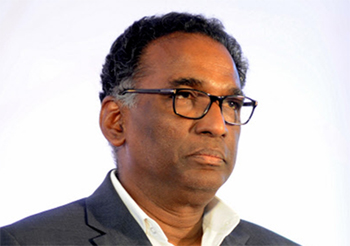
New Delhi, Mar 30: Any "bonhomie" between the judiciary and the government would sound the "death knell" for democracy, senior-most Supreme Court judge Justice J Chelameswar has told the Chief Justice of India (CJI) and urged him to convene a full court to deal with the alleged executive interference in the judiciary.
In an unprecedented letter to the CJI, copies of which were also sent to 22 other apex court judges on March 21, Justice Chelameswar has questioned the probe initiated by Karnataka High Court Chief Justice Dinesh Maheshwari against District and Sessions Judge Krishna Bhat at the request of the Union Ministry of Law and Justice, despite his name being recommended for elevation twice by the Collegium.

Efforts to get a response to the letter from the office of CJI Dipak Misra did not fructify, while several legal luminaries, when contacted, chose not to comment on the matter.

Justice Chelameswar, who had held the unprecedented January 12 press conference along with three other senior judges raising issues including the allocation of cases by the CJI, expressed concern over the executive directly asking the Karnataka Chief Justice to conduct a probe against Bhat, saying this was done even after his name was recommended twice for judgeship by the apex court collegium.

In 2016, then Chief Justice of India T S Thakur had asked the then high court chief justice S K Mukherjee to hold an inquiry against Bhat on certain allegations levelled by a subordinate woman judicial officer. After the probe had given him a clean chit, Bhat's name was recommended by the collegium for elevation.

"Someone from Bangalore (sic) has already beaten us in the race to the bottom. The Chief Justice of Karnataka High Court is more than willing to do the executive bidding, behind our back," Justice Chelameswar wrote in his six-page letter.

Raising the issue of judicial independence, he said, "We, the judges of the Supreme Court of India, are being accused of ceding our independence and our institutional integrity to the Executive's incremental encroachment.

"The executive is always impatient and brooks no disobedience even of the judiciary if it can. Attempts were always made to treat the Chief Justices as the Departmental Heads in the Secretariat. So much for our 'independence and pre-eminence' as a distinct State organ."

The letter said: "Let us also not forget that the bonhomie between the judiciary and the government in any State sounds the death knell to democracy. We both are mutual watchdogs, so to say, no mutual admirers, much less constitutional cohorts".

Justice Chelameswar referred to the "unhappy experience" where the government sat tight over the files even after the Collegium recommends names for appointment in the higher judiciary.

"For some time, our unhappy experience has been that the government's accepting our recommendations is an exception and sitting on them is the norm. 'Inconvenient' but able judges or judges to be are being bypassed through this route," he alleged.

The apex court judge, who demits office on June 22, took serious note of the communication between the Karnataka High Court chief justice and the executive saying, "the role of the High Court ceases with its recommendation".

He said that any correspondence, clarificatory or otherwise, has to be between the executive and the Supreme Court.

The top court judge also said the day may not be "far off" when the executive would directly communicate with the High Court about pending cases and ask what orders are to be passed.

While referring to Bhat's case, he said, "To my mind, I could recollect no instance from the past, of the executive bypassing the Supreme Court, more particularly while its recommendations are pending, to look into the allegations already falsified and conclusively rejected by us.

"Asking the High Court to re-evaluate our recommendation in this matter has to be deemed improper and contumacious."

Beseeching the CJI to take up the issue of executive interference in judiciary by convening a full court on the judicial side, he said this was necessary in order to ensure that the institution (Supreme Court) remained relevant under the scheme of the Constitution.

He also referred to a past instance when the apex court had taken serious note of a direct communication of the then Law Minister to the High Courts on the issue of judges' transfer which had finally led to the judgement in first judges case in 1981. Later, the Collegium had assumed power with regard to judges' appointment in the higher judiciary.

Comments

Add new comment

  • Coastaldigest.com reserves the right to delete or block any comments.
  • Coastaldigset.com is not responsible for its readers’ comments.
  • Comments that are abusive, incendiary or irrelevant are strictly prohibited.
  • Please use a genuine email ID and provide your name to avoid reject.
News Network
November 30,2025

girlnomore.jpg

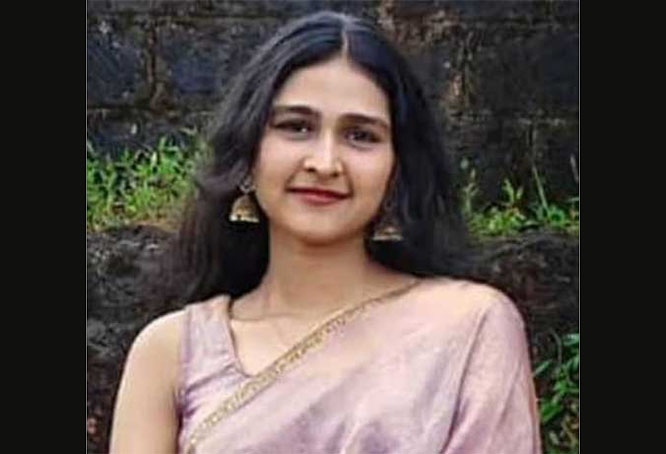
Mangaluru, Nov 30: A 22-year-old college student succumbed to her injuries at a private hospital in Mangaluru today, days after she was hit by a goods tempo while crossing a road in Padubidri.

The deceased has been identified as Preksha, a resident of Nadsalu Billitota in Padubidri. The fatal incident occurred as Preksha, who was returning home after completing her examination, attempted to cross the service road towards Mangaluru. She was struck by a goods tempo approaching from the Udupi side, causing her to fall and sustain a severe head injury.

Prompt action from local residents ensured she received immediate first aid before being rushed to a hospital in Mangaluru for specialised treatment. Despite medical efforts, she passed away while undergoing care.

Preksha was a student at Karavali College, Vamanjoor on the outskirts of Mangaluru city. The tragedy is compounded by the fact that she belonged to a financially vulnerable family, having previously lost her father. She is survived by her mother and brother.

A case related to the accident has been registered at the Padubidri police station, and an investigation is underway to determine the exact circumstances that led to the collision. The incident highlights the growing concerns over road safety, particularly on busy service roads, and serves as a tragic reminder of the human cost of traffic accidents.

Comments

Add new comment

  • Coastaldigest.com reserves the right to delete or block any comments.
  • Coastaldigset.com is not responsible for its readers’ comments.
  • Comments that are abusive, incendiary or irrelevant are strictly prohibited.
  • Please use a genuine email ID and provide your name to avoid reject.
News Network
December 6,2025

pilot.jpg

New Delhi: IndiGo, India’s largest airline, faced major operational turbulence this week after failing to prepare for new pilot-fatigue regulations issued by the Directorate General of Civil Aviation (DGCA). The stricter rules—designed to improve flight safety—took effect in phases through 2024, with the latest implementation on November 1. IndiGo has acknowledged that inadequate roster planning led to widespread cancellations and delays.

Below are the key DGCA rules that affected IndiGo’s operations:

1. Longer Mandatory Weekly Rest

Weekly rest for pilots has been increased from 36 hours to 48 hours.

The government says the extended break is essential to curb cumulative fatigue. This rule remains in force despite the current crisis.

2. Cap on Night Landings

Pilots can now perform only two night landings per week—a steep reduction from the earlier limit of six.

Night hours, defined as midnight to early morning, are considered the least alert period for pilots.

Given the disruptions, this rule has been temporarily relaxed for IndiGo until February 10.

3. Reduced Maximum Night Flight Duty

Flight duty that stretches into the night is now capped at 10 hours.

This measure has also been kept on hold for IndiGo until February 10 to stabilize operations.

4. Weekly Rest Cannot Be Replaced With Personal Leave

Airlines can no longer count a pilot’s personal leave as part of the mandatory 48-hour rest.

Pilots say this closes a loophole that previously reduced actual rest time.

Currently, all airlines are exempt from this rule to normalise travel.

5. Mandatory Fatigue Monitoring

Airlines must submit quarterly fatigue reports along with corrective actions to DGCA.

This system aims to create a transparent fatigue-tracking framework across the industry.

The DGCA has stressed that these rules were crafted to strengthen flight safety and align India with global fatigue-management standards. The temporary relaxations are expected to remain until February 2025, giving IndiGo time to stabilise its schedules and restore normal air travel.

Comments

Add new comment

  • Coastaldigest.com reserves the right to delete or block any comments.
  • Coastaldigset.com is not responsible for its readers’ comments.
  • Comments that are abusive, incendiary or irrelevant are strictly prohibited.
  • Please use a genuine email ID and provide your name to avoid reject.
News Network
November 27,2025

siddDKS.jpg

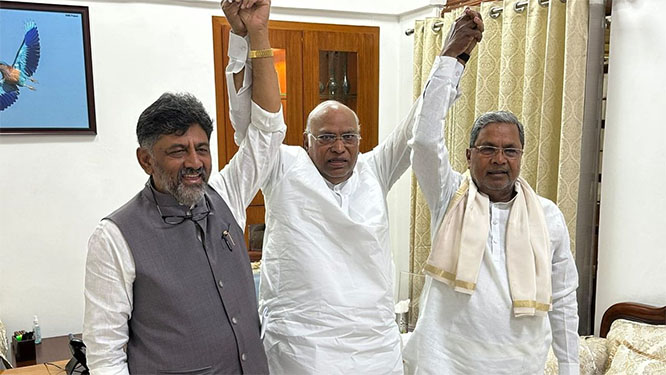
Congress president Mallikarjun Kharge on Thursday announced that he will convene a high-level meeting in New Delhi with senior leaders — including Rahul Gandhi, Karnataka Chief Minister Siddaramaiah and Deputy Chief Minister D.K. Shivakumar — to resolve the escalating leadership turmoil in Karnataka and “put an end to the confusion.”

Kharge said the discussions would focus on the way forward for the ruling party, as rumours of a possible leadership change continue to swirl. The speculation has intensified after the Congress government crossed the halfway mark of its five-year term on November 20, reviving talk of an alleged 2023 “power-sharing agreement” between Siddaramaiah and Shivakumar.

“After reaching Delhi, I will call three or four important leaders and hold discussions. Once we talk, we will decide how to move ahead and end this confusion,” Kharge told reporters in Bengaluru, according to PTI.

When asked specifically about calling Siddaramaiah and Shivakumar to Delhi, he responded: “Certainly, we should call them. We will discuss with them and settle the issue.”

He confirmed that Rahul Gandhi, the Chief Minister, the Deputy Chief Minister and other senior members would be part of the deliberations. “After discussing with everyone, a decision will be made,” he said.

Meanwhile, Siddaramaiah held a separate strategy meeting at his Bengaluru residence with ministers and leaders seen as his close confidants, including G. Parameshwara, Satish Jarkiholi, H.C. Mahadevappa, K. Venkatesh and K.N. Rajanna.
Signalling calm, the Chief Minister told reporters, “Will go to Delhi if the high command calls.”

Shivakumar echoed a similar stance, saying he too would head to the national capital if summoned by the party leadership.

Comments

Add new comment

  • Coastaldigest.com reserves the right to delete or block any comments.
  • Coastaldigset.com is not responsible for its readers’ comments.
  • Comments that are abusive, incendiary or irrelevant are strictly prohibited.
  • Please use a genuine email ID and provide your name to avoid reject.