Kuwait offers $2 billion in loans, investments to rebuild Iraq

Agencies
February 14, 2018

Kuwait City, Feb 14: Kuwait’s ruling Emir Sheikh Sabah Al Ahmad Al Sabah said on Wednesday that his nation will give $1 billion in loans and $1 billion in direct investments to help rebuild Iraq.

The stunning donation, as only a decade ago Saddam Hussein invaded the small, oil-rich nation, shows the deep interest Kuwait has in making sure Iraq becomes a peaceful, stable country after the war against the Islamic State group and the chaos that followed the 2003 United States-led invasion of Baghdad.

“This large assembly of international communities that are here today is reflective of the large loss that Iraq withstood in facing terrorism,” Sheikh Sabah said at a donors' summit at Kuwait City’s Bayan Palace.

“Iraq cannot commence the mission of rebuilding itself without support, which is why we are all here today from all around the world, to stand by Iraq’s side,” he said.

Among the hardest-hit areas in Iraq is the city of Mosul, which Iraqi forces, aided by Iranian-backed Shiite militias and a U.S.-led coalition, recaptured from the Islamic State group in July 2017. Their victory came at a steep cost for Mosul, as coalition airstrikes and extremist suicide car bombs destroyed homes and government buildings.

Of the money needed, Iraqi officials estimate that $17 billion alone needs to go toward rebuilding homes, the biggest single line item offered on Monday, on the first day of meetings. The United Nations estimates 40,000 homes need to be rebuilt in Mosul alone.

The war against the Islamic State group displaced more than 5 million people, only half of whom have returned to their hometowns.

The U.S., under President Donald Trump, also seems uninterested in directly investing in Iraq’s reconstruction.

The U.S. alone spent $60 billion over nine years, some $15 million a day to rebuild Iraq. Around $25 billion went to Iraq’s military, which disintegrated during the lightning 2014 offensive of the Islamic State group, which grew out of Al-Qaida in Iraq. U.S. government auditors also found massive waste and corruption, fueling suspicions of western politicians like Mr. Trump who want to scale back foreign aid.

Meanwhile, regional tensions may affect how spending comes. Iranian Foreign Minister Mohammad Javad Zarif attended the meeting, skipping a group photograph held before.

Meanwhile, Saudi Arabia and other Gulf nations remain suspicious of Iran’s influence in Iraq.

Comments

Add new comment

  • Coastaldigest.com reserves the right to delete or block any comments.
  • Coastaldigset.com is not responsible for its readers’ comments.
  • Comments that are abusive, incendiary or irrelevant are strictly prohibited.
  • Please use a genuine email ID and provide your name to avoid reject.
News Network
November 24,2025

Mangaluru, Nov 24: The original departure time of 11.10 pm was a distant memory for scores of Dammam-bound passengers at Mangaluru International Airport last Friday night, as their Air India Express flight was abruptly cancelled at the eleventh hour, sparking hours of frustration and chaos.

The flight, IX 885, initially scheduled to depart at 11.10 pm on November 22, was subject to two back-to-back reschedules—first pushed to 11.45 pm and then significantly postponed to 1.40 am—before the final, crushing announcement of cancellation was made. For the travellers, many of whom are likely expatriate workers with tight schedules, the last-minute change marked the beginning of a distressing ordeal.

"There was no drinking water, no food, and absolutely no proper guidance. We were left stranded like refugees," complained a stranded passenger.

According to multiple passenger accounts, the airline's ground staff failed to provide adequate support or essential amenities following the cancellation. Complaints poured in about the total absence of drinking water, food provisions, and any reliable guidance from the carrier's representatives. Travellers alleged they were left stranded for a considerable period, with no immediate arrangements or clear communication offered regarding accommodation or alternative travel to send them back home.

The incident has highlighted serious concerns over the carrier's contingency planning and customer service protocols during flight disruptions at one of India's key international gateways. The airline is yet to issue a comprehensive statement addressing the alleged lapse in passenger care.
 

Comments

Add new comment

  • Coastaldigest.com reserves the right to delete or block any comments.
  • Coastaldigset.com is not responsible for its readers’ comments.
  • Comments that are abusive, incendiary or irrelevant are strictly prohibited.
  • Please use a genuine email ID and provide your name to avoid reject.
News Network
November 24,2025

israelsyra.jpg

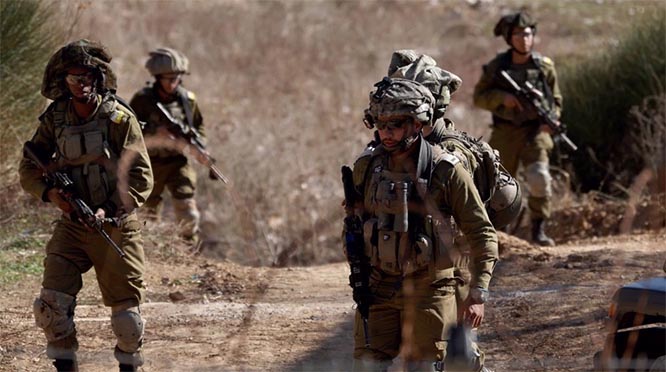
Israeli forces have pushed over the Syrian frontier, erecting a checkpoint and stopping vehicles in the southwestern city of Quneitra, in yet another breach of the Arab country’s sovereignty.

The violation took place on Sunday, when the troops made their way across the border, setting up the outpost near the Ain al-Bayda junction in northern Quneitra, Syrian outlets reported.

According to the al-Ikhbariya paper, an Israeli detachment positioned itself at the junction, halting cars and conducting searches.

The Syrian Arab News Agency (SANA) reported that three Israeli military vehicles then moved further into the northern countryside, deploying between the town of Jubata al-Khashab and the villages of Ofaniya and Ain al-Bayda. The agency added that a separate Israeli unit mounted a new incursion in the central region, approaching the villages of Umm Batina and al-Ajraf.

Residents said such activities have surged in recent months, pointing to Israeli advances onto farmland, leveling of extensive forested areas, arrests, and spread of mobile checkpoints.

The Israeli regime began markedly increasing its military aggression against Syria last year.

The escalation coincided with increasingly ferocious onslaughts throughout the country by the so-called Hay'at Tahrir al-Sham (HTS) Takfiri terrorist group, which the government of President Bashar al-Assad had confined to northwestern Syria. The HTS, however, managed to overthrow the government as the Israeli attacks would pummel the country’s civilian and defensive infrastructure.

Various reports have shown that, during the escalation, the regime conducted more than 1,000 airstrikes on the Syrian territory and over 400 ground raids into the south.

Following the collapse of the Assad government, Tel Aviv also widened its grip over the occupied Golan Heights by taking control of a demilitarized buffer zone, in defiance of a 1974 Disengagement Agreement. Earlier this month, senior Israeli officials, including Prime Minister Benjamin Netanyahu, visited the buffer zone, prompting expressions of alarm on the part of the United Nations.

The United States, the regime’s biggest ally, has, meanwhile, been fraternizing the HTS head Abu Mohammed al-Jolani amid the widely reported prospect of rapprochement with Tel Aviv.

Comments

Add new comment

  • Coastaldigest.com reserves the right to delete or block any comments.
  • Coastaldigset.com is not responsible for its readers’ comments.
  • Comments that are abusive, incendiary or irrelevant are strictly prohibited.
  • Please use a genuine email ID and provide your name to avoid reject.
News Network
December 6,2025

pilot.jpg

New Delhi: IndiGo, India’s largest airline, faced major operational turbulence this week after failing to prepare for new pilot-fatigue regulations issued by the Directorate General of Civil Aviation (DGCA). The stricter rules—designed to improve flight safety—took effect in phases through 2024, with the latest implementation on November 1. IndiGo has acknowledged that inadequate roster planning led to widespread cancellations and delays.

Below are the key DGCA rules that affected IndiGo’s operations:

1. Longer Mandatory Weekly Rest

Weekly rest for pilots has been increased from 36 hours to 48 hours.

The government says the extended break is essential to curb cumulative fatigue. This rule remains in force despite the current crisis.

2. Cap on Night Landings

Pilots can now perform only two night landings per week—a steep reduction from the earlier limit of six.

Night hours, defined as midnight to early morning, are considered the least alert period for pilots.

Given the disruptions, this rule has been temporarily relaxed for IndiGo until February 10.

3. Reduced Maximum Night Flight Duty

Flight duty that stretches into the night is now capped at 10 hours.

This measure has also been kept on hold for IndiGo until February 10 to stabilize operations.

4. Weekly Rest Cannot Be Replaced With Personal Leave

Airlines can no longer count a pilot’s personal leave as part of the mandatory 48-hour rest.

Pilots say this closes a loophole that previously reduced actual rest time.

Currently, all airlines are exempt from this rule to normalise travel.

5. Mandatory Fatigue Monitoring

Airlines must submit quarterly fatigue reports along with corrective actions to DGCA.

This system aims to create a transparent fatigue-tracking framework across the industry.

The DGCA has stressed that these rules were crafted to strengthen flight safety and align India with global fatigue-management standards. The temporary relaxations are expected to remain until February 2025, giving IndiGo time to stabilise its schedules and restore normal air travel.

Comments

Add new comment

  • Coastaldigest.com reserves the right to delete or block any comments.
  • Coastaldigset.com is not responsible for its readers’ comments.
  • Comments that are abusive, incendiary or irrelevant are strictly prohibited.
  • Please use a genuine email ID and provide your name to avoid reject.