At midnight, Riyadh erupts in cheers for a woman in car

Agencies
June 24, 2018

Riyadh, Jun 24: Every few metres someone -- a newlywed couple, a group of young girls with balloons -- stops Samar Almogren to cheer her on or flash her a thumbs-up.

It's midnight in Riyadh, and she's making her way across the city she was born and raised in, finally in the driver's seat of her own car.

Saudi Arabia's notorious ban on women driving ended today. After drinking tea and counting down the minutes, at midnight, Samar -- a TV anchor and mother-of-three -- went upstairs to kiss her four-year-old son Salloum goodnight.

She then put on a flowing white abaya, strode out of her front door, accompanied by her best friend, and walked towards a white GMC parked outside her house in the Narjiss neighbourhood in northern Riyadh.

Across the street, her neighbour had just arrived home with two bags of groceries. He paused, placed his shopping on the hood of his car, and watched her closely.

In her cateye glasses, wedge sandals and nose ring, she did not skip a beat. She smiled, climbed in, started the ignition and pulled out of her parking spot.

"I have goosebumps," she says as she turns onto the King Fahd highway, the main road in the Saudi capital.

She drives in silence for a few minutes, glancing up at the moon, then adds: "I never in my life imagined I would be driving here. On this road. Driving."

The question of whether Saudi Arabian society is "ready" for women to drive has been hotly debated in the kingdom.

In 2013, Sheikh Saleh al-Luhaidan, a notable Saudi cleric, announced driving could damage a woman's ovaries and push the pelvis up, thus leading to birth defects.

Resistance to the end of the driving ban still resonates across some segments of society, with songs titled "You will not drive" and "No woman no drive" popping up on social media in recent weeks.

But as she drives across Riyadh, men and women stopped Samar's SUV to congratulate her and voice their support.

A group of men in their 20s, waiting for the police assessment of a minor accident, spot Samar driving by. They smile and cheer. The policeman, too, looks up and smiles.

A man in a suit, smoking on a sidewalk, applauds her loudly. A young couple walking hand-in-hand -- him in a t-shirt and jeans, her in head-to-toe black abaya and niqab -- stop to flash her a thumbs-up and a victory sign.

"I'm proud, proud, proud," says one man driving by the scene. "It feels like a holiday".

"This is the society they say is not ready for women to drive," Samar says, visibly moved.

Samar, whose youngest son was born with Down's syndrome, has already decided where she will drive the next day.

"My first trip, tomorrow, is to take Salloumi to my mother's house," she says. "And then to take my mother wherever she wants."

For many, the end of Saudi Arabia's driving ban for women is a welcome step, but far from enough in a country that still has a guardianship system in 2018.

Under the system, women need the permission of their closest male relative -- husband, father, brother or even son -- for most facets of life, including travelling, enrolling in school and in certain cases receiving medical attention.

Samar says she is fully aware that her newfound freedom to drive was not the fruit of activists who have long fought Saudi Arabia's repressive gender policies -- some of whom were arrested just this month.

Decades of campaigning by activists failed to achieve what one stroke of the king's pen ended in a royal decree signed last year.

"This was a political decision," she says.

But the will for women to drive in Saudi Arabia -- like the will to dismantle the guardianship system -- goes back nearly two decades.

On November 6, 1990, 47 women drove themselves through the streets of Riyadh in an act of protest against, and in defiance of, the ban, stopping only when they were arrested.

Some lost their jobs. Others lost the support of their families. What was not lost was their cause.

One of the women, Faiza al-Bakr, now works with Samar at the national paper where she runs a twice-weekly column.

"It was them," Samar says of Bakr and the 46 others. "They're the ones who started it all for us. They're the ones who cut the yellow tape."

Comments

Add new comment

  • Coastaldigest.com reserves the right to delete or block any comments.
  • Coastaldigset.com is not responsible for its readers’ comments.
  • Comments that are abusive, incendiary or irrelevant are strictly prohibited.
  • Please use a genuine email ID and provide your name to avoid reject.
News Network
November 28,2025

fire.jpg

Several Syrians were killed and more than two dozen others injured in Israeli strikes on the outskirts of Damascus, amid intensified incursions by the occupying regime since the fall of former president Bashar al-Assad and the rise of Hayat Tahrir al-Sham (HTS) rule.

Syrian state TV reported that the casualties occurred during an overnight Israeli assault involving helicopters and drones on the town of Beit Jinn in the Damascus countryside. The attack followed an Israeli military unit’s entry into the town, where they were surrounded by local residents, leading to gunfire and direct confrontations.

According to the report, “The occupation army’s helicopters and artillery shelled Beit Jinn, located at the foothills of Mount Hermon, resulting in 13 martyrs and 25 injured civilians.” The broadcaster did not specify the full extent of damage.

Al-Ikhbariyah Syria confirmed that the shelling coincided with Israeli soldiers entering Beit Jinn, while artillery pounded surrounding areas. The broadcaster stated that the escalation began after local residents clashed with an Israeli patrol that had infiltrated the southern town and “kidnapped” three young men.

Following a two-hour exchange of heavy fire, Israeli forces withdrew and repositioned on the hill of Butt al-Warda at the town’s outskirts.

Israeli media acknowledged that six soldiers were wounded in the clashes—three of them seriously—describing the confrontation as a “sudden ambush” that forced the deployment of reserve units and air support to secure an exit route. No further details were provided.

The aggression has fueled renewed displacement from Beit Jinn, with residents fleeing to nearby villages amid increasingly frequent Israeli attacks.

The raid came just a day after Israeli troops carried out another ground incursion into Umm al-Luqas village in Quneitra province. According to SANA, an Israeli unit in four vehicles entered the village, raided several homes, and later withdrew.

Syria condemned the repeated incursions as violations of the 1974 Disengagement Agreement and UN resolutions, urging the international community to enforce compliance and pressure Israel to halt its operations and withdraw fully.

Israel has expanded its attacks across Syrian territory following the collapse of the Assad government last year. Prime Minister Benjamin Netanyahu has reportedly instructed his forces to push deeper into Syrian territory and seize strategic positions.

Meanwhile, critics say the HTS-led interim government’s inaction and growing normalization gestures toward Israel have emboldened Tel Aviv to intensify its military operations. HTS, formerly linked to al-Qaeda, seized control of Damascus last December, formally ending Assad’s rule.

Comments

Add new comment

  • Coastaldigest.com reserves the right to delete or block any comments.
  • Coastaldigset.com is not responsible for its readers’ comments.
  • Comments that are abusive, incendiary or irrelevant are strictly prohibited.
  • Please use a genuine email ID and provide your name to avoid reject.
News Network
December 2,2025

Puttur: The long-cherished dream of a government medical college in Puttur has moved a decisive step closer to reality, with the Karnataka State Finance Department granting its official approval for the construction of a new 300-bed hospital.

Puttur MLA Ashok Kumar Rai announced the crucial development to reporters on Monday, confirming that the official communication from the finance department was issued on November 27. This 300-bed facility is intended to be the cornerstone for the establishment of the government medical college, a project announced in the state budget.

Fast-Track Implementation

The MLA outlined an aggressive timeline for the project:

•    A Detailed Project Report (DPR) for the hospital is expected to be ready within 45 days.

•    The tender process for the construction will be completed within two months.

Following the completion of the tender process, Chief Minister Siddaramaiah is scheduled to lay the foundation stone for the project.

"Setting up a medical college in Puttur is a historical decision by the Congress government in Karnataka," Rai stated. The project has an estimated budget allocation of Rs 1,000 crore for the medical college.

Focus on Medical Education Department

The MLA highlighted a key strategic move: requesting the government to implement the hospital construction through the Medical Education Department instead of the Health and Family Welfare Department. This is intended to streamline the entire process of establishing the full medical college, ensuring the facilities—including labs, operation theatres, and other necessary infrastructure—adhere to the strict guidelines set by the Medical Council of India (MCI). The proposed site for the project is in Bannur.

Rai also took the opportunity to address political criticism, stating that the government has fulfilled its promise despite "apprehensions" and "mocking and criticising" from opposition parties who had failed to take similar initiatives when they were in power. "Chief Minister Siddaramaiah has kept his word," he added.

Comments

Add new comment

  • Coastaldigest.com reserves the right to delete or block any comments.
  • Coastaldigset.com is not responsible for its readers’ comments.
  • Comments that are abusive, incendiary or irrelevant are strictly prohibited.
  • Please use a genuine email ID and provide your name to avoid reject.
News Network
November 22,2025

gaza.jpg

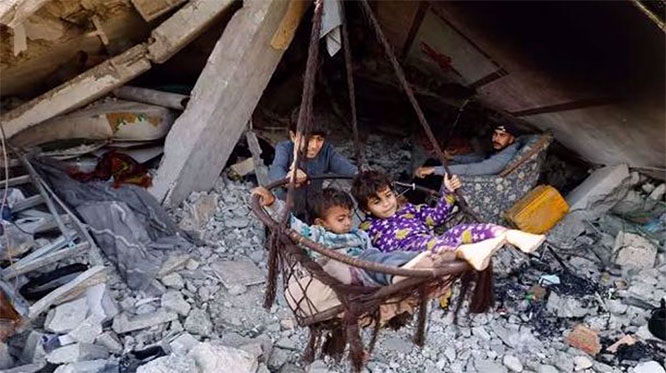
The Israeli regime’s forces have killed two Palestinian children in the Gaza Strip every day since the ceasefire began in early October, UNICEF has warned.

The UN children’s agency said on Friday that Israeli forces continue to attack Palestinians in Gaza even though the agreement was meant to stop the killing.

“Since 11 October, while the ceasefire has been in effect, at least 67 children have been killed in conflict-related incidents in the Gaza Strip. Dozens more have been injured. That is an average of almost two children killed every day since the ceasefire took effect,” UNICEF spokesperson Ricardo Pires said in Geneva, reminding that each number in the statistics represents a child whose life had ended violently.

“These are not statistics,” he said. “Each child had a story, a family, and a future that was stolen from them.”

Data from Palestinian factions, human rights groups, and government bodies recorded since the US-brokered ceasefire deal went into effect on October 10 show that Israeli forces have carried out numerous attacks, each constituting a separate ceasefire violation.

UNICEF teams say they repeatedly continue to witness heart-wrenching scenes of fearful Palestinian children sleeping outdoors with amputated limbs, while others live as orphans in flooded, makeshift shelters.

“I saw this myself in August. There is no safe place for them. The world cannot normalize their suffering,” Pires said, lamenting that the UN could “do a lot more if the aid that is really needed was entering faster.”

The UNICEF spokesperson warned that with the advent of winter, the risks for hundreds of thousands of displaced children will increase.

He warned, “The stakes are incredibly high” for children as winter acts as a threat multiplier, where children have no heating, no insulation, and few blankets. He said respiratory infections rise.

“Too many children have already paid the highest price,” Pires said. “Too many are still paying it, even under a ceasefire. The world promised them it would stop and that we would protect them.”

“Now we must act like it,” the UNICEF spokesperson added.

Since the Israeli regime launched its genocidal war against Palestinians in Gaza in October 2023, it has killed nearly 70,000 people in the territory, most of them women and children, and injured over 170,000 more, while reducing most of the structures in the enclave to rubble.

Comments

Add new comment

  • Coastaldigest.com reserves the right to delete or block any comments.
  • Coastaldigset.com is not responsible for its readers’ comments.
  • Comments that are abusive, incendiary or irrelevant are strictly prohibited.
  • Please use a genuine email ID and provide your name to avoid reject.