Kannada novelist, short story writer Sara Aboobacker passes away at 87

News Network
January 10, 2023

sara.jpg

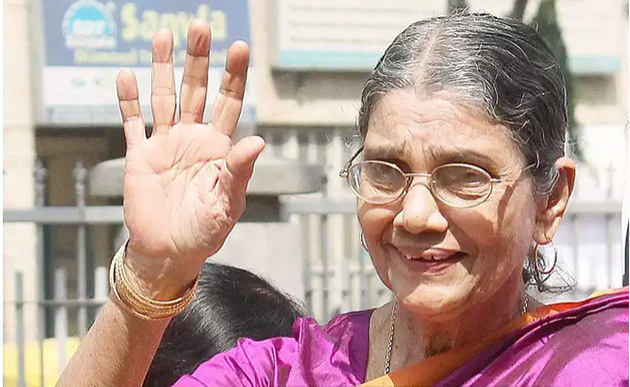
Mangaluru, Jan 10: Veteran Kannada writer, novelist, short story writer, translator and feminist Sara Aboobacker passed away at a private hospital in the city due to age related ailment. She was 87. 

Sara was born in Kasargod, Kerala on 30 June 1936, to Pudiyapuri Ahmad and Zainabi Ahmad. She has four brothers. 

She was married after graduating from a local Kannada school and went on to have four sons. She claimed that her desire to further her education was constrained by community norms that restricted female access to higher education, and that she was only able to obtain a library membership in 1963.

Sara Aboobacker's books largely focus on the lives of a particular section of Muslim women living in the Kasaragod region. She focused on issues of alleged inequality and injustice within her community, critiquing patriarchal systems within religious and familial groups.

She had claimed that she preferred a realist approach to literature, prioritizing the expression of social concerns over stylistic embellishments. Her books have dealt with controversial subjects such as marital rape, communal and religious violence, and individual autonomy.

Works

In 1981, Aboobacker published her first article, an editorial on communal harmony, in a local monthly Kannada-language magazine, Lankesh Patrike. Following this she began writing stories and novels, focusing on her own community, the Beary people, a Muslim community living across coastal Karnataka and surrounding areas.

Aboobacker is most well-known for her first novel, Chandragiriya Theeradalli (1981), which was later translated into English by Vanamala Vishwanatha as Breaking Ties and into Marathi by Shivarama Padikkal in 1991. 

The novel was initially published in serialised form in a local monthly magazine, Lankesh Patrike, and later republished as a novel. It focuses on the life of Nadira, a young Muslim woman attempting to assert independence first from her father, and later, from her husband. Chandragiriya Theeradalli has been adapted for the theatre, with a script written by Roopa Koteshwar being produced in 2016.

In 2019, a district court ruled in favour of Aboobacker in a suit she had filed for copyright infringement against the makers of the film Byari. The film had won the Swarna Kamal Award at the 59th National Film Festival in 2011. The District Court found that it was based primarily on Aboobacker's book, Chandragiriya Theeradalli and that the producers had not obtained her permission to adapt the book for their film.

Her novel, Vrajagalu (1988) was in 2022 made into a film produced by Devendra Reddy, titled Saaravajra. The film stars actress Anu Prabhakar Mukherjee as the protagonist, Nafisa, and traces her life from childhood to old age, as she navigates marriage, and divorce within the Muslim community in Kasargod.

From 1994, Aboobacker was publishing her works under her own publication company, Chandragiri Prakashan. Aboobaker has translated into Kannada books by T. V. Eachara Warrier, Kamala Das and B. M. Suhara.

Awards and honours

In 1984, she received the Karnataka Sahitya Akademi Award

In 1987, she received the Anupama Nirajan Award.

From 1990 to 1994, she served as president of a local writers' association, the Karavali Lekhakiyara mattu Vachakiyara Sangha.

In 1995, she received the Kannada Rajyotsava Award.

In 1996, she received the Rathnamma Heggade Mahila Sahitya Award.

Daana Chintamani Attimabbe Award in 2001 by Government of Karnataka

In 2006, she received the Nadoja Award from Hampi University for her contributions to literature.In 2008, she was awarded an honorary doctorate from Mangalore University.

Comments

Add new comment

  • Coastaldigest.com reserves the right to delete or block any comments.
  • Coastaldigset.com is not responsible for its readers’ comments.
  • Comments that are abusive, incendiary or irrelevant are strictly prohibited.
  • Please use a genuine email ID and provide your name to avoid reject.
News Network
November 22,2025

The Karnataka government has announced a 50% rebate on pending traffic and transport fines. The discount is available from November 21 to December 12.

The rebate applies to all traffic e-challans and violation cases booked by the RTO between 1991–92 and 2019–20. Officials clarified that the offer is not applicable to pending tax dues and is restricted only to traffic-violation fines.

Across Karnataka, more than 4 lakh RTO cases remain pending, including those involving transport vehicles. While thousands of vehicle owners have already cleared their dues, the department expects to generate substantial revenue through this limited-period rebate.

How to Pay and Avail the Discount

There are three ways to check and pay your pending fines:

1. Through Mobile Apps
Available on both Play Store and App Store:
•    Karnataka State Police (KSP) app
•    KarnatakaOne app
•    ASTraM app

Steps:
•    Enter your vehicle number in any of the above apps
•    Verify the photo/details of your vehicle
•    Pay the fine with the 50% discount applied

2. Visit a Traffic Police Station

You can pay your pending fine at any nearby traffic police station.

3. Visit the Traffic Management Centre (TMC)

•    Location: First Floor, Infantry Road, near Indian Express, Bengaluru

Transport Commissioner Yogeesh A M said, “We don't issue e-challans, so there's no online payment system.”

The department estimates ₹52 crore in pending RTO fines up to March 2020. “With the 50% rebate, we expect to collect around ₹25 crore if all dues are cleared,” he added.

Comments

Add new comment

  • Coastaldigest.com reserves the right to delete or block any comments.
  • Coastaldigset.com is not responsible for its readers’ comments.
  • Comments that are abusive, incendiary or irrelevant are strictly prohibited.
  • Please use a genuine email ID and provide your name to avoid reject.
News Network
November 26,2025

students.jpg

Bengaluru, Nov 26: Karnataka is taking its first concrete steps towards lifting a three-decade-old ban on student elections in colleges and universities. Deputy Chief Minister D.K. Shivakumar announced Wednesday that the state government will form a small committee to study the reintroduction of campus polls, a practice halted in 1989 following incidents of violence.

Speaking at a 'Constitution Day' event organised by the Karnataka Congress, Mr. Shivakumar underscored the move's aim: nurturing new political leadership from the grassroots.

"Recently, (Leader of the Opposition in Lok Sabha) Rahul Gandhi wrote a letter to me and Chief Minister (Siddaramaiah) asking us to think about restarting student elections," Shivakumar stated. "I'm announcing today that we'll form a small committee and seek a report on this."

Student elections were banned in Karnataka in 1989, largely due to concerns over violence and the infiltration of political party affiliates into campus life. The ban effectively extinguished vibrant student bodies and the pipeline of young leaders they often produced.

Mr. Shivakumar, who also serves as the Karnataka Congress president, said that former student leaders will be consulted to "study the pros and cons" of the re-introduction.

Acknowledging the history of the ban, he added, "There were many criminal activities taking place back then. We’ll see how we can conduct (student) elections by regulating such criminal activities."

The Deputy CM reminisced about his own journey, which began on campus. He recalled his political activism at Sri Jagadguru Renukacharya College leading to his first Assembly ticket in 1985 at the age of 23. "That's how student leadership was at the time. Such leadership has gone today. College elections have stopped," he lamented, adding that for many, college elections were "like a big movement" where leaders were forged.

The move, driven by the Congress high command's push to cultivate young talent, will face scrutiny from academics and university authorities who have, in the past, expressed concern that the return of polls could disrupt the peaceful academic environment and turn campuses into political battlegrounds.

Comments

Add new comment

  • Coastaldigest.com reserves the right to delete or block any comments.
  • Coastaldigset.com is not responsible for its readers’ comments.
  • Comments that are abusive, incendiary or irrelevant are strictly prohibited.
  • Please use a genuine email ID and provide your name to avoid reject.
News Network
November 22,2025

gaza.jpg

The Israeli regime’s forces have killed two Palestinian children in the Gaza Strip every day since the ceasefire began in early October, UNICEF has warned.

The UN children’s agency said on Friday that Israeli forces continue to attack Palestinians in Gaza even though the agreement was meant to stop the killing.

“Since 11 October, while the ceasefire has been in effect, at least 67 children have been killed in conflict-related incidents in the Gaza Strip. Dozens more have been injured. That is an average of almost two children killed every day since the ceasefire took effect,” UNICEF spokesperson Ricardo Pires said in Geneva, reminding that each number in the statistics represents a child whose life had ended violently.

“These are not statistics,” he said. “Each child had a story, a family, and a future that was stolen from them.”

Data from Palestinian factions, human rights groups, and government bodies recorded since the US-brokered ceasefire deal went into effect on October 10 show that Israeli forces have carried out numerous attacks, each constituting a separate ceasefire violation.

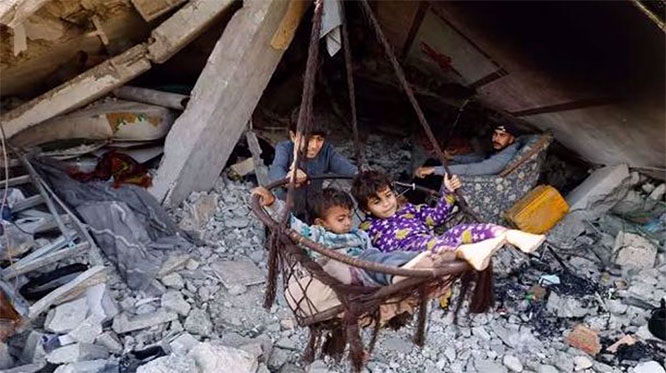
UNICEF teams say they repeatedly continue to witness heart-wrenching scenes of fearful Palestinian children sleeping outdoors with amputated limbs, while others live as orphans in flooded, makeshift shelters.

“I saw this myself in August. There is no safe place for them. The world cannot normalize their suffering,” Pires said, lamenting that the UN could “do a lot more if the aid that is really needed was entering faster.”

The UNICEF spokesperson warned that with the advent of winter, the risks for hundreds of thousands of displaced children will increase.

He warned, “The stakes are incredibly high” for children as winter acts as a threat multiplier, where children have no heating, no insulation, and few blankets. He said respiratory infections rise.

“Too many children have already paid the highest price,” Pires said. “Too many are still paying it, even under a ceasefire. The world promised them it would stop and that we would protect them.”

“Now we must act like it,” the UNICEF spokesperson added.

Since the Israeli regime launched its genocidal war against Palestinians in Gaza in October 2023, it has killed nearly 70,000 people in the territory, most of them women and children, and injured over 170,000 more, while reducing most of the structures in the enclave to rubble.

Comments

Add new comment

  • Coastaldigest.com reserves the right to delete or block any comments.
  • Coastaldigset.com is not responsible for its readers’ comments.
  • Comments that are abusive, incendiary or irrelevant are strictly prohibited.
  • Please use a genuine email ID and provide your name to avoid reject.