Where the Green Ants Dream' screened for public

September 10, 2011

Mangalore, September 10: Everything is moving, just like the earth. If the earth was static, then ropes were required to hold it still – is brought out marvellously in the film, 'Where the Green Ants Dream', screened for the public by Ellipses, the film club of the Department of Mass Communication, St. Aloysius College, here on Saturday.

The movie directed by Werner Herzog of Germany portrays the dispute between the mining company who intends to start an Uranium extraction in an area covered by ant hills in Australia and the aborigines with the belief that this particular area is the place where the ants dream.

Lance Hackett, the geologist employed by the mining company to test the soil for the extraction is in a fix as the aborigines very adamantly state that destroying these ant hills will destroy humanity and cause destruction in the land. They show their disapproval by singing, dancing and sitting in that land inspite of the tractor moving towards them.

As the movie progresses the turmoil between the two parties increases. Meanwhile, the mining company tries to convince the aborigines by offering various solutions in terms of money and other source of revenue. They also try to grant certain benefits to them. But it is all in vain.

Two aborigines are then taken on a visit to the city where they come across a military aeroplane and express desire to own it. The mining company sensing that this might be a way to get their way through the deal buy an aeroplane for the aborigines.

Despite the deal, there is further clash between the two sides resulting in the matter going to the Supreme Court of the commonwealth. The arguments from both the sides are heard in the presence of experts.

The mining company finally wins the case. This is followed by a moment of panic when two aborigines, by themselves, take the aeroplane which contains very little fuel. The movie ends on a sad note as the aborigines helplessly witness their land being destroyed.

Following the film screening, the students and lecturers discussed and analysed the film. The use of sound, music, expressions, signs and symbols in the film were the main topics of discussion. Public, students and lecturers were present at the movie screening.

FLm_1

FLm_2

FLm_3

FLm_4

FLm_5

Comments

Add new comment

  • Coastaldigest.com reserves the right to delete or block any comments.
  • Coastaldigset.com is not responsible for its readers’ comments.
  • Comments that are abusive, incendiary or irrelevant are strictly prohibited.
  • Please use a genuine email ID and provide your name to avoid reject.
News Network
December 7,2025

SHRIMP.jpg

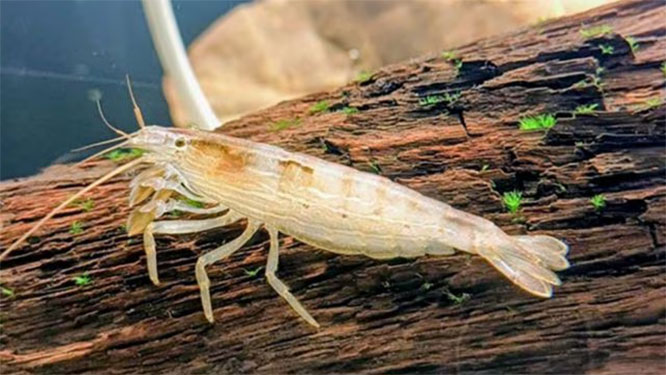
Mangaluru, Dec 7: A rare bamboo shrimp has been rediscovered on mainland India more than 70 years after it was last reported, confirming for the first time the presence of Atyopsis spinipes in the country. The find was made by researchers from the Centre for Climate Change Studies at Sathyabama Institute of Science and Technology, Chennai, during surveys in Karnataka and Odisha.

The team — shrimp expert Dr S Prakash, PhD scholar K Kunjulakshmi, and Mangaluru-based researcher Maclean Antony Santos — combined field surveys, ecological assessments and DNA analysis to identify the elusive species. Their findings, published in Zootaxa, resolve decades of taxonomic confusion stemming from a 1951 report that misidentified the species as Atyopsis moluccensis without strong evidence.

The shrimp has now been confirmed at two locations: the Mulki–Pavanje estuary near Mangaluru and the Kuakhai River in Bhubaneswar. Historical specimens from the Andaman Islands, previously labelled as A. moluccensis, were also found to be misidentified and actually belong to A. spinipes.

The rediscovery began after an aquarium hobbyist in Odisha spotted a shrimp in 2022, prompting systematic surveys across Udupi, Karwar and Mangaluru. Four female specimens were collected in Mulki and one in Odisha, all genetically matching.

Researchers warn the species may exist in very small, vulnerable populations as freshwater habitats face increasing pressure from pollution, sand mining and infrastructure development. All verified specimens have been deposited with the Zoological Survey of India for future reference.

Comments

Add new comment

  • Coastaldigest.com reserves the right to delete or block any comments.
  • Coastaldigset.com is not responsible for its readers’ comments.
  • Comments that are abusive, incendiary or irrelevant are strictly prohibited.
  • Please use a genuine email ID and provide your name to avoid reject.