EU demands duty-free car imports into India; domestic auto industry worried

April 12, 2013

EU_duty-free_car
New Delhi, Apr 12: The domestic auto industry is foxed with the latest demand from the European Union — to allow zero duty import of cars.

The proposal, which has come at the behest of the German lobby that includes global giants like Mercedes, BMW and Audi, has so far been resisted by the government but it has set off fresh fears in the industry that the government may agree to cut tariffs to as low as 5-10 % from the notified rate of 60%. After all, the government has done a series of U-turns on its position despite getting nothing much in return.

"We hope India does not give in," said Vishnu Mathur, head of Siam, the auto industry lobby group.

From holding out on cutting import duty on cars and wines and spirits to giving a firm grip to European companies in government contracts and decisions that could hinder medicine exports, the government has gone the extra mile to accommodate EU's interests.

What it has so far got in return is the promise of zero-duty textiles exports, which will put it on par with Bangladesh, while the European trading bloc has resisted any move to ease visa rules or make it simpler for Indian IT companies to do business in the 27 member countries.

Lower duty good for car buyers

While allowing professionals and contract service providers into EU, there is a safeguard clause that will kick in when 20% of the committed number of professionals enter the territory. This clause will virtually render the "flexibility" meaningless but European negotiators are unwilling to concede any ground on it.

Lower duty on cars is good for consumers dreaming of buying the latest hot rod but is bad news for creating jobs in not just the automobile industry but even in components and logistics that depend on it. In fact, it was to protect these segments that the government had chosen to keep tariffs at 100% levels after import restrictions were eased.

But during the negotiations with EU — led by commerce and industry minister Anand Sharma and closely monitored by Prime Minister Manmohan Singh — the tariff walls are all set to collapse. India has already conceded that it will lower import duty to 30% from 2017 before cutting it to 20% in 2020.

Similarly, customs duty on "high-end" wine is proposed to be slashed to 30% from near 150% levels. Although the move may not be palatable to local players, consumers would be literally uncorking the bubbly as duty will fall on bottles that cost over $3.75.

In return, it is offering to lower customs duty on sensitive goods such as milk powder , a move that will put local dairies at risk.

What has come as a huge surprise is that EU reopened talks on auto import tariffs just when the issue looked settled . When Sharma meets his EU counterpart Karel De Gucht on Monday, the issues will be back on the agenda, amid fears that the deal will be sealed in Brussels. The fears stem from the undue haste shown by the government in doing a series of Uturns .

Despite maintaining for years that it will not give any preference to European firms in government contracts , negotiators have now agreed to treat them at par with Indian companies for contracts below a threshold — likely to be fixed at Rs 100 crore. For contracts beyond the trigger point, there will be international competitive bidding. "It will also put Indian SMEs at a disadvantage since their counterparts from EU will be given the same treatment in contracts," said Third World Network's K M Gopakumar.

Similarly, on Bilateral Investment Protection Agreement , something that EU was initially not keen to negotiate, India has gone beyond what it has done for any other country despite the prospect of having to shell out billions after challenges from a host of overseas investors ranging from Telenor and Sistema to The Children's Investment Fund (TCIF).

Again, on intellectual property rights, the government's record is patchy. It may accept a proposal from EU to certify that goods exported out of India meet the norms, a task which is so far performed by European customs agents. Even on geographical indications, negotiators have softened their stance saying that they will consider special dispensation for countries that are signatories to international agreements and purely on a reciprocal basis.

Comments

Add new comment

  • Coastaldigest.com reserves the right to delete or block any comments.
  • Coastaldigset.com is not responsible for its readers’ comments.
  • Comments that are abusive, incendiary or irrelevant are strictly prohibited.
  • Please use a genuine email ID and provide your name to avoid reject.
News Network
December 6,2025

indigoticket.jpg

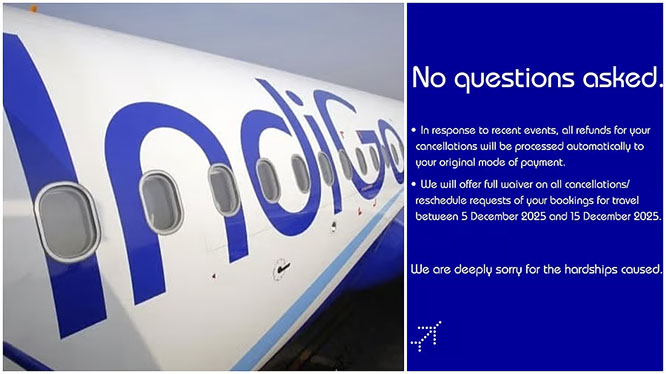
With IndiGo flight disruptions impacting thousands of passengers, the airline on Saturday said that it will offer full waiver on all cancellations/reschedule requests for travel bookings between December 5, 2025 and December 15, 2025.

Earlier in the day, the civil aviation ministry had directed the airline to complete the ticket refund process for the cancelled flights by Sunday evening, as well as ensure baggage separated from the travellers are delivered in the next two days.

In a post on X, titled 'No questions asked', IndiGo wrote, "In response to recent events, all refunds for your cancellations will be processed automatically to your original mode of payment."

"We are deeply sorry for the hardships caused," it further added.

Several passengers, however, complained of not getting full refund as promised by the airline.

Netizens have shared screenchots of getting charged for airline cancellation fee and convenience fee.

"Please tell me why u have did this airline cancellation charges when u say full amount will be refunded (sic)," a user wrote sharing a screenshot of the refund page.

"Well, but you have still debited the convenience charges," wrote another.

Passengers have also raised concerns about the "cancel" option being disabled on the IndiGo app. "First enable the 'Cancel' button on your App & offer full refund on tickets cancelled by customers between the said dates," wrote a user.

A day after the country's largest airline, IndiGo, cancelled more than 1,000 flights and caused disruptions for the fifth day on Saturday, the ministry said that any delay or non-compliance in refund processing will invite immediate regulatory action.

The refund process for all cancelled or disrupted flights must be completed by 8 pm on Sunday, the ministry said in a statement.

"Airlines have also been instructed not to levy any rescheduling charges for passengers whose travel plans were affected by cancellations," it said.

On Saturday, more than 400 flights were cancelled at various airports.

IndiGo has also been instructed to set up dedicated passenger support and refund facilitation cells.

Comments

Add new comment

  • Coastaldigest.com reserves the right to delete or block any comments.
  • Coastaldigset.com is not responsible for its readers’ comments.
  • Comments that are abusive, incendiary or irrelevant are strictly prohibited.
  • Please use a genuine email ID and provide your name to avoid reject.
News Network
December 6,2025

pilot.jpg

New Delhi: IndiGo, India’s largest airline, faced major operational turbulence this week after failing to prepare for new pilot-fatigue regulations issued by the Directorate General of Civil Aviation (DGCA). The stricter rules—designed to improve flight safety—took effect in phases through 2024, with the latest implementation on November 1. IndiGo has acknowledged that inadequate roster planning led to widespread cancellations and delays.

Below are the key DGCA rules that affected IndiGo’s operations:

1. Longer Mandatory Weekly Rest

Weekly rest for pilots has been increased from 36 hours to 48 hours.

The government says the extended break is essential to curb cumulative fatigue. This rule remains in force despite the current crisis.

2. Cap on Night Landings

Pilots can now perform only two night landings per week—a steep reduction from the earlier limit of six.

Night hours, defined as midnight to early morning, are considered the least alert period for pilots.

Given the disruptions, this rule has been temporarily relaxed for IndiGo until February 10.

3. Reduced Maximum Night Flight Duty

Flight duty that stretches into the night is now capped at 10 hours.

This measure has also been kept on hold for IndiGo until February 10 to stabilize operations.

4. Weekly Rest Cannot Be Replaced With Personal Leave

Airlines can no longer count a pilot’s personal leave as part of the mandatory 48-hour rest.

Pilots say this closes a loophole that previously reduced actual rest time.

Currently, all airlines are exempt from this rule to normalise travel.

5. Mandatory Fatigue Monitoring

Airlines must submit quarterly fatigue reports along with corrective actions to DGCA.

This system aims to create a transparent fatigue-tracking framework across the industry.

The DGCA has stressed that these rules were crafted to strengthen flight safety and align India with global fatigue-management standards. The temporary relaxations are expected to remain until February 2025, giving IndiGo time to stabilise its schedules and restore normal air travel.

Comments

Add new comment

  • Coastaldigest.com reserves the right to delete or block any comments.
  • Coastaldigset.com is not responsible for its readers’ comments.
  • Comments that are abusive, incendiary or irrelevant are strictly prohibited.
  • Please use a genuine email ID and provide your name to avoid reject.
News Network
December 5,2025

indigoCEO.jpg

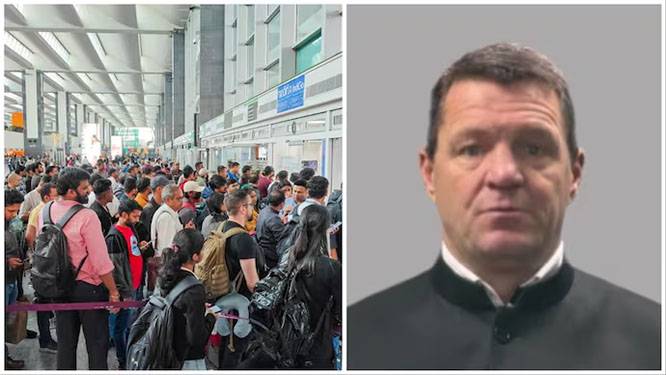
New Delhi, Dec 5: IndiGo CEO Pieter Elbers issued a public apology this evening after more than a thousand flights were cancelled today, making it the "most severely impacted day" in terms of cancellations. The biggest airline of the country cancelled "more than half" of its daily number of flights on Friday, said Elbers. He also said that even though the crisis will persist on Saturday, the airline anticipates fewer than 1,000 flight cancellations.

"Full normalisation is expected between December 10 and 15, though IndiGo cautions that recovery will take time due to the scale of operations," the IndiGo CEO said. 

IndiGo operates around 2,300 domestic and international flights daily.

Pieter Elbers, while apologising for the major inconvenience due to delays and cancellations, said the situation is a result of various causes.

The crisis at IndiGo stems from new regulations that boost pilots' weekly rest requirements by 12 hours to 48 and allow only two night-time landings per week, down from six. IndiGo has attributed the mass cancellations to "misjudgment and planning gaps".

Elbers also listed three lines of action that the airline will adopt to address the issue.

"Firstly, customer communication and addressing your needs, for this, messages have been sent on social media. And just now, a more detailed communication with information, refunds, cancellations and other customer support measures was sent," he said.

The airline has also stepped up its call centre capacity.

"Secondly, due to yesterday's situation, we had customers stranded mostly at the nation's largest airports. Our focus was for all of them to be able to travel today itself, which will be achieved. For this, we also ask customers whose flights are cancelled not to come to the airports as notifications are sent," the CEO said.

"Thirdly, cancellations were made for today to align our crew and planes to be where they need to start tomorrow morning afresh. Earlier measures of the last few days, regrettable, have proven not to be enough, but we have decided today to reboot all our systems and schedules, resulting in the highest numbers of cancellations so far, but imperative for progressive improvements starting from tomorrow," he added.

As airports witnessed chaotic scenes, the Directorate General of Civil Aviation (DGCA) stepped in to grant IndiGo a temporary exemption from stricter night duty rules for pilots. It also allowed substitution of leaves with a weekly rest period. 

Civil Aviation Minister Ram Mohan Naidu has said a high-level inquiry will be ordered and accountability will be fixed.

Comments

Add new comment

  • Coastaldigest.com reserves the right to delete or block any comments.
  • Coastaldigset.com is not responsible for its readers’ comments.
  • Comments that are abusive, incendiary or irrelevant are strictly prohibited.
  • Please use a genuine email ID and provide your name to avoid reject.