



Qatar hits out at UAE for alleged cyber terrorism, Saudi denies hacking

Agencies
July 18, 2017

Dubai, Jul 18: Qatar, the tiny Gulf state being isolated by its neighbours, said the reported involvement of the United Arab Emirates in hacking its government news site in May is "unfortunate" and a breach of agreements among the Gulf countries.

Qatar

The Washington Post, quoting unnamed US intelligence officials, reported Sunday that the UAE orchestrated the hacking and planted a false story that was used as a pretext for the crisis between Qatar and four Arab countries.

The report said senior members of the Emirati government discussed the hacking plan a day before a story appeared on the official Qatar News Agency quoting Qatar's emir, Sheikh Tamim Bin Hamad Al Thani, allegedly praising Iran and saying Qatar has a good relationship with Israel.

The UAE has denied involvement, calling the Post report "false" and insisting that the UAE "had no role whatsoever" in the alleged hacking.

The UAE along with Saudi Arabia, Egypt and Bahrain cut diplomatic ties and severed air, land and sea links with Qatar in early June over allegations that it supports extremist ideology - a charge Qatar denied. The crisis has dragged on for more than a month with neither side showing signs of backing down.

Qatar maintained from the beginning that the quotes attributed to its ruler were the result of a hacking. It said in a statement yesterday that the Post report "unequivocally proves that this hacking crime took place."

Sheikh Saif bin Ahmad Al Thani, the head of Qatar's government communications office, said "it is especially unfortunate that this shameful act of cyber terrorism is being attributed to a fellow member of the Gulf Cooperation Council.

"This criminal act represents a clear violation and breach of international law and of the bilateral and collective agreements signed between the member states of the Gulf Cooperation Council, as well as collective agreements with the Arab League, the Organisation of Islamic Cooperation, and the United Nations," he said.

The GCC is a six-member bloc that includes Bahrain, Kuwait, Oman, Qatar, Saudi Arabia and the UAE. Kuwait has been serving as a mediator in trying to resolve the current Gulf crisis.

Sheikh Saif said a Qatari government investigation into the hacking is ongoing and that prosecutors will "take all necessary legal measures to bring to justice the perpetrators and instigators of this crime.

Comments

Add new comment

  • Coastaldigest.com reserves the right to delete or block any comments.
  • Coastaldigset.com is not responsible for its readers’ comments.
  • Comments that are abusive, incendiary or irrelevant are strictly prohibited.
  • Please use a genuine email ID and provide your name to avoid reject.
News Network
November 24,2025

israelsyra.jpg

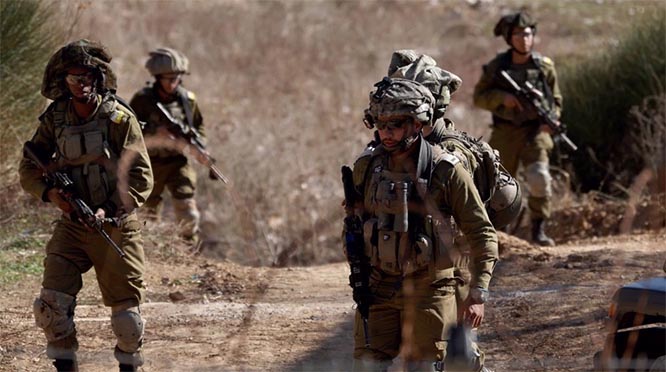
Israeli forces have pushed over the Syrian frontier, erecting a checkpoint and stopping vehicles in the southwestern city of Quneitra, in yet another breach of the Arab country’s sovereignty.

The violation took place on Sunday, when the troops made their way across the border, setting up the outpost near the Ain al-Bayda junction in northern Quneitra, Syrian outlets reported.

According to the al-Ikhbariya paper, an Israeli detachment positioned itself at the junction, halting cars and conducting searches.

The Syrian Arab News Agency (SANA) reported that three Israeli military vehicles then moved further into the northern countryside, deploying between the town of Jubata al-Khashab and the villages of Ofaniya and Ain al-Bayda. The agency added that a separate Israeli unit mounted a new incursion in the central region, approaching the villages of Umm Batina and al-Ajraf.

Residents said such activities have surged in recent months, pointing to Israeli advances onto farmland, leveling of extensive forested areas, arrests, and spread of mobile checkpoints.

The Israeli regime began markedly increasing its military aggression against Syria last year.

The escalation coincided with increasingly ferocious onslaughts throughout the country by the so-called Hay'at Tahrir al-Sham (HTS) Takfiri terrorist group, which the government of President Bashar al-Assad had confined to northwestern Syria. The HTS, however, managed to overthrow the government as the Israeli attacks would pummel the country’s civilian and defensive infrastructure.

Various reports have shown that, during the escalation, the regime conducted more than 1,000 airstrikes on the Syrian territory and over 400 ground raids into the south.

Following the collapse of the Assad government, Tel Aviv also widened its grip over the occupied Golan Heights by taking control of a demilitarized buffer zone, in defiance of a 1974 Disengagement Agreement. Earlier this month, senior Israeli officials, including Prime Minister Benjamin Netanyahu, visited the buffer zone, prompting expressions of alarm on the part of the United Nations.

The United States, the regime’s biggest ally, has, meanwhile, been fraternizing the HTS head Abu Mohammed al-Jolani amid the widely reported prospect of rapprochement with Tel Aviv.

Comments

Add new comment

  • Coastaldigest.com reserves the right to delete or block any comments.
  • Coastaldigset.com is not responsible for its readers’ comments.
  • Comments that are abusive, incendiary or irrelevant are strictly prohibited.
  • Please use a genuine email ID and provide your name to avoid reject.