



Saudi Arabia's wealth fund aims to nearly double size by 2020

Agencies
October 26, 2017

Riyadh, Oct 26: Saudi Arabia’s main sovereign wealth fund wants to increase its financial clout to SR 1.5 trillion ($400 billion) by 2020 as part of the Kingdom’s efforts to boost private-sector growth and wean itself off oil export dependence.

The assets-under-management goal, laid out by the Public Investment Fund (PIF) on Wednesday, came on the second day of an international conference in Riyadh. It was accompanied by publication of PIF’s first comprehensive business program, outlining targets for investments and returns for 2018-2020.

PIF, which is expected to receive proceeds from the planned sale of 5 percent of state oil company Saudi Aramco’s shares, has currently around $230 billion worth of assets under management. It plans to create 20,000 direct domestic jobs, and 256,000 construction jobs by 2020. This will increase PIF’s contribution to Saudi Arabia’s gross domestic product from 4.4 percent to 6.3 percent, it said in a statement on Wednesday.

Investments will be in sectors such as real estate and infrastructure as well as in new areas of activity in the Saudi economy through the establishment of companies such as the Saudi Arabian Military Industries company and the Saudi Real Estate Refinancing Company.

One of the biggest tasks facing PIF will be the delivery of a $500 billion plan to build a business and industrial zone extending into Jordan and Egypt, announced at the start of the conference on Tuesday.

PIF also set a new target to increase total shareholder return to 4 to 5 percent between now and 2020 from 3 percent, it said on Wednesday.

“The PIF Program represents a vital milestone as we work toward realizing Vision 2030,” Crown Prince Mohammed bin Salman, the economic reform plan’s architect, said in a statement.

The 96-page program said PIF will structure its investments in six areas: Saudi equity holdings, sector development, real estate and infrastructure, mega projects, international strategic investments and a “diversified pool” across global asset classes. It said “long-term” average annual return from these areas would be between 6.5 and 9 percent.

Outside of Saudi Arabia, PIF’s investments will be in a number of assets such as fixed-income, public equity, private equity and debt, real estate, infrastructure and alternative investments such as hedge funds, the fund said.

PIF Managing Director Yasir Al-Rumayyan said the fund was open to investing in more big ticket items such as US ride services company Uber.

It also outlined its four major sources of funding to include capital injections from the government, government asset transfers, loans and debt instruments as well as retained earnings from investments.

Comments

Add new comment

  • Coastaldigest.com reserves the right to delete or block any comments.
  • Coastaldigset.com is not responsible for its readers’ comments.
  • Comments that are abusive, incendiary or irrelevant are strictly prohibited.
  • Please use a genuine email ID and provide your name to avoid reject.
News Network
November 24,2025

israelsyra.jpg

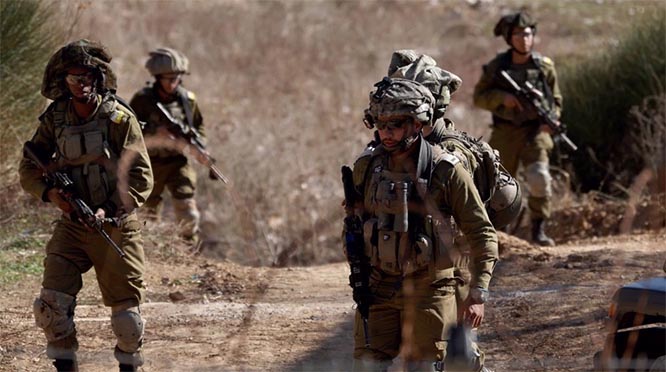
Israeli forces have pushed over the Syrian frontier, erecting a checkpoint and stopping vehicles in the southwestern city of Quneitra, in yet another breach of the Arab country’s sovereignty.

The violation took place on Sunday, when the troops made their way across the border, setting up the outpost near the Ain al-Bayda junction in northern Quneitra, Syrian outlets reported.

According to the al-Ikhbariya paper, an Israeli detachment positioned itself at the junction, halting cars and conducting searches.

The Syrian Arab News Agency (SANA) reported that three Israeli military vehicles then moved further into the northern countryside, deploying between the town of Jubata al-Khashab and the villages of Ofaniya and Ain al-Bayda. The agency added that a separate Israeli unit mounted a new incursion in the central region, approaching the villages of Umm Batina and al-Ajraf.

Residents said such activities have surged in recent months, pointing to Israeli advances onto farmland, leveling of extensive forested areas, arrests, and spread of mobile checkpoints.

The Israeli regime began markedly increasing its military aggression against Syria last year.

The escalation coincided with increasingly ferocious onslaughts throughout the country by the so-called Hay'at Tahrir al-Sham (HTS) Takfiri terrorist group, which the government of President Bashar al-Assad had confined to northwestern Syria. The HTS, however, managed to overthrow the government as the Israeli attacks would pummel the country’s civilian and defensive infrastructure.

Various reports have shown that, during the escalation, the regime conducted more than 1,000 airstrikes on the Syrian territory and over 400 ground raids into the south.

Following the collapse of the Assad government, Tel Aviv also widened its grip over the occupied Golan Heights by taking control of a demilitarized buffer zone, in defiance of a 1974 Disengagement Agreement. Earlier this month, senior Israeli officials, including Prime Minister Benjamin Netanyahu, visited the buffer zone, prompting expressions of alarm on the part of the United Nations.

The United States, the regime’s biggest ally, has, meanwhile, been fraternizing the HTS head Abu Mohammed al-Jolani amid the widely reported prospect of rapprochement with Tel Aviv.

Comments

Add new comment

  • Coastaldigest.com reserves the right to delete or block any comments.
  • Coastaldigset.com is not responsible for its readers’ comments.
  • Comments that are abusive, incendiary or irrelevant are strictly prohibited.
  • Please use a genuine email ID and provide your name to avoid reject.