At 67.11 percent, 2019 turnout highest for LS polls

Agencies
May 20, 2019

New Delhi, May 20: An estimated 67.11 per cent of the nearly 91 crore electors turned up to cast their vote in this year's seven-phase Lok Sabha elections, the highest ever turnout recorded in any parliamentary polls in India.

The overall turnout in 2014 was 66.40 per cent.

But, the Election Commission figures are provisional and are subject to change.

The overall turnout was recorded at 67.11 per cent, as per data available on Monday morning.

Out of the 543 Lok Sabha seats, elections were held in 542 constituencies as the EC had cancelled polls to the Vellore constituency on the grounds of excessive use of money power.

The poll panel is yet to announce a fresh date for elections in Vellore.

While there were 83.40 crore voters in the 2014 polls, their number stood at 90.99 crore as on April 23, the day third phase of polling took place for the 2019 Lok Sabha elections.

In the 2009 elections, the turnout was pegged at 56.9 per cent.

In 2019, the voter turnout saw a decreasing trend from the first to the seventh phase, which took place on Sunday.

According to data provided by the EC, in phase one, the turnout was 69.61 per cent. It went down marginally to 69.44 per cent in phase two and further down to 68.40 per cent in the third phase.

In the fourth phase, the turnout saw a dip of nearly three per cent and stood at 65.50 per cent. In the fifth phase, the turnout was 64.16 per cent, but went up marginally to 64.40 per cent in the sixth and penultimate phase.

In the seventh and the last phase, it was 65.15 per cent, according to the EC's Voter Turnout app on Monday evening. 

The cumulative turnout figure of the first six phases stood at 67.34 per cent, which is 1.21 per cent more than the corresponding constituencies in 2014.

Madhya Pradesh's turnout was 5.92 per cent more than that in 2014 and Himachal Pradesh's 5.1 per cent higher than that in the last Lok Sabha polls.

Chandigarh on the other hand recorded a massive dip in turnout as compared to the last elections. The turnout went down by 10.27 per cent. 

Punjab also witnessed a lower turnout as compared to 2014. The gap was a glaring 5.64 per cent.

In most of the states the turnout was marginally higher by 2.5 per cent than 2014.

Out of 18 lakh registered voters, 16.49 lakh have sent their postal ballots to their respective returning officers as on May 17.

The postal ballots were electronically transmitted to the service voters.They have to download it, fill it and send it by speed post.

Interestingly, the gap between male and female voters turning out to cast their vote is narrowing since 2009. In 2009, the gap was nine per cent, which went down to 1.4 per cent in 2014. It now tentatively stands at 0.4 per cent now.


Comments

Add new comment

  • Coastaldigest.com reserves the right to delete or block any comments.
  • Coastaldigset.com is not responsible for its readers’ comments.
  • Comments that are abusive, incendiary or irrelevant are strictly prohibited.
  • Please use a genuine email ID and provide your name to avoid reject.
News Network
December 6,2025

pilot.jpg

New Delhi: IndiGo, India’s largest airline, faced major operational turbulence this week after failing to prepare for new pilot-fatigue regulations issued by the Directorate General of Civil Aviation (DGCA). The stricter rules—designed to improve flight safety—took effect in phases through 2024, with the latest implementation on November 1. IndiGo has acknowledged that inadequate roster planning led to widespread cancellations and delays.

Below are the key DGCA rules that affected IndiGo’s operations:

1. Longer Mandatory Weekly Rest

Weekly rest for pilots has been increased from 36 hours to 48 hours.

The government says the extended break is essential to curb cumulative fatigue. This rule remains in force despite the current crisis.

2. Cap on Night Landings

Pilots can now perform only two night landings per week—a steep reduction from the earlier limit of six.

Night hours, defined as midnight to early morning, are considered the least alert period for pilots.

Given the disruptions, this rule has been temporarily relaxed for IndiGo until February 10.

3. Reduced Maximum Night Flight Duty

Flight duty that stretches into the night is now capped at 10 hours.

This measure has also been kept on hold for IndiGo until February 10 to stabilize operations.

4. Weekly Rest Cannot Be Replaced With Personal Leave

Airlines can no longer count a pilot’s personal leave as part of the mandatory 48-hour rest.

Pilots say this closes a loophole that previously reduced actual rest time.

Currently, all airlines are exempt from this rule to normalise travel.

5. Mandatory Fatigue Monitoring

Airlines must submit quarterly fatigue reports along with corrective actions to DGCA.

This system aims to create a transparent fatigue-tracking framework across the industry.

The DGCA has stressed that these rules were crafted to strengthen flight safety and align India with global fatigue-management standards. The temporary relaxations are expected to remain until February 2025, giving IndiGo time to stabilise its schedules and restore normal air travel.

Comments

Add new comment

  • Coastaldigest.com reserves the right to delete or block any comments.
  • Coastaldigset.com is not responsible for its readers’ comments.
  • Comments that are abusive, incendiary or irrelevant are strictly prohibited.
  • Please use a genuine email ID and provide your name to avoid reject.
News Network
December 6,2025

indigoticket.jpg

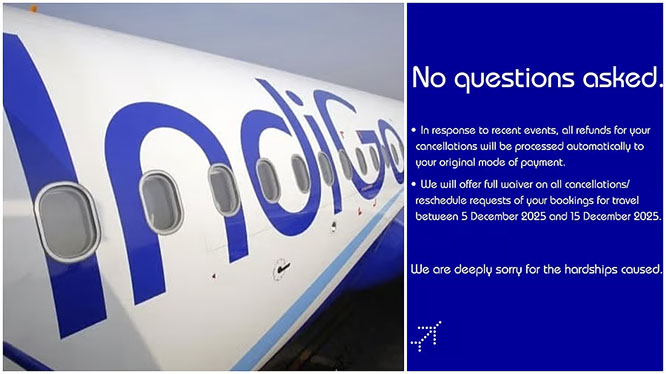
With IndiGo flight disruptions impacting thousands of passengers, the airline on Saturday said that it will offer full waiver on all cancellations/reschedule requests for travel bookings between December 5, 2025 and December 15, 2025.

Earlier in the day, the civil aviation ministry had directed the airline to complete the ticket refund process for the cancelled flights by Sunday evening, as well as ensure baggage separated from the travellers are delivered in the next two days.

In a post on X, titled 'No questions asked', IndiGo wrote, "In response to recent events, all refunds for your cancellations will be processed automatically to your original mode of payment."

"We are deeply sorry for the hardships caused," it further added.

Several passengers, however, complained of not getting full refund as promised by the airline.

Netizens have shared screenchots of getting charged for airline cancellation fee and convenience fee.

"Please tell me why u have did this airline cancellation charges when u say full amount will be refunded (sic)," a user wrote sharing a screenshot of the refund page.

"Well, but you have still debited the convenience charges," wrote another.

Passengers have also raised concerns about the "cancel" option being disabled on the IndiGo app. "First enable the 'Cancel' button on your App & offer full refund on tickets cancelled by customers between the said dates," wrote a user.

A day after the country's largest airline, IndiGo, cancelled more than 1,000 flights and caused disruptions for the fifth day on Saturday, the ministry said that any delay or non-compliance in refund processing will invite immediate regulatory action.

The refund process for all cancelled or disrupted flights must be completed by 8 pm on Sunday, the ministry said in a statement.

"Airlines have also been instructed not to levy any rescheduling charges for passengers whose travel plans were affected by cancellations," it said.

On Saturday, more than 400 flights were cancelled at various airports.

IndiGo has also been instructed to set up dedicated passenger support and refund facilitation cells.

Comments

Add new comment

  • Coastaldigest.com reserves the right to delete or block any comments.
  • Coastaldigset.com is not responsible for its readers’ comments.
  • Comments that are abusive, incendiary or irrelevant are strictly prohibited.
  • Please use a genuine email ID and provide your name to avoid reject.