72.2% of beggars in India are Hindus; 24.9% Muslims; 0.88% Christians

July 29, 2016

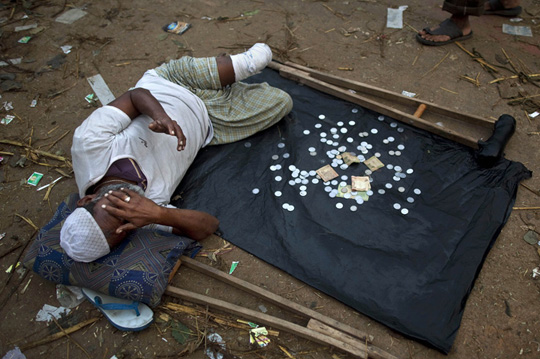
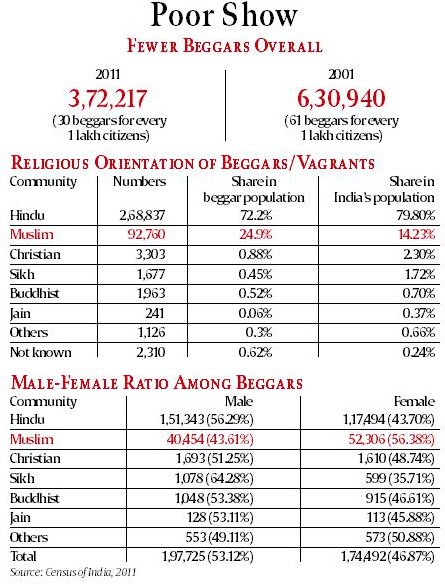
Nearly 25 percent of the 3.7 lakh Indians categorised as "beggars" in the 2011 Census are Muslims, according to data released last month. While most of beggars in India are Hindus—about 72.2 percent—Hindus are also the majority religious group in India, accounting for almost four-fifths of the country's population.
beggar

The number of Muslim beggars is significant as compared to their overall population in India, which stands at 17.22 crore as per the last Census.

A majority of the Muslim beggars are women, which is contrary to the national trend, where there are fewer women beggars compared to men.

Earlier, reports have indicated that Muslims have the lowest living standard in India, and spend less than Rs 33 every day.

Activists claim that the data — released last month — on the religious orientation of those deemed non workers' in Census 2011, highlights, once again, the limited or unequal access that certain communities or groups of citizens have to government schemes and services, which pushes them to destitution.

Non workers' are defined in the Census as individuals who do not participate in any economic activity — paid or unpaid — household duties, or cultivation.

As per Census data, of the total 72.89 crore non workers, 3.7 lakh are beggars. This number fell 41% since the last Census of 2001, which recorded the number of beggars at 6.3 lakh.

Muslims make up an unusually high percentage of individuals who have been categorised as beggars. A total of 92,760 Muslims are categorised thus — a quarter of the country's total beggar population of 3.7 lakh.

Hindus are 79.8% of India's population, but with 2.68 lakh individuals, make up 72.22% of its beggar population. Christians, who are 2.3% of the population, make up 0.88% of the beggar population (3,303 individuals). Buddhists (0.52%), Sikhs (0.45%), Jains (0.06%) and others (0.30%) follow.

Interestingly, more Muslim women seem to be begging as compared to Muslim men, a trend that is opposite to that of all communities except those categorised as Others'. The national average is 53.13% male beggars to 46.87% female beggars; for Muslims, the ratio is 43.61% male beggars and 56.38% female.
begger

Begging is illegal

Beggary is illegal in India, and is punishable by imprisonment of 3-10 years. The Bombay Prevention of Begging Act, 1959 has been followed by almost all states in the country. Activists say the Act provides no clear categorisation of beggars, and even homeless and landless labourers who have migrated to different cities are categorised as beggars. Like many of India's laws, the anti-beggary legislation is based on an archaic British law against vagrants.

Under the Bombay Prevention of Begging Act, 1959, anyone having no visible means of subsistence and found wandering about in a public space is deemed as a beggar. All those who solicit alms in a public place under any pretence including singing, dancing, fortune-telling or street performing are also deemed as beggars.

The Act gives discretionary powers to the police to pick up anyone on suspicion that he is a beggar or a destitute with no means of fending for himself.

Activists say the law, rather than rehabilitating destitutes, criminalises the poor and those suffering from mental illnesses. Some states like Bihar have undertaken a programme for the rehabilitation of beggars. But other states like Maharashtra and West Bengal can put away an individual found on the street to prison. 

Comments

mohammad.n
 - 
Friday, 29 Jul 2016

Beggers are beggers, why religion is coming in everything nowadays?!

Satyameva Jayate
 - 
Friday, 29 Jul 2016

@kr.....
whats your problem yaar, convent ho ya private...what it has to go with beggers....?

kr
 - 
Friday, 29 Jul 2016

Half of Hindu population are studying in convent school... How many muslim study in convent.... They say is non Islamic.... I heard my neighborhood saying it

Add new comment

  • Coastaldigest.com reserves the right to delete or block any comments.
  • Coastaldigset.com is not responsible for its readers’ comments.
  • Comments that are abusive, incendiary or irrelevant are strictly prohibited.
  • Please use a genuine email ID and provide your name to avoid reject.
News Network
December 7,2025

SHRIMP.jpg

Mangaluru, Dec 7: A rare bamboo shrimp has been rediscovered on mainland India more than 70 years after it was last reported, confirming for the first time the presence of Atyopsis spinipes in the country. The find was made by researchers from the Centre for Climate Change Studies at Sathyabama Institute of Science and Technology, Chennai, during surveys in Karnataka and Odisha.

The team — shrimp expert Dr S Prakash, PhD scholar K Kunjulakshmi, and Mangaluru-based researcher Maclean Antony Santos — combined field surveys, ecological assessments and DNA analysis to identify the elusive species. Their findings, published in Zootaxa, resolve decades of taxonomic confusion stemming from a 1951 report that misidentified the species as Atyopsis moluccensis without strong evidence.

The shrimp has now been confirmed at two locations: the Mulki–Pavanje estuary near Mangaluru and the Kuakhai River in Bhubaneswar. Historical specimens from the Andaman Islands, previously labelled as A. moluccensis, were also found to be misidentified and actually belong to A. spinipes.

The rediscovery began after an aquarium hobbyist in Odisha spotted a shrimp in 2022, prompting systematic surveys across Udupi, Karwar and Mangaluru. Four female specimens were collected in Mulki and one in Odisha, all genetically matching.

Researchers warn the species may exist in very small, vulnerable populations as freshwater habitats face increasing pressure from pollution, sand mining and infrastructure development. All verified specimens have been deposited with the Zoological Survey of India for future reference.

Comments

Add new comment

  • Coastaldigest.com reserves the right to delete or block any comments.
  • Coastaldigset.com is not responsible for its readers’ comments.
  • Comments that are abusive, incendiary or irrelevant are strictly prohibited.
  • Please use a genuine email ID and provide your name to avoid reject.
News Network
December 15,2025

Udupi, Dec 15: What was meant to be a post-pilgrimage gathering turned tragic in Padukere village of Brahmavar taluk, Udupi district, late Sunday night, when a clash among youths escalated into a fatal assault, leaving one man dead.

The victim has been identified as 30-year-old Santosh Mogaveera, a resident of Padukere.

According to preliminary information, the incident took place during a late-night drinking party involving a group of local youths who had recently returned after completing their pilgrimage to the Sabarimala shrine. An argument reportedly broke out among the group and soon escalated into a violent confrontation.

During the ensuing brawl, Santosh Mogaveera was allegedly assaulted and collapsed at the spot after sustaining serious injuries. He was rushed by local residents to a private hospital in Brahmavar, where doctors declared him dead.

On receiving information, senior police officials, including Brahmavar Circle Inspector Gopikrishna, Kota Police Sub-Inspector Praveen Kumar T, Station ASI Manthesh Jabagoudar, and head constables Pradeep and Ashok, visited the spot and conducted an inspection.

Police have taken four youths into custody in connection with the incident. A case has been registered at the Kota police station, and further investigation is underway to ascertain the exact sequence of events leading to the death.

Comments

Add new comment

  • Coastaldigest.com reserves the right to delete or block any comments.
  • Coastaldigset.com is not responsible for its readers’ comments.
  • Comments that are abusive, incendiary or irrelevant are strictly prohibited.
  • Please use a genuine email ID and provide your name to avoid reject.
News Network
December 17,2025

melkar1.jpg

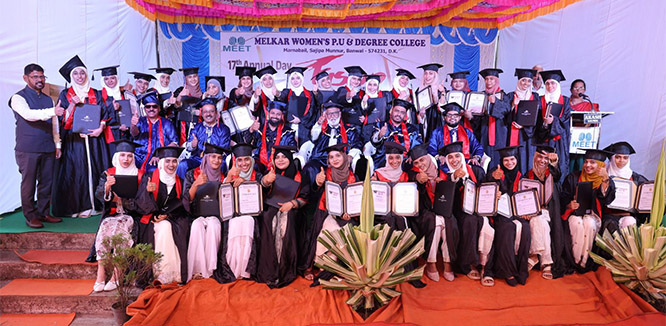
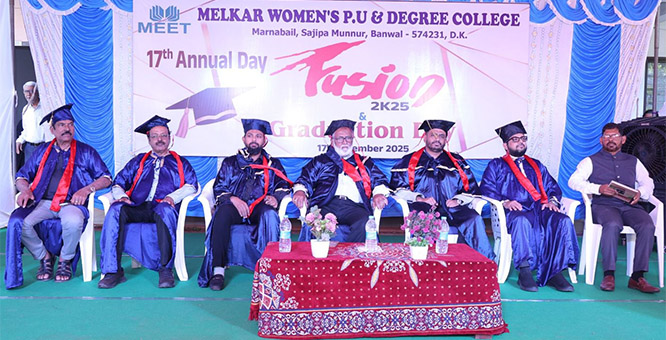
Melkar, Dec 17: The 17th Annual Day and Graduation Ceremony of Melkar Women’s PU and Degree College, themed “Fusion-2K25,” was celebrated with dignity and enthusiasm, marking a significant milestone in the institution’s academic journey. The programme reflected the college’s steadfast commitment to academic excellence, character building, and the holistic development of students.

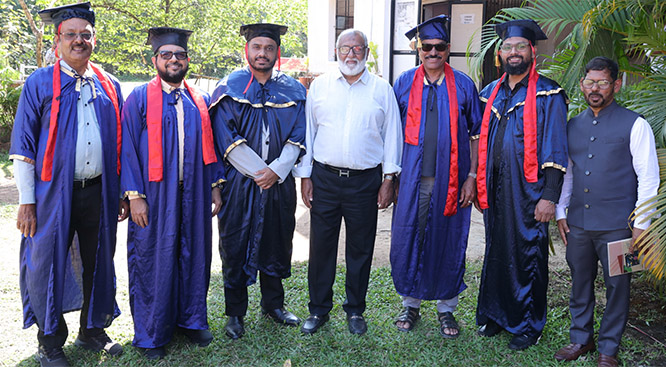
The event was inaugurated by Mr. Asif Mohammed, whose presence greatly enriched the occasion. The celebration was further graced by the chief guests Mr. P. B. Ahmed Mudassir and Mr. Nissar Fakeer Mohammed, along with the distinguished guests of honour Mr. B. A. Nazeer and Mr. Ibrahim Gadiyar. In their inspiring addresses, the guests encouraged the graduating students and appreciated the dedicated efforts of the management, faculty, and students.

The annual report was presented by the Principal, Mr. Abdul Majeed S, highlighting the institution’s academic progress, notable achievements, and extracurricular accomplishments during the academic year.

The presidential address was delivered by the esteemed Chairman of Melkar Women’s PU and Degree College, Dr. Haji S. M. Rasheed, who emphasized the vital role of education in empowering women and shaping responsible citizens. He also stressed the importance of discipline, dedication, and perseverance in achieving success.

Cultural programmes and academic recognitions formed an integral part of the celebration, showcasing the talents and achievements of the students. The graduation ceremony was a proud moment for the outgoing students as they were formally conferred degrees and wished success in their future endeavours.

Ms. Mashmooma Fathima served as the Master of Ceremonies. The welcome address was delivered by Ms. Fathima Nida, and the programme concluded with a vote of thanks proposed by Ms. Ayisha Suhana.

The event successfully achieved its objectives and was highly appreciated by the guests and attendees.

melkar3.jpg

melkar2.jpg

Comments

Add new comment

  • Coastaldigest.com reserves the right to delete or block any comments.
  • Coastaldigset.com is not responsible for its readers’ comments.
  • Comments that are abusive, incendiary or irrelevant are strictly prohibited.
  • Please use a genuine email ID and provide your name to avoid reject.