From Allahabad to Prayagraj; Whats in the name?

Ram Puniyani
October 27, 2018

Adityanath Yogi, Chief Minister of UP seems to be on the name changing spree. In his latest move he has changed the name of famous city of UP, Allahabad to Prayagraj. Prayag is the meeting point of rivers and since this city is the meeting point of Ganga, Yamuna and probably of invisible Sarswati, this name might have been chosen by him in his attempts to remove the Islamic touch to the names of our cities. As such many a versions of the origin of the name of this city are circulating. One such says that it was Ila-vas. Ila being the mother of mythological Pururva. Another such says it was in the name of Alha of Alha-Udal (part of popular folk lore) fame. More concrete records tell us that Akbar had named it Illaha-bad or Illahi-bas. Illaha is a generic term of Gods. He regarded this city as holy city of Hindus and Illah-bas in Persian means ‘abode of Gods’. This is clear from the records and from the coins of that time and reflects the inclusive spirit of Akbar. Earlier Yogi had made many changes in the names like that of Mughal sarai to Pundit Deendayal Upadhayay Junction, Agra airport in the same leader, Urdu Bazar to Hindi Bazar, Ali Nagar to Arya nagar etc. He regards all Muslim sounding names as being alien.

In an interview Yogi said he has to change many more names. On his agenda is to change the name Taj Mahal to Ram Mahal, Azamgarhg to Aryamgarh and to cap it all as per him the name India in our constitution should be changed to Hindustan. As per him these places were renamed after invasion of Muslim kings, so there is a need to re-change them. In UP Mayawati had already begun this name changing game which was to some extent reversed by his successor Akhilesh Yadav. Now in a more persistent way Yogi is identifying the Muslim sounding names and changing them one by one.

Adityanath Yogi is the Mahant of famous Gorakhnath Math. His predecessor of Math was in also politics, and Yogi has been a major player on the political chess board in UP. He comes from the Hindu Mahasabha stream of politics. His dominance has been very visible as his slogan, UP mein rahna hay to Yogi Yogi Kahna hoga (If you want to stay in UP, you have to Chant Yogi-Yogi) had been prevalent in parts of UP. His Hindu Yuva Vahaini has been in the news off and on; not for right reasons. He belongs to the group of large number of Holy men, Sakski Maharaj, Sadhvi Uma Bharati, Sadhvi Nirnajan Jyoti etc. who have been part of Hindu nationalist agenda. As such Holy men are supposed to have renounced the World to focus on spiritual pursuits, but this lot seems to be more active in Worldly pursuits.

The phenomenon of these holy men-women being in politics seems to be there in many post-colonial states. In these countries there has been absence of radical land reforms and there is persistence of hold of landlord-clergy which seems to be the reason for the God people to be in political arena. In these places God men and women has been part of the politics, which opposes the democratic values as being Western or alien, being against the spirit of ‘our’ land. They in a way harp on the pre Industrial values of birth based hierarchies. Surveying these countries one can see the rise of Ayatollah Khomeini in Iran, succeeded by many Ayatollahs. In Pakistan the Mullahs have been working closely with the military and landlord elements to undermine the democratic possibilities in society. In Pakistan the most prominent name which emerged was that of Maulana Maududi, who worked closely with Zia Ul Haq in Islamization of Pakistan. In neighboring Mynamar, the monks like Ashin Wirathu, also called ‘Burma’s bin laden’, are part of the politics to oppose the democratic society, to target the religious minorities there.

Back to India we have seen the crop of these Holy men, dominating the political scene in various ways. Most of these Godmen-women have been part of Hindu nationalist movement and are very vicious as far as hate speech is concerned. One recalls that Sadhvi Niranjan Jyoti had used the word haram Jade, Sakshi Maharaj was booked for blaming Muslims for population growth. Yogi himself has many cases pending against as far as hate speech is concerned. The worst of these was when he advised the rape of dead Muslim women.

Yogi has intensified the communal agenda to no end. UP state is organizing Hindu religious festivals. One recalls that the on occasion of Divali, the Helicopter carrying Lord Ram and Sita landed and the Gods were received by Yogi. UP State also organized the lighting of lamps in big numbers. Recently he had again been in news for the declaration that state Government will spend 5000 crores for the Kumbh mela. All this is taking place at a time when the state is suffering sever crunch in regards to health care and other infrastructure related issues. Young children, infants have died in hospital for lack of facilities; times and over again. The cities where name change has been brought about languishes with bad infrastrures and state constantly lags behind in Human growth indices, what to talk of the abysmal condition of human rights in the state. The condition of minorities is worsening as state sponsored moves to trample on their livelihood in the form of closing many the meat shops, which was done right at the beginning of his rule in UP, among other steps which is order of the day.

Yogi also bluntly stated that secularism is a big lie. His actions are showing as to how he is forcing the march of the state in the direction of Hindu nation, without any qualms for secular values as enshrined in our Constitution!

Comments

Well Wisher
 - 
Wednesday, 31 Oct 2018

I prefer Goondaraj instead

Add new comment

  • Coastaldigest.com reserves the right to delete or block any comments.
  • Coastaldigset.com is not responsible for its readers’ comments.
  • Comments that are abusive, incendiary or irrelevant are strictly prohibited.
  • Please use a genuine email ID and provide your name to avoid reject.
News Network
February 1,2026

Bengaluru, Feb 1: For travelers landing at Kempegowda International Airport (KIA), the sleek, wood-paneled curves of Terminal 2 promise a world-class welcome. But the famed “Garden City” charm quickly withers at the curb. As India’s aviation sector swells to record numbers—handling over 43 million passengers in Bengaluru alone this past year—the “last mile” has turned into a marathon of frustration.

The Bengaluru Logjam: Rules vs Reality

While the city awaits the 2027 completion of the Namma Metro Blue Line, the interim has been chaotic. Recent “decongestion” rules at Terminal 1 have pushed app-based cab pickups to distant parking zones, forcing weary passengers into a 20-minute walk with luggage.

“I landed after ten months away and felt like a stranger in my own city,” says Ruchitha Jain, a Koramangala resident. “My driver couldn’t find me, staff couldn’t guide me, and the so-called ‘Premium’ lane is just a fancy tax on convenience.”

•    The Cost of Distance: A 40-km cab ride can now easily cross ₹1,500, driven by demand pricing and airport surcharges.

•    The Bus Gap: While Vayu Vajra remains a lifeline, its ₹300–₹400 fare is often cited as the most expensive airport bus service in the country.

A National Pattern of Disconnect

The struggle is not unique to Karnataka. From Chennai’s coast to Hyderabad’s plateau, India’s airports tell a familiar story: brilliant runways, broken exits.

City:    Primary Issue   |    Recent Development

Bengaluru:    Cab pickup restrictions & distance  |    App-based taxis shifted to far parking zones; long walks and fare spikes reported

Chennai:    Multi-Level Parking (MLCP) hike  |    Passengers report 40-minute walks to reach cab pickup points

Hyderabad:    “Taxi mafia” & touting  |    Over 440 touting cases reported; security presence intensified

Mumbai:    Fare scams  |     Tourists charged ₹18,000 for just 400 metres, triggering police action

In Hyderabad, travelers continue to battle entrenched local groups that intimidate Uber and Ola drivers, pushing passengers toward overpriced private taxis. Chennai flyers, meanwhile, complain that reaching the designated pickup zones now takes longer than short-haul flights from cities like Coimbatore.

The ‘Budget Day’ Hope

As Finance Minister Nirmala Sitharaman presents the Union Budget 2026 today, the aviation sector is watching closely. With the government’s renewed emphasis on multimodal integration, there is cautious hope for funding toward seamless airport-metro-bus hubs.

The vision is clear: a future where planes, trains, and metros speak the same language. Until then, passengers at KIA—and airports across India—will continue to discover that the hardest part of flying isn’t the thousands of kilometres in the air, but the last few on the ground.

Comments

Add new comment

  • Coastaldigest.com reserves the right to delete or block any comments.
  • Coastaldigset.com is not responsible for its readers’ comments.
  • Comments that are abusive, incendiary or irrelevant are strictly prohibited.
  • Please use a genuine email ID and provide your name to avoid reject.
coastaldigest.com news network
January 19,2026

rizwanzameer.jpg

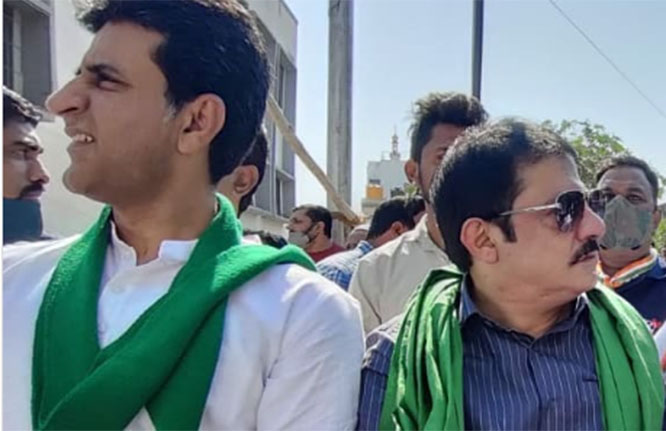
Bengaluru: As the dust settles on the recent legislative session, the corridors of Vidhana Soudha are buzzing with more than just policy talk. A high-stakes game of political musical chairs has begun, exposing a deepening rift within the Congress party’s Muslim leadership as a major Cabinet reshuffle looms.

With the party hierarchy signaling a "50% refresh" to gear up for the 2028 Assembly elections, the race to fill three projected Muslim ministerial berths has transformed from a strategic discussion into an all-out turf war.

The "Star Son" Spark

The internal friction turned public this week following provocative remarks by Zaid Khan, actor and son of Wakf Minister Zameer Ahmed Khan. Zaid’s claim—that his father "helped" secure a ticket for Shivajinagar MLA Rizwan Arshad in 2023—has acted as a lightning rod for resentment.

Rizwan’s camp was quick to fire back, dismissing the comment as a desperate attempt by Zameer to manufacture seniority. "Rizwan’s political pedigree was forged in the NSUI and Youth Congress long before Zameer even stepped into the party," a supporter noted, highlighting Rizwan’s tenure as an AICC secretary and his two-term presidency of the State Youth Congress.

A Tale of Two Loyalists

While both Zameer Ahmed Khan and Rizwan Arshad are staunch allies of Chief Minister Siddaramaiah and represent Bengaluru strongholds, their political DNA could not be more different:

•    Zameer Ahmed Khan: A four-time MLA who crossed over from JD(S) in 2018. Known for his "overzealous" and often polarizing outreach during communal flashpoints—from the DJ Halli riots to the recent Wakf land notice controversy—his style has frequently left the Congress high command in a state of "discomfort."

•    Rizwan Arshad: A homegrown organizational man. Seen as a "quiet performer," Arshad represents the sophisticated, moderate face of the party, preferred by those who find Zameer’s brand of politics too volatile.

The Outsiders Looking In

The bickering isn't limited to a duo. The "Beary" community, represented by leaders like N A Haris and Saleem Ahmed, is demanding its pound of flesh. Saleem Ahmed, the Chief Whip in the Legislative Council, has dropped the veil of diplomacy, openly declaring his ministerial aspirations.

"I was the only working president not included in the Cabinet last time," Saleem noted pointedly, signaling that the "loyalty quota" is no longer enough to keep the peace.

As Chief Minister Siddaramaiah prepares to finalize the list, he faces a delicate balancing act: rewarding the aggressive grassroots mobilization of Zameer’s camp without alienating the organizational stalwarts and minority sub-sects who feel increasingly sidelined by the "Chamarajpet-Shivajinagar" binary.

Comments

Add new comment

  • Coastaldigest.com reserves the right to delete or block any comments.
  • Coastaldigset.com is not responsible for its readers’ comments.
  • Comments that are abusive, incendiary or irrelevant are strictly prohibited.
  • Please use a genuine email ID and provide your name to avoid reject.
News Network
January 20,2026

iran.jpg

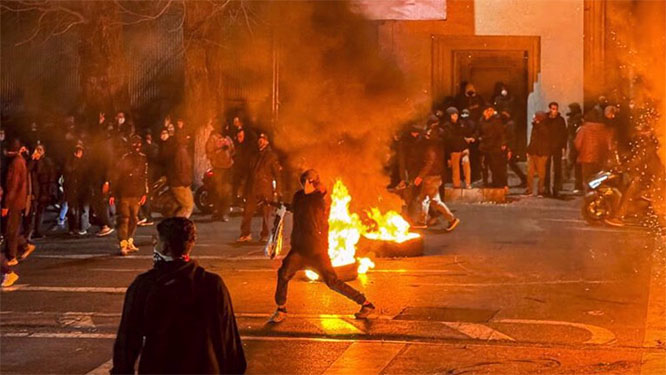
Iranian security and intelligence forces have captured more than 470 individuals in three provinces, identified as key figures behind the recent wave of violent unrest and terrorist activities linked to foreign-backed networks.

The Intelligence Ministry's provincial office in Khorasan Razavi announced on Monday the arrest of 192 armed terrorists, identified as the main agents behind recent riots in the region. 

According to an official statement, the detainees were involved in the killing of several security personnel and civilians, setting fire to mosques, public service facilities, and buses, as well as attacks on military and law enforcement centers.

The seized items from the group include several bulletproof vests, Kalashnikov rifles, hunting weapons, Winchester rifles, and various cold weapons such as daggers, swords, brass knuckles, tactical knives, crossbows, and chains.

Evidence indicates that some of the individuals were tied to hostile movements and terrorist organizations, with links overseas. Others were identified as members of violent criminal gangs, actively taking part in the unrest alongside their associates.

Simultaneously, in the western province of Lorestan, the IRGC announced the arrest of 134 individuals as the main leaders and influential field agents of a US-Israeli terrorist network.

The IRGC statement stated that these individuals formed terrorist cells during the recent unrest, committing "Daesh-like" acts.

They wounded security forces with firearms and cold weapons, and burned and destroyed public and private properties, including mosques, shops, banks, and private and public vehicles.

In the northwestern province of Zanjan, the police reported detaining 150 people identified as principal leaders and agents behind recent riots.

Authorities noted that these individuals were responsible for destroying public and private property and intentionally setting fire to vehicles in the province's squares.

Their crimes include shedding the blood of innocent people, destroying public and private property, attempting to enter military sites, disrupting public order, and spreading terror among citizens.

A variety of cold weapons were reportedly seized from the detainees.

What began late last month as peaceful protests over economic hardship across Iran turned violent after public statements by US and Israeli regime figures encouraged vandalism and disorder.

During the unrest, foreign-backed mercenaries rampaged through cities, killing security forces and civilians and damaging public property.

Comments

Add new comment

  • Coastaldigest.com reserves the right to delete or block any comments.
  • Coastaldigset.com is not responsible for its readers’ comments.
  • Comments that are abusive, incendiary or irrelevant are strictly prohibited.
  • Please use a genuine email ID and provide your name to avoid reject.