Amit Shah: BJP's 'Chanakya' who delivered Modi Wave 2.0

Agencies
May 24, 2019

New Delhi, May 24: He combined BJP's core Hindutva plank with a hardcore nationalism agenda and set up a huge ground-level organisational setup to execute it the BJP's 'Chanakya' Amit Shah blazed such a trail that the 'Modi Wave 2.0' surpassed its own original avatar with a much bigger saffron surge.
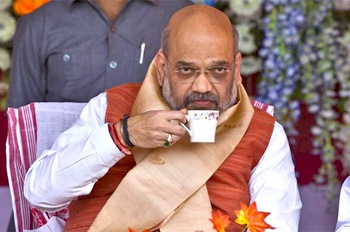
Known as an astute strategist whose non-political interests range from playing chess and watching cricket to stage performances and listening to classical music, 54-year-old Shah is often hailed as the BJP's most successful president for crafting its way to power states after states.

The record tally that he has now delivered for the BJP in the Lok Sabha 2019 elections is already being seen by many as something that would be difficult to repeat, though there are others who believe there is more to come as they point towards further inroads to be made in West Bengal, Odisha and in down South.

A man with avowed aim of having the BJP rule from "panchayat to Parliament", Shah has built his party into a formidable army that has been forever marching on since he took charge as its president in July 2014, turning India more saffron than it has ever been.

Political pundits say Shah has used a skilful mix of ideological firmness, unlimited political imagination and realpolitik flexibility to keep the BJP ahead of the game.

He ceded space in states like Bihar and Maharashtra to put allies at ease, worked on rival politicians with captive local vote banks to get them into the BJP fold, and sewed up new alliances as in Tamil Nadu and in the North East to boost his party's winning prospects.

And, unlike in the 90s when the BJP first came to power at the Centre, Shah ensured that his party made new friends without inviting the charge from its core voter base of diluting its core principles, ranging from Ram temple to cow, nationalism and Kashmir, for political gains.

If under Atal Bihari Vajpayee and L K Advani, the saffron party was seen as being inhibited in going all-out with its Hindutva plank for fear of antagonising allies and due to its perceived limited electoral appeal, the BJP has worn its Hindutva ideology on sleeve like a badge of honour under Prime Minister Narendra Modi and Shah.

Shah has been of a firm view that Hindutva combined with the BJP's hardcore nationalism agenda, though panned as shrill and divisive by its critics, render the party a distinct identity, and is a winning electoral strategy.

He has always believed that the allies would keep coming as long as the party is delivering in the polls.

Shah is also known to always match his limitless political ambition with thorough spadework, and then takes charge at the ground to put it into work.

When it emerged in 2015 that the BJP with its small allies was no match to the joint forces of Lalu Prasad and Nitish Kumar in Bihar, the party worked at winning over the JD(U) president, who finally broke his short alliance with Prasad in 2017 and joined hands with the former ally.

And when reports of disquiet within the JD(U) emerged with the alliance, Shah met Kumar and announced that both parties will contest an equal number of Lok Sabha seats in Bihar, virtually conceding the senior status to the regional party within the state.

In Maharashtra, where Shah had let ally Shiv Sena walk out of the alliance in the 2015 assembly polls so that the BJP can consolidate its position there, he offered a generous seat-sharing deal to the Hindutva ally for the all-important Lok Sabha polls.

In Uttar Pradesh with Yogi Adityanath at the helm as chief minister, Shah combined the Hindutva agenda with the Modi government's development plank to woo backward castes and bolster its traditional base of upper castes to take on a formidable SP-BSP combine.

Having risen through the ranks since starting at the booth level for the party in Gujarat at the age of 14 years, Shah is a firm believer in the prerequisite of a strong ground-level organisational machinery for poll successes.

In state after state, he has put in place robust organisational machinery for publicising the government schemes, carrying out political programmes and making full use of social media to reach out to voters.

For the 2019 elections, he deployed over 7,000 leaders for nearly 500 poll committee across the country, with special focus on 120 seats that the BJP had lost in 2014, and brought in 3,000 "full-timers" across parliamentary seats.

Seen as a Modi confidant, Shah also brought about cohesion between the government and the party, with the party leaders promoting the government's work and the ministers being used for the party work.

Leading from the front, Shah held over 161 rallies and visited over 312 Lok Sabha seats, clocking over 1.58 lakh km, more than any other leader.

After being given charge of the party, he was seen as Modi's hand-picked man to usher in changes to make it more attuned to the prime minister's vision. He did so, including by easing out veterans like L K Advani and Murli Manohar Joshi, cultivating a new band of younger leaders and by keeping the party firmly under his grip.

By all accounts, Shah has become to Modi what Advani was to Vajpayee, and may have crafted a success much bigger than that of the original Hindutva mascot.

Just a few months back, Shah said the BJP will remain in power for 50 years if it wins the 2019 elections. With 2019 done and dusted, he can be trusted to work at the "50-year" saffron rule in India.

Comments

Add new comment

  • Coastaldigest.com reserves the right to delete or block any comments.
  • Coastaldigset.com is not responsible for its readers’ comments.
  • Comments that are abusive, incendiary or irrelevant are strictly prohibited.
  • Please use a genuine email ID and provide your name to avoid reject.
News Network
December 6,2025

indigoticket.jpg

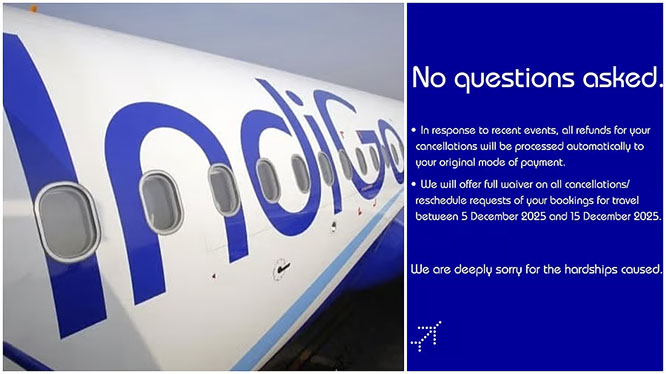
With IndiGo flight disruptions impacting thousands of passengers, the airline on Saturday said that it will offer full waiver on all cancellations/reschedule requests for travel bookings between December 5, 2025 and December 15, 2025.

Earlier in the day, the civil aviation ministry had directed the airline to complete the ticket refund process for the cancelled flights by Sunday evening, as well as ensure baggage separated from the travellers are delivered in the next two days.

In a post on X, titled 'No questions asked', IndiGo wrote, "In response to recent events, all refunds for your cancellations will be processed automatically to your original mode of payment."

"We are deeply sorry for the hardships caused," it further added.

Several passengers, however, complained of not getting full refund as promised by the airline.

Netizens have shared screenchots of getting charged for airline cancellation fee and convenience fee.

"Please tell me why u have did this airline cancellation charges when u say full amount will be refunded (sic)," a user wrote sharing a screenshot of the refund page.

"Well, but you have still debited the convenience charges," wrote another.

Passengers have also raised concerns about the "cancel" option being disabled on the IndiGo app. "First enable the 'Cancel' button on your App & offer full refund on tickets cancelled by customers between the said dates," wrote a user.

A day after the country's largest airline, IndiGo, cancelled more than 1,000 flights and caused disruptions for the fifth day on Saturday, the ministry said that any delay or non-compliance in refund processing will invite immediate regulatory action.

The refund process for all cancelled or disrupted flights must be completed by 8 pm on Sunday, the ministry said in a statement.

"Airlines have also been instructed not to levy any rescheduling charges for passengers whose travel plans were affected by cancellations," it said.

On Saturday, more than 400 flights were cancelled at various airports.

IndiGo has also been instructed to set up dedicated passenger support and refund facilitation cells.

Comments

Add new comment

  • Coastaldigest.com reserves the right to delete or block any comments.
  • Coastaldigset.com is not responsible for its readers’ comments.
  • Comments that are abusive, incendiary or irrelevant are strictly prohibited.
  • Please use a genuine email ID and provide your name to avoid reject.
News Network
December 19,2025

Mangaluru: In a decisive move to tackle the city’s deteriorating sanitation infrastructure, the Mangaluru City Corporation (MCC) has announced a massive ₹1,200 crore action plan to overhaul its underground drainage (UGD) network.

The initiative, spearheaded by Deputy Commissioner and MCC Administrator Darshan HV, aims to bridge "missing links" in the current system that have left residents grappling with overflowing sewage and environmental hazards.

The Breaking Point

The announcement follows a high-intensity phone-in session on Thursday, where the DC was flooded with grievances from frustrated citizens. Residents, including Savithri from Yekkur, described a harrowing reality: raw sewage from apartments leaking into stormwater drains, creating a "permanent stink" and turning residential zones into mosquito breeding grounds.

"We are facing immense difficulties due to the stench and the health risks. Local officials have remained silent until now," one resident reported during the session.

The Strategy: A Six-Year Vision

DC Darshan HV confirmed that the proposed plan is not a temporary patch but a comprehensive six-year roadmap designed to accommodate Mangaluru’s projected population growth. Key highlights of the plan include:

•    Infrastructure Expansion: Laying additional pipelines to connect older neighborhoods to the main grid.

•    STP Crackdown: Stricter enforcement of Sewage Treatment Plant (STP) regulations. While new apartments are required to have functional STPs, many older buildings lack them entirely, and several newer units are reportedly non-functional.

•    Budgetary Push: The plan has already been discussed with the district in-charge minister and the Secretary of the Urban Development Department. It is slated for formal presentation in the upcoming state budget.

Comments

Add new comment

  • Coastaldigest.com reserves the right to delete or block any comments.
  • Coastaldigset.com is not responsible for its readers’ comments.
  • Comments that are abusive, incendiary or irrelevant are strictly prohibited.
  • Please use a genuine email ID and provide your name to avoid reject.
News Network
December 16,2025

jordan.jpg

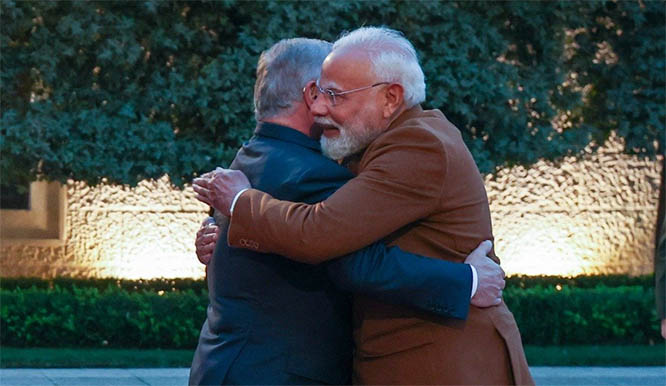
Prime Minister Narendra Modi on Monday held talks with Jordan’s King Abdullah II in Amman, during which the two leaders discussed ways to further strengthen bilateral relations, with the Prime Minister outlining an eight-point vision covering key areas of cooperation.

Describing the meeting as “productive”, PM Modi said he shared a roadmap focused on trade and economy, fertilisers and agriculture, information technology, healthcare, infrastructure, critical and strategic minerals, civil nuclear cooperation, and people-to-people ties.

In a post on social media platform X, the Prime Minister praised King Abdullah II’s personal commitment to advancing India–Jordan relations, particularly as both countries mark the 75th anniversary of the establishment of diplomatic ties this year.

“Held productive discussions with His Majesty King Abdullah II in Amman. His personal commitment towards vibrant India-Jordan relations is noteworthy. This year, we are celebrating the 75th anniversary of our bilateral diplomatic relations,” PM Modi said.

The meeting took place at the Al Husseiniya Palace, where the two leaders also exchanged views on regional and global issues of mutual interest. According to the Ministry of External Affairs (MEA), both sides agreed to further deepen cooperation in areas including trade and investment, defence and security, counter-terrorism and de-radicalisation, fertilisers and agriculture, infrastructure, renewable energy, tourism, and heritage.

The MEA said both leaders reaffirmed their united stand against terrorism.

PM Modi arrived in Amman earlier on Monday and was received by Jordanian Prime Minister Jafar Hassan, who accorded him a formal welcome. Following the talks, King Abdullah II hosted a banquet dinner in honour of the Prime Minister, reflecting the warmth of bilateral ties.

Jordan is the first leg of PM Modi’s three-nation tour. From Amman, the Prime Minister will travel to Ethiopia at the invitation of Prime Minister Abiy Ahmed Ali, marking his first official visit to the African nation. The tour will conclude with a visit to Oman.

Comments

Add new comment

  • Coastaldigest.com reserves the right to delete or block any comments.
  • Coastaldigset.com is not responsible for its readers’ comments.
  • Comments that are abusive, incendiary or irrelevant are strictly prohibited.
  • Please use a genuine email ID and provide your name to avoid reject.