Amit Shah: BJP's 'Chanakya' who delivered Modi Wave 2.0

Agencies
May 24, 2019

New Delhi, May 24: He combined BJP's core Hindutva plank with a hardcore nationalism agenda and set up a huge ground-level organisational setup to execute it the BJP's 'Chanakya' Amit Shah blazed such a trail that the 'Modi Wave 2.0' surpassed its own original avatar with a much bigger saffron surge.
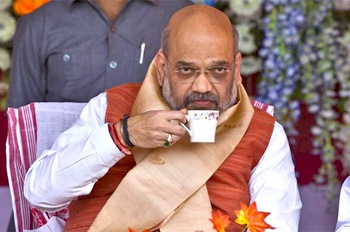
Known as an astute strategist whose non-political interests range from playing chess and watching cricket to stage performances and listening to classical music, 54-year-old Shah is often hailed as the BJP's most successful president for crafting its way to power states after states.

The record tally that he has now delivered for the BJP in the Lok Sabha 2019 elections is already being seen by many as something that would be difficult to repeat, though there are others who believe there is more to come as they point towards further inroads to be made in West Bengal, Odisha and in down South.

A man with avowed aim of having the BJP rule from "panchayat to Parliament", Shah has built his party into a formidable army that has been forever marching on since he took charge as its president in July 2014, turning India more saffron than it has ever been.

Political pundits say Shah has used a skilful mix of ideological firmness, unlimited political imagination and realpolitik flexibility to keep the BJP ahead of the game.

He ceded space in states like Bihar and Maharashtra to put allies at ease, worked on rival politicians with captive local vote banks to get them into the BJP fold, and sewed up new alliances as in Tamil Nadu and in the North East to boost his party's winning prospects.

And, unlike in the 90s when the BJP first came to power at the Centre, Shah ensured that his party made new friends without inviting the charge from its core voter base of diluting its core principles, ranging from Ram temple to cow, nationalism and Kashmir, for political gains.

If under Atal Bihari Vajpayee and L K Advani, the saffron party was seen as being inhibited in going all-out with its Hindutva plank for fear of antagonising allies and due to its perceived limited electoral appeal, the BJP has worn its Hindutva ideology on sleeve like a badge of honour under Prime Minister Narendra Modi and Shah.

Shah has been of a firm view that Hindutva combined with the BJP's hardcore nationalism agenda, though panned as shrill and divisive by its critics, render the party a distinct identity, and is a winning electoral strategy.

He has always believed that the allies would keep coming as long as the party is delivering in the polls.

Shah is also known to always match his limitless political ambition with thorough spadework, and then takes charge at the ground to put it into work.

When it emerged in 2015 that the BJP with its small allies was no match to the joint forces of Lalu Prasad and Nitish Kumar in Bihar, the party worked at winning over the JD(U) president, who finally broke his short alliance with Prasad in 2017 and joined hands with the former ally.

And when reports of disquiet within the JD(U) emerged with the alliance, Shah met Kumar and announced that both parties will contest an equal number of Lok Sabha seats in Bihar, virtually conceding the senior status to the regional party within the state.

In Maharashtra, where Shah had let ally Shiv Sena walk out of the alliance in the 2015 assembly polls so that the BJP can consolidate its position there, he offered a generous seat-sharing deal to the Hindutva ally for the all-important Lok Sabha polls.

In Uttar Pradesh with Yogi Adityanath at the helm as chief minister, Shah combined the Hindutva agenda with the Modi government's development plank to woo backward castes and bolster its traditional base of upper castes to take on a formidable SP-BSP combine.

Having risen through the ranks since starting at the booth level for the party in Gujarat at the age of 14 years, Shah is a firm believer in the prerequisite of a strong ground-level organisational machinery for poll successes.

In state after state, he has put in place robust organisational machinery for publicising the government schemes, carrying out political programmes and making full use of social media to reach out to voters.

For the 2019 elections, he deployed over 7,000 leaders for nearly 500 poll committee across the country, with special focus on 120 seats that the BJP had lost in 2014, and brought in 3,000 "full-timers" across parliamentary seats.

Seen as a Modi confidant, Shah also brought about cohesion between the government and the party, with the party leaders promoting the government's work and the ministers being used for the party work.

Leading from the front, Shah held over 161 rallies and visited over 312 Lok Sabha seats, clocking over 1.58 lakh km, more than any other leader.

After being given charge of the party, he was seen as Modi's hand-picked man to usher in changes to make it more attuned to the prime minister's vision. He did so, including by easing out veterans like L K Advani and Murli Manohar Joshi, cultivating a new band of younger leaders and by keeping the party firmly under his grip.

By all accounts, Shah has become to Modi what Advani was to Vajpayee, and may have crafted a success much bigger than that of the original Hindutva mascot.

Just a few months back, Shah said the BJP will remain in power for 50 years if it wins the 2019 elections. With 2019 done and dusted, he can be trusted to work at the "50-year" saffron rule in India.


Comments

Add new comment

  • Coastaldigest.com reserves the right to delete or block any comments.
  • Coastaldigset.com is not responsible for its readers’ comments.
  • Comments that are abusive, incendiary or irrelevant are strictly prohibited.
  • Please use a genuine email ID and provide your name to avoid reject.
News Network
December 6,2025

pilot.jpg

New Delhi: IndiGo, India’s largest airline, faced major operational turbulence this week after failing to prepare for new pilot-fatigue regulations issued by the Directorate General of Civil Aviation (DGCA). The stricter rules—designed to improve flight safety—took effect in phases through 2024, with the latest implementation on November 1. IndiGo has acknowledged that inadequate roster planning led to widespread cancellations and delays.

Below are the key DGCA rules that affected IndiGo’s operations:

1. Longer Mandatory Weekly Rest

Weekly rest for pilots has been increased from 36 hours to 48 hours.

The government says the extended break is essential to curb cumulative fatigue. This rule remains in force despite the current crisis.

2. Cap on Night Landings

Pilots can now perform only two night landings per week—a steep reduction from the earlier limit of six.

Night hours, defined as midnight to early morning, are considered the least alert period for pilots.

Given the disruptions, this rule has been temporarily relaxed for IndiGo until February 10.

3. Reduced Maximum Night Flight Duty

Flight duty that stretches into the night is now capped at 10 hours.

This measure has also been kept on hold for IndiGo until February 10 to stabilize operations.

4. Weekly Rest Cannot Be Replaced With Personal Leave

Airlines can no longer count a pilot’s personal leave as part of the mandatory 48-hour rest.

Pilots say this closes a loophole that previously reduced actual rest time.

Currently, all airlines are exempt from this rule to normalise travel.

5. Mandatory Fatigue Monitoring

Airlines must submit quarterly fatigue reports along with corrective actions to DGCA.

This system aims to create a transparent fatigue-tracking framework across the industry.

The DGCA has stressed that these rules were crafted to strengthen flight safety and align India with global fatigue-management standards. The temporary relaxations are expected to remain until February 2025, giving IndiGo time to stabilise its schedules and restore normal air travel.

Comments

Add new comment

  • Coastaldigest.com reserves the right to delete or block any comments.
  • Coastaldigset.com is not responsible for its readers’ comments.
  • Comments that are abusive, incendiary or irrelevant are strictly prohibited.
  • Please use a genuine email ID and provide your name to avoid reject.
News Network
December 21,2025

hadith.jpg

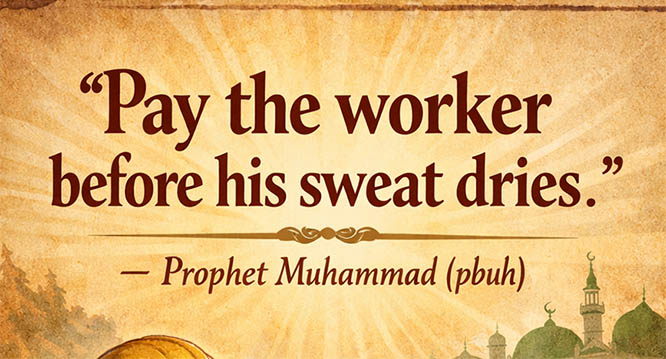
Invoking the teachings of Prophet Muhammad—“pay the worker before his sweat dries”—the Madras High Court has directed a municipal corporation to settle long-pending legal dues owed to a former counsel. The court observed that this principle reflects basic fairness and applies equally to labour and service-related disputes.

Justice G. R. Swaminathan made the observation while hearing a petition filed by advocate P. Thirumalai, who claimed that the Madurai City Municipal Corporation failed to pay him legal fees amounting to ₹13.05 lakh. Earlier, the High Court had asked the corporation to consider his representation. However, a later order rejected a major portion of his claim, prompting the present petition.

The court allowed Thirumalai to approach the District Legal Services Authority (DLSA) and submit a list of cases in which he had appeared. It also directed the corporation to settle the verified fee bills within two months, without interest. The court noted that the petitioner had waited nearly 18 years before challenging the non-payment and that the corporation could not be fully blamed, as the fee bills were not submitted properly.

‘A Matter of Embarrassment’

Justice Swaminathan described it as a “matter of embarrassment” that the State has nearly a dozen Additional Advocate Generals. He observed that appointing too many law officers often leads to unnecessary allocation of work and frequent adjournments, as government counsel claim that senior officers are engaged elsewhere.

He expressed hope that such practices would end at least in the Madurai Bench of the High Court and added that Additional Advocate Generals should “turn a new leaf” from 2026 onwards.

‘Scandalously High Amounts’

While stating that the court cannot examine the exact fees paid to senior counsel or law officers, Justice Swaminathan stressed that good governance requires public funds to be used prudently. He expressed concern over the “scandalously high amounts” paid by government and quasi-government bodies to a few favoured law officers.

In contrast, the court noted that Thirumalai’s total claim was “a pittance” considering the large number of cases he had handled.

Background

Thirumalai served as the standing counsel for the Madurai City Municipal Corporation for more than 14 years, from 1992 to 2006. During this period, he represented the corporation in about 818 cases before the Madurai District Courts.

As the former counsel was unable to hire a clerk to obtain certified copies of judgments in all 818 cases, the court directed the District Legal Services Authority to collect the certified copies within two months. The court further ordered the corporation to bear the cost incurred by the DLSA and deduct that amount from the final settlement payable to the petitioner.

Comments

Add new comment

  • Coastaldigest.com reserves the right to delete or block any comments.
  • Coastaldigset.com is not responsible for its readers’ comments.
  • Comments that are abusive, incendiary or irrelevant are strictly prohibited.
  • Please use a genuine email ID and provide your name to avoid reject.
News Network
December 15,2025

Mangaluru, Dec 15: Educational institutions in Mangaluru that rely on the popular Mangala Stadium for their annual sports events are bracing for an inconvenience as the city's key sporting venue is set to close its gates for a significant upgrade. The stadium is expected to be unavailable for approximately two months starting from January 15, 2026.

The closure is necessitated by a proposed overhaul of the stadium's facilities, with a special focus on upgrading the synthetic track. Pradeep Dsouza, Assistant Director of the District of Youth Empowerment and Sports (DYES), Dakshina Kannada, confirmed the development.

"Experts have visited the stadium, conducted a thorough inspection, and have given the go-ahead for a complete makeover," Dsouza stated. "Funds have been allocated for the project, and we are currently awaiting the final green signal from state officials to commence the work. We anticipate that the work will likely begin in the second week of January. Consequently, we have stopped renting out the stadium to colleges and other organizations in preparation for the upgrade."

The timing presents a logistical challenge for colleges, as many schools have already concluded their sports meets.

"Colleges will now be organizing their events and will need to find alternative locations to host their sports meets," Dsouza added. He suggested a few potential venues, including the Dakshina Kannada police ground, University College grounds, Panambur grounds, Swaraj Maidan in Moodbidri, and the Mangalore University sports grounds in Konaje.

However, many institutions note that finding a comparable venue will be difficult. While the DK police ground and University College grounds are closer to the city center, they do not possess the extensive facilities and infrastructure offered by Mangala Stadium.

Dr. P Dayananda Pai - P Satisha Govt First Grade College, Carstreet, is one such institution dependent on the stadium. Principal Jayakar Bhandary expressed hope for a swift completion of the work. "We expect the work to be completed at the earliest. If not, we will be forced to look for other venues to host the sports day for our students," Bhandary said, highlighting the pressing need for the city's main sporting facility.

Comments

Add new comment

  • Coastaldigest.com reserves the right to delete or block any comments.
  • Coastaldigset.com is not responsible for its readers’ comments.
  • Comments that are abusive, incendiary or irrelevant are strictly prohibited.
  • Please use a genuine email ID and provide your name to avoid reject.