



Army destroys 3 terror camps in PoK, six to ten Pakistan soldiers dead

Agencies
October 21, 2019

New Delhi, Oct 21: Six to ten soldiers of the Pakistan Army were killed and three terror camps destroyed in a retaliatory action by the Indian Army opposite the Tangdhar sector in Jammu & Kashmir, Army chief General Bipin Rawat said on Sunday.

Talking to reporters on the sidelines of an event, he said another terror camp was severely damaged in the action by the Indian forces and the retaliation had caused substantial harm to the terror infrastructure across the Line of Control (LoC).

Defence Minister Rajnath Singh was briefed about the retaliatory action, the Army chief said. “Ever since the abrogation of special provisions (for Jammu & Kashmir), we are getting repeated inputs about infiltration by terrorists from across the border,” he added. “So far, according to the information available with us, 6-10 Pakistani soldiers have been killed and nearly as many terrorists,” General Rawat said, adding that more information on terrorist casualty was being obtained.

“Three terror camps have been destroyed and on the fourth one also, we have caused severe damage,” he said.

If Pakistan continued with such activities, the Indian Army would not hesitate to retaliate, the Army chief asserted.

Recently, the Army received information that terrorists were coming closer to camps in the forward areas, General Rawat said.

In the last one month, repeated infiltration attempts were made from the Gurez, Keran, Machil sectors and south of Pir Panjal, he said, adding that Pakistani soldiers were resorting to ceasefire violation to provide support to the infiltration bids by terrorists. “Last evening, an attempt was made in Tangdhar to infiltrate...where we retaliated...Pakistan, at the same time, carried out some firing at the post, in which we did suffer as two of our soldiers got killed and one civilian also died,” General Rawat said. “All this (firing) was done to ensure that they can push in the terrorists,” he said.

General Rawat said terror camps across the border were targeted as the Army had definitive information. “The festival season is approaching, Diwali is round the corner, we had picked up a definitive signal that some of the terror camps north of Pir Panjal were active. Terrorists had arrived in these camps and that they were likely to infiltrate.

Lashing out at Pakistan, General Rawat said the other side was desperate as the first snow had fallen and advised the neighbouring country to “not perpetrate terror in the territory” on the Indian side. “Three days ago, we had foiled an infiltration bid in the Machil sector and recovered a rucksack and other equipment,” he said.

On the artillery action, the Army chief said as of now, there was a kind of "radio silence" on the other side and “we are not even able to pick up any mobile communication from across (the LoC), which implies that there have been casualty, damage, which the Pakistan Army does not want to highlight”.

“They do not want to highlight or project this damage as the world will know that no action had been taken (by them) to curtain the acts of terrorism from across the border. They are trying to keep it under the wraps. But, definitely, as and when we get it, we will provide you with more evidence,” he said.

On the situation in Jammu and Kashmir after the abrogation of Article 370 of the Constitution, which gave a special status to the state, the Army chief said while Indian forces were trying to restore normalcy in the Valley, attempts were being made from elements across the border to disrupt peace.

“Ever since the abrogation of special provisions (for Jammu and Kashmir), we are getting repeated inputs about infiltration by terrorists from across the border,” he added.

“Gradually, things are returning to normal in the valley, but obviously somebody is working behind the scenes, at the behest of terrorists and agencies, some within and some outside Pakistan and PoK, to disrupt the peaceful atmosphere,” he said. Asked if Defence Minister Rajnath Singh was briefed by him on the Tangdhar incident, the Army chief answered in the affirmative. "He (Singh) has been briefed regularly," he said. “The defence minister has regularly been in contact with me on this issue,” General Rawat said.

“As I said earlier, the political leadership and the military are working in close coordination and that is continuing... The political leadership is fully backing us on countering terror in whatever way and no restriction has been put. The mutual consultation goes on regularly,” he added.

Comments

Add new comment

  • Coastaldigest.com reserves the right to delete or block any comments.
  • Coastaldigset.com is not responsible for its readers’ comments.
  • Comments that are abusive, incendiary or irrelevant are strictly prohibited.
  • Please use a genuine email ID and provide your name to avoid reject.
News Network
December 7,2025

SHRIMP.jpg

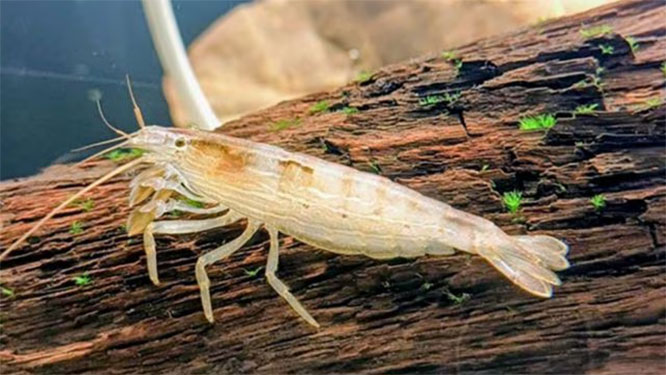
Mangaluru, Dec 7: A rare bamboo shrimp has been rediscovered on mainland India more than 70 years after it was last reported, confirming for the first time the presence of Atyopsis spinipes in the country. The find was made by researchers from the Centre for Climate Change Studies at Sathyabama Institute of Science and Technology, Chennai, during surveys in Karnataka and Odisha.

The team — shrimp expert Dr S Prakash, PhD scholar K Kunjulakshmi, and Mangaluru-based researcher Maclean Antony Santos — combined field surveys, ecological assessments and DNA analysis to identify the elusive species. Their findings, published in Zootaxa, resolve decades of taxonomic confusion stemming from a 1951 report that misidentified the species as Atyopsis moluccensis without strong evidence.

The shrimp has now been confirmed at two locations: the Mulki–Pavanje estuary near Mangaluru and the Kuakhai River in Bhubaneswar. Historical specimens from the Andaman Islands, previously labelled as A. moluccensis, were also found to be misidentified and actually belong to A. spinipes.

The rediscovery began after an aquarium hobbyist in Odisha spotted a shrimp in 2022, prompting systematic surveys across Udupi, Karwar and Mangaluru. Four female specimens were collected in Mulki and one in Odisha, all genetically matching.

Researchers warn the species may exist in very small, vulnerable populations as freshwater habitats face increasing pressure from pollution, sand mining and infrastructure development. All verified specimens have been deposited with the Zoological Survey of India for future reference.

Comments

Add new comment

  • Coastaldigest.com reserves the right to delete or block any comments.
  • Coastaldigset.com is not responsible for its readers’ comments.
  • Comments that are abusive, incendiary or irrelevant are strictly prohibited.
  • Please use a genuine email ID and provide your name to avoid reject.
News Network
December 19,2025

Mangaluru: The Mangaluru CEN police have arrested a 23-year-old man for allegedly posting provocative and misleading content on an Instagram page named “mr_a_titude”, targeting the Bajpe police.

Mangaluru Commissioner of Police Sudheer Kumar Reddy C H identified the arrested as Abhishek M, a resident of Katipalla in Mangaluru.

A case has been registered at the Bajpe Police Station under Sections 353(1)(c), 353(2), 56, and 57 read with Section 189 of the Bharatiya Nyaya Sanhita (BNS) in connection with the post.

According to police, the accused uploaded a photograph of a hotel on the Instagram page and alleged that accused persons in a murder case under the Bajpe police jurisdiction were being given “royal treatment” by the police, including being served beef meals daily from the hotel.

The post further accused the police of supporting criminals, misusing their authority, and betraying public trust. Police said the content was provocative in nature and aimed at inciting public outrage against the police.

Following the post, a case was registered at the Bajpe police station, and further investigation was transferred to the CEN police station.

Police records indicate that the accused has a criminal history, with multiple cases registered against him, including murder, attempt to murder, assault, and robbery at the Surathkal Police Station, and one case at the Kaup Police Station.

The Commissioner said the accused was traced and arrested using technical evidence.

Comments

Add new comment

  • Coastaldigest.com reserves the right to delete or block any comments.
  • Coastaldigset.com is not responsible for its readers’ comments.
  • Comments that are abusive, incendiary or irrelevant are strictly prohibited.
  • Please use a genuine email ID and provide your name to avoid reject.
News Network
December 13,2025

New Delhi: School-going children are picking up drug and smoking habits and engaging in consumption of alcohol, with the average age of introduction to such harmful substances found to be around 13 years, suggesting a need for earlier interventions as early as primary school, a multi-city survey by AIIMS-Delhi said.

The findings also showed substance use increased in higher grades, with grade XI/XII students two times more likely to report use of substances when compared with grade VIII students. This emphasised the importance of continued prevention and intervention through middle and high school.

The study led by Dr Anju Dhawan of AIIMS's National Drug Dependence Treatment Centre, published in the National Medical Journal of India this month, looks at adolescent substance use across diverse regions.

The survey included 5,920 students from classes 8, 9, 11 and 12 in urban government, private and rural schools across 10 cities -- Bengaluru, Chandigarh, Delhi, Dibrugarh, Hyderabad, Imphal, Jammu, Lucknow, Mumbai, and Ranchi. The data were collected between May 2018 and June 2019.

The average age of initiation for any substance was 12.9 (2.8) years. It was lowest for inhalants (11.3 years) followed by heroin (12.3 years) and opioid pharmaceuticals (without prescription; 12.5 years).

Overall, 15.1 per cent of participants reported lifetime use, 10.3 per cent reported past year use, and 7.2 per cent reported use in the past month of any substance, the study found.

The most common substances used in the past year, after tobacco (4 per cent) and alcohol (3.8 per cent), were opioids (2.8 per cent), followed by cannabis (2 per cent) and inhalants (1.9 per cent). Use of non-prescribed pharmaceutical opioids was most common among opioid users (90.2 per cent).

On being asked, 'Do you think this substance is easily available for a person of your age' separately for each substance category, nearly half the students (46.3 per cent) endorsed that tobacco products and more than one-third of the students (36.5 per cent) agreed that a person of their age can easily procure alcohol products.

Similarly, for Bhang (21.9 per cent), ganja/charas (16.1 per cent), inhalants (15.2 per cent), sedatives (13.7 per cent), opium and heroin (10 per cent each), the students endorsed that these can be easily procured.

About 95 per cent of the children, irrespective of their grade, agreed with the statement that 'drug use is harmful'.

The rates of substance use (any) among boys were significantly higher than those of girls for substance use (ever), use in the past year and use in the past 30 days. Compared to grade VIII students, grade IX students were more likely, and grade XI/XII students were twice as likely to have used any substance (ever).

The likelihood of past-year use of any substance was also higher for grade IX students and for grade XI/XII students as compared to grade VIII students.

About 40 per cent of students mentioned that they had a family member who used tobacco or alcohol each. The use of cannabis (any product) and opioid (any product) by a family member was reported by 8.2 per cent and 3.9 per cent of students, respectively, while the use of other substances, such as inhalants/sedatives by family was 2-3 per cent, the study found.

A relatively smaller percentage of students reported use of tobacco or alcohol among peers as compared to among family members, while a higher percentage reported inhalants, sedatives, cannabis or opioid use among peers.

Children using substances (past year) compared to non-users reported significantly higher any substance use by their family members and peers.

There were 25.7 per cent students who replied 'yes' to the question 'conflicts/fights often occur in your family'. Most students also replied affirmatively to 'family members are aware of how their time is being spent' and 'damily members are aware of with whom they spend their time'.

Comments

Add new comment

  • Coastaldigest.com reserves the right to delete or block any comments.
  • Coastaldigset.com is not responsible for its readers’ comments.
  • Comments that are abusive, incendiary or irrelevant are strictly prohibited.
  • Please use a genuine email ID and provide your name to avoid reject.