Art 370 root cause of terrorism, says Amit Shah as RS clears resolution on J&K

Agencies
August 5, 2019

New Delhi, Aug 5: Rajya Sabha on Monday approved a resolution abrogating Article 370 for Jammu and Kashmir and a bill to bifurcate the state into two union territories with home minister Amit Shah saying the controversial provisions were responsible for poverty and lack of development in the state.

Allaying opposition fears of all hell breaking loose after the move, Shah replied, "nothing will happen" and it won't be allowed to turn into another battle-torn Kosovo.

"It was heaven on earth and will remain so," he said replying to the debate on the resolution and the bill which were taken up together.

He said full statehood will be restored to Jammu and Kashmir at "appropriate time" and after "normalcy" returns.

The bill provides for bifurcation of the state into two union territories of Jammu and Kashmir and Ladakh.

"Article 370 is biggest hurdle to normalcy in the state," he said, adding his government was committed to making Jammu and Kashmir the most developed state in the country.

Terrorism, he said, cannot be eliminated from the state until Article 370 and 35A are in existence.

The two articles of the Constitution, which give Jammu and Kashmir a special status and does not allow all laws of India to be applicable to the state, have hindered development and breeded corruption, he said.

Shah said rule of three families in the state during their 70 years since independence did not allow democracy to percolate and it breeded corruption.

Article 370 ruined Jammu and Kashmir and is responsible for poverty in the state, he said.

This, despite Rs 14,255 per capita being allocated to J&K as against Rs 3,681 per capita national average, he said.

Insisting development was being stalled in the state because of Article 370, he said real estate prices haven't moved in sync with national average.

Tourism did not develop in the state because of restrictions on purchase of land for outsiders, he said, adding that no industry can be set up in J&K because of Article 370.

Healthcare is crippling in Jammu and Kashmir as no private hospital could be set up due to restrictions placed by Article 370 and 35A, he said.

"Similar is the situation for education. Right to Education, which guarantees children below a certain age, cannot be implemented in Kashmir. Why should valley children not get benefit of education," he asked.

After abrogation of Article 370, J&K will truly become an integral part of India, he said.

More than 41,400 people have been killed due to terrorism in Jammu and Kashmir. Whose policy is responsible for the deaths, he asked.

Shah said that Article 370 was a temporary provision and asked how long can a provision like that be allowed to continue.

Rajya Sabha also approved a bill to extend 10% reservation to economically weaker sections in the state as well as the resolution on abrogating Article 370 by voice vote.

TMC, which vehemently opposed the resolution, walked out before Shah began to reply to the debate on it.

However, the bill to bifurcate the state was approved by 125 votes in favour and 61 against it. One member abstained.

Opposition BSP, BJD, AIADMK and YSR-Congress voted in favour of the bill.

Comments

Nation Adviser
 - 
Thursday, 8 Aug 2019

this time India will loose war badly...become we know when our lion soldier go to fight under the leadership of DOG M*D*...this is wat happen.


if india loose then hindu people must worry...there is no escape...muslim can go whereever country they want, but not in case of indian hindu..

Fairman
 - 
Tuesday, 6 Aug 2019

This person and his team are the real terrorists. They went against the justice for the Kashmirians under the fact when they joined India. 


According to the pact 

Whenever the citizens of kashmir request for withdrawal from the country  the government should arrange referendum  

That is the choice of the people  

What majority likes they  should be given independence  

Now nobody wants to respect the pact. 

So the instability started for their right. 


Now the BJP wants denay their rights  

So real terrorisom can not be ruled out. 


Got help the truth to reign. 


Add new comment

  • Coastaldigest.com reserves the right to delete or block any comments.
  • Coastaldigset.com is not responsible for its readers’ comments.
  • Comments that are abusive, incendiary or irrelevant are strictly prohibited.
  • Please use a genuine email ID and provide your name to avoid reject.
News Network
December 19,2025

Saudi Arabia has abolished fees on expatriate workers employed in licensed industrial establishments, signaling a strong push to empower national factories and enhance the Kingdom’s global industrial competitiveness. The move reflects the leadership’s commitment to building a sustainable and resilient industrial economy under Saudi Vision 2030.

The decision was approved by the Council of Ministers, chaired by Crown Prince and Prime Minister Mohammed bin Salman, following a recommendation from the Council of Economic and Development Affairs (CEDA). It forms part of a broader strategy to support, modernize, and strengthen the industrial sector.

By removing fees on foreign workers, industrial establishments gain greater operational flexibility and relief from financial pressures. This is expected to help factories expand production, improve efficiency, and compete more effectively in international markets, while reinforcing long-term sustainability.

The initiative aligns closely with Saudi Vision 2030, which identifies industry as a key pillar of economic diversification. A competitive and resilient industrial base is viewed as essential for driving innovation, attracting investment, and sustaining long-term economic growth.

Overall, the fee exemption underscores the Kingdom’s commitment to creating a supportive environment for industrial development and ensuring that Saudi factories remain globally competitive and capable of leading the nation’s economic transformation.

Comments

Add new comment

  • Coastaldigest.com reserves the right to delete or block any comments.
  • Coastaldigset.com is not responsible for its readers’ comments.
  • Comments that are abusive, incendiary or irrelevant are strictly prohibited.
  • Please use a genuine email ID and provide your name to avoid reject.
News Network
December 16,2025

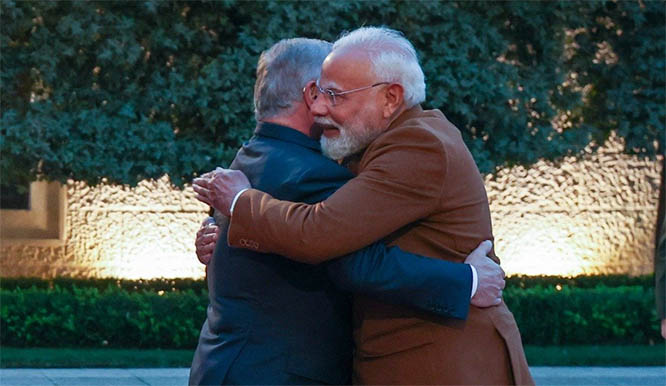
jordan.jpg

Prime Minister Narendra Modi on Monday held talks with Jordan’s King Abdullah II in Amman, during which the two leaders discussed ways to further strengthen bilateral relations, with the Prime Minister outlining an eight-point vision covering key areas of cooperation.

Describing the meeting as “productive”, PM Modi said he shared a roadmap focused on trade and economy, fertilisers and agriculture, information technology, healthcare, infrastructure, critical and strategic minerals, civil nuclear cooperation, and people-to-people ties.

In a post on social media platform X, the Prime Minister praised King Abdullah II’s personal commitment to advancing India–Jordan relations, particularly as both countries mark the 75th anniversary of the establishment of diplomatic ties this year.

“Held productive discussions with His Majesty King Abdullah II in Amman. His personal commitment towards vibrant India-Jordan relations is noteworthy. This year, we are celebrating the 75th anniversary of our bilateral diplomatic relations,” PM Modi said.

The meeting took place at the Al Husseiniya Palace, where the two leaders also exchanged views on regional and global issues of mutual interest. According to the Ministry of External Affairs (MEA), both sides agreed to further deepen cooperation in areas including trade and investment, defence and security, counter-terrorism and de-radicalisation, fertilisers and agriculture, infrastructure, renewable energy, tourism, and heritage.

The MEA said both leaders reaffirmed their united stand against terrorism.

PM Modi arrived in Amman earlier on Monday and was received by Jordanian Prime Minister Jafar Hassan, who accorded him a formal welcome. Following the talks, King Abdullah II hosted a banquet dinner in honour of the Prime Minister, reflecting the warmth of bilateral ties.

Jordan is the first leg of PM Modi’s three-nation tour. From Amman, the Prime Minister will travel to Ethiopia at the invitation of Prime Minister Abiy Ahmed Ali, marking his first official visit to the African nation. The tour will conclude with a visit to Oman.

Comments

Add new comment

  • Coastaldigest.com reserves the right to delete or block any comments.
  • Coastaldigset.com is not responsible for its readers’ comments.
  • Comments that are abusive, incendiary or irrelevant are strictly prohibited.
  • Please use a genuine email ID and provide your name to avoid reject.
News Network
December 7,2025

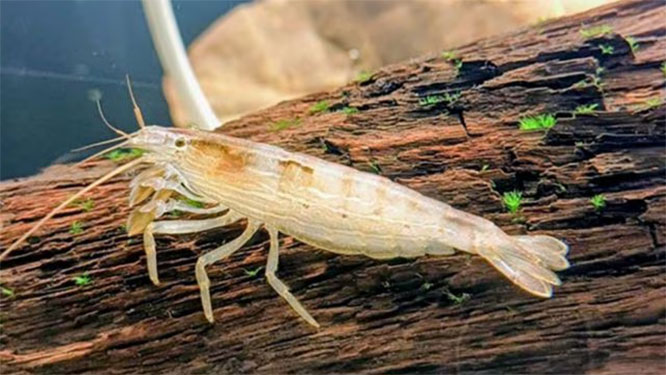
SHRIMP.jpg

Mangaluru, Dec 7: A rare bamboo shrimp has been rediscovered on mainland India more than 70 years after it was last reported, confirming for the first time the presence of Atyopsis spinipes in the country. The find was made by researchers from the Centre for Climate Change Studies at Sathyabama Institute of Science and Technology, Chennai, during surveys in Karnataka and Odisha.

The team — shrimp expert Dr S Prakash, PhD scholar K Kunjulakshmi, and Mangaluru-based researcher Maclean Antony Santos — combined field surveys, ecological assessments and DNA analysis to identify the elusive species. Their findings, published in Zootaxa, resolve decades of taxonomic confusion stemming from a 1951 report that misidentified the species as Atyopsis moluccensis without strong evidence.

The shrimp has now been confirmed at two locations: the Mulki–Pavanje estuary near Mangaluru and the Kuakhai River in Bhubaneswar. Historical specimens from the Andaman Islands, previously labelled as A. moluccensis, were also found to be misidentified and actually belong to A. spinipes.

The rediscovery began after an aquarium hobbyist in Odisha spotted a shrimp in 2022, prompting systematic surveys across Udupi, Karwar and Mangaluru. Four female specimens were collected in Mulki and one in Odisha, all genetically matching.

Researchers warn the species may exist in very small, vulnerable populations as freshwater habitats face increasing pressure from pollution, sand mining and infrastructure development. All verified specimens have been deposited with the Zoological Survey of India for future reference.

Comments

Add new comment

  • Coastaldigest.com reserves the right to delete or block any comments.
  • Coastaldigset.com is not responsible for its readers’ comments.
  • Comments that are abusive, incendiary or irrelevant are strictly prohibited.
  • Please use a genuine email ID and provide your name to avoid reject.