Article 370: CWC deplores govt's 'undemocratic' manner

Agencies
August 7, 2019

New Delhi, Aug 7: The Congress Working Committee late Tuesday deplored the "unilateral, brazen and totally undemocratic" manner in which provisions of Article 370 of the Constitution was abrogated and the state of Jammu and Kashmir was bifurcated by the government into two Union Territories.
At a meeting of the Congress's highest decision-making body, the party accused the BJP of violating constitutional law, the states' rights, parliamentary procedure and democratic governance.

Party sources said various party leaders made their points and the leadership respected the sentiments expressed by each of them. Rahul Gandhi said the party would stand with its ideology and opposed the manner in which the government went ahead with the decision against all democratic and constitutional norms, the sources said.

Gandhi, the sources added, pointed out that the party respected the sentiments of all, including those who have expressed divergent views as per the sentiment of people in their respective states and areas, but the party had to go by its ideological stand.

Priyanka Gandhi also expressed similar views.

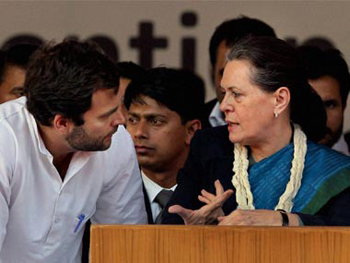
The meeting, chaired by Rahul Gandhi, was attended by top party leaders Sonia Gandhi, Manmohan Singh, A K Antony, Ahmed Patel, Ghulam Nabi Azad, P Chidambaram besides Priyanka Gandhi, and they deliberated on the party's strategy going forward on J&K.

Former state chief minister Ghulam Nabi Azad explained the entire Kashmir situation and the aftermath of the government's decision.

The meeting of the CWC came after the party took a stand against the government action, while several Congress leaders such as Jyotiraditya Scindia and Janardan Dwivedi struck a divergent view and supported the Centre's action.

It was held soon after Parliament approved the government's action of revoking the special status of Jammu and Kashmir and bifurcated the border state into two Union Territories. The Congress has strongly opposed the move in both houses of Parliament and termed the government action as unconstitutional and undemocratic.

While some leaders expressed divergent views on the issue at the meeting, the resolution adopted at the meeting was unanimous.

"The CWC deplores the unilateral, brazen and totally undemocratic manner in which Article 370 of the Constitution was abrogated and the State of Jammu and Kashmir was dismembered by misinterpreting the provisions of the Constitution," the CWC resolution stated.

Reading out the resolution, Chidambaram said, "Every principle of Constitutional law, States’ rights, Parliamentary procedure and democratic governance was violated."

"The CWC strongly reaffirmed the consistent and stated position of the Indian National Congress that J&K, including the areas under the illegal occupation of Pakistan and the part ceded by it to China, are integral part of the Republic of India.

"The integration of J&K with India is final and irrevocable. CWC firmly asserted that all issues pertaining to J&K are internal matters of India and no outside interference will be tolerated," the CWC resolved.

The party reiterated its pledge to stand with the people of Jammu, Kashmir and Ladakh and to fight BJP's "divisive and diabolical". The party also urged the people of Jammu and Kashmir to maintain peace and calm.

The resolution further stated that Article 370 is the Constitutional recognition of the terms of the Instrument of Accession between the State of Jammu and Kashmir and India.

"It deserved to be honoured until it was amended, after consultation with all sections of the people, and strictly in accordance with the Constitution of India," it said.

The CWC said what the BJP government accomplished yesterday in the Rajya Sabha and today in the Lok Sabha has "grave implications" going well beyond J&K and calls into question the very idea of India being a Union of States.

"Jammu and Kashmir acceded to India as one State and no government has the power to change its status or divide it or reduce any part of it to a Union Territory," the party said.

The Indian National Congress pledges to stand with the people of Jammu, Kashmir and Ladakh and to fight the BJP and its divisive and diabolical agenda with every power in its hands. We urge the people of J&K to maintain peace and calm.

Congress leader in Lok Sabha Adhir Ranjan Chowdhury, who earlier in the day stoked controversy as he sought to know from the government whether Jammu and Kashmir was an internal matter or a bilateral issue, also attended the meeting.

However, just ahead of the meeting, Scindia said he supported the move on Jammu and Kashmir and Ladakh and the state's full integration into the Union of India, adding that it was in the interest of the country.

"I support the move on #JammuAndKashmir & #Ladakh and its full integration into union of India," he tweeted.

"Would have been better if constitutional process had been followed. No questions could have been raised then. Nevertheless, this is in our country's interest and I support this," he said.

While the meeting was on, senior Congress leader Anand Sharma put out a tweet saying Jammu and Kashmir joined the Indian Union as a state.

"BJP govt ill thought decision of dividing the state and downgrading the strategically sensitive state is a first in history and changes geography and humiliates the people of Jammu and Kashmir," he said.

The CWC was also expected to pass a resolution on the situation arising out of the government's move on Jammu and Kashmir.

Comments

Add new comment

  • Coastaldigest.com reserves the right to delete or block any comments.
  • Coastaldigset.com is not responsible for its readers’ comments.
  • Comments that are abusive, incendiary or irrelevant are strictly prohibited.
  • Please use a genuine email ID and provide your name to avoid reject.
News Network
December 13,2025

New Delhi: School-going children are picking up drug and smoking habits and engaging in consumption of alcohol, with the average age of introduction to such harmful substances found to be around 13 years, suggesting a need for earlier interventions as early as primary school, a multi-city survey by AIIMS-Delhi said.

The findings also showed substance use increased in higher grades, with grade XI/XII students two times more likely to report use of substances when compared with grade VIII students. This emphasised the importance of continued prevention and intervention through middle and high school.

The study led by Dr Anju Dhawan of AIIMS's National Drug Dependence Treatment Centre, published in the National Medical Journal of India this month, looks at adolescent substance use across diverse regions.

The survey included 5,920 students from classes 8, 9, 11 and 12 in urban government, private and rural schools across 10 cities -- Bengaluru, Chandigarh, Delhi, Dibrugarh, Hyderabad, Imphal, Jammu, Lucknow, Mumbai, and Ranchi. The data were collected between May 2018 and June 2019.

The average age of initiation for any substance was 12.9 (2.8) years. It was lowest for inhalants (11.3 years) followed by heroin (12.3 years) and opioid pharmaceuticals (without prescription; 12.5 years).

Overall, 15.1 per cent of participants reported lifetime use, 10.3 per cent reported past year use, and 7.2 per cent reported use in the past month of any substance, the study found.

The most common substances used in the past year, after tobacco (4 per cent) and alcohol (3.8 per cent), were opioids (2.8 per cent), followed by cannabis (2 per cent) and inhalants (1.9 per cent). Use of non-prescribed pharmaceutical opioids was most common among opioid users (90.2 per cent).

On being asked, 'Do you think this substance is easily available for a person of your age' separately for each substance category, nearly half the students (46.3 per cent) endorsed that tobacco products and more than one-third of the students (36.5 per cent) agreed that a person of their age can easily procure alcohol products.

Similarly, for Bhang (21.9 per cent), ganja/charas (16.1 per cent), inhalants (15.2 per cent), sedatives (13.7 per cent), opium and heroin (10 per cent each), the students endorsed that these can be easily procured.

About 95 per cent of the children, irrespective of their grade, agreed with the statement that 'drug use is harmful'.

The rates of substance use (any) among boys were significantly higher than those of girls for substance use (ever), use in the past year and use in the past 30 days. Compared to grade VIII students, grade IX students were more likely, and grade XI/XII students were twice as likely to have used any substance (ever).

The likelihood of past-year use of any substance was also higher for grade IX students and for grade XI/XII students as compared to grade VIII students.

About 40 per cent of students mentioned that they had a family member who used tobacco or alcohol each. The use of cannabis (any product) and opioid (any product) by a family member was reported by 8.2 per cent and 3.9 per cent of students, respectively, while the use of other substances, such as inhalants/sedatives by family was 2-3 per cent, the study found.

A relatively smaller percentage of students reported use of tobacco or alcohol among peers as compared to among family members, while a higher percentage reported inhalants, sedatives, cannabis or opioid use among peers.

Children using substances (past year) compared to non-users reported significantly higher any substance use by their family members and peers.

There were 25.7 per cent students who replied 'yes' to the question 'conflicts/fights often occur in your family'. Most students also replied affirmatively to 'family members are aware of how their time is being spent' and 'damily members are aware of with whom they spend their time'.

Comments

Add new comment

  • Coastaldigest.com reserves the right to delete or block any comments.
  • Coastaldigset.com is not responsible for its readers’ comments.
  • Comments that are abusive, incendiary or irrelevant are strictly prohibited.
  • Please use a genuine email ID and provide your name to avoid reject.
News Network
December 16,2025

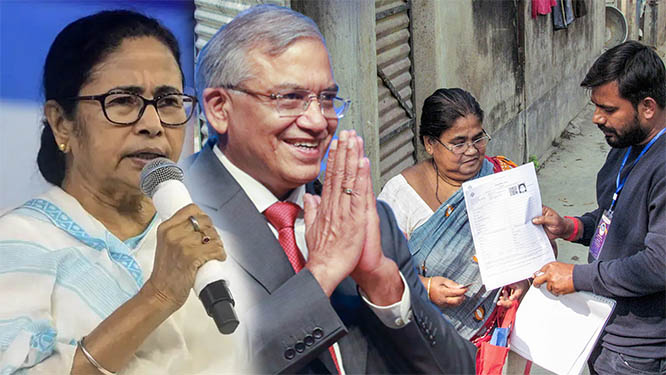
bengal.jpg

The deletion of over 58 lakh names from West Bengal’s draft electoral rolls following a Special Intensive Revision (SIR) has sparked widespread concern and is likely to deepen political tensions in the poll-bound state.

According to the Election Commission, the revision exercise has identified 24 lakh voters as deceased, 19 lakh as relocated, 12 lakh as missing, and 1.3 lakh as duplicate entries. The draft list, published after the completion of the first phase of SIR, aims to remove errors and duplication from the electoral rolls.

However, the scale of deletions has raised fears that a large number of eligible voters may have been wrongly excluded. The Election Commission has said that individuals whose names are missing can file objections and seek corrections. The final voter list is scheduled to be published in February next year, after which the Assembly election announcement is expected. Notably, the last Special Intensive Revision in Bengal was conducted in 2002.

The development has intensified the political row over the SIR process. Chief Minister Mamata Banerjee and her Trinamool Congress have strongly opposed the exercise, accusing the Centre and the Election Commission of attempting to disenfranchise lakhs of voters ahead of the elections.

Addressing a rally in Krishnanagar earlier this month, Banerjee urged people to protest if their names were removed from the voter list, alleging intimidation during elections and warning of serious consequences if voting rights were taken away.

The BJP, meanwhile, has defended the revision and accused the Trinamool Congress of politicising the issue to protect what it claims is an illegal voter base. Leader of the Opposition Suvendu Adhikari alleged that the ruling party fears losing power due to the removal of deceased, fake, and illegal voters.

The controversy comes amid earlier allegations by the Trinamool Congress that excessive work pressure during the SIR led to the deaths by suicide of some Booth Level Officers (BLOs), for which the party blamed the Election Commission. With the draft list now out, another round of political confrontation appears imminent.

As objections begin to be filed, the focus will be on whether the correction mechanism is accessible, transparent, and timely—critical factors in ensuring that no eligible voter is denied their democratic right ahead of a crucial election.

Comments

Add new comment

  • Coastaldigest.com reserves the right to delete or block any comments.
  • Coastaldigset.com is not responsible for its readers’ comments.
  • Comments that are abusive, incendiary or irrelevant are strictly prohibited.
  • Please use a genuine email ID and provide your name to avoid reject.
News Network
December 7,2025

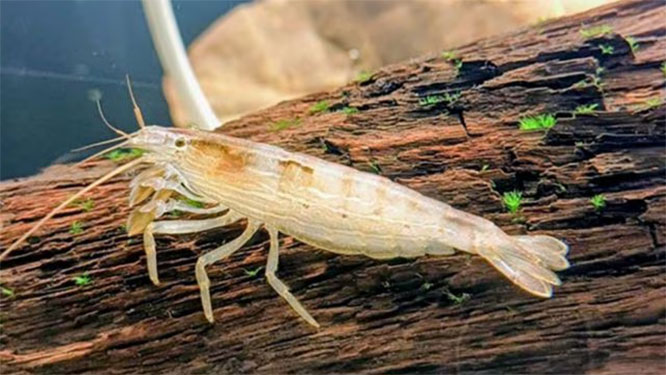
SHRIMP.jpg

Mangaluru, Dec 7: A rare bamboo shrimp has been rediscovered on mainland India more than 70 years after it was last reported, confirming for the first time the presence of Atyopsis spinipes in the country. The find was made by researchers from the Centre for Climate Change Studies at Sathyabama Institute of Science and Technology, Chennai, during surveys in Karnataka and Odisha.

The team — shrimp expert Dr S Prakash, PhD scholar K Kunjulakshmi, and Mangaluru-based researcher Maclean Antony Santos — combined field surveys, ecological assessments and DNA analysis to identify the elusive species. Their findings, published in Zootaxa, resolve decades of taxonomic confusion stemming from a 1951 report that misidentified the species as Atyopsis moluccensis without strong evidence.

The shrimp has now been confirmed at two locations: the Mulki–Pavanje estuary near Mangaluru and the Kuakhai River in Bhubaneswar. Historical specimens from the Andaman Islands, previously labelled as A. moluccensis, were also found to be misidentified and actually belong to A. spinipes.

The rediscovery began after an aquarium hobbyist in Odisha spotted a shrimp in 2022, prompting systematic surveys across Udupi, Karwar and Mangaluru. Four female specimens were collected in Mulki and one in Odisha, all genetically matching.

Researchers warn the species may exist in very small, vulnerable populations as freshwater habitats face increasing pressure from pollution, sand mining and infrastructure development. All verified specimens have been deposited with the Zoological Survey of India for future reference.

Comments

Add new comment

  • Coastaldigest.com reserves the right to delete or block any comments.
  • Coastaldigset.com is not responsible for its readers’ comments.
  • Comments that are abusive, incendiary or irrelevant are strictly prohibited.
  • Please use a genuine email ID and provide your name to avoid reject.