Lee Kun-hee, Korean icon who transformed Samsung, passes away at 78

News Network
October 25, 2020

Lee Kun-hee, who transformed Samsung Electronics Co. from a copycat South Korean appliance maker into the world’s biggest producer of smartphones, televisions and memory chips, has died. He was 78.

Lee passed away on Sunday with his family by his side, the company said in a statement, without mentioning the cause of death. His family will hold a private funeral. He had surgery in 2014 after a heart attack and was treated for lung cancer in the late 1990s.

Lee, who told employees to “change everything except your wife and children” during his drive to foster innovation and challenge rivals such as Sony Corp., was South Korea’s richest person. He had an estimated net worth of $20.7 billion, according to the Bloomberg Billionaires Index. Samsung, the biggest of South Korea’s family-run industrial groups, known as chaebol, has been led by his only son since the heart attack.

“Chairman Lee was a true visionary who transformed Samsung into the world-leading innovator and industrial powerhouse from a local business,” the company said. “His legacy will be everlasting.”

The reins are now set to pass to his only son Jay Y. Lee, who’s been the conglomerate’s de facto leader since his father’s hospitalization in 2014. Lee is expected to eventually inherit a $300 billion company that’s riding a Covid-era boom in online activity. Samsung, the maker of the Galaxy line of smartphones, also supplies semiconductors for Google’s data centers and Apple Inc.’s iPhone. It’s the world’s most advanced maker of displays for TVs, computers and mobile devices.

The younger Lee is currently grappling with two simultaneous legal disputes with South Korean prosecutors over allegations of bribery and corruption, which he’s repeatedly denied.

Lee Kun-hee’s heirs now face an estate tax of roughly $10 billion, and paying it may complicate the family’s control of the Samsung conglomerate -- his beneficiaries would likely have to sell some assets to cover the tax — diluting their stake in Samsung. South Korea’s levy of 50% on estates of more than 3 billion won ($2.6 million) is the second-highest among countries in the Organization for Economic Cooperation and Development, after Japan.

The Samsung empire includes 62 companies. Although the late Lee owned large chunks of some of the businesses — including 4.2% of Samsung Electronics — they’re not big enough to afford control of the conglomerate. The family depends on informal ties to executives who run related companies, and a lot of that soft power may dissipate with Lee’s death.

Global Powerhouse

It was Lee Kun-Hee who built the company into the electronics powerhouse of today, becoming synonymous with the rise of South Korea on a global economic stage.

Named one of the world’s 100 most influential people by Time magazine in 2005, Lee began overhauling Samsung Electronics after he saw the company’s products gathering dust in a Los Angeles electronics store, according to “The Lee Kun Hee Story,” a 2010 biography by Lee Kyung-sik. The Suwon, South Korea-based company had become known for cheap, low-quality electronics gear and was in the “second phase of cancer,” sending out 6,000 people to fix products made by 30,000 employees, Lee said in 1993, according to the biography.

Why Samsung’s Billionaire Scion Faces Two More Trials: QuickTake

The company’s makeover started in 1993 when Lee gathered top executives in Germany and laid out a plan, known as the Frankfurt Declaration, to transform Samsung from a second-tier television maker into an industry leader. The company’s new mission: create high-quality products, even if it meant lower sales.

Samsung Electronics became the world’s top maker of computer memory chips in 1992, the same year it became the first to develop 64-megabyte DRAM chips, according to the company.

Samsung’s Origins

Lee was born on Jan. 9, 1942, in Daegu about 240 kilometers (150 miles) south of Seoul, and was raised in the nearby rural district of Uiryeong, according to the company.

In 1938, his father Lee Byung-chull opened a four-story grocery store in Daegu that would later become Samsung Group.

As a teenager, Lee Kun-Hee liked movies and cars and kept to himself. He took up wrestling and played rugby in high school to fight loneliness. He graduated with a degree in economics from Waseda University in Tokyo and also studied business administration in the U.S. at George Washington University in Washington.

In 1971, Lee Byung-chull chose his youngest son to be his successor, and in 1974, the company moved into semiconductors when it acquired a 50% stake in unprofitable Hankook Semiconductor. The business turned profitable in 1988, helped by dynamic random-access memory chips it produced.

After the Frankfurt Declaration, Lee required employees to arrive at work at 7 a.m. instead of their usual 8:30 a.m. start, so they could “soak up reform in their slumber,” according to the biography.

In 1995, he assembled 2,000 workers to watch him make a bonfire out of 150,000 mobile phones, fax machines and other company products that didn’t meet his quality standards.

Lee’s cultural change eventually produced results. Samsung Electronics surpassed Tokyo-based Sony to become the top seller of flat-screen TVs in 2006, the same year its market value exceeded $100 billion.

In 2010, Samsung introduced the Galaxy-branded smartphone running Alphabet Inc.’s Android software, which helped it pass Apple as the world’s biggest smartphone maker in 2011 in terms of units sold. By introducing the Galaxy Note in 2011, Samsung created a new product niche known as the phablet, a smartphone-tablet hybrid.

Political Controversy

Samsung became the biggest seller of all mobile phones in 2012, unseating Nokia Oyj, which had been the industry leader for more than a decade. Its success in smartphones then boosted profits at its component businesses, including memory chips, display and processors.

Lee’s career was also notable for its setbacks and controversies. An expansion into the car business was unsuccessful. Samsung Motor Inc. rolled out its first automobiles in 1998 and failed to attract buyers. The unit was placed into receivership and Renault SA purchased a majority stake in 2000.

Lee was mired in political scandals in the late 1990s after being convicted of paying bribes to former president Roh Tae-woo in 1996. He was pardoned by President Kim Young-sam a year later.

In 2009, Lee was found guilty of tax evasion and breach of duty for causing losses at Samsung SDS Co., an information technology services provider, because he knew the company illegally sold bonds with warrants to his son at artificially low prices. He was fined 110 billion won and received a suspended three-year jail sentence.

Presidential Pardon

Four months after the 2009 ruling, South Korea’s then-President Lee Myung-bak pardoned Lee, a member of the International Olympic Committee, so he could help the country’s successful bid to host the 2018 Winter Olympics in Pyeongchang.

Lee, who resigned from the board of Samsung Electronics in 2008 amid the controversies, returned as chairman in March 2010, telling employees the business was “facing a real crisis.”

“In 10 years, the majority of products that represent Samsung may no longer exist,” he said in a statement announcing his return. “We must have a new start. There is no time to hesitate.”

Two months later, Samsung Group said it would invest 23 trillion won to expand in areas such as health care and solar batteries by 2020.

Lee’s son, Jay Y. Lee, became vice chairman of Samsung Electronics in December 2012 and his daughter, Lee Boo-jin, is president of Hotel Shilla Co., a Samsung affiliate, raising concerns that the founding family would maintain its grip on the conglomerate at the expense of minority shareholders. That issue lies at the heart of the two legal disputes the younger Lee is now embroiled in.

In August 2019, the Supreme Court ordered the retrial of Jay Y. Lee over bribery charges that voided an earlier decision to suspend Lee’s 2.5-year prison sentence. A special prosecutor had indicted the Samsung heir on charges of bribing a friend of former President Park Geun-hye in return for government backing for a merger that helped cement his control over Samsung while his father was hospitalized.

In 1967, Lee Kun-hee married Hong Ra-hee. In addition to children Jay Y. and Boo-jin, he had a daughter, Lee Seo-hyun. Another daughter, Lee Yoon-hyung, died in 2005 at age 26.

Comments

Add new comment

  • Coastaldigest.com reserves the right to delete or block any comments.
  • Coastaldigset.com is not responsible for its readers’ comments.
  • Comments that are abusive, incendiary or irrelevant are strictly prohibited.
  • Please use a genuine email ID and provide your name to avoid reject.
News Network
January 19,2026

New Delhi: Setting speculation to the rest, the CPI(M) has made it clear that it is open to have an electoral understanding with the Congress “to defeat” the Trinamool Congress and the BJP in West Bengal Assembly election even as it is all set to take on the grand old party in Kerala accusing it of “found wanting” in fighting the Hindutva forces.

The CPI(M) also said that it will contest the Tamil Nadu election “with DMK and its allies to defeat the BJP and its allies”, amid a section in the Congress triggering confusion about its participation in the M K Stalin-led coalition over demand over power-sharing and more seats. It is also willing to join hands with Congress and others in Assam and Puducherry to defeat the BJP.

The decisions came at a three-day meeting of the CPI(M) Central Committee in Thiruvananthapuram, which ended on Sunday after reviewing the poll preparations in the poll-bound states.

The CPI(M)'s decision came even as a section led by West Bengal Congress president Subhankar Sarkar is averse to tying up with the Left Front, claiming that their party is not benefitted by the electoral understanding. Both Congress and CPI(M)-led Left Front had electoral understanding in 2016 and 2021 Assembly elections and 2024 Lok Sabha polls.

Congress and the Left Front fought together for the first time in 2016 when Congress won 44 seats and the CPI(M) got 26. In 2021, the Left Front and the Congress drew a blank. In the 2024 Lok Sabha polls, Congress managed to win one seat while the Left did not win any. In the 2019 Lok Sabha polls, both fought against each other with Congress winning two and the Left none.

“In Bengal, the party will work for the defeat of both the TMC and the BJP, which are trying to polarise the society. We will try to rally all the forces that are ready to work against them,” the CPI(M) said in a statement without naming Congress by name. Senior leaders said there is no change in its strategy of pooling all non-BJP, non-TMC votes.

However, the party was critical of the Congress in Kerala where both will fight against each other.

The CPI(M) said it would "expose the BJP-led Union government’s denial of rightful dues to Kerala, the fiscal constraints imposed and the overall attack on federalism" as also "expose the failure of the Congress to effectively counter this attack on federalism, as the largest opposition party in the Parliament".

"The Congress, especially in Kerala, was found wanting in the fight against communal RSS-BJP, ideologically and this will also be exposed before the people," it added.

In Assam, it said, the CPI(M) will work for the mobilisation of all the anti-BJP parties and forces and defeat the rabidly communal and divisive BJP government. The Left parties are cooperating with Congress in the north-eastern state. In Puducherry, it said it will work for the defeat of the BJP alliance government.

Comments

Add new comment

  • Coastaldigest.com reserves the right to delete or block any comments.
  • Coastaldigset.com is not responsible for its readers’ comments.
  • Comments that are abusive, incendiary or irrelevant are strictly prohibited.
  • Please use a genuine email ID and provide your name to avoid reject.
News Network
January 28,2026

ajit.jpg

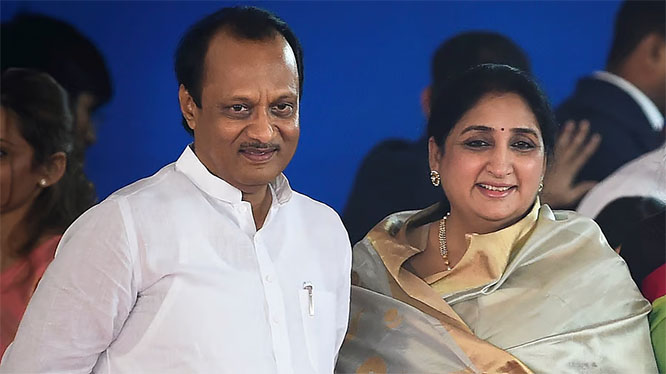
Mumbai: The sudden death of Maharashtra Deputy Chief Minister Ajit Pawar in a plane crash in his hometown of Baramati has plunged the state into political uncertainty, raising a pressing question for both the Nationalist Congress Party (NCP) and its rival faction, the Nationalist Congress Party (Sharadchandra Pawar): what next?

For the two factions that emerged after the dramatic split of June–July 2023, the moment marks their gravest challenge yet. Many believe the answer now rests with party founder Sharad Pawar.

Sharad Pawar, who founded the NCP in 1999 after parting ways with the Congress over Sonia Gandhi’s foreign origin, has already indicated his intention to step away from electoral politics once his Rajya Sabha term ends in April 2026.

Speaking at a public event in Baramati ahead of his 85th birthday on December 12, 2025, Pawar said he would not contest any further elections. “I have contested 14 elections. The younger generation needs to be given an opportunity,” he said, adding that he would decide later whether to seek another Rajya Sabha term.

Often described as the Bhishma Pitamah of Indian politics, Pawar also spoke of his gradual withdrawal from active leadership. “For the first 30 years, I handled everything. For the next 25–30 years, Ajit Dada handled responsibilities. Now, arrangements must be made for new leadership,” he said.

Ajit Pawar’s death has dramatically altered that transition, especially as he was working towards reunifying the two NCP factions.

“After the developments of June–July 2023 and the 2024 Lok Sabha and Vidhan Sabha elections, there were deep changes within the family and the party. In the last six months, serious efforts were made to reunite. Even workers from both sides wanted unity. This is a massive blow,” a Pawar family insider told DH over phone from Baramati.

Electoral outcomes over the past year reflected the split. In the 2024 Lok Sabha elections, NCP (SP) recorded the best strike rate in Maharashtra, winning eight of the 10 seats it contested. The NCP, by contrast, won just one seat out of four.

However, the trend reversed in the subsequent Vidhan Sabha elections, where the NCP emerged stronger, securing 41 of the 288 seats, while NCP (SP) managed only 10.

Within NCP (SP), Sharad Pawar’s daughter Supriya Sule serves as Working President, followed by leaders such as Rohit Pawar, state president Shashikant Shinde and former state chief Jayant Patil.

In the NCP, Praful Patel is the Working President and Raigad MP Sunil Tatkare heads the state unit. Ajit Pawar’s wife, Sunetra Pawar, is a Rajya Sabha MP, while their sons Parth and Jay are not actively involved in day-to-day politics. Parth Pawar briefly entered electoral politics in 2019 but lost the Lok Sabha election from Maval. Jay Pawar’s political debut was under consideration.

With Ajit Pawar gone, speculation has intensified that a member of the family may be asked to assume a larger role. For now, Sunetra Pawar is expected to play a key coordinating role in party affairs, alongside Patel and Tatkare.

The NCP continues to have several heavyweight leaders, including Chhagan Bhujbal, Hasan Mushrif, Dattatreya Bharne, Manikrao Kokate and Dhananjay Munde.

Ajit Pawar had already begun steps towards reconciliation between the two factions. While they contested the Pune and Pimpri-Chinchwad municipal elections separately, they later decided to fight the zilla parishad elections together under the ‘clock’ symbol—seen as the first formal step towards reunification.

Nagpur meet and party roadmap

Both NCP factions claim adherence to the ideology of ‘Shiv–Shahu–Phule–Ambedkar’. At the Rashtravadi Chintan Shivir held in Nagpur on September 19, 2025, the NCP reaffirmed its commitment to sarva dharma sambhav and discussed strengthening ties with the BJP “for the welfare and development of Maharashtra”.

In recent days, reports had suggested Ajit Pawar might return to the Maha Vikas Aghadi following the party’s poor performance in Pune municipal elections, but these claims were denied.

Big question for Maha Yuti

Ajit Pawar’s death also presents an immediate challenge for the Devendra Fadnavis-led Maha Yuti government. Pawar held crucial portfolios, including Finance, Planning and Excise. With the Budget Session approaching, appointing a new Finance Minister has become urgent.

Beyond numbers and portfolios, Maha Yuti has lost a swift decision-maker known for his administrative grip and political finesse—leaving a vacuum that will not be easy to fill.

Comments

Add new comment

  • Coastaldigest.com reserves the right to delete or block any comments.
  • Coastaldigset.com is not responsible for its readers’ comments.
  • Comments that are abusive, incendiary or irrelevant are strictly prohibited.
  • Please use a genuine email ID and provide your name to avoid reject.
News Network
January 31,2026

Roy.jpg

Bengaluru: The shooting incident involving CJ Roy, founder of the Confident Group, has once again put the spotlight on a businessman whose life has swung between flamboyant global success and persistent controversy at home.

Though Roy’s business interests extended across continents, his roots lay firmly in Karnataka. An alumnus of Christ School in Bengaluru, he later moved to Tumakuru to pursue an engineering degree. Those familiar with his early years describe him as intensely ambitious, beginning his career as a salesman at a small electronics firm dealing in computers.

Roy’s entry into large-scale real estate came through the Crystal Group, where he worked closely with Latha Namboothiri and rose from manager to director. However, the launch of the Confident Group in 2005 was clouded by industry speculation. Insiders speak of a fallout involving alleged “benami” properties and claims of deception that ultimately led to his independent venture—an episode Roy spent years trying to distance himself from, according to associates.

A tale of two cities

Roy’s professional trajectory diverged sharply across geographies.

In Dubai, he built a reputation as a bold and efficient developer, completing massive luxury residential projects in record time—some reportedly within 11 months. His rapid project delivery and lavish lifestyle in the Emirates earned him admiration and visibility in the real estate sector.

In Bengaluru, however, his image remained far more fractured. Sources say Roy stayed away from the city for several years amid disputes over unpaid dues to vendors and suppliers. Several projects were allegedly stalled, with accusations of unfulfilled commitments to cement and steel suppliers continuing to follow him.

Roy’s return to Bengaluru’s business and social circles began around 2018, marked by a conscious attempt at rebranding. His appointment as Honorary Consul of the Slovak Republic added diplomatic legitimacy, which he complemented with visible CSR initiatives, including ambulance donations and high-profile charity events.

Heavy police presence in Langford Town

Following the incident, police personnel from the Central division were deployed outside the Confident Group building in Langford Town, which also houses the Slovak Honorary Consulate in Bengaluru.

The otherwise busy premises near Hosur Road wore a deserted look on Friday, reflecting the shock and uncertainty that followed the tragedy.

Comments

Add new comment

  • Coastaldigest.com reserves the right to delete or block any comments.
  • Coastaldigset.com is not responsible for its readers’ comments.
  • Comments that are abusive, incendiary or irrelevant are strictly prohibited.
  • Please use a genuine email ID and provide your name to avoid reject.