



Ban on oil imports: India shouldn’t have obeyed US, says Iran

September 11, 2019

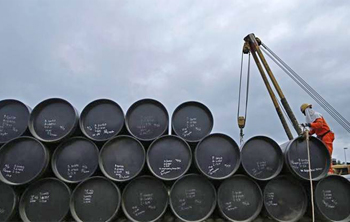
New Delhi: Months after India decided to shut down oil imports from Iran in keeping with the sanctions imposed by the United States, the Iranian Ambassador to India said it is hurting the India-Iran bilateral trade and the former's future in Chabahar port.
Breaking silence on New Delhi's move to “zero out” oil purchases after May 2 this year, Iran's envoy Ali Chegeni said India had “fought hard for its independence” and should not have given in to “unilateral sanctions” from the US, The Hindu reported.

Speaking to the members of the Indian Association of Foreign Affairs Correspondents on Monday, Chegeni said, “It is now official that India has stopped importing oil from Iran because of what it says is its own national interest.”

Chegeni pointed out the adverse effect of India's move on bilateral trade, saying, “If there are no oil payments due from India, how we can buy from India?"

Further, referring to countries including China, Russia, and Turkey, who have kept up their energy engagement with Iran, he said, "This is India’s sovereign decision, but others have chosen differently.”

Trouble Ahead

The Iranian Ambassdor's comments that ensued on India’s plans to build a railway line connecting Chabahar port to the Afghan border at Zahedan can be a worrisome affair for New Delhi as the construction of the Shahid Beheshti terminal is an integral part of its trade and connectivity routes to Afghanistan and Central Asia, circumventing Pakistan.

India’s development work had been “very slow” despite the US sanctions waiver for Chabahar, Chegeni said. Therefore, the Iranian government had decided to finish the railroad project by 2021 using its own resources.

Doubting India's interest in LNG imports from Iran any longer, the envoy said that Iran is now discussing an LNG pipeline to China along the China-Pakistan Economic Corridor (CPEC).

“If India wants energy security, it should prefer Iran as a dependable supplier,” said Mr. Chegeni. “We love the Indian people. But we cannot force somebody to love us. The Government of India has to decide according to its national interest. Just as the Chinese have,” he added.

Comments

Add new comment

  • Coastaldigest.com reserves the right to delete or block any comments.
  • Coastaldigset.com is not responsible for its readers’ comments.
  • Comments that are abusive, incendiary or irrelevant are strictly prohibited.
  • Please use a genuine email ID and provide your name to avoid reject.
News Network
December 20,2025

train.jpg

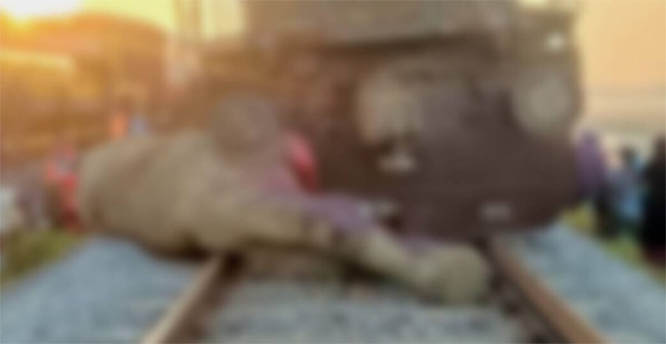
At least seven elephants were killed and one calf injured after a herd collided with the Sairang-New Delhi Rajdhani Express in Assam's Hojai on Saturday morning, leading to disruption of rail services. 

The Sairang-New Delhi Rajdhani Express struck a herd of elephants, resulting in the derailment of the locomotive and five coaches. No passenger casualties or injuries were reported, officials said.

The New Delhi-bound train met with the accident around 2.17 am, PTI reported. The Sairang-New Delhi Rajdhani Express connects Mizoram's Sairang (near Aizawl) to Anand Vihar Terminal (Delhi). 

Railway has issued helpline numbers at the Guwahati Railway Station:-

•    0361-2731621
•    0361-2731622
•    0361-2731623

The accident site is located about 126 km from Guwahati. Following the incident, accident relief trains and railway officials rushed to the spot to initiate rescue operations.

Train Services Disrupted

Sources said that due to the derailment and elephant body parts scattered on the tracks, train services to Upper Assam and other parts of the Northeast were affected.

Passengers from the affected coaches were temporarily accommodated in vacant berths available in other coaches of the train. Once the train reaches Guwahati, additional coaches will be attached to accommodate all passengers, after which the train will resume its onward journey.

The incident occurred at a location that is not a designated elephant corridor. The loco pilot, upon spotting the herd on the tracks, applied emergency brakes. Despite this, the elephants dashed into the train, leading to the collision and derailment.

Last month, an elephant was killed after being hit by a train in Dhupguri in West Bengal's Jalpaiguri district. The incident took place on November 30. 

The adult elephant was killed on the spot, and a calf was discovered lying injured beside the tracks. 

Over 70 Elephants Killed In Train Collisions Over Last 5 Years

At least 79 elephants have died in train collisions across the country in the last five years, the Environment Ministry had informed Parliament in August.

In a written reply in the Lok Sabha, Minister of State for Environment Kirti Vardhan Singh had said the figure is based on reports from state governments and Union Territory administrations for the period 2020-21 to 2024-25.

He said that the ministry does not maintain consolidated data on the deaths of other wild animals on railway tracks, including in designated elephant corridors.

Singh confirmed that three elephants, including a mother and her calf, were killed on July 18 this year after being hit by a speeding express train on the Kharagpur-Tatanagar section in West Bengal's Paschim Midnapore district. The incident took place near Banstala between Jhargram and Banstala stations.

The minister said several measures have been taken jointly by the Environment Ministry and the Railways to prevent such accidents.

These include imposing speed restrictions in elephant habitats, pilot projects such as seismic sensor-based detection of elephants near tracks and construction of underpasses, ramps and fencing at vulnerable points.

The Wildlife Institute of India, in consultation with the ministry and other stakeholders, has also issued guidelines titled 'Eco-friendly Measures to Mitigate Impacts of Linear Infrastructure' to help agencies design railways and other projects in ways that reduce human-animal conflicts.

Singh added that capacity-building workshops were conducted for railway officials at the Wildlife Institute of India in 2023 and 2024 to raise awareness on elephant conservation and protection.

A detailed report titled 'Suggested Measures to Mitigate Elephant & Other Wildlife Train Collisions on Vulnerable Railway Stretches in India' had also been prepared after surveys across 127 railway stretches covering 3,452 km.

Of these, 77 stretches spanning 1,965 km in 14 states were prioritised for mitigation, with site-specific interventions suggested. 

Comments

Add new comment

  • Coastaldigest.com reserves the right to delete or block any comments.
  • Coastaldigset.com is not responsible for its readers’ comments.
  • Comments that are abusive, incendiary or irrelevant are strictly prohibited.
  • Please use a genuine email ID and provide your name to avoid reject.