BJP’s Nationalism and Electoral Chessboard

Ram Puniyani
November 4, 2019

BJP is a party with a difference in more ways than one. It is the major electoral formation which contrary to the values of Indian Constitution of secular, democratic nation, holds that India is a Hindu nation. It is the only party which is the electoral wing of RSS, the organization formed and pursuing Hindu Nationalism. BJP also has the distinction of gaining electoral strength parallel to the rise of sectarian violence. It is also the one which has kept emotive, divisive issues and issues related to its own brand of nationalism at the core of its politics. Its massive victory in 2014 elections and then in 2019 General elections, gave the impression that it is invincible.  Its President Amit Shah did declare that BJP will rule the country for next fifty years. So when its projection, backed up by the commercial media, that it will walk away with massive victories in Maharashtra and Haryana Assembly elections of 2019, bit the dust, some new thinking about its electoral prospects is in order.

As the results unfolded, it fell short of simple majority in Haryana and had to ally with JJP of Dushyabt Chautala to form the Government. In Maharashtra, while it emerged as the single largest party, on its own it was nowhere close to the simple majority and so it’s electoral ally of years, is trying for a bargain hard this time. The usual boasting which has followed earlier victories of BJP is nowhere in sight and some commentators have termed it as a moral defeat for this party. The claim of its invincibility is lying shattered and the opposition parties which were feeling demoralized seem to have been infused with hope yet again.

As such BJP was formed by the elements of Bharatiya Jansangh with the proclamation of Gandhian Socialism in 1980s. Soon it changed the track and took up the issue of Ram Temple. The whole agitation around temple, the rath yatras led to communal violence and polarization of society. This is what gave fillip to BJP which then went from strength to strength. Mostly it kept taking up issues related to identity.

Having tasted power in 1996 for thirteen days and then for thirteen months in 1998, it floated National Democratic Alliance, with the power hungry leaders falling to the bait of minimum common program, which remained on paper as BJP asserted the Hindutva agenda through and through. Hindutva agenda is constituted by demand for Uniform Civil Code, abolition of Article 370 and construction of Ram Temple. The major strength of BJP so far was the solid support of RSS volunteers, which trained in the ideology of Hindu Rashtra were seeing political power as another means to enhance their agenda. Post Gujarat carnage another solid support for BJP emerged from the corporate sector. Modi in the aftermath of Gujarat carnage; encouraged the Corporate, giving them all facilities in the name of Vikas (development). The Corporate sector also came to acquire total control on the large section of Media. The third aspect which enhanced the power of BJP was its shrewd support to Jan Lok Pal Bill. Propping up Anna Hazare and riding on the popular sentiments against corruption it succeeded in defaming Congress to the hilt. Its use of Nirbhaya case to further defame Congress paid rich electoral dividends. At the same time BJP perfected its electoral machinery and now it claims to be the largest party in the World.

Modi’s promises of Rs 15 lakhs, crores of jobs, reducing prices were cleverly advertised, and Modi won 2014 elections with 31% of vote share. Anti incumbency, corruption, RSS support and corporate funding gave it comfortable victory in 2014 elections. During this period no efforts were made to fulfill these promises, BJP kept igniting the polarization through Cow beef issue. The supplementary issues like Love Jihad, Ghar Wapasi kept strengthening the electoral position of BJP, as it succeeded in projecting that the religious minorities are a threat to the majority Hindus. Back on the emotive issues it added up its brand of Nationalism. BJP nationalism means creating hysteria against Pakistan. Its nationalism seemed to be paying dividends with some sections of society. In 2019 elections all these factors played their role. Adding on to this Pulwama-Balakot and EVM machines seem to have aided the victory of BJP despite worsening economic scenario. And this gave the impression that a party adept at using emotive-divisive issues, converting nationalism into another emotive issue may take the cake for good.

So what went wrong with the Modi-Shah duo in Maharashtra-Haryana elections? Can people keep consuming emotions and nationalism to survive?  The bread butter issues are surfacing and can no more remain undermined by hysteria created around nationalism or communalism. In these elections, role of EVM machines notwithstanding, the biggest lesson to learn is that even the most powerful electoral machine cannot trample on the issues related to basic needs of society. The lesson is that hunger cannot be quenched by the boasts of abolishing article 370 or by harping on triple talaq, by creating a fear of Pakistan.

While RSS has seeped into most sections of our social life, education, media, social work, the BJP-RSS agenda cannot fill the hungry stomachs or give employment to youth or prevent farmer’s suicides. Surely this election result of two states will boost the secular values and agenda which talks of right to food, employment, health and livelihood will come to the fore. Can the opposition parties committed to issues of people pick up the gauntlet and come forward as a united force to put the national agenda back on the rails of Indian Constitution? Can social movements pick up from here and articulate people’s issues with greater vigor and zest? The limits of Communal agenda and nationalist agenda lies exposed, now the ball is in the court of those who believe in pluralism, diversity and humanism to bring back the people’s issues and counter the Hate and divisiveness which has filled the social space?

Comments

Add new comment

  • Coastaldigest.com reserves the right to delete or block any comments.
  • Coastaldigset.com is not responsible for its readers’ comments.
  • Comments that are abusive, incendiary or irrelevant are strictly prohibited.
  • Please use a genuine email ID and provide your name to avoid reject.
News Network
January 20,2026

DGP.jpg

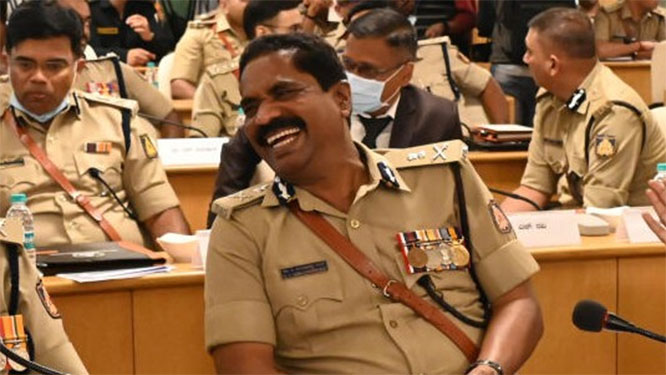
Karnataka DGP (Civil Rights Enforcement) K Ramachandra Rao was suspended with immediate effect, as per a state government order issued on Monday, 19 January. The order cited conduct unbecoming of a government servant and causing embarrassment to the state administration.

The Karnataka government suspended Rao after a purported video showed him in a compromising position with a woman inside his official chamber. The video went viral on social media. Rao rejected the videos outright, terming them "fabricated and false".

Who is K Ramachandra Rao?

Rao is a DGP-rank officer who was heading the Directorate of Civil Rights Enforcement until his suspension. He was promoted to DGP in September 2023 and assumed office in October 2023, the Sunday Guardian reported.

He also served as the Chairman and Managing Director of the Karnataka State Police Housing and Infrastructure Development Corporation Limited.

His stint as the Inspector General of Police (IGP) for the Southern Range was also marred by controversy. In 2014, during a cash seizure near Mysuru’s Yelwal, officials claimed the seized amount was ₹20 lakh, while the accused (Kerala-based merchants) claimed it was around ₹2.27 crore.

Rao, who was present during the seizure, denied all allegations. However, he was transferred soon after.

Allegations of collusion with a businessman surfaced, and a senior police officer was quoted by The Sunday Guardian as saying, “In Rao’s case, the CID has clearly mentioned that there was a great degree of lapse on the part of Rao and a deputy superintendent of police after it was brought to their notice that a few policemen, including a gunman attached to the IGP, were involved in the robbery.”

Rao had denied all wrongdoing in that incident. Despite past controversies, he rose to the state’s top police position, the Sunday Guardian reported.

Ranya Rao’s stepfather

Rao is the stepfather of Kannada actress Harshavardhini Ranya alias Ranya Rao, accused of orchestrating the illegal import of gold worth over ₹12.56 crore from Dubai to India along with two others — businessman Tarun Raju, and jewellery dealer Sahil Jain.

‘Obscene video’ controversy

A viral video showed Rao behaving inappropriately with a woman inside his office while in uniform.

The Karnataka government said in its Monday order that “vide videos and news reports widely broadcast on public news channels and media platforms, it is observed that Dr K Ramachandra Rao has acted in an obscene manner which is unbecoming of a Government Servant and also causing embarrassment to the Government.”

The order said the matter was examined by the state government, which found that the officer's conduct amounted to a violation of Rule 3 of the All India Services (Conduct) Rules, 1968.

The government said it is prima facie satisfied that "it is necessary to place Rao under suspension with immediate effect, pending inquiry".

During the suspension period, Rao will be entitled to subsistence allowance as per Rule 4 of the All India Services (Discipline and Appeal) Rules, 1969.

The order also places restrictions on his movement, stating that during the period of suspension, the officer must not leave headquarters under any circumstances without the written permission of the state government.

Comments

Add new comment

  • Coastaldigest.com reserves the right to delete or block any comments.
  • Coastaldigset.com is not responsible for its readers’ comments.
  • Comments that are abusive, incendiary or irrelevant are strictly prohibited.
  • Please use a genuine email ID and provide your name to avoid reject.
News Network
January 20,2026

Mangaluru: In a major step towards strengthening rural innovation, the Office of the Principal Scientific Adviser (PSA) to the Government of India is supporting the establishment of RuTAGe Smart Village Centres (RSVCs) across the country through collaborations with academic institutions, civil society organisations and philanthropic partners.

As part of this national initiative, Nitte (Deemed to be University) will set up the first RSVCs in the region at Nitte GP in Udupi district and at the Nitte Health Centre, Sevanjali Trust, Farangipete, in Dakshina Kannada district. The centres will be inaugurated on January 21. In South India, the programme is being implemented by the Section Infin-8 Foundation (SI-8).

Speaking to reporters on Monday, SI-8 founder-director Vishwas US said experts from Nitte University and SI-8 would work closely with farmers, students, youth and local entrepreneurs to adapt and deploy technologies tailored to local needs.

Project head Prof Iddya Karunasagar, representing Nitte DU, said the RSVCs at Nitte and Farangipete would serve as demonstration hubs for a wide range of agriculture, energy, skill-development and assistive technologies. These include solar dryers for fruits, vegetables and crops; soil-testing solutions; power weeders and women-friendly farm tools; wind-powered devices for rural artisans; grain storage systems; grass-cutting and tree-climbing equipment; and liquid fertiliser production using cowshed waste.

SI-8 CEO Aravind C Kumar said the centres would also provide access to digital and knowledge-based platforms such as ISRO applications, government scheme portals, market linkage tools and gamified learning resources, along with assistive technologies for persons with visual impairments.

Highlighting the broader impact of the initiative, Principal Scientific Adviser Prof Ajay Kumar Sood said it demonstrated how applied research could bridge the rural–urban divide and help create self-reliant, technology-enabled villages.

The initiative has been made possible through philanthropic support from Dr NC Murthy of ACM Business Solutions, LLC, USA. Dr Sapna Poti, Director (Strategic Alliances) at the Office of the Principal Scientific Adviser, said the long-term objective is to build self-sufficient, technology-driven communities capable of generating sustainable livelihoods on their own.

Comments

Add new comment

  • Coastaldigest.com reserves the right to delete or block any comments.
  • Coastaldigset.com is not responsible for its readers’ comments.
  • Comments that are abusive, incendiary or irrelevant are strictly prohibited.
  • Please use a genuine email ID and provide your name to avoid reject.
coastaldigest.com news network
January 19,2026

rizwanzameer.jpg

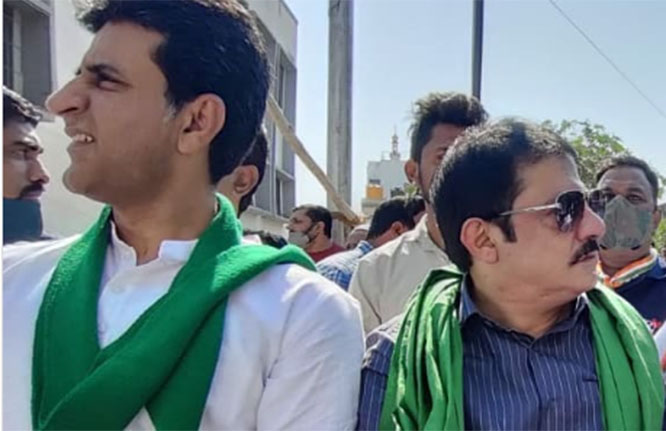
Bengaluru: As the dust settles on the recent legislative session, the corridors of Vidhana Soudha are buzzing with more than just policy talk. A high-stakes game of political musical chairs has begun, exposing a deepening rift within the Congress party’s Muslim leadership as a major Cabinet reshuffle looms.

With the party hierarchy signaling a "50% refresh" to gear up for the 2028 Assembly elections, the race to fill three projected Muslim ministerial berths has transformed from a strategic discussion into an all-out turf war.

The "Star Son" Spark

The internal friction turned public this week following provocative remarks by Zaid Khan, actor and son of Wakf Minister Zameer Ahmed Khan. Zaid’s claim—that his father "helped" secure a ticket for Shivajinagar MLA Rizwan Arshad in 2023—has acted as a lightning rod for resentment.

Rizwan’s camp was quick to fire back, dismissing the comment as a desperate attempt by Zameer to manufacture seniority. "Rizwan’s political pedigree was forged in the NSUI and Youth Congress long before Zameer even stepped into the party," a supporter noted, highlighting Rizwan’s tenure as an AICC secretary and his two-term presidency of the State Youth Congress.

A Tale of Two Loyalists

While both Zameer Ahmed Khan and Rizwan Arshad are staunch allies of Chief Minister Siddaramaiah and represent Bengaluru strongholds, their political DNA could not be more different:

•    Zameer Ahmed Khan: A four-time MLA who crossed over from JD(S) in 2018. Known for his "overzealous" and often polarizing outreach during communal flashpoints—from the DJ Halli riots to the recent Wakf land notice controversy—his style has frequently left the Congress high command in a state of "discomfort."

•    Rizwan Arshad: A homegrown organizational man. Seen as a "quiet performer," Arshad represents the sophisticated, moderate face of the party, preferred by those who find Zameer’s brand of politics too volatile.

The Outsiders Looking In

The bickering isn't limited to a duo. The "Beary" community, represented by leaders like N A Haris and Saleem Ahmed, is demanding its pound of flesh. Saleem Ahmed, the Chief Whip in the Legislative Council, has dropped the veil of diplomacy, openly declaring his ministerial aspirations.

"I was the only working president not included in the Cabinet last time," Saleem noted pointedly, signaling that the "loyalty quota" is no longer enough to keep the peace.

As Chief Minister Siddaramaiah prepares to finalize the list, he faces a delicate balancing act: rewarding the aggressive grassroots mobilization of Zameer’s camp without alienating the organizational stalwarts and minority sub-sects who feel increasingly sidelined by the "Chamarajpet-Shivajinagar" binary.

Comments

Add new comment

  • Coastaldigest.com reserves the right to delete or block any comments.
  • Coastaldigset.com is not responsible for its readers’ comments.
  • Comments that are abusive, incendiary or irrelevant are strictly prohibited.
  • Please use a genuine email ID and provide your name to avoid reject.