Omicron, Delta pave the wave for a new super variant – interaction among experts

Agencies
December 3, 2021

What happens when two nasty Covid-19 variants get together and share their most effective mutations? Omicron and delta have brought us closer to the answer, says Peter White, a virologist at the University of New South Wales who warns of the inevitability of a new Covid-19 "super strain."

He joined Stephanie Topp, a global public health expert at James Cook University in Townsville, Australia, and Bloomberg Opinion columnist David Fickling for a Twitter Spaces discussion on the implications of the newest coronavirus variant shaking up the world. Leading the conversation, which has been lightly edited for length and clarity, is Bloomberg Opinion columnist Anjani Trivedi.

Anjani Trivedi: Here we are again. Omicron. Were you surprised, Peter?

Peter White: No, I wasn't surprised because this is what viruses do. Viruses are built to change quickly. That's why every year we have to adjust the flu vaccine. Some viruses change quicker than others. We have to adapt as the virus adapts.

Trivedi: Why is it so difficult for scientists to work out, and for us to understand, how a virus actually works on its hosts?

White: Each of these viruses is somewhere in the order of 50 mutations different from the previous variant of concern. So the first thing we need to do is look at the mutations and where they are and what changes could be important. And then, what is the effect. You cannot tell from the sequence exactly what the virus is going to do.

Trivedi: Is there anything that we're able to conclude with any certainty right now about immune resistance and how contagious this specific variant is?

White: From what I've seen, it looks to be about the same severity as delta, and the fact that it's actually taken over Delta indicates that it's more transmissible. We're seeing quite a rapid spread of it across the globe. But it doesn't seem to be more severe. There's no more hospitalizations in South Africa compared to delta.

Trivedi: Many emerging economies really struggled through previous waves, India being a case in point. How has South Africa gotten so far ahead?

Stephanie Topp: They got there by making good decisions based on need. I would say that the imperative to manage and respond to the HIV epidemic in the 1990s and 2000s, has resulted in a great deal of investment in public health, human and material infrastructure. Developing or developed isn't particularly helpful context. We've also seen the United States of America struggle. A lot can be learned about the way public health and politics intersect, and the way that influences what is seen as a priority.

Trivedi: When we think about the resilience of these health systems, how does that translate into distribution of vaccines?

Topp: What we're talking about here is the fair and equitable distribution of these medical technologies. The reason we're failing the so-called self-interest test is because our global economy is not set up to protect the interests of global populations. It's set up to protect the interests of shareholders. So we lack vaccine equity today, because you see very tight knit relationships between governments and large corporations. That result in political choices to benefit a certain very small segment of the global community.

Trivedi: What are your thoughts on why the death toll hasn't been as bad in South Africa and in Sub Saharan Africa so far?

White: It's a much younger population. That's a major factor. I also think there'll be a big underreporting aspect to this. But I don't really know the answer to that question.

Trivedi: How do we tackle this issue of vaccine demand? Something like one in six people in the US have had Covid-19, and nearly 800,000 people have died. What does that mean for going forward, especially in the next few months?

Topp: This is where education and information — not just risk messaging — of a public health response becomes so critical. Because if people haven't heard about it before, then they are susceptible to misinformation. And in our incredibly hyper social-networked world, the capacity of misinformation to reach people before official information is ever-more present. And that abuts, I think, a growing mistrust of politicians who are in charge of delivering those messages.

Trivedi: What should we be watching out for in the next few months? What answers are you looking for in the data, especially with the new variant?

White: You've got to look at the severity of the new variant. The next thing you've got to ask is, "Does the vaccine cover us?" And the answer that we're seeing at the moment is, "Yes." But in the future, it might be, "No." And so I'll be asking Moderna and Pfizer: "Can you tweak your vaccine?" And they are doing this already. And then the thing I think people haven't realized is that we're going to see the largest-scale mutations, known as recombination in virology terms, between variants of concern. So if we mix the best bits of delta with the best bits of omicron, we might create a super new strain that could be better than both of them [at infecting or sickening people]. And so we need to be looking for these hybrid viruses, and they will pop up in the future. They will come.

Trivedi: If we're going to keep getting new variants, how does that work in terms of vaccines and gaining immunity?

White: Vaccines reduce the severity of the disease. The chances of you dying if you've been vaccinated are many, many times reduced. So it's much better to get the vaccine than it is to get the real virus because you could die. So you can still get the virus even if you'd double vaccinated, but you've got less chance of getting it and you're going to be less ill and you've got less chance of passing it on.

Trivedi: What happens with a super-strain when variants combine? How does that play out?

White: We would then be asking the vaccination companies to adjust their vaccines to give us the immunity that we need to protect us from that variant. And we should be able to do that.

Trivedi: Does this change the business model for pharmaceutical companies? This virus is going to keep changing, and they're going to have to keep adapting their vaccines.

David Fickling: For pharma companies, vaccines are a bit of a backwater. It's not a very attractive business. You have to go through a very, very stringent development process that's very capital intensive. And then you basically have no repeat business. [For many vaccines] you are protected for life. And you're having a price negotiation with a very large and powerful buyer (governments). And so you're not going to get a good profit margin compared to something like drugs against diseases of aging, heart disease and cancer in rich countries. That's actually what they want to be spending money doing. Drug companies have been quitting vaccine development. Now Covid has blown this open to a large extent. We've got the whole world being vaccinated once, twice, three times, and then again with boosters reformulations, potentially.

Trivedi: Quarantines, border closures, how effective are these measures from a public health standpoint?

Topp: No single public health measure by itself is sufficient to manage communicable disease. Things like border shutdowns, quarantines, masking, physical distancing and so forth can be effective but come with substantial and unquantified costs. The fact that we now have a medical technology that can mitigate the acute clinical consequences of this disease is an absolute gift. It's gobsmacking to me that we're not making every effort to utilize this to the best advantage. I mean, here is something that would enable us to very much recapture aspects of our daily lives that we value. The fact that we're not is deeply demonstrative of the pathologies now in our governance systems.

White: we need to learn how to live with this virus. And the only way to do that is to stop people dying through vaccination, and then try to find a sensible balance between lockdowns and being back to normal.

Trivedi: What do you think is the single largest challenge we face right now?

Fickling: It's recognizing the type of business that vaccines are. For companies to make a proper return on vaccines, there has to be an unlevel playing field that produces suboptimal public health outcomes. So I think governments actually need to recognize they have a much bigger role to play. We need to regard the vaccine businesses as something that's much better suited to a public-private system.

Topp: Until we recognize that our health systems mirror the same weaknesses that we see in society, the problems we're having in improving coverage and quality and access to technologies like vaccines are going to continue.

White: To stay ahead of this virus will require funding of proper research and proper surveillance systems. What we don't have now is a proper antiviral [treatment]. We're close. In less than a year, we will have proper drugs targeting the virus and they will work well. And when we get those, are the rich countries going to keep them like they did with other viruses?

Comments

Add new comment

  • Coastaldigest.com reserves the right to delete or block any comments.
  • Coastaldigset.com is not responsible for its readers’ comments.
  • Comments that are abusive, incendiary or irrelevant are strictly prohibited.
  • Please use a genuine email ID and provide your name to avoid reject.
News Network
January 31,2026

Roy.jpg

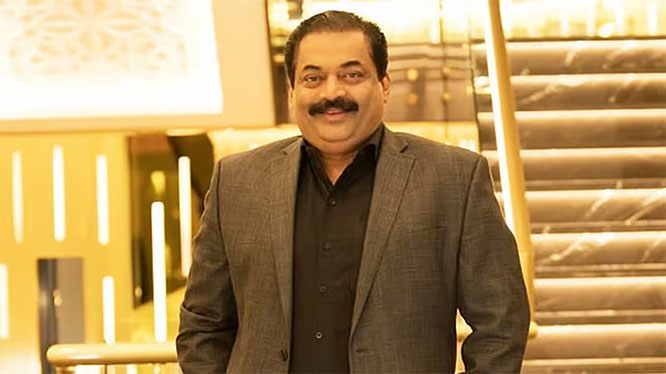
Bengaluru: The shooting incident involving CJ Roy, founder of the Confident Group, has once again put the spotlight on a businessman whose life has swung between flamboyant global success and persistent controversy at home.

Though Roy’s business interests extended across continents, his roots lay firmly in Karnataka. An alumnus of Christ School in Bengaluru, he later moved to Tumakuru to pursue an engineering degree. Those familiar with his early years describe him as intensely ambitious, beginning his career as a salesman at a small electronics firm dealing in computers.

Roy’s entry into large-scale real estate came through the Crystal Group, where he worked closely with Latha Namboothiri and rose from manager to director. However, the launch of the Confident Group in 2005 was clouded by industry speculation. Insiders speak of a fallout involving alleged “benami” properties and claims of deception that ultimately led to his independent venture—an episode Roy spent years trying to distance himself from, according to associates.

A tale of two cities

Roy’s professional trajectory diverged sharply across geographies.

In Dubai, he built a reputation as a bold and efficient developer, completing massive luxury residential projects in record time—some reportedly within 11 months. His rapid project delivery and lavish lifestyle in the Emirates earned him admiration and visibility in the real estate sector.

In Bengaluru, however, his image remained far more fractured. Sources say Roy stayed away from the city for several years amid disputes over unpaid dues to vendors and suppliers. Several projects were allegedly stalled, with accusations of unfulfilled commitments to cement and steel suppliers continuing to follow him.

Roy’s return to Bengaluru’s business and social circles began around 2018, marked by a conscious attempt at rebranding. His appointment as Honorary Consul of the Slovak Republic added diplomatic legitimacy, which he complemented with visible CSR initiatives, including ambulance donations and high-profile charity events.

Heavy police presence in Langford Town

Following the incident, police personnel from the Central division were deployed outside the Confident Group building in Langford Town, which also houses the Slovak Honorary Consulate in Bengaluru.

The otherwise busy premises near Hosur Road wore a deserted look on Friday, reflecting the shock and uncertainty that followed the tragedy.

Comments

Add new comment

  • Coastaldigest.com reserves the right to delete or block any comments.
  • Coastaldigset.com is not responsible for its readers’ comments.
  • Comments that are abusive, incendiary or irrelevant are strictly prohibited.
  • Please use a genuine email ID and provide your name to avoid reject.
News Network
January 20,2026

iran.jpg

Iranian security and intelligence forces have captured more than 470 individuals in three provinces, identified as key figures behind the recent wave of violent unrest and terrorist activities linked to foreign-backed networks.

The Intelligence Ministry's provincial office in Khorasan Razavi announced on Monday the arrest of 192 armed terrorists, identified as the main agents behind recent riots in the region. 

According to an official statement, the detainees were involved in the killing of several security personnel and civilians, setting fire to mosques, public service facilities, and buses, as well as attacks on military and law enforcement centers.

The seized items from the group include several bulletproof vests, Kalashnikov rifles, hunting weapons, Winchester rifles, and various cold weapons such as daggers, swords, brass knuckles, tactical knives, crossbows, and chains.

Evidence indicates that some of the individuals were tied to hostile movements and terrorist organizations, with links overseas. Others were identified as members of violent criminal gangs, actively taking part in the unrest alongside their associates.

Simultaneously, in the western province of Lorestan, the IRGC announced the arrest of 134 individuals as the main leaders and influential field agents of a US-Israeli terrorist network.

The IRGC statement stated that these individuals formed terrorist cells during the recent unrest, committing "Daesh-like" acts.

They wounded security forces with firearms and cold weapons, and burned and destroyed public and private properties, including mosques, shops, banks, and private and public vehicles.

In the northwestern province of Zanjan, the police reported detaining 150 people identified as principal leaders and agents behind recent riots.

Authorities noted that these individuals were responsible for destroying public and private property and intentionally setting fire to vehicles in the province's squares.

Their crimes include shedding the blood of innocent people, destroying public and private property, attempting to enter military sites, disrupting public order, and spreading terror among citizens.

A variety of cold weapons were reportedly seized from the detainees.

What began late last month as peaceful protests over economic hardship across Iran turned violent after public statements by US and Israeli regime figures encouraged vandalism and disorder.

During the unrest, foreign-backed mercenaries rampaged through cities, killing security forces and civilians and damaging public property.

Comments

Add new comment

  • Coastaldigest.com reserves the right to delete or block any comments.
  • Coastaldigset.com is not responsible for its readers’ comments.
  • Comments that are abusive, incendiary or irrelevant are strictly prohibited.
  • Please use a genuine email ID and provide your name to avoid reject.
News Network
January 20,2026

DGP.jpg

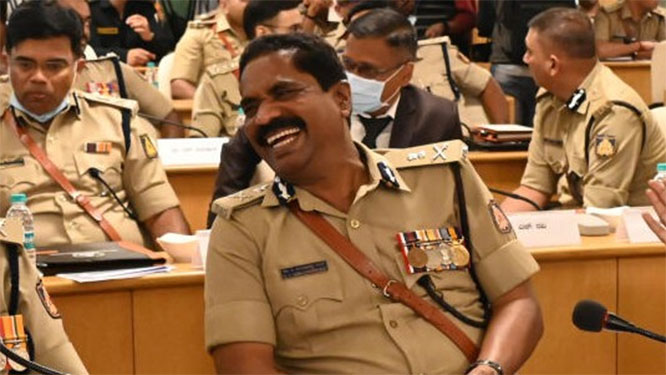
Karnataka DGP (Civil Rights Enforcement) K Ramachandra Rao was suspended with immediate effect, as per a state government order issued on Monday, 19 January. The order cited conduct unbecoming of a government servant and causing embarrassment to the state administration.

The Karnataka government suspended Rao after a purported video showed him in a compromising position with a woman inside his official chamber. The video went viral on social media. Rao rejected the videos outright, terming them "fabricated and false".

Who is K Ramachandra Rao?

Rao is a DGP-rank officer who was heading the Directorate of Civil Rights Enforcement until his suspension. He was promoted to DGP in September 2023 and assumed office in October 2023, the Sunday Guardian reported.

He also served as the Chairman and Managing Director of the Karnataka State Police Housing and Infrastructure Development Corporation Limited.

His stint as the Inspector General of Police (IGP) for the Southern Range was also marred by controversy. In 2014, during a cash seizure near Mysuru’s Yelwal, officials claimed the seized amount was ₹20 lakh, while the accused (Kerala-based merchants) claimed it was around ₹2.27 crore.

Rao, who was present during the seizure, denied all allegations. However, he was transferred soon after.

Allegations of collusion with a businessman surfaced, and a senior police officer was quoted by The Sunday Guardian as saying, “In Rao’s case, the CID has clearly mentioned that there was a great degree of lapse on the part of Rao and a deputy superintendent of police after it was brought to their notice that a few policemen, including a gunman attached to the IGP, were involved in the robbery.”

Rao had denied all wrongdoing in that incident. Despite past controversies, he rose to the state’s top police position, the Sunday Guardian reported.

Ranya Rao’s stepfather

Rao is the stepfather of Kannada actress Harshavardhini Ranya alias Ranya Rao, accused of orchestrating the illegal import of gold worth over ₹12.56 crore from Dubai to India along with two others — businessman Tarun Raju, and jewellery dealer Sahil Jain.

‘Obscene video’ controversy

A viral video showed Rao behaving inappropriately with a woman inside his office while in uniform.

The Karnataka government said in its Monday order that “vide videos and news reports widely broadcast on public news channels and media platforms, it is observed that Dr K Ramachandra Rao has acted in an obscene manner which is unbecoming of a Government Servant and also causing embarrassment to the Government.”

The order said the matter was examined by the state government, which found that the officer's conduct amounted to a violation of Rule 3 of the All India Services (Conduct) Rules, 1968.

The government said it is prima facie satisfied that "it is necessary to place Rao under suspension with immediate effect, pending inquiry".

During the suspension period, Rao will be entitled to subsistence allowance as per Rule 4 of the All India Services (Discipline and Appeal) Rules, 1969.

The order also places restrictions on his movement, stating that during the period of suspension, the officer must not leave headquarters under any circumstances without the written permission of the state government.

Comments

Add new comment

  • Coastaldigest.com reserves the right to delete or block any comments.
  • Coastaldigset.com is not responsible for its readers’ comments.
  • Comments that are abusive, incendiary or irrelevant are strictly prohibited.
  • Please use a genuine email ID and provide your name to avoid reject.