The long term implications of COVID: When it leaves, what remains?

Mafazah Sharafuddin
June 1, 2021

postcovid.jpg

The pandemic has swept the world in a panic. It has come with the pervading sense of fear and loss, and completely unexpectedly to the common man. Although environmentalists have been predicting a rise in pandemics as a consequence of the same things that caused climate change, to the layman, it arrived out of the blue. 

The pandemic has taken away several things that make us social beings. Physical touch, gatherings, dining together etc. have all gone from being something one does for fun to something that could be potentially fatal.

It does not come as a shock that people all of the globe are suffering during the pandemic. While they are unsure of how much longer this will go on, the spread of the vaccines make people hopeful that it will soon come to an end. 

When the pandemic ends, what will it leave behind?

The anxiety of being

With fatal illness and massive death-tolls, anxiety comes as an almost inevitable companion. The compulsive act of using hand sanitizer after touching anything in public is slowly becoming second nature. 

A US study comparing the number of adults experiencing symptoms of an anxiety or depressive disorder saw the number raise from 11% in January 2019 to 41.1% in January 2021. It also showed an increase in suicidal ideation and substance use. 

Another unfortunate consequence of the pandemic is a possible rise in agoraphobia. Agoraphobia is a specific anxiety disorder. It is defined by a fear of being in part of a public environment or activity from which leaving or escaping is perceived to be difficult. Due to the frequent and persistent lockdowns and the association of danger with being in public spaces, the slip towards agoraphobia is understandable. 

An integral part of the human experience is physical touch. While some may be isolating with family, there are many people all over the world who are living along in the middle of the pandemic. The pandemic may also lead to an increase in ‘touch-starvation’ as the stress relieving hormone, oxytocin, is released through touch.

The prevalence of mental illness after a calamity is not a new phenomenon. The aftermath of war and natural disasters have left people suffering in its wake. This is, however, a calamity of global magnitude. Like the survivors of war, those who come out of this pandemic alive are going to carry it with them for the rest of their lives.

A state of grief 

Aptly dubbed the ‘grief pandemic’ by sociologist Holly Prigerson, the Coronavirus pandemic has taken away many loved ones. Children are left orphaned and parents mourn their children. The elderly are kept under keen watch by their loved ones in fear that they, too, will be taken away. 

Grief and mourning have become an everyday thing since the pandemic showed its full strength. With entire families being wiped out, and crematoriums unable to process the bodies at the rate at which they arrive, we as a society are experiencing death in high definition. 

The processing of is complex. It is made more complex by the situation we are in. the constant anxiety and fear of safety are severely detrimental to the processing of grief. There is no room to process grief in a situation where death is continuous. As of now, we are in a persistent state of grief.

Money matters 

The economic implications of the pandemic have been spoken about often at a global scale. Small businesses have shut down. Daily wage laborers struggle to find jobs with the lockdowns in place. Several people who, before 2020, believed they were secure in their jobs, have been unexpectedly dismissed. 

Survival in the middle of a pandemic, even without getting infected, with no incoming money is precarious. People are dependent of the goodwill of social workers and people who give out food, donations, etc. People are being rendered homeless because they are unable to pay rent. The inability to properly socially distance or isolate, however, increases the risk of infection.

If survival for the poor without getting infected is precarious, surviving COVID is a miracle. They have to combat steep prices for treatment, trouble with transportation, being unable to afford medication and several other issues. 

Not only is getting infected and showing symptoms a death sentence for so many, it comes with the fear that it will bankrupt their family. 

The state the economy is in right now has no quick fixes. There are small scale industries that have suffered in a way they may not recover from. An alarming percentage of medium and small enterprises have faced permanent closure. The recovery of the economy is going to a long, arduous process. 

On a positive note

While the pandemic has been a cause of suffering for people everywhere, the long term social implications of it are not all bad. 

For environmentalists, the pandemic has been proof that there can be no real solution to climate change until bog corporations stop contributing to it. With the common people staying at home most of the time, hugely reducing the amount of fuel used by the public, there has been no huge change in the state of the world. 

While it may always be the socially responsible option to continue to use environmentally friendly options, the onus truly does fall on large corporations to limit their damage before it is unsalvageable. 

It addition to this, curb-side pickups, online learning, work from home etc. have shown that it is possible to do these actions remotely. This opens up a whole realm of possibilities for people with disabilities not only in employment and education, but day to day activities.

When accessibility has been made possible because there is no other way, employers and management of educational institutes can no longer give excuses for their lack of accessibility for disabled employees or students. 

The pandemic may leave behind a more accessible world. 

Comments

Ramesh Mishra
 - 
Wednesday, 2 Jun 2021

COVID-19, PANDEMIC
Has put the world behind at least 25 years but India, Pakistan, Bangla Desh, and Nepal 50 years. During the coming 50 years, India would face massive internal conflicts dividing the Provinces. India lacks skilled leaders.

Ramesh Mishra
Victoria BC CANADA

Add new comment

  • Coastaldigest.com reserves the right to delete or block any comments.
  • Coastaldigset.com is not responsible for its readers’ comments.
  • Comments that are abusive, incendiary or irrelevant are strictly prohibited.
  • Please use a genuine email ID and provide your name to avoid reject.
coastaldigest.com news network
January 19,2026

rizwanzameer.jpg

Bengaluru: As the dust settles on the recent legislative session, the corridors of Vidhana Soudha are buzzing with more than just policy talk. A high-stakes game of political musical chairs has begun, exposing a deepening rift within the Congress party’s Muslim leadership as a major Cabinet reshuffle looms.

With the party hierarchy signaling a "50% refresh" to gear up for the 2028 Assembly elections, the race to fill three projected Muslim ministerial berths has transformed from a strategic discussion into an all-out turf war.

The "Star Son" Spark

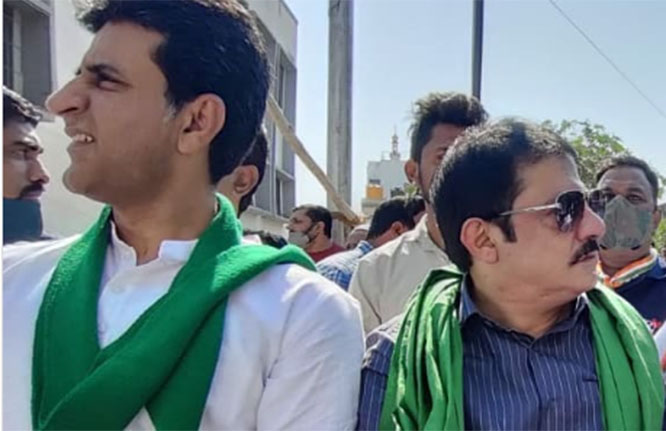
The internal friction turned public this week following provocative remarks by Zaid Khan, actor and son of Wakf Minister Zameer Ahmed Khan. Zaid’s claim—that his father "helped" secure a ticket for Shivajinagar MLA Rizwan Arshad in 2023—has acted as a lightning rod for resentment.

Rizwan’s camp was quick to fire back, dismissing the comment as a desperate attempt by Zameer to manufacture seniority. "Rizwan’s political pedigree was forged in the NSUI and Youth Congress long before Zameer even stepped into the party," a supporter noted, highlighting Rizwan’s tenure as an AICC secretary and his two-term presidency of the State Youth Congress.

A Tale of Two Loyalists

While both Zameer Ahmed Khan and Rizwan Arshad are staunch allies of Chief Minister Siddaramaiah and represent Bengaluru strongholds, their political DNA could not be more different:

•    Zameer Ahmed Khan: A four-time MLA who crossed over from JD(S) in 2018. Known for his "overzealous" and often polarizing outreach during communal flashpoints—from the DJ Halli riots to the recent Wakf land notice controversy—his style has frequently left the Congress high command in a state of "discomfort."

•    Rizwan Arshad: A homegrown organizational man. Seen as a "quiet performer," Arshad represents the sophisticated, moderate face of the party, preferred by those who find Zameer’s brand of politics too volatile.

The Outsiders Looking In

The bickering isn't limited to a duo. The "Beary" community, represented by leaders like N A Haris and Saleem Ahmed, is demanding its pound of flesh. Saleem Ahmed, the Chief Whip in the Legislative Council, has dropped the veil of diplomacy, openly declaring his ministerial aspirations.

"I was the only working president not included in the Cabinet last time," Saleem noted pointedly, signaling that the "loyalty quota" is no longer enough to keep the peace.

As Chief Minister Siddaramaiah prepares to finalize the list, he faces a delicate balancing act: rewarding the aggressive grassroots mobilization of Zameer’s camp without alienating the organizational stalwarts and minority sub-sects who feel increasingly sidelined by the "Chamarajpet-Shivajinagar" binary.

Comments

Add new comment

  • Coastaldigest.com reserves the right to delete or block any comments.
  • Coastaldigset.com is not responsible for its readers’ comments.
  • Comments that are abusive, incendiary or irrelevant are strictly prohibited.
  • Please use a genuine email ID and provide your name to avoid reject.
News Network
January 23,2026

Mangaluru: The Karnataka Government Polytechnic (KPT), Mangaluru, has achieved autonomous status from the All India Council for Technical Education (AICTE), becoming the first government polytechnic in the country to receive such recognition in its 78-year history. The status was granted by AICTE, New Delhi, and subsequently approved by the Karnataka Board of Technical Education in October last year.

Officials said the autonomy was conferred a few months ago. Until recently, AICTE extended autonomous status only to engineering colleges, excluding diploma institutions. However, with a renewed national focus on skill development, several government polytechnics across India have now been granted autonomy.

KPT, the second-largest polytechnic in Karnataka, was established in 1946 with four branches and has since expanded to offer eight diploma programmes, including computer science and polymer technology. The institution is spread across a 19-acre campus.

Ravindra M Keni, the first dean of the institution, told The Times of India that AICTE had proposed autonomous status for polytechnic institutions that are over 25 years old. “Many colleges applied. In the first round, 100 institutions were shortlisted, which was further narrowed down to 15 in the second round. We have already completed one semester after becoming an autonomous institution,” he said. He added that nearly 500 students are admitted annually across eight three-year diploma courses.

Explaining the factors that helped KPT secure autonomy, Keni said the institution has consistently recorded 100 per cent admissions and placements for its graduates. He also noted its strong performance in sports, with the college emerging champions for 12 consecutive years, along with active student participation in NCC and NSS activities.

Autonomous status allows KPT to design industry-oriented curricula, conduct examinations, prepare question papers, and manage academic documentation independently. The institution can also directly collaborate with industries and receive priority funding from AICTE or the Ministry of Education. While academic autonomy has been granted, financial control will continue to rest with the state government.

“There will be separate committees for examinations, question paper setting, boards of studies, and boards of examiners. The institution will now have the freedom to conduct admissions without government notifications and issue its own marks cards,” Keni said, adding that new academic initiatives would be planned after a year of functioning under the autonomous framework.

Comments

Add new comment

  • Coastaldigest.com reserves the right to delete or block any comments.
  • Coastaldigset.com is not responsible for its readers’ comments.
  • Comments that are abusive, incendiary or irrelevant are strictly prohibited.
  • Please use a genuine email ID and provide your name to avoid reject.
News Network
January 20,2026

iran.jpg

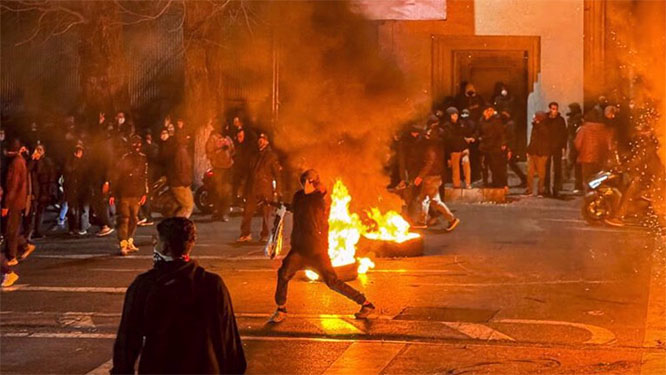
Iranian security and intelligence forces have captured more than 470 individuals in three provinces, identified as key figures behind the recent wave of violent unrest and terrorist activities linked to foreign-backed networks.

The Intelligence Ministry's provincial office in Khorasan Razavi announced on Monday the arrest of 192 armed terrorists, identified as the main agents behind recent riots in the region. 

According to an official statement, the detainees were involved in the killing of several security personnel and civilians, setting fire to mosques, public service facilities, and buses, as well as attacks on military and law enforcement centers.

The seized items from the group include several bulletproof vests, Kalashnikov rifles, hunting weapons, Winchester rifles, and various cold weapons such as daggers, swords, brass knuckles, tactical knives, crossbows, and chains.

Evidence indicates that some of the individuals were tied to hostile movements and terrorist organizations, with links overseas. Others were identified as members of violent criminal gangs, actively taking part in the unrest alongside their associates.

Simultaneously, in the western province of Lorestan, the IRGC announced the arrest of 134 individuals as the main leaders and influential field agents of a US-Israeli terrorist network.

The IRGC statement stated that these individuals formed terrorist cells during the recent unrest, committing "Daesh-like" acts.

They wounded security forces with firearms and cold weapons, and burned and destroyed public and private properties, including mosques, shops, banks, and private and public vehicles.

In the northwestern province of Zanjan, the police reported detaining 150 people identified as principal leaders and agents behind recent riots.

Authorities noted that these individuals were responsible for destroying public and private property and intentionally setting fire to vehicles in the province's squares.

Their crimes include shedding the blood of innocent people, destroying public and private property, attempting to enter military sites, disrupting public order, and spreading terror among citizens.

A variety of cold weapons were reportedly seized from the detainees.

What began late last month as peaceful protests over economic hardship across Iran turned violent after public statements by US and Israeli regime figures encouraged vandalism and disorder.

During the unrest, foreign-backed mercenaries rampaged through cities, killing security forces and civilians and damaging public property.

Comments

Add new comment

  • Coastaldigest.com reserves the right to delete or block any comments.
  • Coastaldigset.com is not responsible for its readers’ comments.
  • Comments that are abusive, incendiary or irrelevant are strictly prohibited.
  • Please use a genuine email ID and provide your name to avoid reject.