Mathura - Kashi: Will Temple Politics be Revived?

Ram Puniyani
September 18, 2020

When Babri Mosque was being demolished in broad day light, the slogan being chanted by the leaders was, Yeh to Kewal jahnki hai, Kashi Mathura Baaki hai (This is the beginning, Kashi Mathura are next on the line).  Supreme Court despite giving the same land to those who demolished the Mosque did call it a crime. The Ram Temple was used to the hilt for electoral purpose and for dividing the society along religious lines. The faith that ‘Lord Ram was born precisely at that spot’ was constructed. This constructed faith formed the base of politics and later the judgement of the Courts.

Having achieved this milestone of religious nationalism, now what next? As such there is no dearth of divisive issues, issues based around identity, issues which demonise the religious minorities, marginalise them and give a boost to sectarian nationalism, some of these are permanently on the agenda like, love jihad, (added on by land jihad, corona jihad, civil service jihad etc.) holy cow, large families, Uniform Civil code among other. There is a regular addition to such issues, through which the majoritarian politics aims to show the majority community as the victim of minorities.

In that sense the issue of Kashi and Mathura are potent issues, which can add on to the already existing plethora of identity issues. In Kashi, abutting the wall of Vishwanath Temple is Gyanwapi Mosque. Some say this was built at the time of Akbar and others say it was Aurangzeb during whose reign it was built. In Mathura, Shahi Idgah mosque stands next to Krishna janma Bhumi Temple. As per the section of Hindu belief the Holy Trio is Ram, Shiva and Krishna which are the most important deities. So the places of importance become Ram (Ayodhya), Shiva (Varanasi) and Krishna (Mathura) which are the three major places to be retrieved.

While the current narrative being popularized is that scores of temples have been destroyed by the invading Muslim rulers of these at least three have to be retrieved as per Hindu Nationalists. There have also been talks and formulations floating that Jama Masjid in Delhi and Jama Masjid in Ahmadabad are also the places, which have been built on Hindu places of worship. The temple destructions have been dealt with by many scholars of History and Archaeology. Temples have been destroyed for political rivalry, assertion of one’s rule and for wealth. It is not only Muslim kings who destroyed Hindu temples, some of them gave generous donations to Hindu temples. Firmans of King Aurangzeb tell us of scores of temple where he gave donations, to recount just couple of them- Kamakhya Devi in Guwahati, Mahakal in Ujjain, and Lord Krishna in Vrindavan. He also destroyed a mosque in Golconda when the local ruler refused to give him the tribute for three consecutive years.

D. D. Kosambi points out (Quoted in ‘Religious Nationalism’, Media House 2020, page 107) that Raja Harshdev of 11th Century Kashmir who appointed a special officer, Devottapatna Nayak, to uproot gold, silver and precious stones studded idols during his regime. Richard Eaton tells us about rival Hindu kings destroying the defeated opponents Kuldevata (Clan god) Temple to build temple of their own clan God. In Srirangatnam Maratha armies destroyed the Hindu temple and Tipu got it repaired! Somehow selective communal historiography has ensured the temple destruction becoming a major seed of divisive politics in India.

If we go a bit further back into history the clash between Buddhism and Brahmanism led to destruction of thousands of Buddha Viharas. Recently while levelling the ground for Ram Temple ground breaking many remnants of Buddha Vihar were found. Historian Dr. M.S. Jayaprakash points out “Hundreds of Buddhist statues, stupas and viharas have been destroyed in India between 830 and 966 AD in the name of Hindu revivalism. Both literary and archaeological sources within and outside India speak volumes about the havoc done to Buddhism by Hindu fanatics… many Hindu kings and rulers took pride in demolishing Buddhist images aiming at the total eradication of Buddhist culture.”

In this backdrop where do we go from here after we have seen the mayhem created around Lord Ram Temple in Ayodhya? The social and political fallout of the whole issue has pushed our democracy several steps backwards. It has relegated the religious minorities in to the cocoon of second class citizenship.

As Akhil Bhartiya Akhada Parishad has declared that it will initiate the campaign for liberation of Kashi and Mathura, it has also said that in due course the arms of Sangh Parivar will be asked to join in. At the moment RSS is saying that it is not keen on the issue, but it seems it is a matter of time when it will jump into the Kashi-Mathura fray and deepen the impact of the campaign to be launched by Akhada Parishad. Already calling the mosques as two “symbols of slavery”, BJP leader and rural development and panchayat raj minister in Karnataka K.S. Eshwarappa had said on August 5 that “a symbol of slavery disturbs our attention and points out that you are a slave”. He reiterated his stance and said, “… All Hindus across the world have a dream that those symbols of slavery should be removed on the lines of Ayodhya. The masjids in Mathura and Kashi will be destroyed too and temples will be rebuilt.” 

As such legislation is in place which states, “prohibit conversion of any place of worship and to provide for the maintenance of the religious character of any place of worship as it existed on the 15th day of August 1947, and for matters connected therewith or incidental thereto.”

Temple politics has dragged us into the politics, which is against plural, democratic ethos. The success of right wing forces to increase their clout through Ram Temple campaign may further, prompt them to go in this direction, which is detrimental to the progress and development of the country. The hope is that the majority people oppose such issues being rekindled again.

Comments

Add new comment

  • Coastaldigest.com reserves the right to delete or block any comments.
  • Coastaldigset.com is not responsible for its readers’ comments.
  • Comments that are abusive, incendiary or irrelevant are strictly prohibited.
  • Please use a genuine email ID and provide your name to avoid reject.
News Network
January 20,2026

iran.jpg

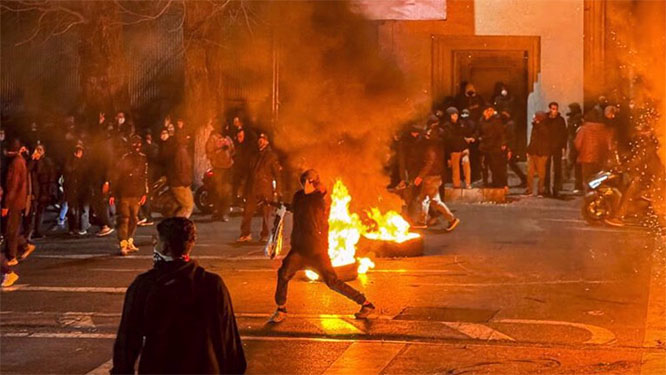
Iranian security and intelligence forces have captured more than 470 individuals in three provinces, identified as key figures behind the recent wave of violent unrest and terrorist activities linked to foreign-backed networks.

The Intelligence Ministry's provincial office in Khorasan Razavi announced on Monday the arrest of 192 armed terrorists, identified as the main agents behind recent riots in the region. 

According to an official statement, the detainees were involved in the killing of several security personnel and civilians, setting fire to mosques, public service facilities, and buses, as well as attacks on military and law enforcement centers.

The seized items from the group include several bulletproof vests, Kalashnikov rifles, hunting weapons, Winchester rifles, and various cold weapons such as daggers, swords, brass knuckles, tactical knives, crossbows, and chains.

Evidence indicates that some of the individuals were tied to hostile movements and terrorist organizations, with links overseas. Others were identified as members of violent criminal gangs, actively taking part in the unrest alongside their associates.

Simultaneously, in the western province of Lorestan, the IRGC announced the arrest of 134 individuals as the main leaders and influential field agents of a US-Israeli terrorist network.

The IRGC statement stated that these individuals formed terrorist cells during the recent unrest, committing "Daesh-like" acts.

They wounded security forces with firearms and cold weapons, and burned and destroyed public and private properties, including mosques, shops, banks, and private and public vehicles.

In the northwestern province of Zanjan, the police reported detaining 150 people identified as principal leaders and agents behind recent riots.

Authorities noted that these individuals were responsible for destroying public and private property and intentionally setting fire to vehicles in the province's squares.

Their crimes include shedding the blood of innocent people, destroying public and private property, attempting to enter military sites, disrupting public order, and spreading terror among citizens.

A variety of cold weapons were reportedly seized from the detainees.

What began late last month as peaceful protests over economic hardship across Iran turned violent after public statements by US and Israeli regime figures encouraged vandalism and disorder.

During the unrest, foreign-backed mercenaries rampaged through cities, killing security forces and civilians and damaging public property.

Comments

Add new comment

  • Coastaldigest.com reserves the right to delete or block any comments.
  • Coastaldigset.com is not responsible for its readers’ comments.
  • Comments that are abusive, incendiary or irrelevant are strictly prohibited.
  • Please use a genuine email ID and provide your name to avoid reject.
News Network
January 31,2026

Roy.jpg

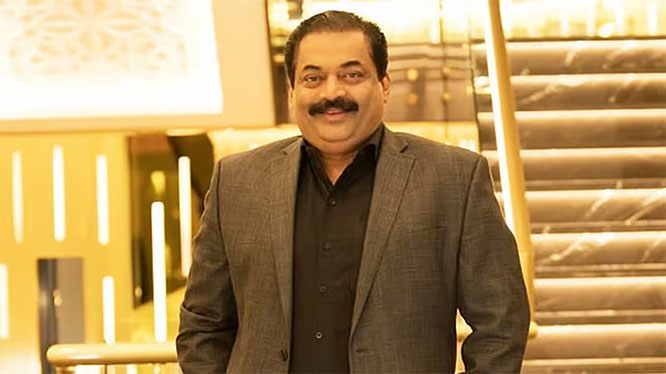
Bengaluru: The shooting incident involving CJ Roy, founder of the Confident Group, has once again put the spotlight on a businessman whose life has swung between flamboyant global success and persistent controversy at home.

Though Roy’s business interests extended across continents, his roots lay firmly in Karnataka. An alumnus of Christ School in Bengaluru, he later moved to Tumakuru to pursue an engineering degree. Those familiar with his early years describe him as intensely ambitious, beginning his career as a salesman at a small electronics firm dealing in computers.

Roy’s entry into large-scale real estate came through the Crystal Group, where he worked closely with Latha Namboothiri and rose from manager to director. However, the launch of the Confident Group in 2005 was clouded by industry speculation. Insiders speak of a fallout involving alleged “benami” properties and claims of deception that ultimately led to his independent venture—an episode Roy spent years trying to distance himself from, according to associates.

A tale of two cities

Roy’s professional trajectory diverged sharply across geographies.

In Dubai, he built a reputation as a bold and efficient developer, completing massive luxury residential projects in record time—some reportedly within 11 months. His rapid project delivery and lavish lifestyle in the Emirates earned him admiration and visibility in the real estate sector.

In Bengaluru, however, his image remained far more fractured. Sources say Roy stayed away from the city for several years amid disputes over unpaid dues to vendors and suppliers. Several projects were allegedly stalled, with accusations of unfulfilled commitments to cement and steel suppliers continuing to follow him.

Roy’s return to Bengaluru’s business and social circles began around 2018, marked by a conscious attempt at rebranding. His appointment as Honorary Consul of the Slovak Republic added diplomatic legitimacy, which he complemented with visible CSR initiatives, including ambulance donations and high-profile charity events.

Heavy police presence in Langford Town

Following the incident, police personnel from the Central division were deployed outside the Confident Group building in Langford Town, which also houses the Slovak Honorary Consulate in Bengaluru.

The otherwise busy premises near Hosur Road wore a deserted look on Friday, reflecting the shock and uncertainty that followed the tragedy.

Comments

Add new comment

  • Coastaldigest.com reserves the right to delete or block any comments.
  • Coastaldigset.com is not responsible for its readers’ comments.
  • Comments that are abusive, incendiary or irrelevant are strictly prohibited.
  • Please use a genuine email ID and provide your name to avoid reject.
News Network
January 23,2026

Mangaluru: The Karnataka Government Polytechnic (KPT), Mangaluru, has achieved autonomous status from the All India Council for Technical Education (AICTE), becoming the first government polytechnic in the country to receive such recognition in its 78-year history. The status was granted by AICTE, New Delhi, and subsequently approved by the Karnataka Board of Technical Education in October last year.

Officials said the autonomy was conferred a few months ago. Until recently, AICTE extended autonomous status only to engineering colleges, excluding diploma institutions. However, with a renewed national focus on skill development, several government polytechnics across India have now been granted autonomy.

KPT, the second-largest polytechnic in Karnataka, was established in 1946 with four branches and has since expanded to offer eight diploma programmes, including computer science and polymer technology. The institution is spread across a 19-acre campus.

Ravindra M Keni, the first dean of the institution, told The Times of India that AICTE had proposed autonomous status for polytechnic institutions that are over 25 years old. “Many colleges applied. In the first round, 100 institutions were shortlisted, which was further narrowed down to 15 in the second round. We have already completed one semester after becoming an autonomous institution,” he said. He added that nearly 500 students are admitted annually across eight three-year diploma courses.

Explaining the factors that helped KPT secure autonomy, Keni said the institution has consistently recorded 100 per cent admissions and placements for its graduates. He also noted its strong performance in sports, with the college emerging champions for 12 consecutive years, along with active student participation in NCC and NSS activities.

Autonomous status allows KPT to design industry-oriented curricula, conduct examinations, prepare question papers, and manage academic documentation independently. The institution can also directly collaborate with industries and receive priority funding from AICTE or the Ministry of Education. While academic autonomy has been granted, financial control will continue to rest with the state government.

“There will be separate committees for examinations, question paper setting, boards of studies, and boards of examiners. The institution will now have the freedom to conduct admissions without government notifications and issue its own marks cards,” Keni said, adding that new academic initiatives would be planned after a year of functioning under the autonomous framework.

Comments

Add new comment

  • Coastaldigest.com reserves the right to delete or block any comments.
  • Coastaldigset.com is not responsible for its readers’ comments.
  • Comments that are abusive, incendiary or irrelevant are strictly prohibited.
  • Please use a genuine email ID and provide your name to avoid reject.