Patriotism, Religion and Ideology of RSS

Ram Puniyani
January 7, 2021

Word ‘anti-National’ has been more in vogue form last few years. Simply put all those who are criticizing the RSS and its progeny are labeled as anti-National. As fountainhead of Hindu Nationalism RSS is becoming stronger, it has been trying to link patriotism and religion. While hailing Hindus for their loyalty to this nation, the subtle hints are being circulated about Muslims in particular that they are more loyal to Pakistan. In cleverly worded articulation, (HT Jan 02, 2020) the chief of RSS, Mohan Bhagwat said that Hindus are patriotic by nature due to their religion.  He also twists a sentence of Gandhi to state that Gandhi’s patriotism had its origin in Hindu religion, “All Indians worship motherland. But Gandhi said my patriotism comes from my religion. So if you are a Hindu then you will be an automatic patriot. You may be an unconscious Hindu, you may need awakening, but a Hindu will never be anti-India.”

Before analyzing the subtle hints hidden in this formulation let’s understand that when RSS began, its major ideologue M.S. Golwalkar was forthright in praising the Nazis and recommended the treatment for Muslims and Christians (Foreign religions, according to RSS) on the lines which were used by Nazis for Jews. Now from last few decades as RSS is becoming more powerful through it multiple organizations like BJP, VHP, ABVP, Vanvasis Kalyan Ashram, and through its infiltration into different wings of state, media and education, it is using more subtle language, while communicating the same  Hindu nationalist ideology. The meaning and content remains the same, which Golwalkar had outlined in ‘We or Our Nationhood Defined’, but the presentation is well decorated, subtle to the extent of confusing many in the society.

As far as Gandhi is concerned, for him religion was a personal matter. He did call himself as sanatani Hindu, but his Hinduism was liberal and inclusive. His religion had more to do with moral values. He derived his spiritual strength from all the religions, "I consider myself as good a Muslim as I am a Hindu and for that matter, I regard myself as equally good a Christian or a Parsi". (Harijan, May 25 197, page 164). There is respect and inclusivity for people of other religions in his practice of Hinduism. This is in total contrast to exclusivist, narrow understanding and practice of Hinduism of RSS, which is continuously raking up issues to frighten and intimidate people of other religions. As Gandhi’s practice of his religion was liberal and inclusive he could lead the people of different religions in the struggle against British rule.

He also did not connect up religion and nationality or for that matter to patriotism. In that sense patriotism, love for one’s country and countrymen, is not rooted in the religion but in the ‘Nationhood’ which is not an outcome of religion for that matter. His use of word religion has two levels. One is the popular notion of customs, identity, faith etc. and second the morality inherent in the teachings of religion. Though he is very clear that morality is the core of religions, the likes of RSS or for that matter even the Muslim communalists (Muslim League etc.) take his use of the word purely at the level of rituals, holy places etc. only.

The ideologues, who are a part of Hindu nationalist outlook, close to RSS mindset, are burning the midnight oil to dig fragments of sentences, not only from Gandhi and other national icons to present as if the values of these makers of ‘India as a nation’ had ideas similar to that of RSS. In the process they retain the RSS ideology while trying to get more legitimacy by showing their similarity to the great icons of India’s freedom movement and the process of ‘India as a nation in the making’.

So now the formulation is that Hindus are naturally patriots, they can’t be anti national. The other side of this is that the nationalism and patriotism of those belonging to other religions is suspect, subject to certification by those who have a monopoly of being patriots and nationalists, those claiming to represent Hindus.

This totally bypasses the great contributions of Muslims and Christians in making of modern India. Where do you place the millions of Muslims who followed Khan Abdul Gaffar Khan and Maulana Abul Kalam Azad who stood not only against British rule but also against the concept of partition of India? Where do you place the likes of Shibli Nomani, Hasrat Mohani, and Ashfaqullah Khan? How do you value the contribution of Allahbaksh who was instrumental in organizing the conference of Muslims to oppose the resolution for separate Pakistan by Mohammad Ali Jinnah? There were innumerable organizations formed by Muslims who rubbed shoulders with participants in the struggle for freedom movement.

In Independent India people of all religions have contributed with equal zeal in making of modern India, in all the fields of industry, education, sports, culture and what have you. Are they not patriots or nationalists?

On the other side this formulation of Mr. Bhagwat is a clever defense of the one trained in its shakhas who murdered Gandhi, Nathuram Godse. How do we label those who participated and led in demolition of Babri Mosque, which was called as a crime by the Supreme Court? As per Bhagwat do acts of killing of Gandhi, Kalburgi, Dabholkar, Gauri Lankesh and Govind Pansare fall in the category of patriotic acts? Where do so many Hindus involved in spying, smuggling, black marketing etc. are to be placed?

Interestingly as RSS is making a show of paying respect to Gandhi, at the same time its trained pracharaks and fellow ideologues and many of its affiliated organizations are openly paying respect to Nathuram Godse. This Gandhi anniversary tweets praising Godse were aplenty, mostly from Hindus. That just shows the ideological manipulation capability of the multithreaded hydra, RSS. Only such an organization can simultaneously make the show of paying obeisance to Gandhi while quietly enhancing the ideology which led to his murder.

Comments

Add new comment

  • Coastaldigest.com reserves the right to delete or block any comments.
  • Coastaldigset.com is not responsible for its readers’ comments.
  • Comments that are abusive, incendiary or irrelevant are strictly prohibited.
  • Please use a genuine email ID and provide your name to avoid reject.
News Network
January 23,2026

Karnataka Governor Thaawarchand Gehlot read only three lines from the 122-paragraph address prepared by the Congress-led state government while addressing the joint session of the Legislature on Thursday, effectively bypassing large sections critical of the BJP-led Union government.

The omitted portions of the customary Governor’s address outlined what the state government described as a “suppressive situation in economic and policy matters” under India’s federal framework. The speech also sharply criticised the Centre’s move to replace the Mahatma Gandhi National Rural Employment Guarantee Act (MGNREGA) with the Viksit Bharat–Guarantee for Rozgar and Ajeevika Mission (Gramin) Act, commonly referred to as the VB-GRAM (G) Act.

Governor Gehlot had earlier conveyed his objection to several paragraphs that were explicitly critical of the Union government. On Thursday, he confined himself to the opening lines — “I extend a warm welcome to all of you to the joint session of the State legislature. I am extremely pleased to address this august House” — before jumping directly to the concluding sentence of the final paragraph.

He ended the address by reading the last line of paragraph 122: “Overall, my government is firmly committed to doubling the pace of the State’s economic, social and physical development. Jai Hind — Jai Karnataka.”

According to the prepared speech, the Karnataka government demanded the scrapping of the VB-GRAM (G) Act, describing it as “contractor-centric” and detrimental to rural livelihoods, and called for the full restoration of MGNREGA. The state government argued that the new law undermines decentralisation, weakens labour protections, and centralises decision-making in violation of constitutional norms.

Key points from the unread sections of the speech:

•    Karnataka facing a “suppressive” economic and policy environment within the federal system

•    Repeal of MGNREGA described as a blow to rural livelihoods

•    VB-GRAM (G) Act accused of protecting corporate and contractor interests

•    New law alleged to weaken decentralised governance

•    Decision-making said to be imposed by the Centre without consulting states

•    Rights of Adivasis, women, backward classes and agrarian communities curtailed

•    Labourers allegedly placed under contractor control

•    States facing mounting fiscal stress due to central policies

•    VB-GRAM (G) Act accused of enabling large-scale corruption

Comments

Add new comment

  • Coastaldigest.com reserves the right to delete or block any comments.
  • Coastaldigset.com is not responsible for its readers’ comments.
  • Comments that are abusive, incendiary or irrelevant are strictly prohibited.
  • Please use a genuine email ID and provide your name to avoid reject.
News Network
January 31,2026

Roy.jpg

Bengaluru: The shooting incident involving CJ Roy, founder of the Confident Group, has once again put the spotlight on a businessman whose life has swung between flamboyant global success and persistent controversy at home.

Though Roy’s business interests extended across continents, his roots lay firmly in Karnataka. An alumnus of Christ School in Bengaluru, he later moved to Tumakuru to pursue an engineering degree. Those familiar with his early years describe him as intensely ambitious, beginning his career as a salesman at a small electronics firm dealing in computers.

Roy’s entry into large-scale real estate came through the Crystal Group, where he worked closely with Latha Namboothiri and rose from manager to director. However, the launch of the Confident Group in 2005 was clouded by industry speculation. Insiders speak of a fallout involving alleged “benami” properties and claims of deception that ultimately led to his independent venture—an episode Roy spent years trying to distance himself from, according to associates.

A tale of two cities

Roy’s professional trajectory diverged sharply across geographies.

In Dubai, he built a reputation as a bold and efficient developer, completing massive luxury residential projects in record time—some reportedly within 11 months. His rapid project delivery and lavish lifestyle in the Emirates earned him admiration and visibility in the real estate sector.

In Bengaluru, however, his image remained far more fractured. Sources say Roy stayed away from the city for several years amid disputes over unpaid dues to vendors and suppliers. Several projects were allegedly stalled, with accusations of unfulfilled commitments to cement and steel suppliers continuing to follow him.

Roy’s return to Bengaluru’s business and social circles began around 2018, marked by a conscious attempt at rebranding. His appointment as Honorary Consul of the Slovak Republic added diplomatic legitimacy, which he complemented with visible CSR initiatives, including ambulance donations and high-profile charity events.

Heavy police presence in Langford Town

Following the incident, police personnel from the Central division were deployed outside the Confident Group building in Langford Town, which also houses the Slovak Honorary Consulate in Bengaluru.

The otherwise busy premises near Hosur Road wore a deserted look on Friday, reflecting the shock and uncertainty that followed the tragedy.

Comments

Add new comment

  • Coastaldigest.com reserves the right to delete or block any comments.
  • Coastaldigset.com is not responsible for its readers’ comments.
  • Comments that are abusive, incendiary or irrelevant are strictly prohibited.
  • Please use a genuine email ID and provide your name to avoid reject.
News Network
January 20,2026

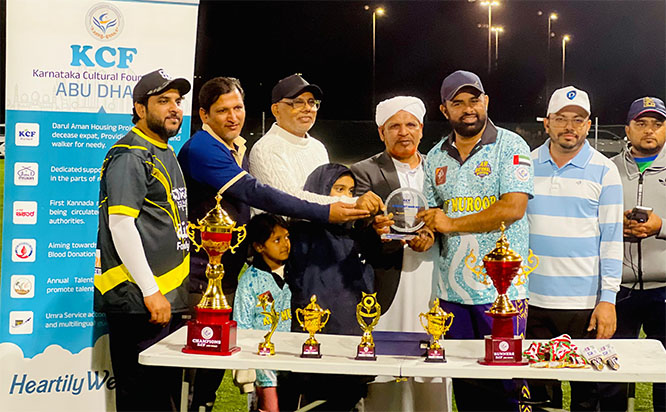
KCFabudhabi.jpg

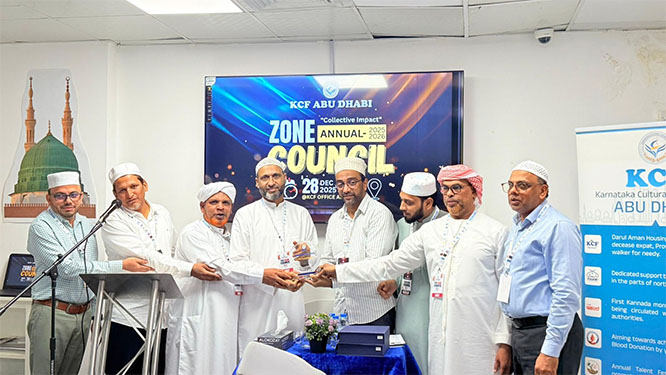
KCF, a global socio-cultural organisation of Karnataka expatriates, is actively involved in education, humanitarian initiatives and community well-being across several countries. The awardees were selected following a structured evaluation of nominations by the Annual Council Program Committee, based on the depth, consistency and long-term impact of their social service.

One of the award recipients, Abdul Razak Haji, a prominent UAE-based entrepreneur from the Qamcon Group of Companies, was honoured for his significant contributions to society. Through both his professional journey and personal initiatives, he has supported numerous employees and families, while also extending assistance in education, housing for the underprivileged and various charitable causes, largely carried out quietly over the years. His award was presented earlier during the Annual Council Program held at the KCF Abu Dhabi office.

The second award was conferred on Latheef Kakkinje, a young social worker based in Abu Dhabi, in recognition of his active involvement in community engagement programmes, sports initiatives, talent festivals and family-oriented social activities. His consistent volunteering efforts and commitment to humanitarian causes were highly appreciated by the selection committee.

The award presentation ceremony for Latheef Kakkinje was held at the Zayed Cricket Stadium (Astro Turf Ground) in the presence of Kedumbady Ibrahim Saqafi, President of KCF UAE; Ibrahim, General Secretary; Kabeer Bayambady, President of KCF Abu Dhabi; Ummer Ishwaramangila, General Secretary; along with other members of the KCF Abu Dhabi cabinet.

Congratulating both awardees, KCF leaders reiterated the organisation’s commitment to recognising individuals who selflessly work for social upliftment and community service.

KCFabudhabi1.jpg

Comments

Add new comment

  • Coastaldigest.com reserves the right to delete or block any comments.
  • Coastaldigset.com is not responsible for its readers’ comments.
  • Comments that are abusive, incendiary or irrelevant are strictly prohibited.
  • Please use a genuine email ID and provide your name to avoid reject.