Was Mughal Rule really the period of India’s Slavery?

Ram Puniyani
September 30, 2020

When James Mill periodized the Indian History into Hindu Period, Muslim Period and British period, he not only gave the tool to British to pursue their policy of ‘divide and rule’, he also gave the potent weapon to the future pursuers of communal politics to intensify the divisive policies in the future. The Muslim communalists later claimed that India was ruled by Muslims and Hindu communalists claimed that Muslims are foreigners and this has been the land of Hindus from times immemorial.

One was reminded of the deep penetration of this communal view of History when, Yogi Aditaynath, the CM of Uttar Pradesh announced that the upcoming Mughal Museum in Agra to be recast as Chatrapati Shivaji Maharaj Museum. As per him such a historical museum is a reflection of subservient mentality and the symbol of ‘mentality of slavery’. The Mughal Museum’s foundation was laid by Akhilesh Yadav, the earlier Chief Minister of UP. The Museum was to come up near TajMahal in Agra and was to show the cultural aspects and armaments of Mughal kings. The aim was to give a boost to tourism industry in UP.

Same Taj is downgraded now by the Hindu communalists. One P.N.Oak has been trying to propagate that it was Tajomahlaya, Shiv Tample, which was converted into Mausoleum by Shahjahan. The fact as recorded by Tavernier, a French Jeweller his travelogues tell us that Shahjahan built it in memory of his wife Mumtaj Mahal. The same is also inferred from the account books of Shahjahan’s Court, which give a details break of regular expenses for the construction of this tomb. The land was acquired from Raja Jaisingh with due compensation.

As Yogi came to power he omitted Taj from the places of importance in UP. His recent utterances that remembering Mughals is symbol of slave mentality are in tune with the communal ideology which regards Islam as alien religion and Muslims as foreigners. As such we see that Indian History has been looked up in three particular ways. One was the Gandhi-Nehru, Indian nationalist interpretation where India is a place of rich diversity. The Muslim kings who ruled parts of India ruled here and lived here as the part of the land. Most of the Muslim kings respected the diverse religious tradition prevailing here.

Mahatma Gandhi points out, “the Hindus flourished under Moslem sovereigns and Moslems under the Hindu. Each party recognized that mutual fighting was suicidal and that neither party would abandon its religion by force of arms. Both parties, therefore, decided to live in peace. With the English advent quarrels recommenced.”

Similarly Jawaharlal Nehru in his book Discovery of India shows the thick interaction between Hindus and Muslims leading to what he famously termed as ‘Ganga Jamani Tehjeeb’, the beautiful portrayal of this is seen in the serial Shyam Benegals’ ‘Bharat Ek Khoj’.

Does this period, in which some parts of the country were ruled by Muslim Kings, (not only Mughals, there were the ones’ from others dynasties also Ghulam, Khaljis, Gazanavid’s. and in South Bahamanis, Haider and Tipu) are a period of slavery? While some kings like Mahmud Gazanavi, Mohammad Ghori, Ghengis Khan did plunder for wealth, the kings who ruled here became the part of this land. They presided over a system of exploitation, like any other king, in which the producer was the farmer. This was true of any king, anywhere for that matter.

This period in no way can be called a period of slavery of the country. Country’s slavery begins with the British, who ruled here and plundered our wealth and implemented the policy of super exploitation of peasantry. Shashi Tharoor has done a good job (An Era of Darkness) in showing as to how India contributed nearly 23% of global GDP and British brought it down to mere 3% by the time they left. On the plus side of British rule was that while social structure did not change in pre British period, during British rule social changes towards democratic society did start taking place with the introduction of railways, communication, modern education, modern Judiciary etc.   

The communalists, Muslim and Hindus take off from the British in interpreting the History as a fight between Hindus and Muslims, and twisting it in a way where their own selves are shown to be the real owners of the land and also victims of the other community. The British plunder and impositions are hidden under the carpet in their scheme of understanding.

At yet another level Ambedkar sees the Indian History primarily as the clash between the values of equality of Buddhism against the caste and gender hierarchy inherent in Brahmanism.

All Hindus kings were not great and all Muslims kings were not villains. Akbar and Dara Shukoh stand out as upholders of diversity, picking up from other religions, while Shivaji ensured that the taxation on poor peasants is curtailed.

As such the real heroes of Independent India are those who contributed to building of Modern India. The three major streams of this are Gandhi, who united the country in the bond of anti colonial struggle, Ambedkar who endeavoured for social equality and democratic rights, and Bhagat Singh who stood for for the cause of poor while giving fighting against British rule in India. It is these values which should inspire the modern India and not the values of Kings, which are essentially based on social inequality and taxation of peasants. All the positive developments strengthening pluralism and diversity with equality are the principles and values we need to look up to in times to come.

Mughal museum was just a small attempt to uphold the cultural background of our lived past and in no way symbol of subservience or of slave mentality. Unfortunately we are living in times where full attempts are going on to erase the symbols; like this upcoming Museum along with changing the names of cities (Allahabad, Faiazabad, Mughal Sarai), the Muslim contribution to Indian culture.

Comments

Add new comment

  • Coastaldigest.com reserves the right to delete or block any comments.
  • Coastaldigset.com is not responsible for its readers’ comments.
  • Comments that are abusive, incendiary or irrelevant are strictly prohibited.
  • Please use a genuine email ID and provide your name to avoid reject.
News Network
January 23,2026

modIKERALA.jpg

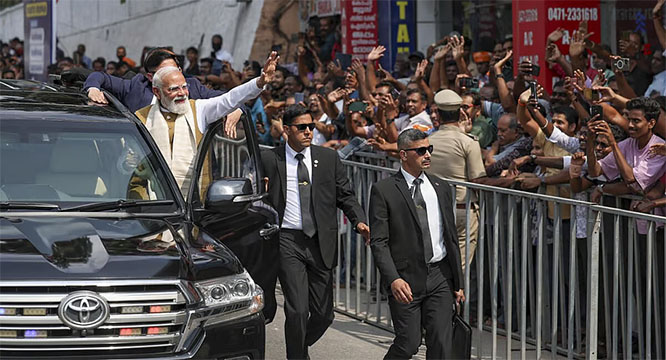
Prime Minister Narendra Modi, during his visit to Thiruvananthapuram on Friday, January 23, indicated that the Bharatiya Janata Party (BJP) is aiming to expand its political footprint in Kerala ahead of the Assembly elections scheduled in the coming months.

Speaking at a BJP-organised public meeting, Modi drew parallels between the party’s early electoral gains in Gujarat and its recent victory in the Thiruvananthapuram Municipal Corporation. The civic body win, which ended decades of Left control, was cited by the Prime Minister as a possible starting point for the party’s broader ambitions in the state.

Recalling BJP’s political trajectory in Gujarat, Modi said the party was largely insignificant before 1987 and received little media attention. He pointed out that the BJP’s first major breakthrough came with its victory in the Ahmedabad Municipal Corporation that year.

“Just as our journey in Gujarat began with one city, Kerala’s journey has also started with a single city,” Modi said, suggesting that the party’s municipal-level success could translate into wider electoral acceptance.

The Prime Minister alleged that successive governments led by the Left Democratic Front (LDF) and the United Democratic Front (UDF) had failed to adequately develop Thiruvananthapuram. He accused both fronts of corruption and neglect, claiming that basic infrastructure and facilities were denied to the capital city for decades.

According to Modi, the BJP’s control of the civic body represents a shift driven by public dissatisfaction with the existing political alternatives. He asserted that the BJP administration in Thiruvananthapuram had begun working towards development, though no specific details or timelines were outlined.

Addressing the gathering at Putharikandam Maidan, Modi said the BJP intended to project Thiruvananthapuram as a “model city,” reiterating his party’s commitment to governance-led change.

The Prime Minister’s visit to Kerala also included the inauguration of several development projects and the flagging off of new train services, as the BJP intensifies its political outreach in the poll-bound state.

Comments

Add new comment

  • Coastaldigest.com reserves the right to delete or block any comments.
  • Coastaldigset.com is not responsible for its readers’ comments.
  • Comments that are abusive, incendiary or irrelevant are strictly prohibited.
  • Please use a genuine email ID and provide your name to avoid reject.
News Network
January 20,2026

iran.jpg

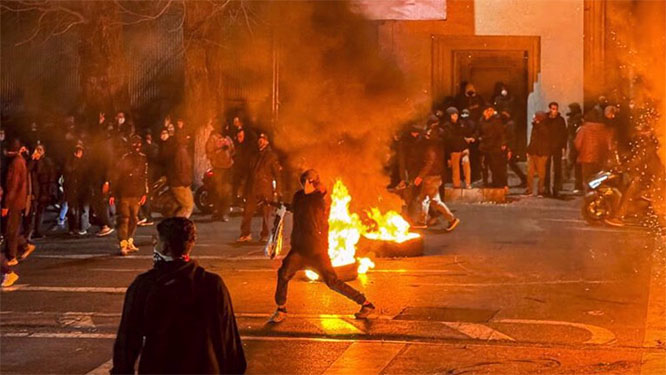
Iranian security and intelligence forces have captured more than 470 individuals in three provinces, identified as key figures behind the recent wave of violent unrest and terrorist activities linked to foreign-backed networks.

The Intelligence Ministry's provincial office in Khorasan Razavi announced on Monday the arrest of 192 armed terrorists, identified as the main agents behind recent riots in the region. 

According to an official statement, the detainees were involved in the killing of several security personnel and civilians, setting fire to mosques, public service facilities, and buses, as well as attacks on military and law enforcement centers.

The seized items from the group include several bulletproof vests, Kalashnikov rifles, hunting weapons, Winchester rifles, and various cold weapons such as daggers, swords, brass knuckles, tactical knives, crossbows, and chains.

Evidence indicates that some of the individuals were tied to hostile movements and terrorist organizations, with links overseas. Others were identified as members of violent criminal gangs, actively taking part in the unrest alongside their associates.

Simultaneously, in the western province of Lorestan, the IRGC announced the arrest of 134 individuals as the main leaders and influential field agents of a US-Israeli terrorist network.

The IRGC statement stated that these individuals formed terrorist cells during the recent unrest, committing "Daesh-like" acts.

They wounded security forces with firearms and cold weapons, and burned and destroyed public and private properties, including mosques, shops, banks, and private and public vehicles.

In the northwestern province of Zanjan, the police reported detaining 150 people identified as principal leaders and agents behind recent riots.

Authorities noted that these individuals were responsible for destroying public and private property and intentionally setting fire to vehicles in the province's squares.

Their crimes include shedding the blood of innocent people, destroying public and private property, attempting to enter military sites, disrupting public order, and spreading terror among citizens.

A variety of cold weapons were reportedly seized from the detainees.

What began late last month as peaceful protests over economic hardship across Iran turned violent after public statements by US and Israeli regime figures encouraged vandalism and disorder.

During the unrest, foreign-backed mercenaries rampaged through cities, killing security forces and civilians and damaging public property.

Comments

Add new comment

  • Coastaldigest.com reserves the right to delete or block any comments.
  • Coastaldigset.com is not responsible for its readers’ comments.
  • Comments that are abusive, incendiary or irrelevant are strictly prohibited.
  • Please use a genuine email ID and provide your name to avoid reject.
News Network
January 23,2026

oscar.jpg

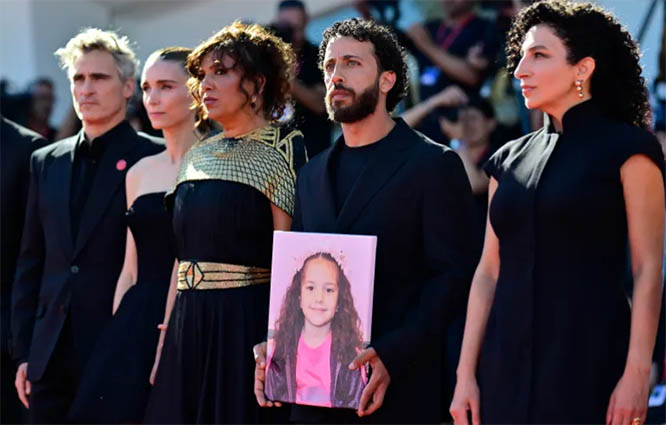
The Voice of Hind Rajab, inspired by the tragic final moments of a young Palestinian girl killed by Israeli fire in Gaza, has been nominated for an Academy Award in the Best International Feature Film category.

Directed by Tunisian filmmaker Kaouther Ben Hania, the film recounts the true story of five-year-old Hind Rajab, who lost her life in January 2024 while fleeing Israeli bombardment with her family.

The film features the real audio of Hind’s desperate call to the Palestinian Red Crescent Society, where she pleaded for help moments before the vehicle she was in was struck by 355 bullets.

The haunting narrative begins with a brief call made from the besieged Tel al-Hawa neighborhood of Gaza, where gunfire and armored vehicles drowned out every sound.

After witnessing the brutal killing of her family, she made a trembling call, her voice reduced to a whisper as she spoke of the massacre and her unbearable loneliness as the sole survivor.

Premiering at the Venice International Film Festival in September 2025, The Voice of Hind Rajab garnered widespread acclaim, receiving a record-setting 23-minute standing ovation and the Silver Lion Grand Jury Prize, the festival’s second-highest honor.

In her acceptance speech, Ben Hania dedicated the film to humanitarian workers and first responders in Gaza, emphasizing that Hind's voice symbolizes countless civilians affected by war.

She aims to give voice to victims often reduced to mere statistics, highlighting the broader suffering of civilians in war zones.

The film’s Oscar nomination underscores its powerful storytelling and ethical approach to depicting real-life tragedy, making it a crucial piece of contemporary cinema.

It serves not only as a narration of individual tragedy but also as an artistic and documentary response to the silence and censorship that often overshadow West Asian struggles and wars.

Using an innovative method she calls docufiction, Ben Hania bridges unvarnished reality and narrative structure, creating a work that is both artistically valuable and socially impactful.

Born in 1977 in Sidi Bouzid—later the epicenter of the Arab revolution—her background profoundly influenced her worldview and artistic approach.

She is a graduate of the Higher School of Audiovisual Arts of Tunis, Pantheon-Sorbonne University, and La Fémis in Paris, where her studies equipped her with the technical and theoretical tools needed to address complex subjects. 

Comments

Add new comment

  • Coastaldigest.com reserves the right to delete or block any comments.
  • Coastaldigset.com is not responsible for its readers’ comments.
  • Comments that are abusive, incendiary or irrelevant are strictly prohibited.
  • Please use a genuine email ID and provide your name to avoid reject.