Countering hate and violence: What should minorities in India do?

Ram Puniyani
August 5, 2018

The violence against religious minorities has been on the rise during last few years. Many a reports tell us not only about the overall rise in the violence but also about the portents of violence orchestrated in the name of Mother Cow and nationalism in recent times. It has increased the insecurity among the religious minorities to no end; leading to ghettotization, which has started affecting the social fabric in very adverse way. It is in this background that the efforts of Jamiat-e-Ulama Hind to start youth clubs for self defense have to be seen and assessed whether this is the right step?

Maulana Mahmood Madani, the chief of the organization while telling about the efforts of his organizations gave an outline of the things to come. As per him the motto of the initiative is “to make youths capable of dealing with tough situations and help the country whenever there is a situation of crisis. He said that the outfit will provide training to the youths just like the Scouts and Guides.” Reacting to this the likes of Vinay Katiyar and spokesmen of RSS related organizations said that this may promote violence and that this is an attempt to copy RSS model, but it will not work. While Madani focused on the training like that of Boys Scouts and Guides, the self defense logic may lead it to an unwanted direction.

Many a spokesmen from Muslim organizations have opposed this step of Jamiat by saying that Muslims have full faith in justice system and that giving safety and security to the citizens is the duty of the state. It’s undeniable that the feeling of insecurity among the Muslim and Christian community has seen an unprecedented rise; with the coming of Modi Sarkar to power. As such it has been RSS and its progeny which introduced the training in wielding lathi (baton), guns in a systematic way. RSS shakhas began with lathis in their shakhas. The question is that time the major problem of Indian society was with the British rule. Could they have used lathis against British? No way! It was primarily for the use within the society itself.

From last few decades the Bajrang Dal and Durga Vahini have been given training in guns as well. All this has been done in the name of self defense! What comes to one’s mind is that in post independence period we have the rule of law with Indian Constitution as the fulcrum of our values. Here we have police, judiciary for protection and justice. So what justifies the program of RSS combine in so called arms training? RSS is very fascinated with arms and every Dusshera day they worship armaments. They have an exhibition of armaments. There are reports doubting whether the police have information about these armaments with RSS, while they do hold license for that. While talking of non violence; RSS has glorified the arms and indulged in training the young boys and girls in these weapons.

On the top of this RSS affiliates have undertaken Trishul (trident) distributions. These trishuls, which have been distributed times and over again; have contributed to rise in hate sentiments. Trishul has religiosity associated with Lord Shiva and is blunt; while the trishuls distributed by these groups have sharp edges like knife. Legal positions apart; such ‘self defense’ organized by communities is a negative phenomenon.

Dilemmas of Muslim community and organizations like Jamiat are well taken. What should be the role of minority organizations in such troubled times? There are Muslim organizations which are opposing Jamiat’s move. Community’s plight cannot be saved by training some youths in techniques of scouts and guide, neither in copying the methods of RSS combine. What is needed is to call for proper implementation of justice and policing mechanism. Most of the communal violence reports tell us about the partisan attitude of the police and the lax attitude of political parties is the main reason for violence going up and up. Justice has not been delivered in 1984 anti-Sikh massacre; it might have given the major boost to the culture of impunity. In Mumbai Sri Kirshna Commission report was not implemented, boosting the trend of where criminal can get away, innocents suffer and justice is denied. In Gujarat violence, post Godhra, which took place right under the nose of the most efficient chief minster; nearly two thousand Hindus and Muslims were done to death, while state was accomplice in the violence.

The Jamiat leadership should think whether they are going in the right direction. Good intentions alone are not enough. Let’s identify the core cause of violence. It’s the Hate manufactured in society. Hate in turn has peaked to mountainous heights due to the misconceptions about the minority community enhanced lately due to abuse of social media in a systematic and planned way. Islam has been demonized as violent religion and Christians are looked down as converters. In Gujarat the travails of the likes of Teesta Setalvad, foremost human rights activist, tell us that getting justice is a humongous task. The need to counter the divisive propaganda done by our TV channels, done through section of media and spruced up by social media needs to be countered. The perceptions about our medieval period, freedom movement and all inclusive nature of Indian nationalism need to be taken far and wide.

What is needed is a broad alliance of those concerned about the security and protection of human rights of all. Right to life has lately been compromised heavily. All those working for preservation and promotion of rights of citizens need to come to uphold the basic Indian ethos of pluralism and the core values of Indian Constitution. Jamiat like organizations will do better by focusing on training the youth in the abilities to counter Hate by spreading the message of peace and love, by training them in countering the prevalent misconceptions against religious minorities and against weaker sections of society.

Comments

Add new comment

  • Coastaldigest.com reserves the right to delete or block any comments.
  • Coastaldigset.com is not responsible for its readers’ comments.
  • Comments that are abusive, incendiary or irrelevant are strictly prohibited.
  • Please use a genuine email ID and provide your name to avoid reject.
coastaldigest.com news network
January 19,2026

rizwanzameer.jpg

Bengaluru: As the dust settles on the recent legislative session, the corridors of Vidhana Soudha are buzzing with more than just policy talk. A high-stakes game of political musical chairs has begun, exposing a deepening rift within the Congress party’s Muslim leadership as a major Cabinet reshuffle looms.

With the party hierarchy signaling a "50% refresh" to gear up for the 2028 Assembly elections, the race to fill three projected Muslim ministerial berths has transformed from a strategic discussion into an all-out turf war.

The "Star Son" Spark

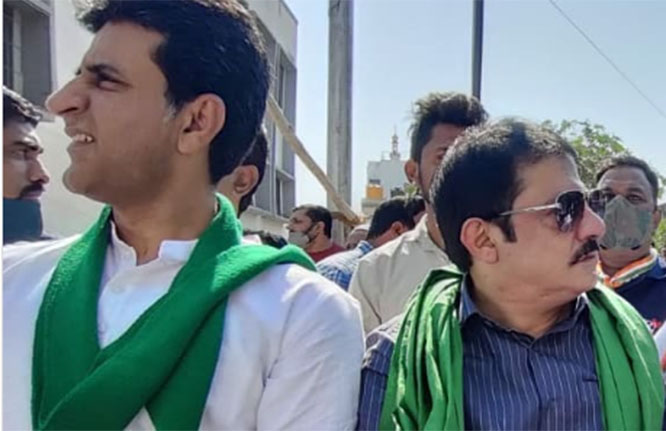
The internal friction turned public this week following provocative remarks by Zaid Khan, actor and son of Wakf Minister Zameer Ahmed Khan. Zaid’s claim—that his father "helped" secure a ticket for Shivajinagar MLA Rizwan Arshad in 2023—has acted as a lightning rod for resentment.

Rizwan’s camp was quick to fire back, dismissing the comment as a desperate attempt by Zameer to manufacture seniority. "Rizwan’s political pedigree was forged in the NSUI and Youth Congress long before Zameer even stepped into the party," a supporter noted, highlighting Rizwan’s tenure as an AICC secretary and his two-term presidency of the State Youth Congress.

A Tale of Two Loyalists

While both Zameer Ahmed Khan and Rizwan Arshad are staunch allies of Chief Minister Siddaramaiah and represent Bengaluru strongholds, their political DNA could not be more different:

•    Zameer Ahmed Khan: A four-time MLA who crossed over from JD(S) in 2018. Known for his "overzealous" and often polarizing outreach during communal flashpoints—from the DJ Halli riots to the recent Wakf land notice controversy—his style has frequently left the Congress high command in a state of "discomfort."

•    Rizwan Arshad: A homegrown organizational man. Seen as a "quiet performer," Arshad represents the sophisticated, moderate face of the party, preferred by those who find Zameer’s brand of politics too volatile.

The Outsiders Looking In

The bickering isn't limited to a duo. The "Beary" community, represented by leaders like N A Haris and Saleem Ahmed, is demanding its pound of flesh. Saleem Ahmed, the Chief Whip in the Legislative Council, has dropped the veil of diplomacy, openly declaring his ministerial aspirations.

"I was the only working president not included in the Cabinet last time," Saleem noted pointedly, signaling that the "loyalty quota" is no longer enough to keep the peace.

As Chief Minister Siddaramaiah prepares to finalize the list, he faces a delicate balancing act: rewarding the aggressive grassroots mobilization of Zameer’s camp without alienating the organizational stalwarts and minority sub-sects who feel increasingly sidelined by the "Chamarajpet-Shivajinagar" binary.

Comments

Add new comment

  • Coastaldigest.com reserves the right to delete or block any comments.
  • Coastaldigset.com is not responsible for its readers’ comments.
  • Comments that are abusive, incendiary or irrelevant are strictly prohibited.
  • Please use a genuine email ID and provide your name to avoid reject.
News Network
January 23,2026

Mangaluru: The Karnataka Government Polytechnic (KPT), Mangaluru, has achieved autonomous status from the All India Council for Technical Education (AICTE), becoming the first government polytechnic in the country to receive such recognition in its 78-year history. The status was granted by AICTE, New Delhi, and subsequently approved by the Karnataka Board of Technical Education in October last year.

Officials said the autonomy was conferred a few months ago. Until recently, AICTE extended autonomous status only to engineering colleges, excluding diploma institutions. However, with a renewed national focus on skill development, several government polytechnics across India have now been granted autonomy.

KPT, the second-largest polytechnic in Karnataka, was established in 1946 with four branches and has since expanded to offer eight diploma programmes, including computer science and polymer technology. The institution is spread across a 19-acre campus.

Ravindra M Keni, the first dean of the institution, told The Times of India that AICTE had proposed autonomous status for polytechnic institutions that are over 25 years old. “Many colleges applied. In the first round, 100 institutions were shortlisted, which was further narrowed down to 15 in the second round. We have already completed one semester after becoming an autonomous institution,” he said. He added that nearly 500 students are admitted annually across eight three-year diploma courses.

Explaining the factors that helped KPT secure autonomy, Keni said the institution has consistently recorded 100 per cent admissions and placements for its graduates. He also noted its strong performance in sports, with the college emerging champions for 12 consecutive years, along with active student participation in NCC and NSS activities.

Autonomous status allows KPT to design industry-oriented curricula, conduct examinations, prepare question papers, and manage academic documentation independently. The institution can also directly collaborate with industries and receive priority funding from AICTE or the Ministry of Education. While academic autonomy has been granted, financial control will continue to rest with the state government.

“There will be separate committees for examinations, question paper setting, boards of studies, and boards of examiners. The institution will now have the freedom to conduct admissions without government notifications and issue its own marks cards,” Keni said, adding that new academic initiatives would be planned after a year of functioning under the autonomous framework.

Comments

Add new comment

  • Coastaldigest.com reserves the right to delete or block any comments.
  • Coastaldigset.com is not responsible for its readers’ comments.
  • Comments that are abusive, incendiary or irrelevant are strictly prohibited.
  • Please use a genuine email ID and provide your name to avoid reject.
coastaldigest.com news network
January 19,2026

badriya.jpg

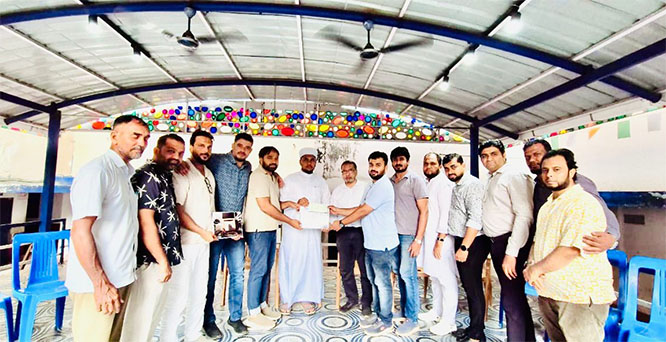
Mangaluru: The Phase I project of Badria Vision 2028 was formally launched at a ceremony held at the Badria Campus on January 17, marking an important step in the institution’s long-term development roadmap.

The programme was attended by P.B. Abdul Hameed, Secretary of the MEA, and P.C. Hasir, Correspondent of the MEA, who presided over the event and underscored the institution’s commitment to growth and academic excellence.

Office-bearers of the Badria Alumni Association were present in large numbers, including A.K. Sajid (President), Shamsuddin and S.M. Farooq (Vice-Presidents), Shaheed (General Secretary), and Khaleel (Treasurer), reflecting strong alumni engagement in the initiative.

The gathering was blessed by Sayyid Shamsuddeen Basith Thangal Kukkaje, Qateeb of Zeenat Yatheem Bakshi, who led a special dua seeking divine guidance and success for the project.

The ceremony also witnessed the participation of prominent alumnus and local corporate professional Abdul Latheef, along with alumni members Naushad, Kalandar, Safwan, members of the core committee, and several other former students.

A key moment of the event was the formal handover of a cheque to Ameen Woodland Architect, signalling the immediate commencement of construction work under Phase I of the project.

Organisers said the launch of Phase I reflects a shared vision, institutional unity, and collective resolve to realise the objectives of Badria Vision 2028.

Comments

Add new comment

  • Coastaldigest.com reserves the right to delete or block any comments.
  • Coastaldigset.com is not responsible for its readers’ comments.
  • Comments that are abusive, incendiary or irrelevant are strictly prohibited.
  • Please use a genuine email ID and provide your name to avoid reject.