


Covid-19 pandemic and furthering of sectarian agenda in education

Ram Puniyani
July 20, 2020

As Covid 19 has created havoc all rounds, the rulers of certain countries are using it to further intensify their set agendas. The democratic freedoms are being curtailed in certain forms, the reaction to which has come in America in the form of a campaign, which is opposing “stifling” cultural climate that is imposing “ideological conformity” and weakening “norms of open debate and toleration of differences”. In India similar intimidations have been intensified. In addition the occasion has been used by the sectarian forces first to link the spread of Corona to Muslim community and now in the name of reducing the burden of curriculum certain chapters on core concepts related to Indian nationalism are being deleted from the text books.

It has been reported that chapters on federalism, citizenship, nationalism, secularism, Human Rights, Legal Aid and Local Self Government and the like are being dropped. Education has been an important area for communal forces and they constantly keep saying that leftists have dominated the curriculum content, it suffers from the impact of Macaulay, Marx and Mohammad and so needs to be Indianized. The first such attempt was done when BJP came to power in 1998 as NDA and had Murli Manohar Joshi as the MHRD minister. He brought the changes which were termed as ‘saffronization of education’. Their focus is more on social science. Some of the highlights of this were introduction of subjects like Astrology and Paurohitya, and chapters defending caste system, nationalism of the type of Hitler was praised.

With defeat of NDA in 2004, the UPA did try to rectify some of these distortions. Again after 2014 the RSS affiliates working in the area of education have been active, interacting with MHRD officials to impress upon them the need to change the curriculum matching with their Hindu nationalist agenda. Its ‘Shiksha Sanskriti Utthan Nyas’ has been asking for removal of English, Urdu words in the texts. It has asked for removal of thoughts of Rabindranath Tagore on Nationalism, extracts of autobiography of M F Husain, references to benevolence of Muslim rulers, references to BJP being Hindu party, apology of Dr. Manmohan Singh for anti Sikh pogrom of 1984, the reference to killings of Gujarat carnage in 2002 among others. This they call as Bhartiykaran of syllabus.

As RSS is a multithreaded hydra one of its pracharak Dinanath Batra has set up ‘Shiksha Bachao Abhiyan Samiti’ which has been pressurizing various publishers to drop the books which are not conforming to their ideology. One recalls their pressuring withdrawal of Wendy Doniger’s ‘The Hindus’, as it does present the ancient India through the concerns of dalits and women. Mr. Batra has already come out with a set of nine books for school curriculum, giving the RSS view of the past and RSS understanding of social sciences. These have already been translated into Gujarati and thousands of the sets of these books are being used in Gujarat Schools.

The present step of deleting parts of curriculum which gives the basics of Indian Nationalism, secularism and human rights is a further step in the same direction. These are the topics which have made the Hindu nationalists uncomfortable during last few years. They have been defaming secularism. They removed it from the preamble of Indian constitution, when they put out an ad on the eve of Republic day in 2015. From last few decades since the Ram Temple movement was brought up, simultaneously the secular ethos of India’s freedom movement and secular values of Indian constitution have been constantly criticized. Many an RSS ideologues and BJP leaders have been asking for change of Indian Constitution for this very reason.

Secularism is part of the concept of Indian nationalism. In the name of religious nationalism, sectarian divisive nationalism they have been attacking various student leaders in particular. When we study Nationalism, the very genesis of Indian nationalism tells us the plurality of our freedom movement with its anti colonial roots. The struggle was for Indian nationalism and so the Muslims and Hindu communalists kept aloof from this great struggle against colonial masters, it was this struggle which built the Indian nation with all its diversity.

Similarly as we have equal rights as citizens the chapters on citizenship are being dropped. Federalism has been the core part of India’s administrative and political structure. As the dictatorial tendencies are becoming stronger, federalism is bound to suffer and that explains the dropping of this subject. Democracy is decentralization of power. Power reaching the lowermost part of the system, the villages and average citizens. This got reflected in Local self Government. The power is distributed among villages, cities, state and center. By removing chapters on federalism and local self government, the indications of the ideology of ruling party are on display.

While we are not dealing with all the portents of the planned omissions, one more aspect that related to dropping of chapter on Human rights needs our attention. The concept of Human rights and dignity are interlinked. This concept of Human rights also has international ramifications. India is signatory to many an UN covenants related to Human rights. The indications are clear that now rights will be for the few elite and ‘duties’ for the large deprived sections will be put on the forefront.

In a way this incidental ‘Corona gifted opportunity’ to the ruling Government is being fully used to enhance the agenda of ruling party in the arena of Educational Curriculum. The part of curriculum with which the ruling party is uncomfortable is being removed. This act of omission does supplement their other acts of commission in changing the shape of educational curriculum, which are reflected in RSS affiliates’ suggestions to MHRD regarding Bhartiyakaran of contents of syllabus. As per this the things like regarding the great epics like Ramayana and Mahabharata as History, the things like India having all the stem cell technology, plastic surgery, aviation science etc. will have a place in the changes planned by communal forces!

Comments

Add new comment

  • Coastaldigest.com reserves the right to delete or block any comments.
  • Coastaldigset.com is not responsible for its readers’ comments.
  • Comments that are abusive, incendiary or irrelevant are strictly prohibited.
  • Please use a genuine email ID and provide your name to avoid reject.
News Network
January 23,2026

Mangaluru: The Karnataka Government Polytechnic (KPT), Mangaluru, has achieved autonomous status from the All India Council for Technical Education (AICTE), becoming the first government polytechnic in the country to receive such recognition in its 78-year history. The status was granted by AICTE, New Delhi, and subsequently approved by the Karnataka Board of Technical Education in October last year.

Officials said the autonomy was conferred a few months ago. Until recently, AICTE extended autonomous status only to engineering colleges, excluding diploma institutions. However, with a renewed national focus on skill development, several government polytechnics across India have now been granted autonomy.

KPT, the second-largest polytechnic in Karnataka, was established in 1946 with four branches and has since expanded to offer eight diploma programmes, including computer science and polymer technology. The institution is spread across a 19-acre campus.

Ravindra M Keni, the first dean of the institution, told The Times of India that AICTE had proposed autonomous status for polytechnic institutions that are over 25 years old. “Many colleges applied. In the first round, 100 institutions were shortlisted, which was further narrowed down to 15 in the second round. We have already completed one semester after becoming an autonomous institution,” he said. He added that nearly 500 students are admitted annually across eight three-year diploma courses.

Explaining the factors that helped KPT secure autonomy, Keni said the institution has consistently recorded 100 per cent admissions and placements for its graduates. He also noted its strong performance in sports, with the college emerging champions for 12 consecutive years, along with active student participation in NCC and NSS activities.

Autonomous status allows KPT to design industry-oriented curricula, conduct examinations, prepare question papers, and manage academic documentation independently. The institution can also directly collaborate with industries and receive priority funding from AICTE or the Ministry of Education. While academic autonomy has been granted, financial control will continue to rest with the state government.

“There will be separate committees for examinations, question paper setting, boards of studies, and boards of examiners. The institution will now have the freedom to conduct admissions without government notifications and issue its own marks cards,” Keni said, adding that new academic initiatives would be planned after a year of functioning under the autonomous framework.

Comments

Add new comment

  • Coastaldigest.com reserves the right to delete or block any comments.
  • Coastaldigset.com is not responsible for its readers’ comments.
  • Comments that are abusive, incendiary or irrelevant are strictly prohibited.
  • Please use a genuine email ID and provide your name to avoid reject.
coastaldigest.com news network
January 19,2026

badriya.jpg

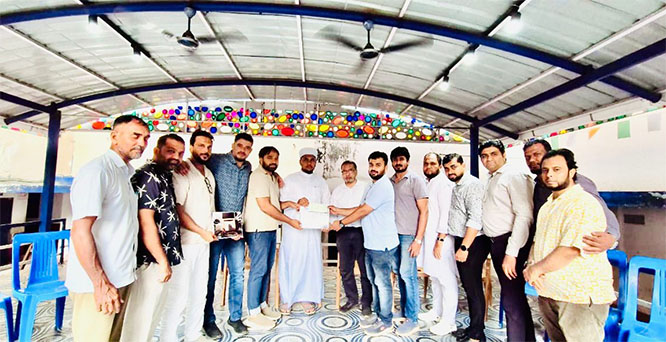
Mangaluru: The Phase I project of Badria Vision 2028 was formally launched at a ceremony held at the Badria Campus on January 17, marking an important step in the institution’s long-term development roadmap.

The programme was attended by P.B. Abdul Hameed, Secretary of the MEA, and P.C. Hasir, Correspondent of the MEA, who presided over the event and underscored the institution’s commitment to growth and academic excellence.

Office-bearers of the Badria Alumni Association were present in large numbers, including A.K. Sajid (President), Shamsuddin and S.M. Farooq (Vice-Presidents), Shaheed (General Secretary), and Khaleel (Treasurer), reflecting strong alumni engagement in the initiative.

The gathering was blessed by Sayyid Shamsuddeen Basith Thangal Kukkaje, Qateeb of Zeenat Yatheem Bakshi, who led a special dua seeking divine guidance and success for the project.

The ceremony also witnessed the participation of prominent alumnus and local corporate professional Abdul Latheef, along with alumni members Naushad, Kalandar, Safwan, members of the core committee, and several other former students.

A key moment of the event was the formal handover of a cheque to Ameen Woodland Architect, signalling the immediate commencement of construction work under Phase I of the project.

Organisers said the launch of Phase I reflects a shared vision, institutional unity, and collective resolve to realise the objectives of Badria Vision 2028.

Comments

Add new comment

  • Coastaldigest.com reserves the right to delete or block any comments.
  • Coastaldigset.com is not responsible for its readers’ comments.
  • Comments that are abusive, incendiary or irrelevant are strictly prohibited.
  • Please use a genuine email ID and provide your name to avoid reject.
News Network
January 20,2026

Mangaluru: In a major step towards strengthening rural innovation, the Office of the Principal Scientific Adviser (PSA) to the Government of India is supporting the establishment of RuTAGe Smart Village Centres (RSVCs) across the country through collaborations with academic institutions, civil society organisations and philanthropic partners.

As part of this national initiative, Nitte (Deemed to be University) will set up the first RSVCs in the region at Nitte GP in Udupi district and at the Nitte Health Centre, Sevanjali Trust, Farangipete, in Dakshina Kannada district. The centres will be inaugurated on January 21. In South India, the programme is being implemented by the Section Infin-8 Foundation (SI-8).

Speaking to reporters on Monday, SI-8 founder-director Vishwas US said experts from Nitte University and SI-8 would work closely with farmers, students, youth and local entrepreneurs to adapt and deploy technologies tailored to local needs.

Project head Prof Iddya Karunasagar, representing Nitte DU, said the RSVCs at Nitte and Farangipete would serve as demonstration hubs for a wide range of agriculture, energy, skill-development and assistive technologies. These include solar dryers for fruits, vegetables and crops; soil-testing solutions; power weeders and women-friendly farm tools; wind-powered devices for rural artisans; grain storage systems; grass-cutting and tree-climbing equipment; and liquid fertiliser production using cowshed waste.

SI-8 CEO Aravind C Kumar said the centres would also provide access to digital and knowledge-based platforms such as ISRO applications, government scheme portals, market linkage tools and gamified learning resources, along with assistive technologies for persons with visual impairments.

Highlighting the broader impact of the initiative, Principal Scientific Adviser Prof Ajay Kumar Sood said it demonstrated how applied research could bridge the rural–urban divide and help create self-reliant, technology-enabled villages.

The initiative has been made possible through philanthropic support from Dr NC Murthy of ACM Business Solutions, LLC, USA. Dr Sapna Poti, Director (Strategic Alliances) at the Office of the Principal Scientific Adviser, said the long-term objective is to build self-sufficient, technology-driven communities capable of generating sustainable livelihoods on their own.

Comments

Add new comment

  • Coastaldigest.com reserves the right to delete or block any comments.
  • Coastaldigset.com is not responsible for its readers’ comments.
  • Comments that are abusive, incendiary or irrelevant are strictly prohibited.
  • Please use a genuine email ID and provide your name to avoid reject.