



Curfew lifted from parts of Srinagar

August 23, 2016

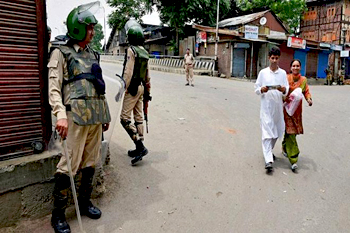
Srinagar, Aug 23: Curfew was today lifted from most areas of Srinagar in view of the improving situation, even as normal life in the Valley remained affected for the 46th straight day due to restrictions and strike in the wake of violence following killing of Hizbul Mujahideen commander Burhan Wani.
Curfew

Curfew has been lifted from most areas of Srinagar district. However, it will remain in force in five police station areas of downtown city and Batamaloo, Maisuma and Kralkhud in the uptown, a police official said.

He said curfew was also in force in Anantnag town of south Kashmir.

The official said the restrictions on the movement of people in many areas of the Valley were lifted following improvement in the situation.

The authorities yesterday relaxed curfew for eight hours in the jurisdiction of 12 police stations in Srinagar from 9 AM and the relaxation period passed off peacefully, without any untoward incident.

Barring five incidents of stone-pelting, the situation in the Valley remained by and large peaceful throughout the day yesterday, the official said.

The lifting of the curbs allowed movement of people in the city as there was increased movement of private cars and auto-rickshaws in and around Lal Chowk city centre today.

However, the official said, restrictions on the assembly of four or more persons under Section 144 Crpc will continue to remain imposed in the entire Valley to maintain law and order.

The separatist camp, which is spearheading the agitation in the Valley over the civilian killings during the protests against Wani's killing, has asked women to hold peaceful protests today.

65 persons, including two cops, have been killed and several thousand others injured in the clashes that began on July 9, a day after Wani was killed in an encounter with security forces in Kokernag area of Anantnag district.

Meanwhile, normal life remained paralysed for the 46th consecutive day due to curfew, restrictions and separatist sponsored strike.

Shops, private offices, educational institutions and petrol pumps remained closed while public transport continued to be off roads.The attendance in government offices and banks was also affected.

Mobile Internet also continued to remain suspended in the entire Valley, where the outgoing facility on prepaid mobiles remained barred.


Comments

Add new comment

  • Coastaldigest.com reserves the right to delete or block any comments.
  • Coastaldigset.com is not responsible for its readers’ comments.
  • Comments that are abusive, incendiary or irrelevant are strictly prohibited.
  • Please use a genuine email ID and provide your name to avoid reject.
News Network
December 6,2025

pilot.jpg

New Delhi: IndiGo, India’s largest airline, faced major operational turbulence this week after failing to prepare for new pilot-fatigue regulations issued by the Directorate General of Civil Aviation (DGCA). The stricter rules—designed to improve flight safety—took effect in phases through 2024, with the latest implementation on November 1. IndiGo has acknowledged that inadequate roster planning led to widespread cancellations and delays.

Below are the key DGCA rules that affected IndiGo’s operations:

1. Longer Mandatory Weekly Rest

Weekly rest for pilots has been increased from 36 hours to 48 hours.

The government says the extended break is essential to curb cumulative fatigue. This rule remains in force despite the current crisis.

2. Cap on Night Landings

Pilots can now perform only two night landings per week—a steep reduction from the earlier limit of six.

Night hours, defined as midnight to early morning, are considered the least alert period for pilots.

Given the disruptions, this rule has been temporarily relaxed for IndiGo until February 10.

3. Reduced Maximum Night Flight Duty

Flight duty that stretches into the night is now capped at 10 hours.

This measure has also been kept on hold for IndiGo until February 10 to stabilize operations.

4. Weekly Rest Cannot Be Replaced With Personal Leave

Airlines can no longer count a pilot’s personal leave as part of the mandatory 48-hour rest.

Pilots say this closes a loophole that previously reduced actual rest time.

Currently, all airlines are exempt from this rule to normalise travel.

5. Mandatory Fatigue Monitoring

Airlines must submit quarterly fatigue reports along with corrective actions to DGCA.

This system aims to create a transparent fatigue-tracking framework across the industry.

The DGCA has stressed that these rules were crafted to strengthen flight safety and align India with global fatigue-management standards. The temporary relaxations are expected to remain until February 2025, giving IndiGo time to stabilise its schedules and restore normal air travel.

Comments

Add new comment

  • Coastaldigest.com reserves the right to delete or block any comments.
  • Coastaldigset.com is not responsible for its readers’ comments.
  • Comments that are abusive, incendiary or irrelevant are strictly prohibited.
  • Please use a genuine email ID and provide your name to avoid reject.