Decision on J&K is about the nation, Article 370 always harmed India: PM Modi

Agencies
August 14, 2019

New Delhi, Aug 14: One of the biggest decisions taken by Prime Minister Narendra Modi in the first 75 days of his government is undoubtedly the unshackling of Jammu and Kashmir so that there is better integration and mobility and the faux concept of dual citizenship is scrapped once and for all. In what was not just a political but a diplomatic masterstroke as well, the Prime Minister, who has been obsessed with resolving the Kashmir imbroglio, hit his straps very early on in his second avatar using the heft of his mandate to prise through the contentious issue.
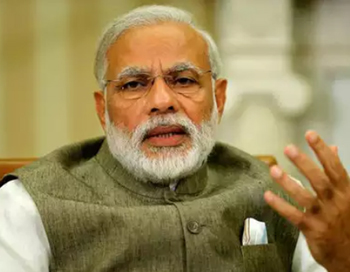
news agency began by asking him about his decision on Article 370 which has been welcomed by many and also been opposed by a few. A fusillade of posers followed. There seems to be an uneasy calm at the moment. Why do you think the people of J&K will stand with you?

Unflinchingly, as his wont and style, PM Modi responded unequivocally, "Please see the list of people who have opposed the decisions about Kashmir - the usual vested interest groups, political dynasties, those who sympathise with terror and some friends in the Opposition. The people of India, irrespective of what their political preference, have supported the steps taken in Jammu, Kashmir and Ladakh. This is about the nation, not politics. The people of India are seeing that tough but essential decisions that were earlier assumed to be impossible are becoming a reality."

As the dragnet eases, life will limp back to normal in the Valley, the PM has a clear view on the issue, he reckons that these provisions actually harmed India, for a handful of families and a separatist cabal capitalised on this. PM Modi said, "It is now clear to everyone how Articles 370 and 35(A) fully isolated Jammu, Kashmir and Ladakh. The status quo of seven long decades clearly could not fulfil people`s aspirations. Citizens were kept away from the fruits of development. The greatest casualty was the lack of any proper economic avenues to increase earnings. Our approach is different -- instead of the vicious cycle of poverty, the people need more economic opportunities. For years, intimidation ruled the roost. Let us now give development a chance."

He followed up by making a fervent plea to his brethren in Kashmir. "My sisters and brothers of Jammu, Kashmir and Ladakh always wanted a better future for them, but Article 370 did not enable it. There was injustice against women and children, ST as well as SC communities. And, most importantly, the innovative zeal of the people of Jammu, Kashmir and Ladakh was not harnessed. Now, from BPOs to startups, from food processing to tourism, many industries can avail of investment and create opportunities for the local youth. Education and skill development will also bloom.

"I want to clearly assure my sisters and brothers of Jammu, Kashmir and Ladakh that these regions will develop as per the wishes of local people, their dreams and ambitions. The growth of these regions will first and foremost be powered by those belonging to these regions. Articles 370 and 35(A) were like chains that kept people tied. These chains are now broken, people have been unshackled from such dominance and they will now shape their own destiny."

For those who are opposing the decisions on Jammu and Kashmir, he believes they should answer one basic question: What is their defence for Articles 370 and 35(A) remaining?

He argued, "They would have no answer to this question. And, these are the same people who are used to protesting when it comes to anything that helps common people. There is a project to provide water to people, they will oppose it. There is a railway track being built, they will oppose that. Their heart only beats for Maoists and terrorists who have only bullied common citizens. Today, every Indian is fully standing with the people of Jammu, Kashmir and Ladakh and I am confident they will stand with us in the aim to boost development and bring peace. "

news agency also asked him about the concerns over democracy. Will the voice of the people of Kashmir be heard?

He said: "Kashmir has never witnessed such a strong commitment in favour of democracy. Remember the turnout during the Panchayat elections? The people voted in large numbers and did not get cowed by bullying. In November and December of 2018, there were 35,000 Sarpanches elected and the turnout in the Panchayat elections was a record 74%. There was no violence during the Panchayat elections. Not a drop of blood was shed in poll violence. This, when the main parties there were lukewarm to this entire exercise. It is very satisfying that now Panchayats are back at the forefront of furthering development and human empowerment. Imagine, for so many years those in power did not find it prudent to work towards strengthening Panchayats. And remember, they gave great sermons on democracy, but the words never led to action."

It is obvious that when the PM obsessed on resolving what appeared to be intractable, he studied the matter extensively. He said: "It surprised and saddened me that 73rd Amendment did not apply to Jammu and Kashmir. How could such injustice be tolerated? It was in the last few years that Panchayats in Jammu and Kashmir got more powers to work towards people`s progress and various subjects transferred to Panchayats under the 73rd amendment were transferred to Panchayats of Jammu and Kashmir.

"Now, I have requested the Honourable Governor to work towards organising Block Panchayat elections too. Recently, the Jammu and Kashmir administration did the `Back to Village` programme, where the entire government machinery went to the people instead of vice versa. They went just to mitigate people`s problems. The common citizens appreciated the programme. The results of these efforts are for all to see. Swachh Bharat, rural electrification and other such initiatives are reaching the grassroots. This is what democracy truly is."

Correcting mistakes and imbalances was at the kernel of the PM`s intent on J&K. The PM said: "In any case, I have assured people that elections in Jammu, Kashmir will continue and it is the people of these regions only who will represent the larger public. Yes, those who ruled Kashmir thinking it is their divine right to do so will dislike democratisation and peddle incorrect narratives. They do not want a self-made, younger leadership to emerge. These are the same people whose own conduct in the 1987 elections has been suspect. Article 370 has helped the local political class avoid transparency and accountability. Its removal will only empower democracy even more."


Comments

Add new comment

  • Coastaldigest.com reserves the right to delete or block any comments.
  • Coastaldigset.com is not responsible for its readers’ comments.
  • Comments that are abusive, incendiary or irrelevant are strictly prohibited.
  • Please use a genuine email ID and provide your name to avoid reject.
News Network
December 16,2025

bengal.jpg

The deletion of over 58 lakh names from West Bengal’s draft electoral rolls following a Special Intensive Revision (SIR) has sparked widespread concern and is likely to deepen political tensions in the poll-bound state.

According to the Election Commission, the revision exercise has identified 24 lakh voters as deceased, 19 lakh as relocated, 12 lakh as missing, and 1.3 lakh as duplicate entries. The draft list, published after the completion of the first phase of SIR, aims to remove errors and duplication from the electoral rolls.

However, the scale of deletions has raised fears that a large number of eligible voters may have been wrongly excluded. The Election Commission has said that individuals whose names are missing can file objections and seek corrections. The final voter list is scheduled to be published in February next year, after which the Assembly election announcement is expected. Notably, the last Special Intensive Revision in Bengal was conducted in 2002.

The development has intensified the political row over the SIR process. Chief Minister Mamata Banerjee and her Trinamool Congress have strongly opposed the exercise, accusing the Centre and the Election Commission of attempting to disenfranchise lakhs of voters ahead of the elections.

Addressing a rally in Krishnanagar earlier this month, Banerjee urged people to protest if their names were removed from the voter list, alleging intimidation during elections and warning of serious consequences if voting rights were taken away.

The BJP, meanwhile, has defended the revision and accused the Trinamool Congress of politicising the issue to protect what it claims is an illegal voter base. Leader of the Opposition Suvendu Adhikari alleged that the ruling party fears losing power due to the removal of deceased, fake, and illegal voters.

The controversy comes amid earlier allegations by the Trinamool Congress that excessive work pressure during the SIR led to the deaths by suicide of some Booth Level Officers (BLOs), for which the party blamed the Election Commission. With the draft list now out, another round of political confrontation appears imminent.

As objections begin to be filed, the focus will be on whether the correction mechanism is accessible, transparent, and timely—critical factors in ensuring that no eligible voter is denied their democratic right ahead of a crucial election.

Comments

Add new comment

  • Coastaldigest.com reserves the right to delete or block any comments.
  • Coastaldigset.com is not responsible for its readers’ comments.
  • Comments that are abusive, incendiary or irrelevant are strictly prohibited.
  • Please use a genuine email ID and provide your name to avoid reject.
News Network
December 7,2025

envoy.jpg

Since 1946, the United States has attempted 93 coups or “regime change” operations across the world — including two in Iran, US Special Envoy for Syria Tom Barrack has admitted.

Speaking to the UAE-based IMI Media Group, in remarks published by The National, Barrack said Washington tried twice to overthrow the Iranian government but failed both times. 

“For (Trump) then to be imputed with regime change — we had two regime changes in Iran already. Neither one worked. So I think wisely leave it to the region to solve,” said Barrack, who also serves as the US ambassador to Turkey.

His comments come six months after the US joined Israel in airstrikes against Iran during ongoing indirect nuclear negotiations between Tehran and Washington.

On June 13, Israel launched an attack on Iran that killed at least 1,064 people and hit civilian infrastructure. Days later, the United States targeted three nuclear facilities — Fordow, Natanz and Isfahan — in what Iran called a clear violation of international law. Iranian retaliation eventually forced a halt to the assault on June 24.

Barrack further claimed that US President Donald Trump and Foreign Secretary Marco Rubio are “not into regime change” and prefer a regional approach driven by Middle Eastern countries themselves. According to him, regional dialogue and non-interference by outside powers offer a more durable path forward.

He added that Washington is still open to an agreement with Tehran if Iranian authorities show “seriousness” and willingness to engage constructively.

However, Iran maintains the US has not shown readiness for meaningful talks. In an interview with Japan’s Kyodo News, Iranian Foreign Minister Abbas Araghchi said negotiations could advance only if Washington acknowledges Iran’s right to peaceful nuclear energy and lifts unilateral sanctions.

Comments

Add new comment

  • Coastaldigest.com reserves the right to delete or block any comments.
  • Coastaldigset.com is not responsible for its readers’ comments.
  • Comments that are abusive, incendiary or irrelevant are strictly prohibited.
  • Please use a genuine email ID and provide your name to avoid reject.
News Network
December 7,2025

SHRIMP.jpg

Mangaluru, Dec 7: A rare bamboo shrimp has been rediscovered on mainland India more than 70 years after it was last reported, confirming for the first time the presence of Atyopsis spinipes in the country. The find was made by researchers from the Centre for Climate Change Studies at Sathyabama Institute of Science and Technology, Chennai, during surveys in Karnataka and Odisha.

The team — shrimp expert Dr S Prakash, PhD scholar K Kunjulakshmi, and Mangaluru-based researcher Maclean Antony Santos — combined field surveys, ecological assessments and DNA analysis to identify the elusive species. Their findings, published in Zootaxa, resolve decades of taxonomic confusion stemming from a 1951 report that misidentified the species as Atyopsis moluccensis without strong evidence.

The shrimp has now been confirmed at two locations: the Mulki–Pavanje estuary near Mangaluru and the Kuakhai River in Bhubaneswar. Historical specimens from the Andaman Islands, previously labelled as A. moluccensis, were also found to be misidentified and actually belong to A. spinipes.

The rediscovery began after an aquarium hobbyist in Odisha spotted a shrimp in 2022, prompting systematic surveys across Udupi, Karwar and Mangaluru. Four female specimens were collected in Mulki and one in Odisha, all genetically matching.

Researchers warn the species may exist in very small, vulnerable populations as freshwater habitats face increasing pressure from pollution, sand mining and infrastructure development. All verified specimens have been deposited with the Zoological Survey of India for future reference.

Comments

Add new comment

  • Coastaldigest.com reserves the right to delete or block any comments.
  • Coastaldigset.com is not responsible for its readers’ comments.
  • Comments that are abusive, incendiary or irrelevant are strictly prohibited.
  • Please use a genuine email ID and provide your name to avoid reject.