Demonetisation had no effect on Indian economy: Nirmala Sitharaman

Agencies
July 2, 2019

New Delhi, Jul 2: Finance Minister Nirmala Sitharaman said economic growth is high on the agenda of the government and various reforms are being undertaken in many spheres to improve GDP growth.
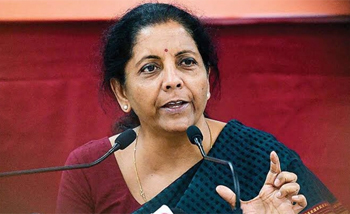
India still continues to be the fastest growing economy and demonetisation has had no effect on the Indian economy, Finance Minister Nirmala Sitharaman told the Rajya Sabha on July 2.

The Minister, while responding to supplementaries during the Question Hour, said the manufacturing sector has had a certain fall, but it is not attributable to demonetisation.

She said economic growth is high on the agenda of the government and various reforms are being undertaken in many spheres to improve GDP growth.

Ms. Sitharaman said “the moderation in growth momentum in 2018-19 is primarily on account of lower growth in ‘Agriculture and allied’, ‘trade, hotel, transport, storage, communication and services related to broadcasting’ and ‘public administration and defence’ sectors.”

“If the impact of low growth in certain sectors has impacted growth rate, particularly in agriculture and allied activities as also in financial and real estate and professional services, there has been a fall, particularly in agriculture based on third advance estimates, it is believed that there has been a 0.6% decline in the output.

“If the impact on the low growth is because of outcomes from these sectors, the manufacturing sector has had a certain fall but which is not attributable to demonetisation,” the Minister said.

‘India growing at the fastest rate’

She said in the last quarter, there could have been a fall and steps have been taken to improve the economy.

“But, we are still the fastest growing economy,” she said.

Ms. Sitharaman said if the United States’ growth has grown between 1.6, 2.2, 2.9 and 2.3% in 2016, 2017, 2018 and 2019 respectively, and China’s growth has also decelerated from 6.7, 6.8, 6.6 and 6.3%, India is still well above 7% at 7.3% growth.

“While the concern of member is well taken about the last quarter’s growth having come down, it is still India which is growing at the fastest rate and the figures are before us,” she stressed in response to a query from a member.

The Minister said as regards steps taken, the government has taken several steps in order that more money goes to people and that is why the PM’s Kisan Samman Yojna, the Pension Yojna, where money goes directly through Direct Benefit Transfer (DBT) into the people’s hands, are activities through which people are getting the benefit.

“Over and above that, in order that institutions will have to extend more credit facilities for industry and for those entrepreneurs in the ground, the credit situation and also taking care of resolutional stressed assets through banks is also happening,” she said.

In her written reply, the Finance Minister said, as per estimates available from Central Statistics Office, growth of Gross Domestic Product (GDP) at constant prices was 6.8% in 2018-19, as compared to 7.2% in 2017-18 and 8.2% in 2016-17.

“Economic growth is high on the agenda of the government. Various reforms are being undertaken by the Government in many spheres to improve GDP growth. The key reforms in Governments new term include expansion to all farmers the cash transfer scheme ‘PM-Kisan’ providing an income support of ₹6,000 per year, which was earlier limited to farmers with a land holding of less than 2 hectares,” she said.

Along with this, the government has launched voluntary pension scheme for small and marginal farmers and small shopkeepers or retail traders, she claimed.

To give focused attention to issues of growth, Government has constituted a five-member Cabinet committee on investment and growth chaired by Prime Minister.

Comments

Sandesh Shetty
 - 
Wednesday, 3 Jul 2019

Those who put their money in Swiss bank wont feel any effect. Only poor, middle calss people suffered much. BJP, RSS people enjoyed that

Vinod
 - 
Wednesday, 3 Jul 2019

Another Feku's puppet. She is getting salary for spreading lies

Well Wisher
 - 
Wednesday, 3 Jul 2019

Dear Madam please. do not ever think the all Indians are stupid.

Add new comment

  • Coastaldigest.com reserves the right to delete or block any comments.
  • Coastaldigset.com is not responsible for its readers’ comments.
  • Comments that are abusive, incendiary or irrelevant are strictly prohibited.
  • Please use a genuine email ID and provide your name to avoid reject.
News Network
December 5,2025

indigoCEO.jpg

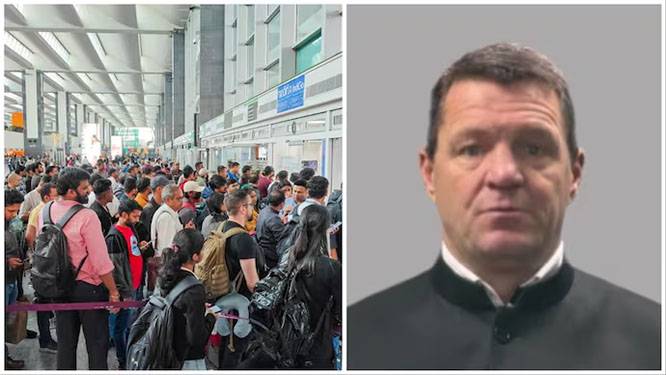
New Delhi, Dec 5: IndiGo CEO Pieter Elbers issued a public apology this evening after more than a thousand flights were cancelled today, making it the "most severely impacted day" in terms of cancellations. The biggest airline of the country cancelled "more than half" of its daily number of flights on Friday, said Elbers. He also said that even though the crisis will persist on Saturday, the airline anticipates fewer than 1,000 flight cancellations.

"Full normalisation is expected between December 10 and 15, though IndiGo cautions that recovery will take time due to the scale of operations," the IndiGo CEO said. 

IndiGo operates around 2,300 domestic and international flights daily.

Pieter Elbers, while apologising for the major inconvenience due to delays and cancellations, said the situation is a result of various causes.

The crisis at IndiGo stems from new regulations that boost pilots' weekly rest requirements by 12 hours to 48 and allow only two night-time landings per week, down from six. IndiGo has attributed the mass cancellations to "misjudgment and planning gaps".

Elbers also listed three lines of action that the airline will adopt to address the issue.

"Firstly, customer communication and addressing your needs, for this, messages have been sent on social media. And just now, a more detailed communication with information, refunds, cancellations and other customer support measures was sent," he said.

The airline has also stepped up its call centre capacity.

"Secondly, due to yesterday's situation, we had customers stranded mostly at the nation's largest airports. Our focus was for all of them to be able to travel today itself, which will be achieved. For this, we also ask customers whose flights are cancelled not to come to the airports as notifications are sent," the CEO said.

"Thirdly, cancellations were made for today to align our crew and planes to be where they need to start tomorrow morning afresh. Earlier measures of the last few days, regrettable, have proven not to be enough, but we have decided today to reboot all our systems and schedules, resulting in the highest numbers of cancellations so far, but imperative for progressive improvements starting from tomorrow," he added.

As airports witnessed chaotic scenes, the Directorate General of Civil Aviation (DGCA) stepped in to grant IndiGo a temporary exemption from stricter night duty rules for pilots. It also allowed substitution of leaves with a weekly rest period. 

Civil Aviation Minister Ram Mohan Naidu has said a high-level inquiry will be ordered and accountability will be fixed.

Comments

Add new comment

  • Coastaldigest.com reserves the right to delete or block any comments.
  • Coastaldigset.com is not responsible for its readers’ comments.
  • Comments that are abusive, incendiary or irrelevant are strictly prohibited.
  • Please use a genuine email ID and provide your name to avoid reject.
News Network
December 6,2025

pilot.jpg

New Delhi: IndiGo, India’s largest airline, faced major operational turbulence this week after failing to prepare for new pilot-fatigue regulations issued by the Directorate General of Civil Aviation (DGCA). The stricter rules—designed to improve flight safety—took effect in phases through 2024, with the latest implementation on November 1. IndiGo has acknowledged that inadequate roster planning led to widespread cancellations and delays.

Below are the key DGCA rules that affected IndiGo’s operations:

1. Longer Mandatory Weekly Rest

Weekly rest for pilots has been increased from 36 hours to 48 hours.

The government says the extended break is essential to curb cumulative fatigue. This rule remains in force despite the current crisis.

2. Cap on Night Landings

Pilots can now perform only two night landings per week—a steep reduction from the earlier limit of six.

Night hours, defined as midnight to early morning, are considered the least alert period for pilots.

Given the disruptions, this rule has been temporarily relaxed for IndiGo until February 10.

3. Reduced Maximum Night Flight Duty

Flight duty that stretches into the night is now capped at 10 hours.

This measure has also been kept on hold for IndiGo until February 10 to stabilize operations.

4. Weekly Rest Cannot Be Replaced With Personal Leave

Airlines can no longer count a pilot’s personal leave as part of the mandatory 48-hour rest.

Pilots say this closes a loophole that previously reduced actual rest time.

Currently, all airlines are exempt from this rule to normalise travel.

5. Mandatory Fatigue Monitoring

Airlines must submit quarterly fatigue reports along with corrective actions to DGCA.

This system aims to create a transparent fatigue-tracking framework across the industry.

The DGCA has stressed that these rules were crafted to strengthen flight safety and align India with global fatigue-management standards. The temporary relaxations are expected to remain until February 2025, giving IndiGo time to stabilise its schedules and restore normal air travel.

Comments

Add new comment

  • Coastaldigest.com reserves the right to delete or block any comments.
  • Coastaldigset.com is not responsible for its readers’ comments.
  • Comments that are abusive, incendiary or irrelevant are strictly prohibited.
  • Please use a genuine email ID and provide your name to avoid reject.
News Network
December 7,2025

SHRIMP.jpg

Mangaluru, Dec 7: A rare bamboo shrimp has been rediscovered on mainland India more than 70 years after it was last reported, confirming for the first time the presence of Atyopsis spinipes in the country. The find was made by researchers from the Centre for Climate Change Studies at Sathyabama Institute of Science and Technology, Chennai, during surveys in Karnataka and Odisha.

The team — shrimp expert Dr S Prakash, PhD scholar K Kunjulakshmi, and Mangaluru-based researcher Maclean Antony Santos — combined field surveys, ecological assessments and DNA analysis to identify the elusive species. Their findings, published in Zootaxa, resolve decades of taxonomic confusion stemming from a 1951 report that misidentified the species as Atyopsis moluccensis without strong evidence.

The shrimp has now been confirmed at two locations: the Mulki–Pavanje estuary near Mangaluru and the Kuakhai River in Bhubaneswar. Historical specimens from the Andaman Islands, previously labelled as A. moluccensis, were also found to be misidentified and actually belong to A. spinipes.

The rediscovery began after an aquarium hobbyist in Odisha spotted a shrimp in 2022, prompting systematic surveys across Udupi, Karwar and Mangaluru. Four female specimens were collected in Mulki and one in Odisha, all genetically matching.

Researchers warn the species may exist in very small, vulnerable populations as freshwater habitats face increasing pressure from pollution, sand mining and infrastructure development. All verified specimens have been deposited with the Zoological Survey of India for future reference.

Comments

Add new comment

  • Coastaldigest.com reserves the right to delete or block any comments.
  • Coastaldigset.com is not responsible for its readers’ comments.
  • Comments that are abusive, incendiary or irrelevant are strictly prohibited.
  • Please use a genuine email ID and provide your name to avoid reject.