



Drought ahead? About 42% of India abnormally dry

Agencies
June 3, 2019

New Delhi, Jun 3: About 42 per cent of India is 'abnormally dry' which is around 6 per cent more than last year, according to the Drought Early Warning System (DEWS).

In the May 28 update of the real time drought watcher, the percentage of abnormally dry area increased to 42.61 per cent from a week before (May 21) when it was 42.18 per cent.

The increase is 0.45 per cent from April 28 when it was 42.16 per cent. The situation was little better on February 27 when 41.30 per cent area was abnormally dry.

The dry index has worsened over the last year as 36.74 per cent of the area in India was abnormally dry on May 28, 2018.

There is an increase in the area under 'severely dry' category from 15.93 per cent a week ago to 16.18 per cent on May 28.

Little less than 6 per cent of the area is under 'exceptionally dry' category.

Some of the worst affected areas are in Telangana, Andhra Pradesh, Karnataka, Maharashtra, Gujarat and Rajasthan.

The area under exceptionally dry category went up from 0.68 per cent last year to 5.66 per cent this year.

The latest bulletin of the Central Water Commission on May 30 said that live storage of water in 91 reservoirs was 31.65 BCM which is 20 per cent of the capacity. However, the bulletin said that the overall storage situation was better than the same time last year.

All eyes are now on the monsoon. The Indian Meteorological Department (IMD) in its second early forecast has claimed that it will be a normal monsoon but northwest India and northeast India are expected to have less than normal rains.

The Long Period Average (LPA) of 96 is expected for the whole country which is the bottom of the scale (96 to 104).

In northwest India, rainfall is expected to be 94 per cent and 91 per cent in the northeast. Rainfall is expected to be 100 per cent in central India and 97 per cent in peninsular India.

Comments

Add new comment

  • Coastaldigest.com reserves the right to delete or block any comments.
  • Coastaldigset.com is not responsible for its readers’ comments.
  • Comments that are abusive, incendiary or irrelevant are strictly prohibited.
  • Please use a genuine email ID and provide your name to avoid reject.
News Network
December 7,2025

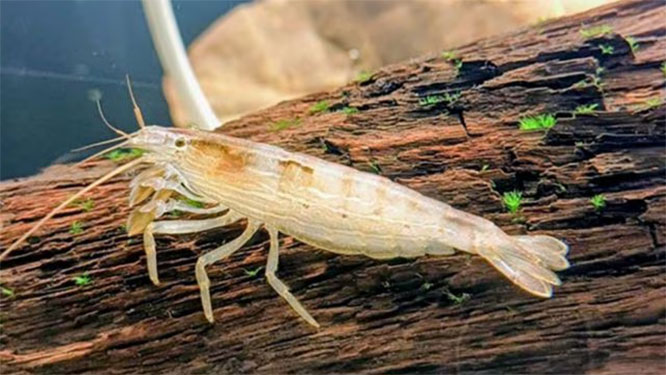
SHRIMP.jpg

Mangaluru, Dec 7: A rare bamboo shrimp has been rediscovered on mainland India more than 70 years after it was last reported, confirming for the first time the presence of Atyopsis spinipes in the country. The find was made by researchers from the Centre for Climate Change Studies at Sathyabama Institute of Science and Technology, Chennai, during surveys in Karnataka and Odisha.

The team — shrimp expert Dr S Prakash, PhD scholar K Kunjulakshmi, and Mangaluru-based researcher Maclean Antony Santos — combined field surveys, ecological assessments and DNA analysis to identify the elusive species. Their findings, published in Zootaxa, resolve decades of taxonomic confusion stemming from a 1951 report that misidentified the species as Atyopsis moluccensis without strong evidence.

The shrimp has now been confirmed at two locations: the Mulki–Pavanje estuary near Mangaluru and the Kuakhai River in Bhubaneswar. Historical specimens from the Andaman Islands, previously labelled as A. moluccensis, were also found to be misidentified and actually belong to A. spinipes.

The rediscovery began after an aquarium hobbyist in Odisha spotted a shrimp in 2022, prompting systematic surveys across Udupi, Karwar and Mangaluru. Four female specimens were collected in Mulki and one in Odisha, all genetically matching.

Researchers warn the species may exist in very small, vulnerable populations as freshwater habitats face increasing pressure from pollution, sand mining and infrastructure development. All verified specimens have been deposited with the Zoological Survey of India for future reference.

Comments

Add new comment

  • Coastaldigest.com reserves the right to delete or block any comments.
  • Coastaldigset.com is not responsible for its readers’ comments.
  • Comments that are abusive, incendiary or irrelevant are strictly prohibited.
  • Please use a genuine email ID and provide your name to avoid reject.