Economic Survey Quotes Hinduism, Islam, Christianity to Deter Tax Evasion

Agencies
July 5, 2019

New Delhi, Jul 5: The Economic Survey, tabled in Parliament on Thursday, suggests invoking the doctrine of "pious obligation" as well as blend principles of behavioural economics with spiritual norm to tackle tax evasion and wilful defaults.
Bringing in a sense of novelty into the Economic Survey, that provides a detailed picture of the economy in 2018-19 and the way ahead, tenets of Hinduism, Islam and Christianity have been cited extensively to tackle debt woes and tax evasion.

Such suggestions find a place the chapter titled 'Policy for Homo Sapiens, Not 02 Homo Economicus: Leveraging the Behavioural Economics of "Nudge"'.

The Economic Survey said that decisions made by real people often deviate from the impractical robots theorised in classical economics.

Drawing on the psychology of human behaviour, it said that behavioural economics provides insights to nudge people towards desirable behaviour.

The "doctrine of pious obligations" could be invoked to encourage people to clear their debts and also pay taxes, the survey, prepared by a team led by Chief Economic Adviser KV Subramanian said.

"Given the importance of religion in Indian culture, the principles of behavioural economics need to be combined with this spiritual / religious norm to reduce tax evasion and wilful default in the country," it noted.

In Hinduism, non-payment of debts is a sin and also a crime. The scriptures ordain that if a person's debts are not paid and he dies in a state of indebtedness, his soul may have to face evil consequences, according to the survey.

Therefore, it is the duty of his children to save him from such evil consequences. This duty or obligation of a child to repay the debts of the deceased parent is rested upon a special doctrine, known as the doctrine of pious obligation, it said.

In Islam, Prophet Muhammad advocated, "Allaahummainnia'oodhibika min al-ma'thamwa'lmaghram (O Allaah, I seek refuge with you from sin and heavy debt)". A person cannot enter paradise unless his/her debt was paid off, as per the survey.

All of his/her wealth could be used to pay the debt and if it is insufficient then one or more heirs of the deceased could voluntarily pay for him, it stated.

Quoting Bible, the survey said, "Let no debt remain outstanding except the continuing debt to love one another - Romans 13:8" and "The wicked borrows and does not repay, but the righteous shows mercy and gives - Psalm 37:21".

The Economic Survey notes that in India, where social and religious norms play such a dominant role in influencing behaviour, behavioural economics can therefore provide a valuable instrument for change.

"So, beneficial social norms can be furthered by drawing attention to positive influencers, especially friends/neighbours that represent role models with which people can identify," it said.

Also, as people are given to tremendous inertia when making a choice, they prefer sticking to the default option. By the nearly costless act of changing the default to overcome this inertia, desired behaviour can be encouraged without affecting people's choices.

Further, as people find it difficult to sustain good habits, repeated reinforcements and reminders of successful past actions can help sustain changed behaviour, the survey said.

According to the survey, insights from behavioural economics can be strategically utilised to create an aspirational agenda for social change -- from BBBP (Beti Bachao Beti Padhao) to BADLAV (Beti Aapki Dhan Lakshmi Aur Vijay Lakshmi); from Swachh Bharat to Sundar Bharat; from "Give It Up" for the LPG subsidy to "Think about the Subsidy" and from tax evasion to tax compliance.

The survey has used 'MARD' as an acronym for 'Men Against Rape and Discrimination' and suggested a campaign underlining the sacrifice of the male ego in a patriarchal society for the larger good of gender equality.

Mard is a Hindi word for man.

Comments

Add new comment

  • Coastaldigest.com reserves the right to delete or block any comments.
  • Coastaldigset.com is not responsible for its readers’ comments.
  • Comments that are abusive, incendiary or irrelevant are strictly prohibited.
  • Please use a genuine email ID and provide your name to avoid reject.
News Network
December 13,2025

New Delhi: School-going children are picking up drug and smoking habits and engaging in consumption of alcohol, with the average age of introduction to such harmful substances found to be around 13 years, suggesting a need for earlier interventions as early as primary school, a multi-city survey by AIIMS-Delhi said.

The findings also showed substance use increased in higher grades, with grade XI/XII students two times more likely to report use of substances when compared with grade VIII students. This emphasised the importance of continued prevention and intervention through middle and high school.

The study led by Dr Anju Dhawan of AIIMS's National Drug Dependence Treatment Centre, published in the National Medical Journal of India this month, looks at adolescent substance use across diverse regions.

The survey included 5,920 students from classes 8, 9, 11 and 12 in urban government, private and rural schools across 10 cities -- Bengaluru, Chandigarh, Delhi, Dibrugarh, Hyderabad, Imphal, Jammu, Lucknow, Mumbai, and Ranchi. The data were collected between May 2018 and June 2019.

The average age of initiation for any substance was 12.9 (2.8) years. It was lowest for inhalants (11.3 years) followed by heroin (12.3 years) and opioid pharmaceuticals (without prescription; 12.5 years).

Overall, 15.1 per cent of participants reported lifetime use, 10.3 per cent reported past year use, and 7.2 per cent reported use in the past month of any substance, the study found.

The most common substances used in the past year, after tobacco (4 per cent) and alcohol (3.8 per cent), were opioids (2.8 per cent), followed by cannabis (2 per cent) and inhalants (1.9 per cent). Use of non-prescribed pharmaceutical opioids was most common among opioid users (90.2 per cent).

On being asked, 'Do you think this substance is easily available for a person of your age' separately for each substance category, nearly half the students (46.3 per cent) endorsed that tobacco products and more than one-third of the students (36.5 per cent) agreed that a person of their age can easily procure alcohol products.

Similarly, for Bhang (21.9 per cent), ganja/charas (16.1 per cent), inhalants (15.2 per cent), sedatives (13.7 per cent), opium and heroin (10 per cent each), the students endorsed that these can be easily procured.

About 95 per cent of the children, irrespective of their grade, agreed with the statement that 'drug use is harmful'.

The rates of substance use (any) among boys were significantly higher than those of girls for substance use (ever), use in the past year and use in the past 30 days. Compared to grade VIII students, grade IX students were more likely, and grade XI/XII students were twice as likely to have used any substance (ever).

The likelihood of past-year use of any substance was also higher for grade IX students and for grade XI/XII students as compared to grade VIII students.

About 40 per cent of students mentioned that they had a family member who used tobacco or alcohol each. The use of cannabis (any product) and opioid (any product) by a family member was reported by 8.2 per cent and 3.9 per cent of students, respectively, while the use of other substances, such as inhalants/sedatives by family was 2-3 per cent, the study found.

A relatively smaller percentage of students reported use of tobacco or alcohol among peers as compared to among family members, while a higher percentage reported inhalants, sedatives, cannabis or opioid use among peers.

Children using substances (past year) compared to non-users reported significantly higher any substance use by their family members and peers.

There were 25.7 per cent students who replied 'yes' to the question 'conflicts/fights often occur in your family'. Most students also replied affirmatively to 'family members are aware of how their time is being spent' and 'damily members are aware of with whom they spend their time'.

Comments

Add new comment

  • Coastaldigest.com reserves the right to delete or block any comments.
  • Coastaldigset.com is not responsible for its readers’ comments.
  • Comments that are abusive, incendiary or irrelevant are strictly prohibited.
  • Please use a genuine email ID and provide your name to avoid reject.
coastaldigest.com news network
December 20,2025

Mangaluru, Dec 20: City Police Commissioner Sudheer Kumar Reddy has issued a high-alert warning to vehicle owners regarding a surge in cyber fraud targeting those looking to pay traffic violation fines. Fraudsters are reportedly exploiting recent government discount schemes on traffic penalties to deceive citizens.

The Scam: How Fraudsters Strike

Criminals are using SMS, WhatsApp, and social media to circulate suspicious links and APK files (Android application packages). They claim these apps allow users to pay e-challans at a discount.

•    Device Hacking: Downloading these unauthorized apps gives hackers full access to the victim's smartphone.

•    Financial Theft: Once the phone is compromised, fraudsters intercept OTPs and personal data to drain bank accounts.

•    Phishing Sites: Fake websites mimicking official portals are also being used to harvest banking credentials.

Already, two residents within Mangaluru city limits have reported significant financial losses after falling victim to these fraudulent apps.

Comments

Add new comment

  • Coastaldigest.com reserves the right to delete or block any comments.
  • Coastaldigset.com is not responsible for its readers’ comments.
  • Comments that are abusive, incendiary or irrelevant are strictly prohibited.
  • Please use a genuine email ID and provide your name to avoid reject.
News Network
December 17,2025

melkar1.jpg

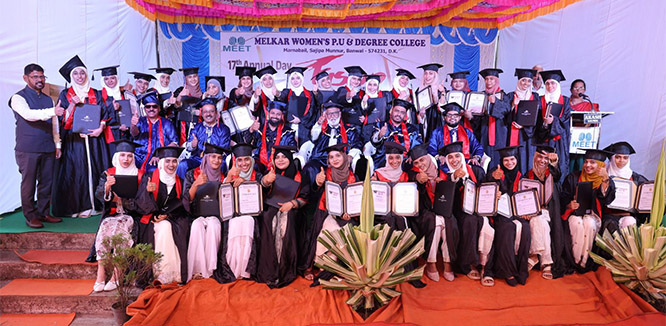
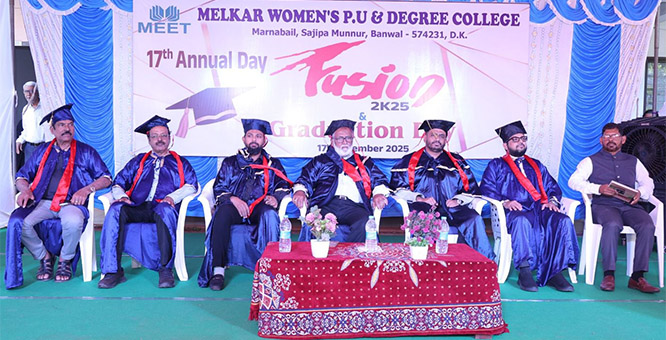
Melkar, Dec 17: The 17th Annual Day and Graduation Ceremony of Melkar Women’s PU and Degree College, themed “Fusion-2K25,” was celebrated with dignity and enthusiasm, marking a significant milestone in the institution’s academic journey. The programme reflected the college’s steadfast commitment to academic excellence, character building, and the holistic development of students.

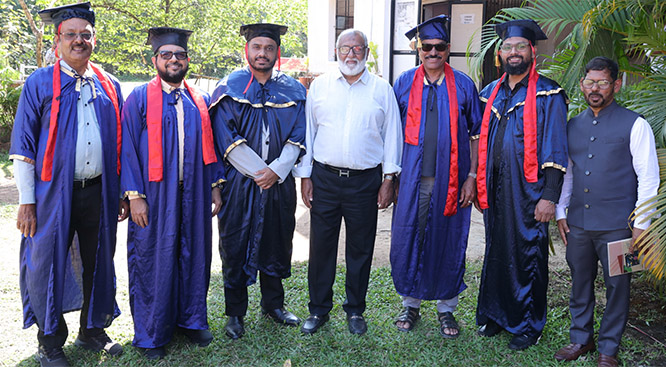
The event was inaugurated by Mr. Asif Mohammed, whose presence greatly enriched the occasion. The celebration was further graced by the chief guests Mr. P. B. Ahmed Mudassir and Mr. Nissar Fakeer Mohammed, along with the distinguished guests of honour Mr. B. A. Nazeer and Mr. Ibrahim Gadiyar. In their inspiring addresses, the guests encouraged the graduating students and appreciated the dedicated efforts of the management, faculty, and students.

The annual report was presented by the Principal, Mr. Abdul Majeed S, highlighting the institution’s academic progress, notable achievements, and extracurricular accomplishments during the academic year.

The presidential address was delivered by the esteemed Chairman of Melkar Women’s PU and Degree College, Dr. Haji S. M. Rasheed, who emphasized the vital role of education in empowering women and shaping responsible citizens. He also stressed the importance of discipline, dedication, and perseverance in achieving success.

Cultural programmes and academic recognitions formed an integral part of the celebration, showcasing the talents and achievements of the students. The graduation ceremony was a proud moment for the outgoing students as they were formally conferred degrees and wished success in their future endeavours.

Ms. Mashmooma Fathima served as the Master of Ceremonies. The welcome address was delivered by Ms. Fathima Nida, and the programme concluded with a vote of thanks proposed by Ms. Ayisha Suhana.

The event successfully achieved its objectives and was highly appreciated by the guests and attendees.

melkar3.jpg

melkar2.jpg

Comments

Add new comment

  • Coastaldigest.com reserves the right to delete or block any comments.
  • Coastaldigset.com is not responsible for its readers’ comments.
  • Comments that are abusive, incendiary or irrelevant are strictly prohibited.
  • Please use a genuine email ID and provide your name to avoid reject.