



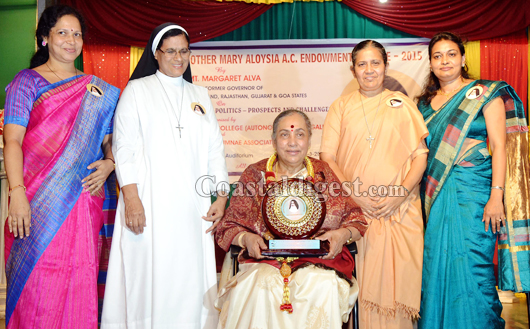
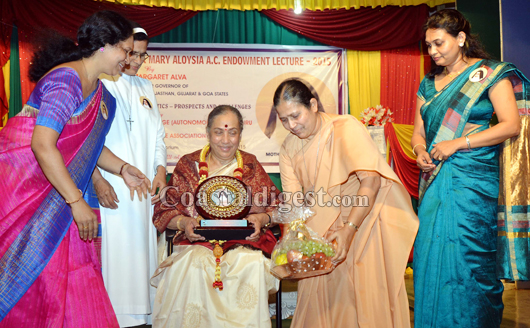
Mangaluru, Mar 18: Former Governor of Uttarakhand, Rajasthan, Gujarat and Goa, Margaret Alva was felicitated with the first ‘Mother Mary Aloysia AC Award for a Distinguished Agnesian’ instituted by St Agnes College, Mangaluru (Autonomous) instituted in honour of the founder of the educational institution.
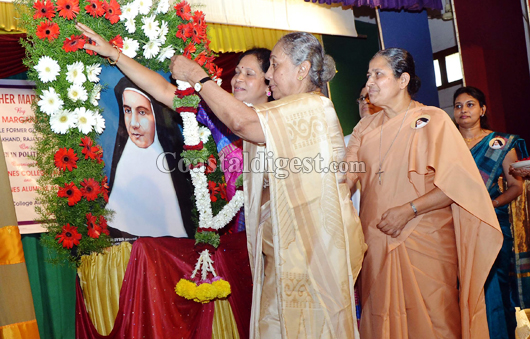
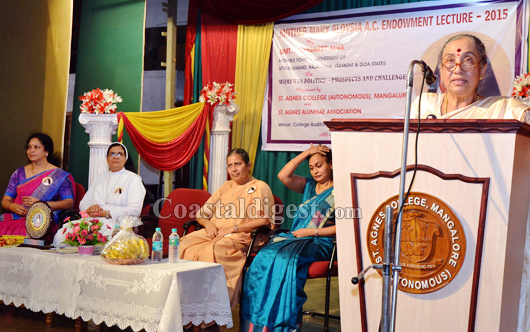
Delivering the first Mother Mary Aloysia A C Endowment Lecture – 2015 on ‘Women in Politics – Prospects and Challenges’ at a programme organised by St Agnes College, Mangaluru and St Agnes Alumnae Association in the college premises here on Wednesday, she said that women in every part of the world continue to be largely marginalised from the political sphere, often as a result of discriminatory laws, practices, attitudes and gender stereotypes, low levels of education, lack of access to health care and the disproportionate effect of poverty on women. The absence of a critical mass of women in the state and national legislature makes them ineffective, she said, pointing that through quotas and reservations, almost 2.5 million women had been elected in the country after many states legislated to raise their reservations for women to 50 percent bringing change in governance at grassroots levels.
Economically exploited, educationally neglected, under-nourished and in poor health, physically violated or denied justice, women saw very little of circumstances-altering decision-making. Traditions, customs, religious practices and caste barriers have been used by an entrenched patriarchy to subdue and restrict women to roles which prevent their participation and empowerment outside the domestic sphere. Mostly, deep-rooted and rotten patriarchy is the biggest obstacle in the way of women forging ahead as equal citizens in the democratic system, she noted.
However, there is still an atmosphere that discourages women from competing directly against men and considers childcare and housekeeping to be the exclusive domain of women. As such, it is common to see women activists supporting democratic activities at the grassroots level without reaching leadership positions. Concerned efforts must be made to raise awareness of gender inequality and the ways in which stereotypical gender roles create both formal and informal barriers, she said.
Speaking on the advancement of women’s political participation, she said that certain interventions could help such as ensuring gender mainstreaming and women supporting policy reform by promoting gender equality in access to justice, health, land rights, social security and inheritances. Established measures such as quotas have repeatedly been shown to be effective in putting more women into positions of power.
Capacity-building and developing specialized skills among elected women are necessary for participation in influential committees in ‘non-traditional’ areas. The support of male political leaders is a key ingredient in creating a political climate that encourages women’s political participation, she said, pointing that transparency in the political and legislative processes was critical to the advancement of women in political and civil society, she said.
Speaking about women’s involvement in the Indian freedom struggle, she said that the active participation of women in the political struggles for independence resulted in a Constitution based on the principles of equality guaranteeing equal rights for women in independent India.
“When women are empowered as political leaders, countries are seen to experience higher standards of living with positive developments in education, infrastructure and health. Empowering women politically helps develop democratic institutions so they can begin to successfully address issues related to security, jobs, human rights, physical well-being and human development,” she noted.
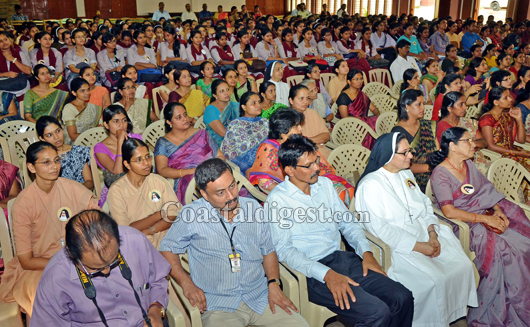
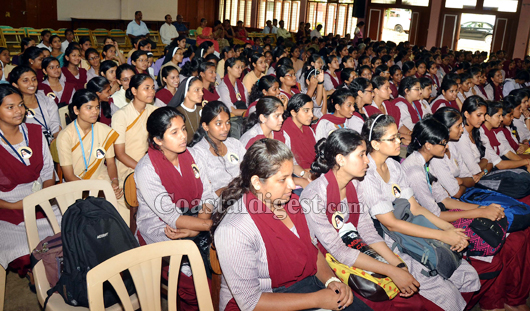
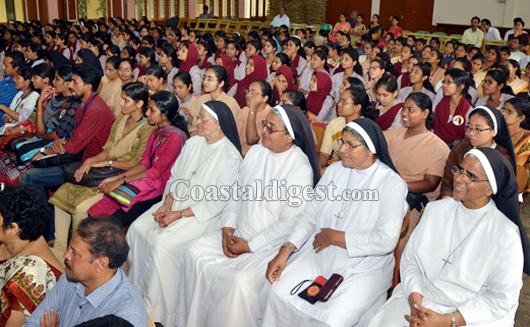
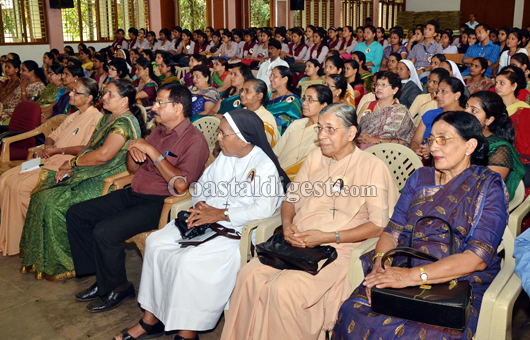
Principal of the college Prof Sr M Supriya, Dr Sr Maria Roopa, Sr Carmelita, vice-president of St Agnes Alumnae Association Usha Fernandes, convenor Dr Devi Prabha Alva, Dr Sr Venissa and others were present on the occasion.

Comments
Add new comment